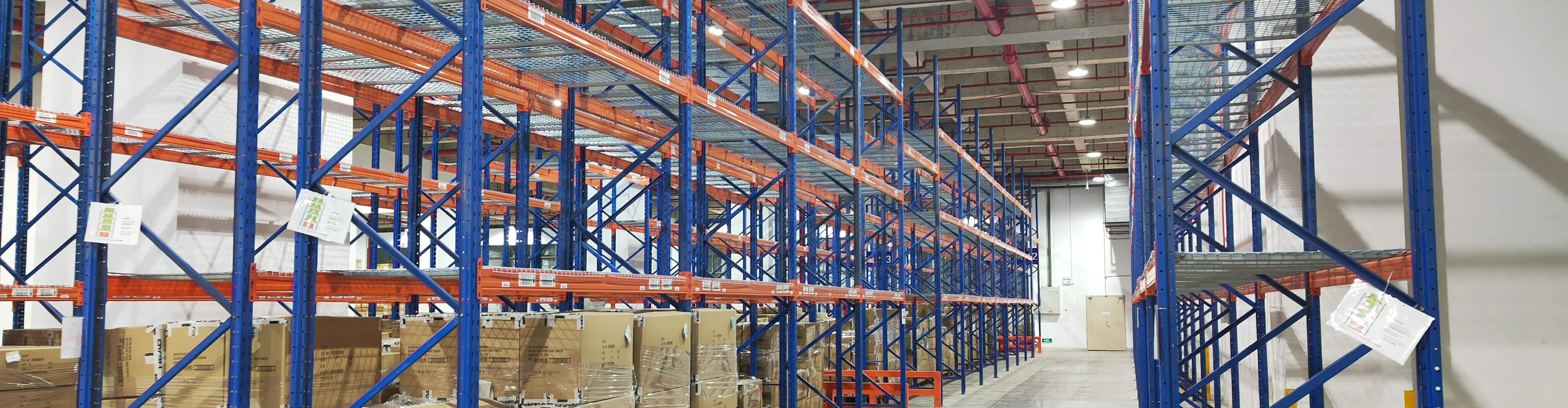
Textile warehouses often struggle with space, workflow, and stability, especially when everything revolves around fabric rolls. Over the years, I’ve walked through plenty of facilities where rolls were stacked on the floor, covered with dust, leaning against each other, or rolling away every time a forklift passed by. That’s usually the moment when warehouse managers finally start asking about custom heavy-duty warehouse racking that can actually handle textile operations. And to be honest, a standard pallet rack rarely does the job for fabric rolls. That’s where a properly engineered system makes all the difference.

In this project, the customer needed a layout that could support growing production volume and get their warehouse back under control. The plan centered around a system built from the ground up—literally—to fit the behavior, size, and daily movement of fabric rolls. And the result was far more efficient than any off-the-shelf rack could ever offer.
Why Fabric Warehouses Need a Custom Solution
Fabric rolls aren’t like pallets or cartons. They shift the moment you lift them, and they don’t stack safely. The heavier the roll, the more unpredictable it becomes. Because of this, custom heavy-duty warehouse racking is not just “nice to have”—it’s the only reliable long-term solution.
In this case, we designed a system that works closely with custom fabric roll racking principles:
- full-height utilization
- tight-fitting cages
- stable load support
- forklift-friendly entry points
- minimal wasted steel
When the warehouse’s entire vertical height is used, the storage capacity often doubles. That’s exactly what happened here. Every level was measured against the customer’s ceiling height, forklift mast restrictions, and storage density requirements. No guesswork—just precise engineering.
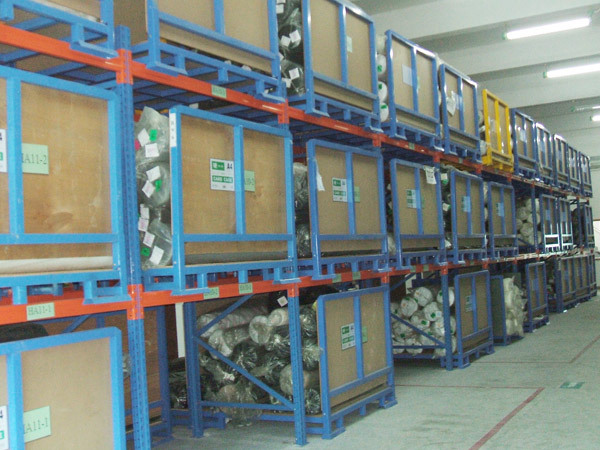
Key Structural Features That Made the System Work
The foundation of this setup is still custom heavy-duty warehouse racking, but every dimension is tailored. The rack uprights, beam spacing, and support levels match the roll weights instead of relying on generic assumptions.
1. First level without beams
Most fabric warehouses benefit from an open ground level. We removed the first beam level so workers could place fabric cages directly on the floor. That alone saved a noticeable amount of material cost.
2. Fabric cages designed for stability
The fabric cages lock the rolls in place. Their enclosed sides prevent the rolls from shifting during movement—something every forklift driver appreciates. When you’re carrying a half-ton roll, the last thing you want is sideways movement mid-turn.
3. Load capacity matched to real requirements
This is a classic mistake I see in non-custom warehouses:
A rack is built to hold 3 tons per level, but the actual fabric only weighs 1 ton.
That means 2 tons worth of steel cost is wasted on every level.
With custom heavy-duty warehouse racking, we designed the load support to fit the customer’s real roll weight. Safe, strong, but not wasteful.
4. Adjustable beam positions
Textile warehouses deal with different roll diameters. Adjustable beams (normally in 75mm or 100mm increments) let the customer adapt the rack to future roll sizes without replacing the structure.
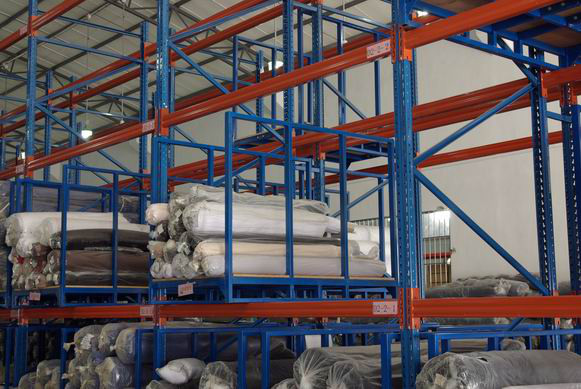
Operational Advantages for Fabric Storage
The moment custom heavy-duty warehouse racking is integrated with custom fabric roll racking, the warehouse workflow changes dramatically.
Space Use Improves Immediately
Floor stacking disappears. Vertical space becomes useful, and aisles stay clear. You’d be surprised how much wasted space a warehouse has until a proper racking system exposes it.
Safety Gets Better Automatically
Fewer shifting rolls. Fewer damaged edges. No more fabric sliding around when a forklift brakes too suddenly in the aisle.
Forklift Productivity Increases
Drivers can locate rolls easily thanks to labeling positions added to the rack frontage. Clear view, fewer mistakes, faster picking.
Long-Term Costs Drop
Custom racks remove over-engineering and reduce steel waste. The customer pays only for the capacity they actually need—not a mythical “one rack fits all” number.
Choosing the Right Custom System
A lot of fabric warehouses underestimate the complexity of roll storage. Here’s what we looked at before designing the final custom heavy-duty warehouse racking layout:
- actual roll weight and diameter
- material type (some fabrics deform more easily)
- forklift turning radius
- storage depth versus accessibility
- cage type and height
- frequency of goods movement
Skipping these steps often leads to future instability, safety risks, or underused space.
Cost Considerations and Long-Term Value
The cost of custom heavy-duty warehouse racking depends on:
- upright height
- load requirements
- beam count
- cage integration
- steel thickness
- surface coating
But the real value comes from eliminating waste:
No extra steel. No unnecessary reinforcement. No unsafe shortcuts.
Just a system that matches your exact fabric storage needs.
Installation and Maintenance from an Engineer’s View
During installation, the biggest concern is floor levelness. Fabric cage systems need stable, consistent ground to avoid tilt or stress on the uprights. After installation, operators should check:
- anchor bolt tightness
- labeling accuracy
- beam locks
- forklift clearances
These small checks prevent 95% of issues I’ve seen over the years.
Final Thoughts: A System Built for Real Fabric Warehouses
Textile warehouses grow fast, and rolls take more space than anyone expects. Floor storage only works for a short time; after that, chaos takes over. A properly designed system—one built around custom heavy-duty warehouse racking and supported by custom fabric roll racking—gives you long-term stability, better safety, and far more usable space.
If your fabric warehouse is expanding, this type of customized racking is the most reliable upgrade you can make. It keeps your operation organized, protects your materials, and gives your team a smoother workflow every single day.