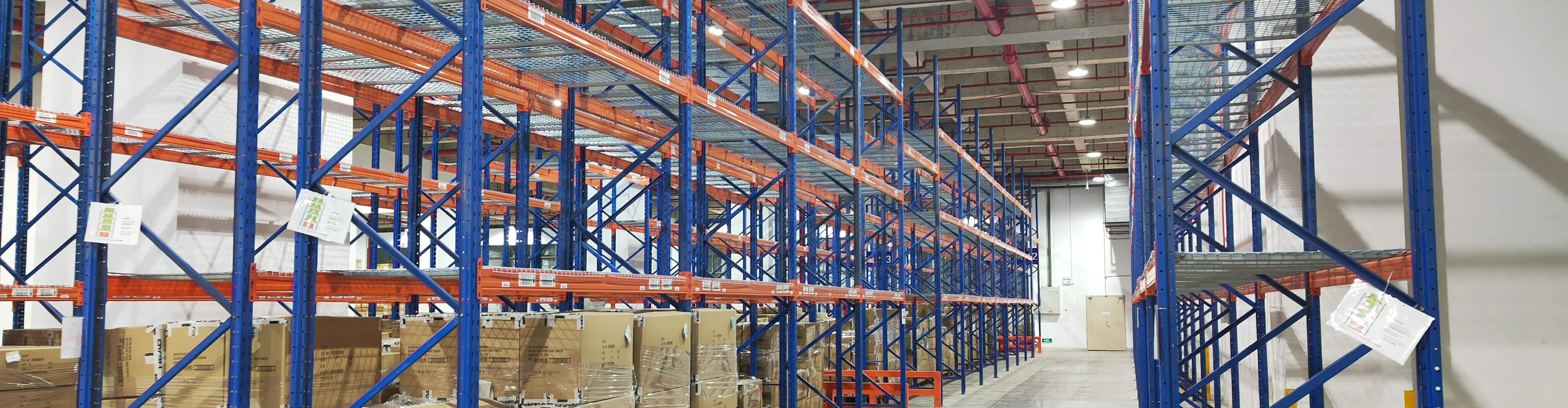
For high-volume storage, the best heavy duty pallet racking system is usually the one that matches your pallet throughput, SKU profile, forklift operation, and space constraints. There is no single layout that suits every warehouse. In many facilities, selective racking remains the most practical choice because it gives direct access to every pallet and supports flexible stock rotation. In operations where storage density matters more than immediate access, drive-in, double-deep, push back, or pallet shuttle systems may be more suitable.
The right decision depends less on the word “best” and more on how your warehouse actually works. If your site handles many SKUs, frequent replenishment, and mixed order patterns, one type of heavy duty pallet racking will perform better than another. If your inventory is more uniform and pallet movement is predictable, a denser system may deliver better use of cubic space. The key is to choose a system that supports throughput without creating avoidable access problems, safety risks, or future expansion limits.
What high-volume storage really requires
High-volume storage is not only about fitting more pallets into the building. It also means maintaining smooth pallet flow, safe forklift movement, clear stock visibility, and consistent replenishment. A warehouse can have a large number of pallet positions and still operate poorly if aisles are too tight for the handling equipment, if slow and fast stock are mixed in the wrong areas, or if the racking layout creates bottlenecks at peak times.
When evaluating heavy duty pallet racking for high-volume use, buyers should look at:
- Number of pallet positions required now and later
- SKU count and stock rotation method
- Inbound and outbound pallet movement per day
- Forklift type, lift height, and turning radius
- Aisle width and traffic flow
- Building clear height and floor condition
- Need for direct pallet access versus density
- Batch storage, FIFO, or LIFO requirements
- Inspection access and ongoing maintenance practicality
These factors determine whether a standard selective layout is enough or whether a higher-density system is justified.
Which heavy duty pallet racking system is usually best?
For most high-volume warehouses, heavy duty pallet racking in a selective configuration is the safest starting point because it balances accessibility, speed, and operational flexibility. Every pallet is accessible without moving another pallet first. That matters in warehouses with mixed SKUs, changing stock profiles, and regular replenishment.
However, selective racking is not always the best use of floor space. If you store large quantities of the same SKU, especially in batch form, higher-density options can reduce aisle space and increase pallet capacity. In those cases, the better solution may be:
- Double-deep racking for increased density with moderate selectivity loss
- Drive-in racking for large batches of similar pallets with LIFO handling
- Push back racking for dense storage with relatively fast pallet handling
- Pallet shuttle systems for high-density operations needing better lane efficiency
- Narrow aisle selective racking when height and floor space must be used more efficiently
So the short answer is this: if your operation needs maximum accessibility and SKU flexibility, selective heavy duty pallet racking is usually the best choice. If your operation needs maximum density for repeated pallet lines, denser systems often outperform it.
Selective heavy duty pallet racking: the most flexible option
Selective heavy duty pallet racking is the most widely used system for a reason. It offers direct access to every pallet location, works well with standard forklift trucks, and is relatively straightforward to inspect, maintain, and reconfigure. For warehouses handling many different SKUs, mixed pallet sizes, or daily order changes, it is often the most operationally stable choice.
When selective racking is a strong fit
- High SKU counts
- Fast-moving and slow-moving inventory stored in the same facility
- Frequent replenishment and picking changes
- Need for clear location control and stock visibility
- Operations that value easy inspection and lower complexity
Its main limitation
The trade-off is storage density. Selective layouts require more aisles than compact systems. If the building footprint is tight and pallet access patterns are repetitive, selective racking can leave valuable space underused.
Double-deep racking: more density, less direct access
Double-deep heavy duty pallet racking places pallets two positions deep instead of one. This reduces the number of aisles and increases storage capacity compared with standard selective layouts. It is often chosen by warehouses that want more density without moving to a more restrictive system such as drive-in.
The drawback is that the rear pallet is not directly accessible until the front pallet is removed. This reduces selectivity and may complicate stock rotation. It also usually requires suitable reach truck handling and disciplined location control.
Best suited for
- Moderate SKU counts
- Multiple pallets per SKU
- Warehouses that need more density but still want a conventional racking structure
Less suitable for
- Very high SKU diversity
- Strict FIFO handling without careful planning
- Operations with frequent access to every pallet position
Drive-in racking: high density for low-SKU, batch storage
Drive-in heavy duty pallet racking is built for density. Forklifts enter the racking lanes to place pallets on side rails, which allows much less aisle space than selective layouts. This can make it attractive for cold storage, seasonal stock, or batch storage of large quantities of the same product.
But drive-in systems come with clear trade-offs. Selectivity is low, stock rotation is usually LIFO, and forklift impact risk is higher because trucks operate within the rack structure. This means lane design, pallet quality, driver discipline, and routine inspection become especially important.
A good fit when
- You store many pallets of the same SKU
- Storage density is more important than direct access
- Stock movement follows a batch pattern
A poor fit when
- You need frequent access to many different SKUs
- Inventory rotation is complex
- Forklift damage risk is already a concern in the site
Push back racking: dense storage with faster lane operation
Push back heavy duty pallet racking stores pallets on inclined carts or rails, allowing several pallets deep per lane. New pallets push existing pallets back, and when the front pallet is removed, the remaining pallets roll forward. This supports LIFO handling while improving lane speed compared with drive-in systems.
Push back can be a practical middle ground for warehouses that need better density than selective racking but want easier pallet handling than drive-in. It is often considered where there are several pallets per SKU and high pallet turnover within each lane.
Its limitations include system cost, lane planning complexity, and less suitability for highly mixed SKU storage. Pallet consistency also matters because poor pallet condition can affect lane performance.
Pallet shuttle systems: high density with reduced forklift entry
Pallet shuttle-based heavy duty pallet racking is often used in operations that want deep-lane density without sending forklifts into the rack structure for every pallet movement. A shuttle moves pallets within the lane, helping improve handling efficiency and reduce some impact risks associated with drive-in operation.
This approach can work well in high-volume environments with repeated pallet lines, cold storage operations, or facilities where density and throughput both matter. It can support LIFO or FIFO depending on the layout. However, it also introduces equipment management, battery charging, operator training, and higher system complexity.
For many warehouses, pallet shuttle systems are justified only when throughput and density requirements are high enough to support the additional investment and operational discipline.
Narrow aisle heavy duty pallet racking: better use of building height and floor space
Narrow aisle heavy duty pallet racking keeps the selective principle of direct pallet access but reduces aisle width to improve space utilization. This can be effective in high-volume warehouses where the SKU count is high but floor area is limited. Instead of moving to a deep-lane storage method, the warehouse increases capacity by tightening aisle dimensions and often using specialized handling equipment.
This option can be attractive when direct access is still essential. The main considerations are truck compatibility, floor flatness, operator training, and the effect of narrower aisles on traffic planning and maintenance access.
How to choose the right system for your warehouse
1. Start with SKU profile and pallet depth needs
If you have many SKUs with only a few pallets per SKU, selective heavy duty pallet racking is usually the most practical. If you have fewer SKUs with many pallets per line, denser systems become more attractive.
2. Review throughput, not just storage capacity
A system that holds more pallets is not automatically better if it slows receiving or dispatch. High-volume operations need smooth movement at peak periods. Consider how many pallets must be put away and retrieved each shift, and whether the racking design supports that pace.
3. Match the rack layout to forklift handling
Forklift type affects aisle width, lift height, and rack accessibility. Some layouts require reach trucks or specialized narrow aisle trucks. Others expose the rack to more impact risk. The best heavy duty pallet racking layout is one your equipment can handle safely and consistently.
4. Check the building itself
Ceiling height, column layout, sprinkler clearance, dock flow, and floor condition all affect racking choice. A dense system may look efficient on paper but become difficult to install or operate if the building has layout constraints.
5. Plan for inspection and maintenance
High-volume storage increases wear. Uprights near traffic areas, lower beam levels, base plates, and protectors need regular checks. Systems that are harder to inspect or more exposed to forklift contact may carry higher long-term maintenance demands.
6. Leave room for expansion
Many buyers choose a system based only on current pallet count. A better approach is to consider likely SKU growth, seasonal fluctuation, and future automation or workflow changes. A slightly less dense but more adaptable heavy duty pallet racking layout may be the better long-term investment.
Common selection mistakes
- Choosing density over access without considering daily pallet retrieval needs
- Ignoring pallet quality and consistency in deep-lane systems
- Using a system that does not suit the actual SKU mix
- Underestimating forklift turning space and aisle requirements
- Failing to account for inspection access and impact damage risk
- Planning only for current stock volume, not future changes
- Assuming all high-volume operations need the same rack type
These mistakes usually lead to congestion, poor stock control, damaged racking, or expensive layout changes later.
Safety and operational points that should influence the decision
Any heavy duty pallet racking system used for high-volume storage must be selected and operated with safety in mind. Higher pallet movement means more exposure to impact, misloading, and wear. Practical planning should include:
- Clear load limits for each beam level and bay
- Compatibility between pallet type and rack design
- Rack protection in high-traffic impact zones
- Routine checks for upright damage, beam displacement, and anchor condition
- Housekeeping standards to keep aisles clear
- Operator training based on the actual rack layout in use
A dense system that is difficult to operate safely can cost more over time than a simpler layout with better visibility and access.
FAQ
Is selective racking always the best heavy duty pallet racking for high-volume storage?
No. It is often the best option for accessibility and SKU flexibility, but not always the best for storage density. If you store many pallets of the same SKU, a denser system may be more efficient.
What is the most space-efficient heavy duty pallet racking option?
Drive-in, push back, and pallet shuttle systems can provide higher density than standard selective layouts. The right choice depends on stock rotation, pallet volume per SKU, and handling method.
Which system is better for many SKUs?
Selective or narrow aisle selective heavy duty pallet racking is generally better for warehouses that need direct access to many different SKUs.
What should buyers check before choosing a deep-lane system?
They should review pallet consistency, SKU concentration, forklift suitability, stock rotation method, lane management, inspection access, and impact risk.
Final decision framework
If your operation needs direct access, mixed SKU handling, and flexible replenishment, selective heavy duty pallet racking is usually the most reliable choice for high-volume storage. If your operation stores large pallet quantities of the same products and needs to maximize cubic space, denser systems such as double-deep, drive-in, push back, or pallet shuttle may deliver better results.
The best heavy duty pallet racking system is the one that supports your real throughput, stock profile, and handling conditions without creating avoidable congestion, damage, or complexity. A sound decision comes from matching the rack type to warehouse behavior, not just to pallet count on a layout drawing.