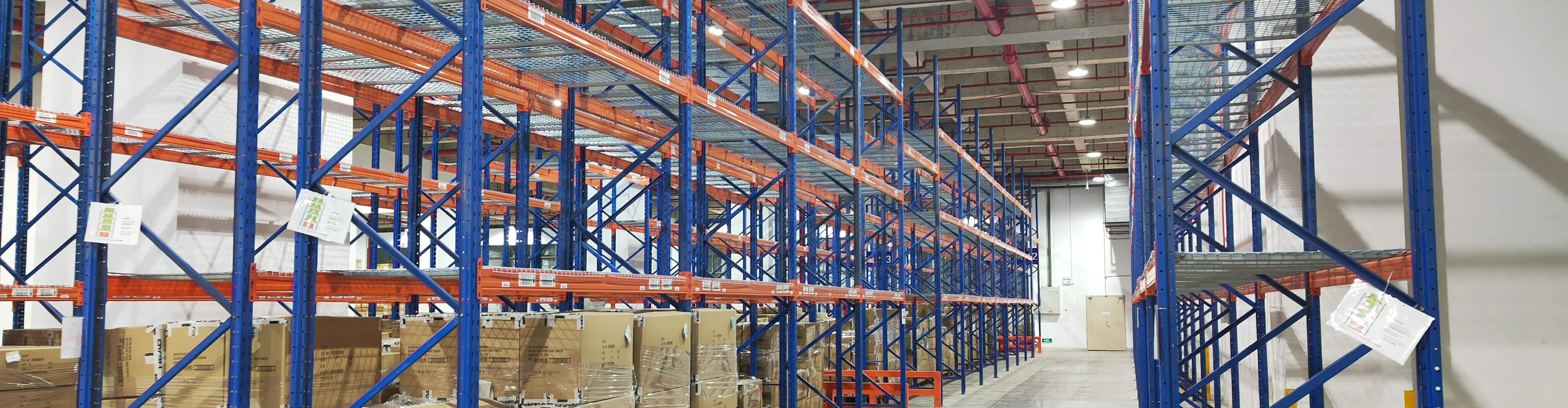
Industrial warehouse shelving is used to store cartons, bins, parts, tools, and non-palletized inventory in a structured, accessible way. In modern facilities, the right shelving system improves space use, supports faster picking, reduces handling inefficiency, and helps maintain safer day-to-day operations. The right choice depends less on appearance and more on SKU profile, load weight, picking method, aisle layout, ceiling height, and how the warehouse is expected to grow.
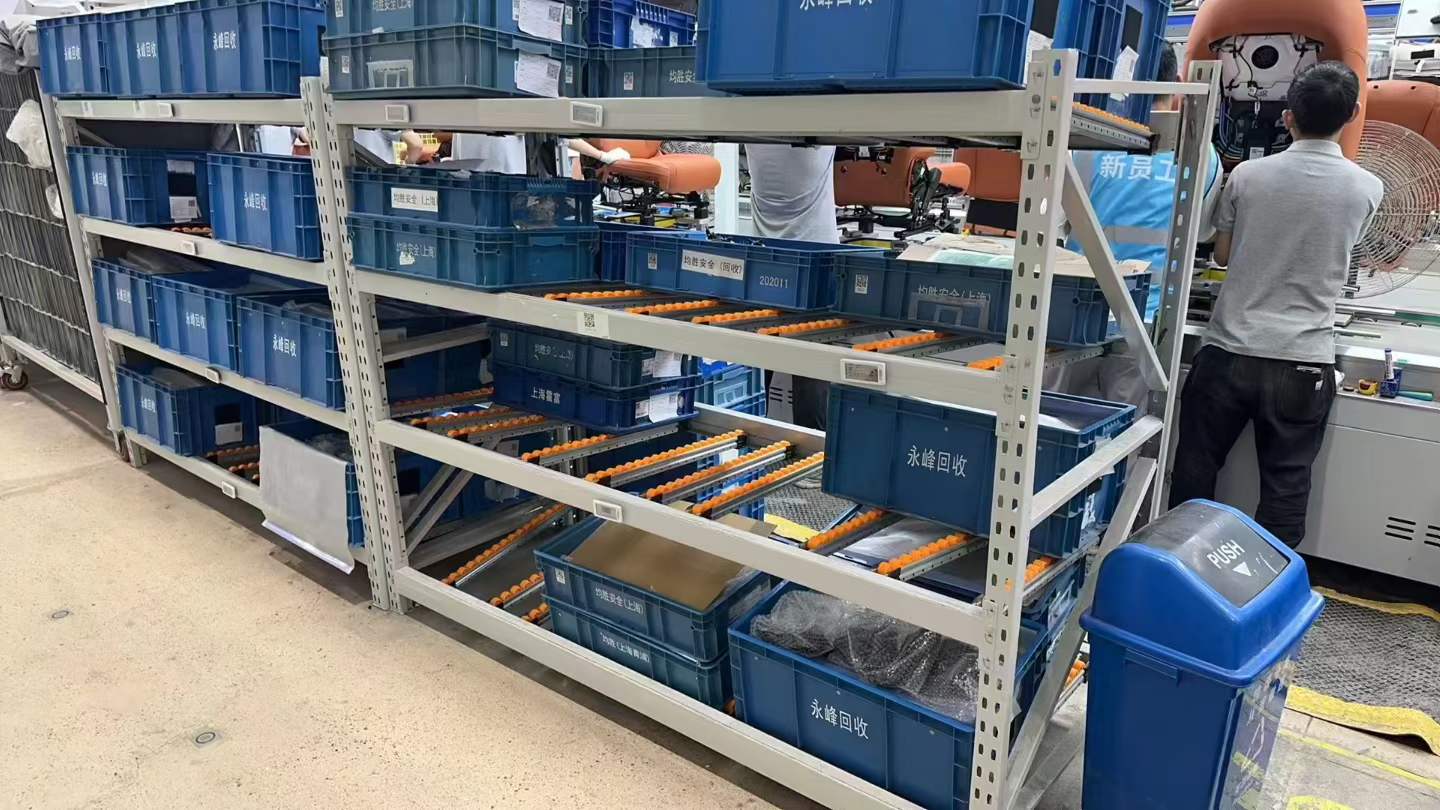
For warehouse managers and project planners, industrial warehouse shelving is rarely a one-size-fits-all purchase. A system that works well for small-parts picking may be inefficient for bulky stock, while shelving that maximizes storage density may slow access if fast-moving SKUs need frequent retrieval. Good planning starts with the inventory and workflow, not the shelving brochure.
What industrial warehouse shelving includes
Industrial warehouse shelving refers to heavy-duty shelving systems designed for commercial and industrial storage environments. These systems are commonly used for hand-loaded inventory, bin storage, archive materials, maintenance spares, e-commerce picking, and mixed-SKU stock that does not suit standard pallet racking alone.
Unlike basic office or retail shelving, industrial warehouse shelving is built for higher load demands, repeated daily use, and integration into warehouse operations. Depending on the application, shelving may be configured as static shelving, longspan shelving, boltless shelving, multi-tier shelving, or shelving combined with mezzanine structures and picking platforms.
Typical uses in modern facilities
- Order picking for carton and piece-pick inventory
- Storage of maintenance, repair, and operations supplies
- Back-up stock for fast-moving SKUs
- Parts storage in manufacturing and assembly environments
- Archive or records storage where pallet systems are unnecessary
- E-commerce and spare parts operations with high SKU counts
Why industrial warehouse shelving still matters in modern warehouses
Even in facilities built around pallet racking and forklift handling, industrial warehouse shelving remains important because many operations carry stock that is too small, too mixed, or too frequently picked for pallet-only storage. Shelving helps separate reserve stock from active picking stock and allows better organization of hand-loaded items.
In practice, modern storage facilities often use industrial warehouse shelving alongside pallet racking, cantilever racking, and mezzanine floors. This mixed-system approach gives planners more flexibility. Full pallets can stay in racking, while smaller SKUs move to shelving closer to packing, assembly, or dispatch zones.
This matters operationally because accessibility and labor efficiency often have a bigger effect on warehouse performance than raw storage density alone. A dense layout that slows picking can increase labor cost and congestion. A well-planned shelving layout can improve travel paths, product visibility, replenishment accuracy, and stock control.
Main types of industrial warehouse shelving
Longspan shelving
Longspan shelving is widely used for cartons, archive boxes, tools, and medium-weight products. It offers wider bays than light-duty shelving and is suitable where operators need direct access to many SKUs. It is often chosen for stockrooms, spare parts areas, and picking zones.
Its main advantage is versatility. Shelf levels can often be adjusted, and the system can handle a broad range of product sizes. However, it is not ideal for very high-density storage where compact mobile systems or multi-tier arrangements would use space more efficiently.
Boltless shelving
Boltless shelving is common where fast assembly, flexible shelf adjustment, and moderate load capacity are important. It is frequently used for small parts, bins, and hand-loaded inventory. For operations that expect regular SKU changes, this can be a practical option because shelf positions can be adapted more easily than in more rigid systems.
The limitation is that not all boltless systems suit heavy industrial loading or rough handling environments. Buyers should review load requirements carefully and consider whether the shelving will sit in a protected picking area or near traffic from pallet trucks and forklifts.
Multi-tier shelving
Multi-tier industrial warehouse shelving adds additional storage levels above the ground floor to make better use of building height. This approach is often used in facilities with high ceilings and a large number of small or medium SKUs.
Multi-tier layouts can significantly increase picking faces without expanding the building footprint. The trade-off is that planning becomes more complex. Stair access, fire safety considerations, lighting, picking routes, and replenishment methods all need attention. Multi-tier shelving can be very effective, but only when the workflow supports it.
Specialized shelving for bins, parts, or archives
Some operations need shelving tailored to specific storage media such as plastic bins, drawers, archive cartons, or maintenance parts. In these cases, the shelving itself is only one part of the system. Labeling, bin sizing, inventory visibility, and replenishment discipline are just as important as the steel structure.
How to choose the right industrial warehouse shelving
Choosing industrial warehouse shelving should begin with a practical review of the operation, not a product shortlist. The most suitable system depends on how inventory moves through the facility and how operators interact with the storage area each day.
1. Review your inventory profile
Start with the basics: item dimensions, weight range, SKU count, pick frequency, and whether products are stored in cartons, bins, loose units, or totes. Shelving for light spare parts is very different from shelving for bulky consumables or dense metal components.
If the product mix changes often, adjustable shelving may be more useful than a fixed layout optimized for current stock only. If inventory is stable and repetitive, a more specialized arrangement may improve efficiency.
2. Match shelving to the picking method
Industrial warehouse shelving used for piece picking should support clear labeling, easy reach ranges, and minimal travel time. If operators rely on ladders for routine access, productivity may drop and safety exposure may increase. Fast-moving lines should generally sit at accessible picking heights, with slower stock placed higher or lower.
For replenishment-heavy operations, shelf access needs to work for both pickers and stock handlers. A layout that is easy to pick but difficult to replenish often creates hidden inefficiency.
3. Consider aisle width and traffic flow
Aisle planning is a frequent weak point in shelving projects. Narrow aisles can improve space utilization, but if they restrict pedestrian flow, cart movement, or replenishment access, the operational gain may be lost. Warehouses with mixed traffic need to think carefully about where shelving sits relative to pallet racking, forklift routes, packing stations, and emergency access paths.
Industrial warehouse shelving near forklift traffic may also require additional protection, especially at aisle ends or exposed uprights.
4. Use building height wisely
Modern facilities often need to increase storage without taking more floor area. Shelving can help by extending upward, but vertical use only works when stock remains accessible and safe to handle. Ceiling height, lighting position, sprinkler clearance, and the practical reach of staff all affect how high shelving should go.
Adding height without a clear replenishment plan can create slow-moving upper levels that are difficult to manage. This is one reason why some operations move from standard shelving to multi-tier systems or combine shelving with mezzanine floors.
5. Check floor condition and load distribution
Warehouse floors are not always considered early enough. Floor flatness, slab condition, and localized load concentration can affect how and where industrial warehouse shelving is installed. This becomes more important with heavier loads, tall shelving runs, or multi-level structures.
Where there is any doubt, site-specific assessment is sensible before finalizing the layout. A good shelving plan should fit the building, not assume every floor can support every arrangement.
6. Plan for future expansion
Many shelving systems work well on day one but become restrictive after inventory growth, SKU expansion, or process changes. Buyers should think about whether additional bays, extra levels, dividers, bin systems, or adjacent mezzanine expansion may be needed later.
Industrial warehouse shelving should support growth where possible. Expansion planning is often more cost-effective when considered upfront than when retrofitting around an inflexible layout.
When shelving is the right solution and when it is not
Industrial warehouse shelving is a strong fit when inventory is hand-loaded, SKU variety is high, and direct access matters more than storing full pallet loads. It is especially useful in picking environments, maintenance stores, spare parts rooms, and mixed-item stockholding areas.
It may be less suitable when the operation is dominated by full pallets, high forklift throughput, or very heavy goods better handled by pallet racking or specialized systems. Shelving can also be a poor fit where storage density is the only priority and access frequency is low. In those cases, denser systems or reserve pallet storage may make more sense.
The key point is that industrial warehouse shelving solves accessibility and organization problems well, but it should not be forced into applications where pallet handling, heavy load concentration, or automated movement define the operation.
Common planning mistakes to avoid
- Choosing shelving by price alone: low initial cost can lead to poor fit, difficult expansion, or reduced durability in active warehouse use.
- Ignoring SKU behavior: fast movers and slow movers should not be treated the same in layout planning.
- Underestimating replenishment needs: pick access and refill access must both work.
- Using excessive shelf height: vertical space is valuable, but inaccessible stock creates labor inefficiency.
- Overlooking protection: shelving near traffic routes may need guards or barriers.
- Failing to label clearly: even good industrial warehouse shelving performs poorly if locations are hard to identify.
- Not planning for inspection and maintenance: damage, overloading, and loose components can go unnoticed in busy facilities.
Safety, maintenance, and inspection priorities
Industrial warehouse shelving should be checked routinely as part of normal warehouse safety management. Although shelving may appear simpler than pallet racking, it still needs regular attention. Damage from carts, pallet trucks, overloaded shelves, or poor manual handling can affect performance over time.
What to check regularly
- Visible damage to uprights, frames, or shelf beams
- Loose or missing clips, bolts, or connectors where applicable
- Shelves that appear overloaded or deflected
- Instability caused by uneven loading or poor floor contact
- Damaged shelf decking or support panels
- Obstructed aisles and poor housekeeping around shelving runs
- Labels that are missing, unclear, or inconsistent with actual stock locations
It is also important to train staff to use industrial warehouse shelving correctly. Heavy items should generally be stored lower, load limits should be understood, and ad hoc alterations should be controlled. A shelving system often fails operationally because of misuse before it fails structurally.
Integrating shelving with broader warehouse storage strategy
Industrial warehouse shelving works best when it is part of a wider storage plan. In many modern facilities, the most effective layout combines several systems: pallet racking for reserve stock, shelving for active picking, mezzanine levels for extra SKU capacity, and designated packing or staging zones nearby.
This integrated approach helps separate workflows. Forklift activity can remain concentrated in pallet zones, while pedestrian picking takes place in shelving areas designed for visibility and access. That separation can improve both efficiency and safety.
For growing operations, it also helps to define the role of each storage zone clearly. Shelving should not gradually become overflow storage for unsuitable items. Once that happens, accessibility, housekeeping, and load discipline usually decline.
Practical selection checklist for buyers and planners
- What products will the industrial warehouse shelving store?
- Are items hand-loaded, carton-picked, bin-picked, or tote-based?
- What are the weight ranges per shelf and per bay?
- How many SKUs need direct access?
- How fast do items move, and where should fast movers be located?
- How much aisle space is needed for people, carts, or replenishment equipment?
- Can the building height be used more effectively?
- Will the system need to expand in the next few years?
- Is the shelving exposed to forklift or pallet truck traffic?
- What inspection, labeling, and maintenance controls will be used?
FAQ
What is the difference between industrial warehouse shelving and pallet racking?
Industrial warehouse shelving is usually intended for hand-loaded items, cartons, bins, and smaller stock units. Pallet racking is designed primarily for palletized loads handled by forklifts or other equipment.
Is industrial warehouse shelving suitable for heavy items?
It can be, depending on the shelving type and load design. The important point is to match the system to the actual shelf loads and handling method rather than assuming all industrial shelving suits heavy stock.
Can shelving be used with mezzanine floors?
Yes. Industrial warehouse shelving is often combined with mezzanine structures or developed into multi-tier systems to increase storage capacity in buildings with available height.
How often should shelving be inspected?
Visual checks should be part of routine warehouse housekeeping, with more formal periodic reviews based on usage intensity, load conditions, and the level of traffic exposure in the area.
Conclusion
Industrial warehouse shelving remains a practical and important storage solution for modern facilities that need organized access to mixed, hand-loaded inventory. The right system can improve picking efficiency, support cleaner stock control, and make better use of available space. The wrong system can create congestion, poor access, and avoidable operational cost.
For most buyers, the best approach is to evaluate industrial warehouse shelving in the context of real warehouse conditions: SKU mix, handling method, traffic flow, building constraints, maintenance discipline, and future expansion. When those factors are considered early, shelving becomes a functional part of a stronger overall storage strategy rather than just another row of steel in the warehouse.