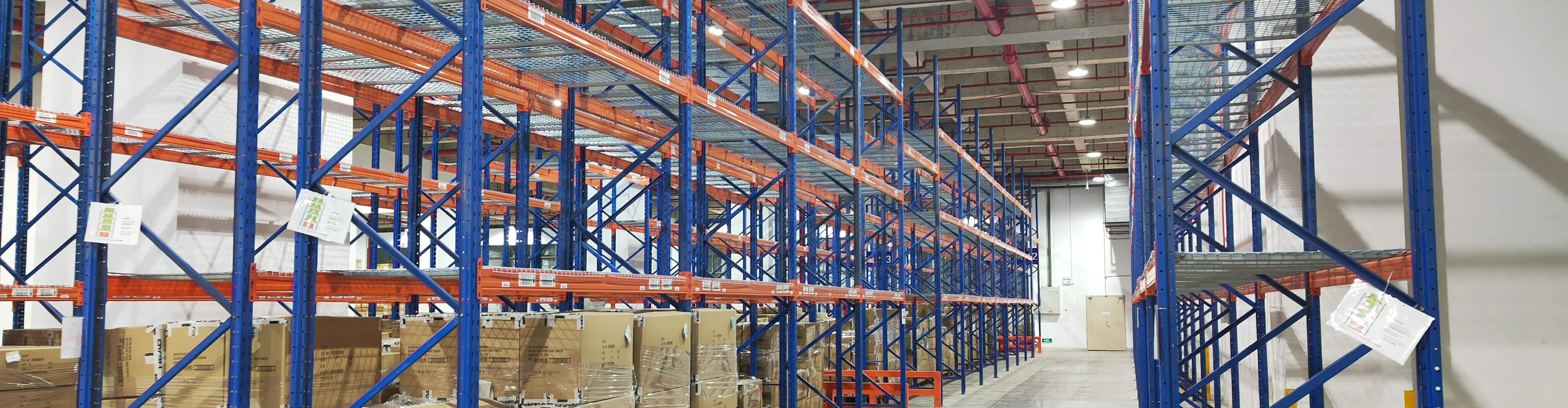
For most warehouses, the short answer is this: neither system is universally better. Heavy duty industrial pallet racking is usually the better choice when loads are heavier, pallet positions are larger, and the operation needs stronger structural capacity for demanding use. Standard selective racking is often the better fit when the priority is simple layout planning, direct access to every pallet, and cost control for general pallet storage.
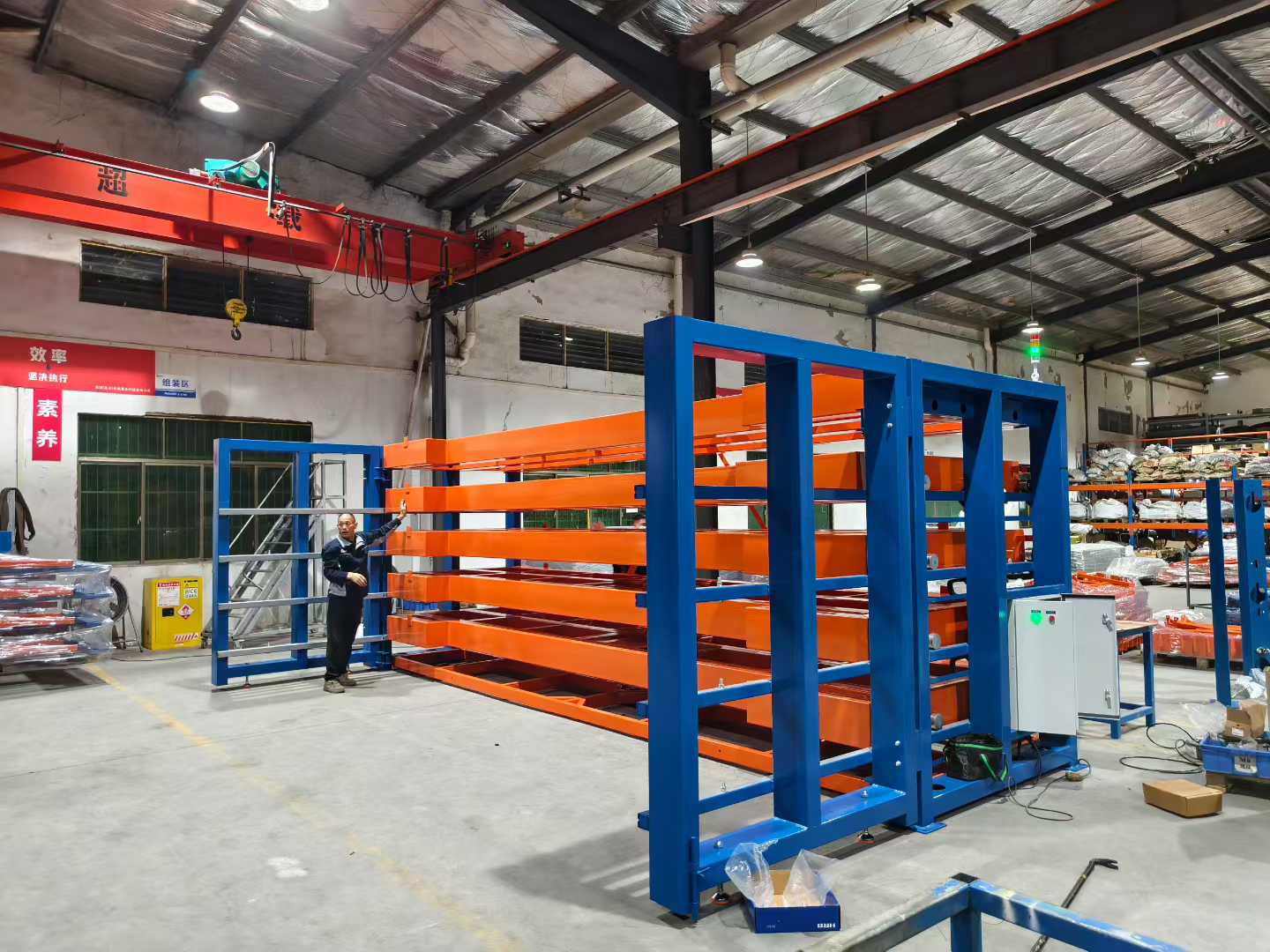
The right decision depends on what you store, how often pallets move, the forklift equipment in use, the available aisle width, the height of the building, and how much flexibility you need for future changes. If you treat heavy duty industrial pallet racking and selective racking as interchangeable, you can end up overspending, underbuilding, or creating avoidable operating constraints.
What is heavy duty industrial pallet racking?
Heavy duty industrial pallet racking is a pallet storage system designed for higher load capacities, more demanding warehouse conditions, and larger or heavier palletized goods. In practice, it often uses more robust uprights, beams, connectors, and accessories than lighter-duty selective systems. It is commonly considered when warehouses handle heavy products, bulky pallets, industrial components, raw materials, or high-volume full-pallet storage.
This does not mean every heavy duty rack is a different storage concept. In many projects, heavy duty industrial pallet racking is still configured as a selective pallet racking layout, meaning each pallet position remains directly accessible. The difference is usually in load rating, structural strength, and suitability for more demanding operating conditions.
What is selective racking?
Selective racking is the most common pallet racking format in warehouses. It gives direct access to each pallet without moving other pallets first. That makes it practical for operations with many SKUs, frequent stock rotation, and mixed order profiles.
Selective racking can be built in different duty levels. Some systems are light or medium duty, while others are engineered as heavy duty industrial pallet racking. That is why buyers sometimes compare the two incorrectly. Selective racking describes the access method and layout logic. Heavy duty describes the load capability and structural class.
So the real comparison is often between:
- standard selective pallet racking for general warehouse use, and
- heavy duty industrial pallet racking configured for selective access but designed for heavier loads and tougher conditions.
Key difference: access style vs load capacity
This is the most important point for buyers and planners. Selective racking is a storage approach. Heavy duty industrial pallet racking is a performance and capacity category.
If your warehouse needs one-pallet-at-a-time access across a broad SKU range, selective access is usually the logical layout. The next question is whether standard-duty components are enough, or whether the operation requires heavy duty industrial pallet racking because of pallet weight, beam span, lift height, impact risk, or long-term durability requirements.
In other words, many warehouses are not choosing one instead of the other. They are deciding whether a selective layout should be built as a standard system or as heavy duty industrial pallet racking.
Heavy duty industrial pallet racking vs selective racking: practical comparison
1. Load handling
Heavy duty industrial pallet racking is generally selected when pallet loads are heavier, less uniform, or more demanding on the structure. This may apply to machinery parts, metal products, building materials, chemicals, industrial packaging, or dense raw materials.
Standard selective racking is often sufficient for general consumer goods, packaged products, and conventional pallet loads where beam and upright capacities do not need to be pushed higher.
If your pallet weights vary widely, the selection process needs extra care. A system that works for average loads may become risky if heavier pallets are placed inconsistently across levels.
2. Accessibility
Selective racking offers direct access to every pallet position. That is one of its main strengths. It supports fast retrieval, simpler stock control, and easier SKU separation.
Heavy duty industrial pallet racking can offer the same accessibility when built in a selective layout. So if direct access is the priority, heavy duty construction does not reduce accessibility by itself. The difference is that you are paying for higher strength and often greater durability, not a different picking method.
3. Storage density
Neither standard selective racking nor heavy duty industrial pallet racking is the highest-density storage solution compared with drive-in, push back, shuttle, or double-deep systems. Both require aisles to allow forklift access to each bay.
However, heavy duty industrial pallet racking may support larger bay configurations or higher vertical storage where the building and handling equipment allow it. That can improve cubic space utilization, but only if floor conditions, pallet quality, and forklift reach are all suitable.
If your main goal is maximum pallet density in limited floor space, the better comparison may not be heavy duty vs selective. It may be selective vs a denser storage system.
4. Durability in demanding environments
This is where heavy duty industrial pallet racking often has a clear advantage. In warehouses with high pallet turnover, larger forklifts, heavier products, or rougher operating conditions, stronger rack components can provide a better margin for daily wear and impact exposure.
That does not eliminate the need for inspections or protection. Upright guards, column protectors, end-of-aisle barriers, and disciplined forklift operation still matter. But in demanding environments, buyers often prefer heavy duty industrial pallet racking because it aligns better with the realities of industrial use.
5. Cost and budget impact
Standard selective racking is usually more economical upfront. If the warehouse stores normal pallet loads and does not face unusual operating stress, it may be the more commercially sensible option.
Heavy duty industrial pallet racking generally costs more because of heavier components and higher design capacity. The extra cost may be justified when lower-duty systems would create limits on load, expansion, safety margin, or service life.
The mistake is not choosing the lower-cost system. The mistake is choosing a lower-duty system for a warehouse that clearly needs heavy duty industrial pallet racking.
6. Flexibility for mixed inventory
Selective layouts are highly flexible. They work well when SKU counts are high, pallet sizes vary, and stock rotation matters. Beam levels can often be adjusted to suit changing product profiles.
Heavy duty industrial pallet racking can also be flexible, but the planning should reflect real pallet dimensions and loading patterns. Overspecifying every bay for maximum possible weight may increase cost without adding practical value. The better approach is to match the duty level to real inventory profiles and likely future changes.
When heavy duty industrial pallet racking is the better choice
Heavy duty industrial pallet racking is usually the better option when the warehouse has one or more of the following conditions:
- Heavy pallet loads or dense products
- Industrial goods with high point loading or uneven load distribution
- Large pallets, oversized goods, or bulky packaging
- Higher rack elevations that require stronger structural performance
- Intensive forklift traffic and greater risk of operational impact
- Long-term plans to increase pallet weights or storage height
- A need for stronger system robustness in demanding warehouse conditions
It is also a sensible choice when the cost of structural limitation later would be greater than the initial investment difference now. That often applies in manufacturing, industrial distribution, heavy parts storage, and raw material warehouses.
When standard selective racking is the better choice
Standard selective racking is often the better fit when:
- Pallet loads are moderate and predictable
- Every pallet needs direct access
- The warehouse stores many SKUs
- Order picking and stock rotation are frequent
- Budget efficiency is a major priority
- The operation does not require unusually high structural capacity
- The layout may need regular adjustment as inventory changes
In these cases, a standard selective system may deliver the required function without the added cost of heavy duty industrial pallet racking. For many general warehouses, that is the more practical answer.
Decision factors buyers should review before choosing
Pallet weight and load consistency
Do not plan around average pallet weight alone. Review the heaviest pallets, the most common pallet types, and whether loads are consistently built. Poorly wrapped or irregular pallets can create handling and safety issues even when the rack capacity is technically adequate.
Forklift type and aisle design
Counterbalance forklifts, reach trucks, and very narrow aisle equipment all affect aisle width, turning behavior, and impact risk. A stronger rack does not solve a poor aisle design. If the forklift cannot work safely and efficiently in the planned layout, the system choice is incomplete.
Building height and vertical strategy
If you plan to use more vertical space, heavy duty industrial pallet racking may make more sense, but only if the slab condition, clear height, sprinkler planning, and lift equipment are suitable. Height can improve storage capacity, but it also increases planning sensitivity and operating discipline requirements.
SKU profile and stock rotation
High-SKU operations usually favor selective access. If many pallet positions hold different products, direct access becomes more valuable than dense block storage. In these warehouses, the real decision is often whether selective access should be standard-duty or heavy duty industrial pallet racking.
Future expansion
Many warehouses outgrow their original assumptions. If product mix, pallet weight, or throughput is likely to increase, under-specifying the system can create expensive limitations later. At the same time, overbuilding every zone may tie up budget unnecessarily. A practical solution is sometimes to use heavy duty industrial pallet racking only in the heaviest or most demanding areas.
Common mistakes in this comparison
- Assuming heavy duty and selective are mutually exclusive categories
- Choosing by price before confirming real load requirements
- Ignoring forklift operating conditions and aisle geometry
- Using nominal pallet weights without checking actual loaded weight ranges
- Planning for current inventory only and not future growth
- Overlooking floor condition, anchoring requirements, and impact protection
- Installing a stronger rack but neglecting inspection and damage reporting procedures
Inspection, maintenance, and safety considerations
Whether you install standard selective racking or heavy duty industrial pallet racking, safety depends on more than capacity ratings. Day-to-day warehouse use causes wear, accidental impacts, and loading errors.
Regular checks should focus on:
- Upright damage and twisting
- Beam deflection or dislodged beam locks
- Loose or damaged anchors
- Missing safety accessories
- Overloaded levels or incorrect pallet placement
- Damage at aisle ends and lower front uprights
- Poor pallet condition that may compromise safe storage
Heavy duty industrial pallet racking is not a substitute for inspection discipline. Stronger systems still require routine review, clear load labeling, trained operators, and prompt action when damage appears.
How to choose between heavy duty industrial pallet racking and selective racking
A simple decision framework can help:
Confirm whether you need direct access to every pallet. If yes, selective access is likely the right layout logic.
Review real pallet weights, dimensions, and load consistency. If loads are heavy or demanding, heavy duty industrial pallet racking may be the right structural level.
Check forklift type, aisle width, and lift height. The rack must fit the equipment and workflow, not just the floor plan.
Consider growth. If heavier products or higher storage are likely later, build enough capacity into the design.
Compare lifecycle practicality, not just purchase cost. A cheaper system is not cheaper if it limits operations or requires early replacement.
FAQ
Is heavy duty industrial pallet racking the same as selective racking?
Not exactly. Selective racking describes a layout that gives direct pallet access. Heavy duty industrial pallet racking describes a stronger load-capacity class. A system can be both heavy duty and selective at the same time.
Which is better for many SKUs?
Selective access is usually better for many SKUs because each pallet is directly reachable. If those SKUs are stored on heavy pallets, heavy duty industrial pallet racking may be the right selective solution.
Does heavy duty industrial pallet racking always cost more?
Usually yes, because the structure is designed for greater load capacity and durability. Whether that extra cost is justified depends on load profile, warehouse conditions, and long-term operating needs.
Can a warehouse use both systems?
Yes. Many warehouses use different duty levels in different zones. Heavier products may be stored in heavy duty industrial pallet racking, while general goods remain in standard selective areas.
Final recommendation
If your operation stores standard pallet loads, needs direct access, and values layout simplicity, standard selective racking is often the sensible choice. If the warehouse handles heavier loads, tougher operating conditions, larger pallets, or higher long-term demands, heavy duty industrial pallet racking is usually the safer and more commercially sound option.
The most reliable way to decide is not to ask which system is better in general. Ask which system matches your pallet weight, SKU profile, forklift movement, aisle plan, building height, and future expansion strategy. In many projects, the answer is a selective layout built to a heavy duty standard where the operation truly needs it.