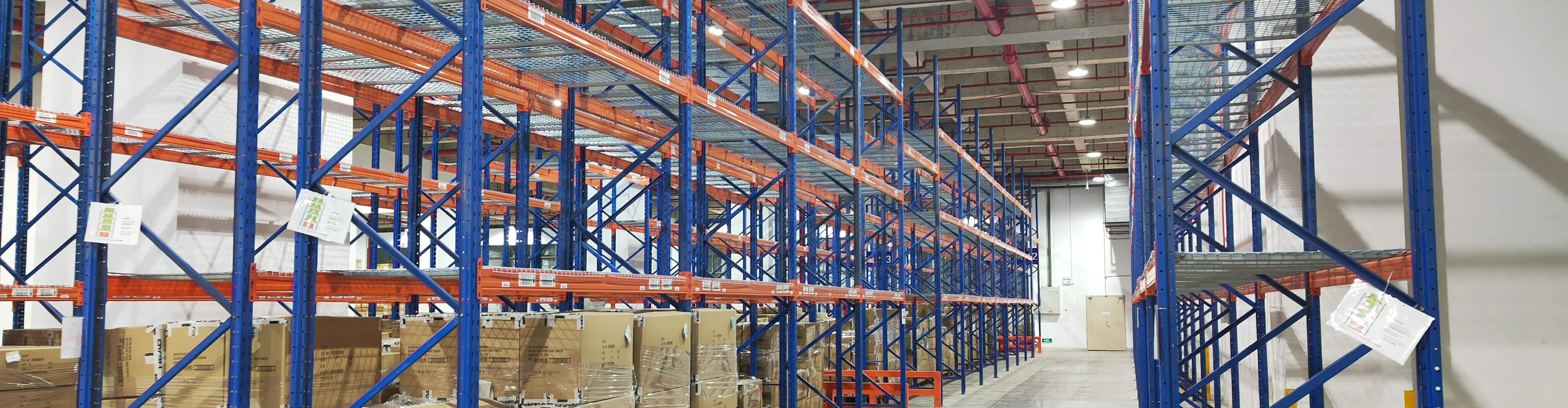
Choosing heavy duty industrial pallet racking starts with one practical question: what exactly needs to be stored, handled, and accessed every day in your warehouse? The right system is not just about holding more pallets. It must match pallet size, load weight, forklift movement, aisle layout, building height, floor condition, picking method, and future expansion plans.
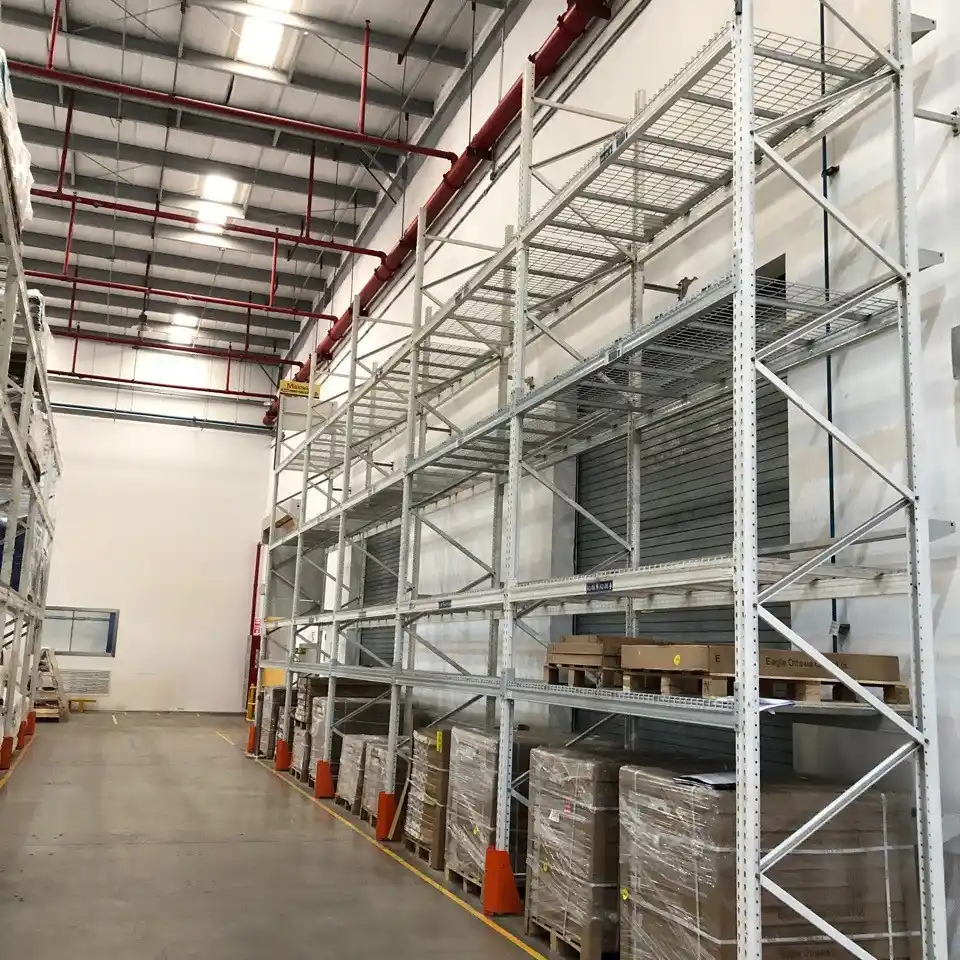
For most warehouses, heavy duty industrial pallet racking is selected when operations need reliable full-pallet storage, structured inventory locations, and better use of vertical space. But not every rack configuration suits every operation. A system that works well for high-throughput pallet handling may be inefficient for mixed picking, irregular loads, or very limited floor space. Good selection depends on operational fit, not just capacity on paper.
What Is Heavy Duty Industrial Pallet Racking?
Heavy duty industrial pallet racking refers to warehouse storage systems designed to support palletized goods at commercial and industrial load levels. These systems typically consist of uprights, beams, connectors, base plates, and accessories such as row spacers, pallet supports, mesh decking, and rack protection.
In practical terms, the system allows forklifts or other handling equipment to place and retrieve pallets from defined storage levels. It is widely used in distribution centers, manufacturing warehouses, spare parts storage, cold storage environments, and general logistics operations where pallet handling is a core part of daily workflow.
The main advantage of heavy duty industrial pallet racking is that it creates organized, scalable storage while using building height more efficiently than floor stacking. The main limitation is that the wrong layout can reduce accessibility, slow down movement, or create safety and maintenance issues.
Start With Your Warehouse Operation, Not the Rack Itself
Before comparing beam sizes or rack layouts, define how the warehouse actually operates. This is the step many buyers rush through, and it often leads to a system that looks acceptable in a drawing but performs poorly in daily use.
Key questions to answer first
- What are the pallet dimensions and typical load weights?
- Are all pallets consistent, or are there mixed sizes and overhanging loads?
- How many SKUs are stored as full pallets?
- How often are pallets moved in and out?
- What type of forklift or reach truck will be used?
- How much aisle width is realistically available?
- Is the warehouse focused on bulk storage, replenishment, or fast dispatch?
- Do you need direct access to every pallet position?
- Will the system need to expand later?
A warehouse with many SKUs and frequent picking usually needs direct selectivity. A warehouse storing large volumes of the same product may benefit more from density-focused layouts. The right heavy duty industrial pallet racking choice depends on that distinction.
Main Factors to Evaluate Before Choosing Heavy Duty Industrial Pallet Racking
1. Pallet load weight and load consistency
Load weight is one of the first technical filters. Buyers should know the maximum pallet weight, not just average weight. If stock varies by season, supplier, or product line, the system should be planned around the heaviest realistic working load.
Consistency matters too. Uniform, stable pallets are easier to store safely. Irregular pallets, damaged pallets, and loads with overhang create more risk and may require additional supports or wider clearances. If your operation routinely handles non-standard pallets, say so early in the planning process.
2. Warehouse clear height and usable vertical space
One reason companies invest in heavy duty industrial pallet racking is to use vertical cube more effectively. But total building height is not the same as usable rack height. You need to account for sprinkler clearance, lighting, roof structure, ducting, forklift lift height, and safe operating clearance above top beam levels.
In some warehouses, a very tall system looks efficient on paper but becomes less practical if lift equipment slows down at height or if replenishment cycles become harder to manage.
3. Aisle width and forklift type
Rack layout and handling equipment must be planned together. Counterbalance forklifts typically require wider aisles than reach trucks or very narrow aisle equipment. If aisle width is reduced to increase pallet positions, maneuverability, travel speed, and operator comfort may suffer.
There is always a trade-off between storage density and handling efficiency. A denser layout is not automatically better if it creates congestion, longer cycle times, or more rack impact damage.
4. SKU profile and stock rotation
If your warehouse stores many SKUs with frequent access requirements, selective pallet racking is often easier to manage. If you store fewer SKUs in larger pallet volumes, higher-density options may be worth evaluating. Stock rotation also matters. Operations with strict FIFO requirements may need a different approach from warehouses that can work with LIFO storage in some zones.
This is where buyers should avoid treating all heavy duty industrial pallet racking layouts as interchangeable. The storage rule has to fit the inventory flow.
5. Floor condition and slab suitability
Racking performance depends partly on the warehouse floor. Uneven floors, weak slabs, settlement issues, or damaged concrete can affect installation quality and long-term safety. Heavy loads transferred through base plates and anchors require proper assessment.
If the floor condition is poor, the project may need remedial work, shimming, or revised layout assumptions. Ignoring the slab is a common mistake in warehouse storage planning.
6. Picking method and access needs
Some warehouses use pallet racking mainly for reserve storage. Others pick directly from lower rack levels. If lower bays will support frequent case picking, operators need enough clearance, visibility, and safe access. Rack design should reflect whether the system is for full-pallet handling only or mixed use.
Where picking is intensive, beam levels, bay spacing, and traffic flow become operational issues, not just structural ones.
Common Types of Heavy Duty Industrial Pallet Racking to Consider
Selective pallet racking
This is the most common form of heavy duty industrial pallet racking. It provides direct access to each pallet location and works well for warehouses with varied SKUs and regular stock rotation.
Good fit for: general warehousing, mixed inventory, accessible pallet storage, and operations that need straightforward stock control.
Less suitable for: warehouses where maximum storage density is the main objective and selectivity is less important.
Drive-in or drive-through racking
These systems increase storage density by reducing the number of aisles. They are often used for larger quantities of similar products.
Good fit for: high-volume, low-SKU storage where density matters more than direct access to every pallet.
Less suitable for: operations with many SKUs, high selectivity needs, or frequent product changeovers. They can also require more disciplined forklift operation because rack contact risk is higher.
Double deep racking
Double deep layouts increase capacity compared with standard selective systems by storing pallets two deep.
Good fit for: warehouses that want more density but still need a structured pallet storage system.
Less suitable for: operations that need immediate access to every pallet position or do not use suitable handling equipment.
Very narrow aisle systems
These systems reduce aisle width to increase storage capacity, usually with specialized equipment.
Good fit for: sites where floor space is constrained and high vertical storage is practical.
Less suitable for: warehouses that want simple, flexible forklift movement or do not want the operational commitment of specialized handling methods.
How to Match Rack Design to Daily Warehouse Reality
The best heavy duty industrial pallet racking choice usually comes from balancing four priorities: capacity, accessibility, speed, and safety. Pushing too hard on one often weakens another.
When direct access matters most
If service speed, stock accuracy, and SKU access are the main priorities, a more selective layout is usually the safer decision. It may store fewer pallets than a dense layout, but it often performs better in fast-moving operations.
When density matters most
If the warehouse stores long runs of the same product and pallet turnover is predictable, higher-density storage can be commercially sensible. The trade-off is usually lower selectivity, more disciplined stock management, and potentially more care during forklift operation.
When growth is expected
Expansion planning should be part of the initial decision. Ask whether the system can be extended in phases, whether beam levels can be adjusted later, and whether the layout leaves room for future aisles, picking areas, or process changes. A rack system that fills the building completely on day one can become restrictive if the product mix changes.
Important Safety and Inspection Considerations
Any heavy duty industrial pallet racking system should be selected with long-term inspection and maintenance in mind, not just installation cost. Warehouses are harsh environments. Forklift contact, overloaded pallets, misplaced loads, and damaged components can all reduce system integrity over time.
Check these points during planning
- Clear load labeling and defined load limits
- Suitable upright and end-of-aisle protection
- Enough clearance for safe pallet placement and removal
- Access for routine inspection
- Compatibility with pallet condition and handling method
- Proper anchoring and installation on the warehouse floor
Selection should also consider how easy it will be to inspect damaged uprights, replace components, and maintain safe working practices. A very dense layout can improve capacity but make inspection and repair access harder.
Common Buying Mistakes to Avoid
Choosing by price alone
The lowest upfront quote may not deliver the best operational result. If the layout slows down handling, limits future changes, or increases damage risk, the long-term cost can be higher.
Using average load weights instead of maximum loads
Racking should be planned around realistic maximum conditions, not ideal averages. This is especially important where product mix changes over time.
Ignoring pallet quality
Damaged or inconsistent pallets create handling and safety problems. Even a well-designed heavy duty industrial pallet racking system can perform poorly if pallet quality is unreliable.
Over-compressing aisle space
Trying to gain extra pallet positions by reducing aisle widths too aggressively can lead to slower movement, more impacts, and operator frustration.
Not planning for inspection and repairs
Racks are working assets, not static structures. Buyers should think about maintenance access, replacement parts, and routine review from the beginning.
A Simple Selection Framework
If you are comparing options, this sequence helps narrow the decision:
Define pallet sizes, maximum weights, and load stability.
Measure usable building height and review floor condition.
Confirm forklift type, turning needs, and aisle constraints.
Map SKU profile, stock rotation, and access frequency.
Decide whether selectivity or density is the higher priority.
Review whether lower levels will be used for picking.
Allow for rack protection, inspection access, and future expansion.
Compare layouts based on operational fit, not just pallet count.
This approach usually leads to a more practical decision than choosing a layout only because it appears to maximize storage.
FAQ
What is the most common type of heavy duty industrial pallet racking?
Selective pallet racking is the most common because it offers direct access to each pallet and suits a wide range of warehouse operations.
How do I know if high-density racking is suitable?
High-density layouts are usually more suitable when you store larger volumes of fewer SKUs and do not need direct access to every pallet position at all times.
Can heavy duty industrial pallet racking be expanded later?
Many systems can be expanded, but this depends on the original layout, available floor space, handling routes, and whether compatible components remain available.
Why does pallet condition matter so much?
Pallet condition affects load stability, beam loading, placement accuracy, and overall rack safety. Poor pallet quality can create operational problems even in a properly designed system.
Conclusion
The right heavy duty industrial pallet racking system is the one that supports your actual warehouse flow safely and efficiently. Buyers should evaluate load weight, pallet consistency, aisle width, forklift type, building height, SKU mix, picking method, and future growth before making a decision. In many projects, the most effective solution is not the densest layout or the cheapest quotation. It is the system that fits day-to-day handling reality, can be inspected and maintained properly, and continues to work as the warehouse changes.
If you approach heavy duty industrial pallet racking as an operational decision rather than just a storage purchase, you are far more likely to end up with a system that performs well over time.