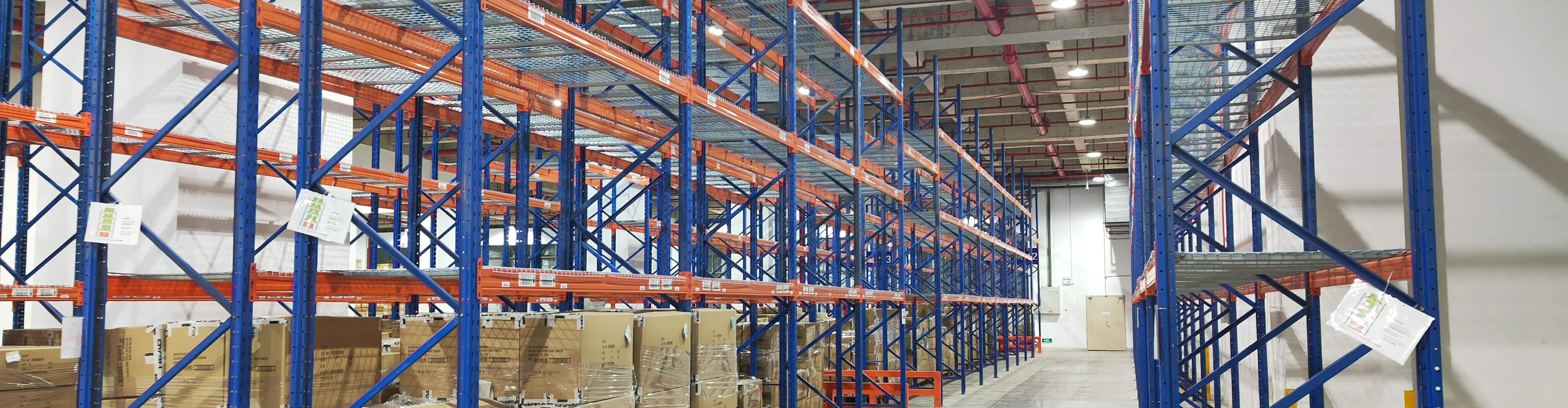
Heavy duty industrial shelving is used when a factory or warehouse needs stronger, more durable storage than standard commercial shelving can provide. It supports heavier loads, larger items, bulk parts, cartons, tools, dies, components, and fast-moving stock while keeping access practical for picking, replenishment, and day-to-day operations.
For most industrial buyers, the real question is not whether heavy duty industrial shelving is useful, but which shelving format fits the building, inventory, and handling method. A system that works well for hand-loaded spare parts may be inefficient for pallet-supported goods, and a layout that maximizes storage density may reduce picking speed or forklift maneuverability. Good shelving decisions depend on load requirements, SKU mix, aisle space, ceiling height, floor condition, and future expansion plans.
What heavy duty industrial shelving is designed to do
Heavy duty industrial shelving bridges the gap between light-duty storage and full pallet racking. It is typically selected for applications where goods are too heavy, bulky, or operationally demanding for office-style shelving, but where direct shelf access is still important.
In factories, it is often used for maintenance stores, production support inventory, tooling, raw materials in smaller units, work-in-progress storage, and finished goods that are picked by case or by item. In warehouses, it is commonly used for order picking areas, reserve stock for cartons, archive storage, e-commerce inventory, and mixed-SKU storage where every shelf location must remain accessible.
The main operational advantage of heavy duty industrial shelving is selective access. Staff can retrieve individual items or cartons without moving a full pallet. That makes it practical for environments with varied stock profiles, frequent replenishment, and manual or trolley-based picking.
Where heavy duty industrial shelving works best
Heavy duty industrial shelving is most suitable when stock is stored in bins, cartons, totes, loose units, or irregular packages rather than only on pallets. It is also useful where businesses need clear product visibility and straightforward stock organization.
Typical factory applications
- Spare parts and maintenance inventory
- Tooling, fixtures, and production consumables
- Component storage near assembly lines
- Work-in-progress separation by batch or job
- Quality hold or inspection areas
Typical warehouse applications
- Case picking and split-case picking
- Fast-moving SKU storage
- E-commerce order picking
- Returns processing areas
- Mixed-size carton storage
It is less suitable when most inventory is handled only as full pallets. In those cases, pallet racking is usually more efficient because it matches forklift handling and uses vertical space differently. Shelving can still support a pallet-rack operation, but usually in the picking or secondary storage zones rather than as the main bulk storage system.
Key types of heavy duty industrial shelving
Not all heavy duty industrial shelving is configured the same way. The right option depends on whether the priority is adjustability, load support, picking efficiency, or integration with larger storage systems.
Longspan shelving
Longspan shelving is widely used for cartons, archive boxes, components, and hand-loaded stock. It offers wider bays than standard shelving and can handle heavier shelf loads. This makes it practical for warehouses that need flexible storage for medium to heavy non-palletized goods.
Its main strength is versatility. Shelf levels can often be adjusted to suit changing carton heights or product dimensions. For operations with changing SKU profiles, longspan shelving is often easier to reconfigure than more specialized storage systems.
Steel shelf industrial shelving
Steel shelf systems are commonly used where durability, clean organization, and frequent access are priorities. They are suitable for smaller parts, bins, tools, and maintenance inventory. They can also be useful in areas where fire safety considerations or housekeeping standards make open, metal shelving preferable to alternative materials.
However, they may be less efficient for very bulky items or long products unless the bay configuration is carefully planned.
Multi-tier shelving systems
Where floor space is limited but ceiling height is available, multi-tier shelving can increase storage capacity by adding additional picking levels. This approach is often used in parts warehouses, e-commerce fulfillment, and high-SKU operations.
The trade-off is operational complexity. Access routes, stair placement, pick paths, and replenishment methods become more important. Multi-tier layouts can improve cube utilization, but they require better planning than single-level shelving.
Shelving combined with mezzanine structures
Some facilities combine shelving with mezzanine floors to create separate storage and picking zones. This can work well where businesses need to expand storage without relocating. It is especially relevant in buildings with sufficient clear height but limited floor area.
This approach should be planned carefully around floor loading, fire strategy, access control, and product movement between levels. It can be highly effective, but it is not a simple shelf-only decision.
How to choose heavy duty industrial shelving for your facility
Choosing heavy duty industrial shelving should start with the inventory and workflow, not just the available floor space. A shelving layout that looks efficient on paper can create congestion, poor replenishment access, or wasted vertical space if the underlying stock profile is misunderstood.
1. Define what will actually be stored
Start by reviewing item weight, dimensions, packaging type, and handling frequency. Shelving for small parts in bins is very different from shelving for heavy cartons or dense metal components. Buyers should identify:
- Average and maximum item weight
- Shelf load and bay load requirements
- Product dimensions and height variability
- Whether items are hand-loaded or equipment-assisted
- Whether stock is loose, boxed, binned, or tray-based
If loads are underestimated at the planning stage, the shelving may become difficult to use safely or may require costly reconfiguration later.
2. Match shelving to the picking method
If operators pick by hand, ergonomic shelf height matters. Fast-moving items should sit in the most accessible zones, while slow-moving stock can be placed higher or lower. If trolleys are used, aisle width and turning space become important. If forklifts or order pickers are involved nearby, impact protection and traffic separation should be considered.
This is where heavy duty industrial shelving often performs well: it supports selective picking without the complexity of pallet-only storage. But it should still be laid out around actual travel paths and replenishment logic.
3. Check building constraints
Ceiling height, column positions, door locations, sprinkler clearance, slab condition, and uneven floors can all affect layout and system selection. Tall shelving may appear attractive from a capacity standpoint, but if upper levels are awkward to access or difficult to replenish, the extra height may not improve real productivity.
Floor condition matters as well. In older factories and warehouses, uneven slabs can complicate installation and leveling. That does not automatically rule out shelving, but it should be identified early.
4. Plan for access and movement
Aisles should be based on how people and equipment actually move. Shelving that is too tightly spaced may increase storage density while slowing picking, replenishment, and stock checks. In production environments, it is also important to avoid layouts that interfere with line-side supply or maintenance access.
Good planning usually considers:
- Main pedestrian routes
- Forklift crossing points
- Emergency exits
- Replenishment access
- Cycle counting and inspection access
- Housekeeping and cleaning clearance
5. Consider future change
Many facilities outgrow their initial shelving layout because the SKU count rises, packaging changes, or picking volumes increase. When evaluating heavy duty industrial shelving, it is sensible to consider whether the system can be expanded, reconfigured, or integrated with other storage equipment later.
A rigid layout may be acceptable for stable stock profiles, but more flexible systems are often better for operations with changing product lines or seasonal variation.
Operational benefits of heavy duty industrial shelving
When correctly selected, heavy duty industrial shelving can improve both storage organization and daily workflow.
- Direct access to every shelf level: useful for mixed SKUs and order picking
- Better stock visibility: easier for identification, replenishment, and cycle counting
- Flexible shelf adjustment: helps adapt to changing product dimensions
- Efficient use of vertical space: especially in facilities with moderate to high clear height
- Support for manual picking operations: suitable for factories, spare parts stores, and warehouse picking zones
These advantages are strongest when shelving is matched to the operation. If very heavy palletized goods dominate the inventory, shelving may be less efficient than racking. If SKU variety is low and turnover is very high, a different storage method may also be more practical.
Common limitations and planning mistakes
Heavy duty industrial shelving is useful, but it is not a universal answer for all storage problems. Some of the most common mistakes come from applying it too broadly or planning it without enough operational detail.
Using shelving for pallet-dominant stock
If most goods arrive, move, and ship as full pallets, shelving usually adds unnecessary handling steps. Staff may need to break pallets down before storage, which increases labor and can reduce throughput.
Ignoring shelf load and bay load requirements
One of the most basic but serious errors is sizing shelving around available space rather than actual load. Dense products such as metal parts, motors, fasteners, or tooling can create much higher shelf loads than buyers initially expect.
Creating aisles that are too narrow
Trying to maximize storage by compressing aisle width often leads to slower picking, more product damage, and poor replenishment flow. In mixed-use industrial environments, narrow access can also make housekeeping and safety inspections harder.
Overbuilding height without a clear access method
Extra shelf levels only add value if stock can be accessed efficiently. If upper tiers require awkward ladders, frequent manual handling, or disruptive replenishment, the apparent capacity gain may not translate into operational improvement.
Failing to separate fast and slow movers
Fast-moving SKUs should be placed in the most accessible pick faces. When all items are stored without velocity logic, labor time increases and congestion becomes more likely.
Safety, inspection, and maintenance considerations
Like any storage equipment, heavy duty industrial shelving should be checked regularly for safe condition and correct use. Even systems used mainly for hand-loaded goods can suffer damage, overloading, or gradual misuse over time.
What to monitor regularly
- Visible frame or upright damage
- Loose or missing bolts, clips, or shelf supports
- Shelf deflection or signs of overload
- Anchor condition where applicable
- Damage from trolleys, pallets, or forklift traffic nearby
- Poor load distribution across shelf levels
- Blocked aisles or unstable stored goods
In factory settings, contamination, oil, dust, or metal debris may also affect housekeeping and safe access. In warehouse settings, repeated contact from handling equipment near aisle ends is a common issue, especially if shelving is installed close to forklift routes.
Good practice for ongoing use
Operators should understand basic load discipline, including not exceeding shelf capacities, not placing concentrated loads on unsuitable shelf surfaces, and not storing unstable items without appropriate containment. A simple internal inspection routine is often enough to identify obvious damage early, but any structural concerns should be reviewed by a qualified professional or the system supplier.
Heavy duty industrial shelving compared with other storage systems
For many facilities, the choice is not just whether to buy heavy duty industrial shelving, but whether shelving is the right primary system compared with pallet racking, cantilever racking, or mezzanine-supported storage.
Compared with pallet racking
Shelving is generally better for hand-loaded items, cartons, bins, and mixed SKUs. Pallet racking is generally better for forklift-handled pallet loads and bulk reserve stock. Many warehouses use both: racking for bulk storage and shelving for forward picking.
Compared with cantilever racking
Cantilever systems are designed for long, awkward items such as pipe, timber, bar stock, or profiles. Standard shelving is usually a poor fit for these goods unless the items are short and well-contained.
Compared with mezzanine floors
A mezzanine is not a direct shelving substitute. It creates additional floor area, while shelving organizes stock within a storage area. The two can work together, but they solve different problems.
Practical buying checklist
Before specifying heavy duty industrial shelving, warehouse managers and procurement teams should be able to answer these questions clearly:
- What products will be stored, and how heavy are they?
- Are items picked by hand, trolley, ladder, or equipment?
- What proportion of stock is palletized versus shelf-stored?
- How many SKUs require direct access?
- What aisle width is needed for safe movement?
- How high can stock be stored and accessed realistically?
- Will the layout need to expand or change in the next few years?
- Are there nearby forklift routes that require protection measures?
- Does the floor support the proposed layout and loading pattern?
If these questions are not resolved early, the final installation may look organized but still perform poorly in daily use.
FAQ
Is heavy duty industrial shelving suitable for full pallet storage?
Usually no. If goods are mainly stored and moved as full pallets, pallet racking is normally the more suitable option. Heavy duty industrial shelving is better for cartons, bins, loose items, and hand-picked stock.
How do I know whether shelving or racking is the better choice?
The decision depends on unit load type, handling equipment, SKU count, and picking method. Shelving suits selective access to smaller units. Racking suits pallet-based operations and higher-volume reserve storage.
Can heavy duty industrial shelving be used in a factory production area?
Yes, it is commonly used in factories for line-side components, tools, spare parts, maintenance stock, and work-in-progress storage. The layout should still allow safe movement, cleaning access, and replenishment without interfering with production flow.
What is the biggest planning mistake with heavy duty industrial shelving?
A common mistake is choosing a layout based only on available floor space without checking actual product weights, pick frequency, access method, and future growth. That often leads to overloaded shelves, poor accessibility, or inefficient use of labor.
Conclusion
Heavy duty industrial shelving is a practical storage solution for factories and warehouses that need durable, accessible storage for cartons, bins, parts, tools, and mixed non-palletized inventory. Its value comes from selective access, flexibility, and strong support for manual picking and organized stockholding.
The right system, however, depends on more than load capacity alone. Buyers should assess inventory type, handling method, aisle requirements, building constraints, workflow impact, and future expansion before making a decision. When those factors are considered properly, heavy duty industrial shelving can improve storage control, picking efficiency, and day-to-day operational reliability without forcing the business into a storage layout that does not fit how the site actually works.