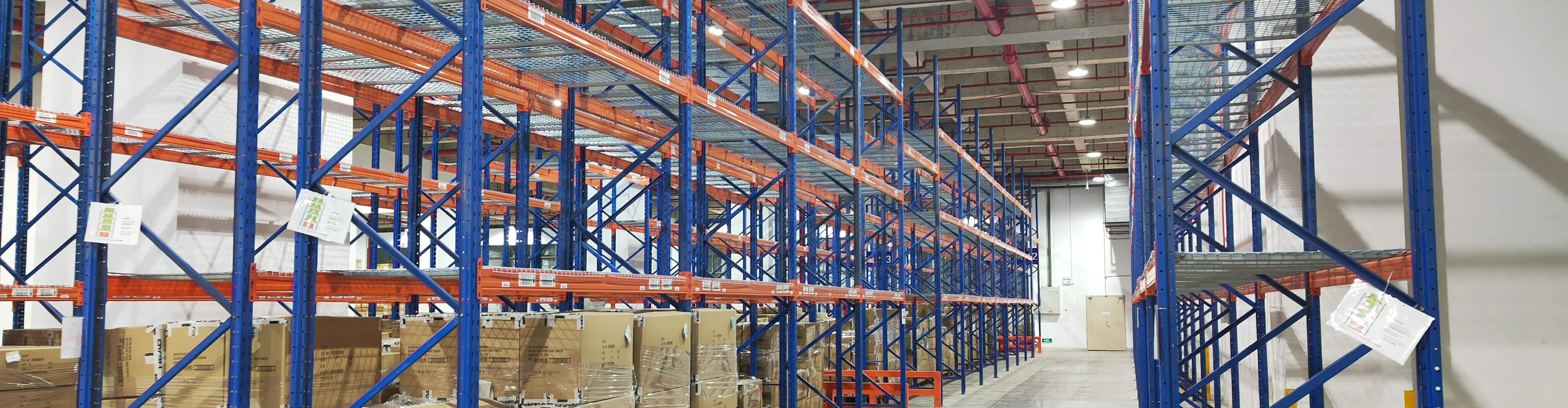
Heavy duty industrial warehouse racking helps warehouses store more palletized goods safely, use vertical space efficiently, improve stock access, and support higher load requirements than lighter storage systems. For many operations, the main benefit is not only capacity, but better control over workflow, equipment movement, and future growth.
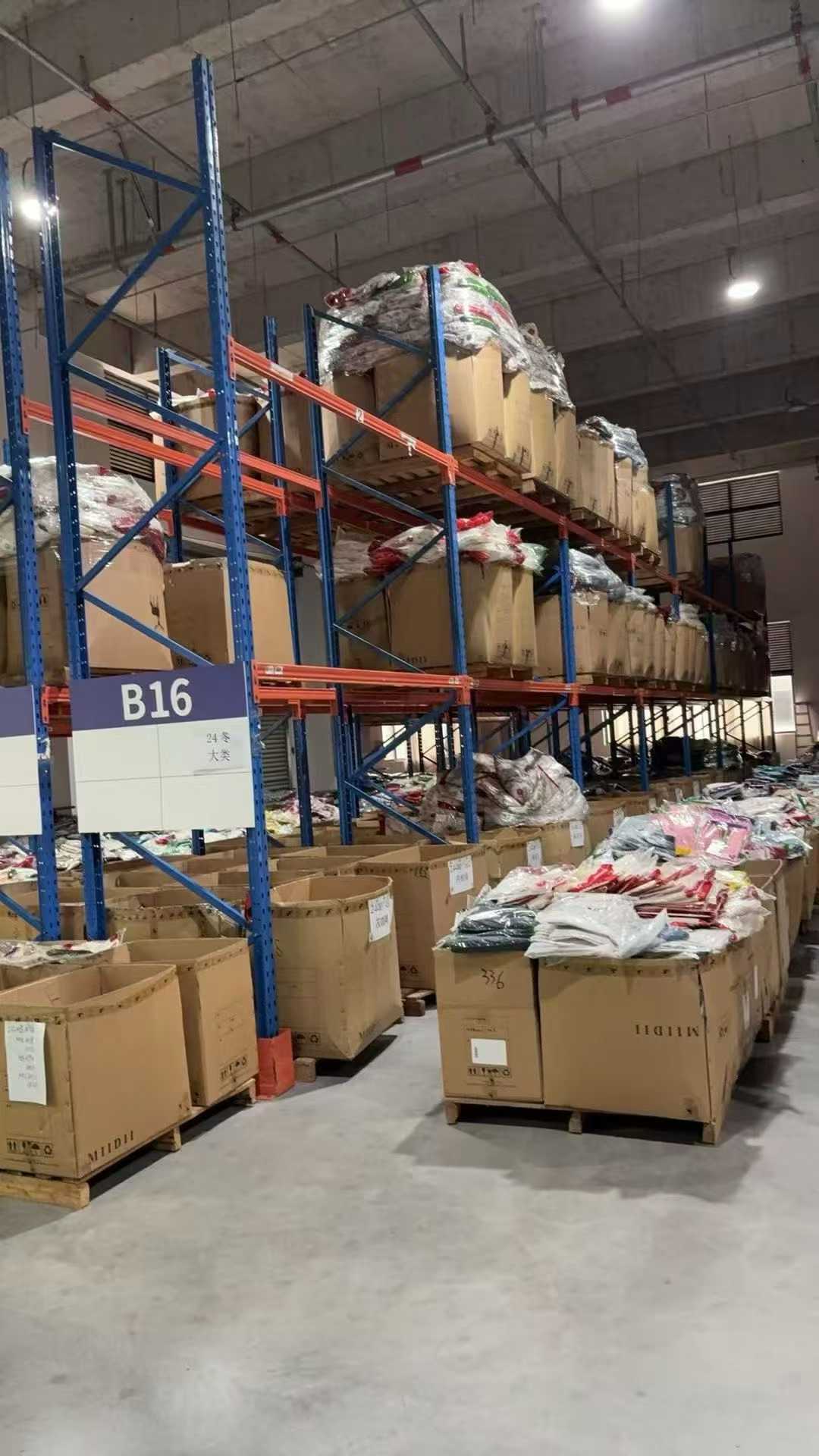
In practical terms, heavy duty industrial warehouse racking is designed for demanding storage environments where loads are substantial, pallet turnover is frequent, and handling equipment such as forklifts is used every day. It is commonly considered in manufacturing plants, distribution centers, spare parts warehouses, cold storage facilities, and other sites where storage must remain reliable under continuous use.
The real value of heavy duty industrial warehouse racking depends on how well the system matches the building, pallet type, SKU profile, and handling method. When planned properly, it can improve storage density, reduce floor congestion, support safer operations, and make expansion easier. When chosen poorly, it can create access problems, aisle conflicts, or inefficient use of space. That is why the benefits should be understood in operational terms, not just as a list of features.
What Is Heavy Duty Industrial Warehouse Racking?
Heavy duty industrial warehouse racking is a pallet storage system built to hold substantial loads across multiple beam levels using upright frames, beams, decking or pallet supports where needed, and anchoring to the warehouse floor. It is intended for industrial environments where storage structures must handle repetitive loading, unloading, and equipment traffic.
The most common form is selective pallet racking, but heavy duty configurations are also used in double deep, drive-in, push back, pallet flow, and other high-capacity layouts. The right configuration depends on whether the warehouse prioritizes direct pallet access, storage density, stock rotation, or picking efficiency.
Unlike light shelving, heavy duty industrial warehouse racking is part of the warehouse operating system. It affects forklift travel, replenishment speed, inspection routines, and even how inventory is slotted.
Key Benefits of Heavy Duty Industrial Warehouse Racking
1. Better use of vertical space
One of the clearest benefits of heavy duty industrial warehouse racking is that it converts unused building height into productive storage capacity. Many warehouses run out of floor space before they truly run out of cubic space. A properly designed racking layout can add storage positions without requiring a building extension or off-site overflow storage.
This matters most in facilities with reasonable clear height and consistent pallet handling. By storing upward rather than spreading inventory across the floor, businesses can reduce congestion in staging areas and preserve more space for movement, packing, or production support.
However, vertical expansion only works well if forklift lift height, mast type, aisle width, floor flatness, and sprinkler clearance are all considered during planning.
2. Higher load capacity for demanding operations
Heavy duty industrial warehouse racking is built for applications where pallets, containers, or stored materials place significant demands on the structure. This makes it suitable for operations handling raw materials, machinery parts, bulk packaged products, dense cartons, or heavy pallet loads.
The benefit is not simply that the rack can hold more weight. It is that the storage system can be matched to the real load profile of the warehouse, including pallet dimensions, load overhang, beam span, and handling frequency. This supports more predictable operation and reduces the risk of using an under-specified storage solution.
Load planning is critical here. Buyers should never assume all heavy duty racks are interchangeable. Capacity depends on the component sizes, bay configuration, beam levels, and installation details.
3. Improved inventory organization
A well-planned heavy duty industrial warehouse racking system brings structure to pallet storage. Instead of mixed floor stacking and improvised storage zones, inventory can be assigned to defined rack locations by SKU, batch, turnover speed, or replenishment logic.
This improves stock visibility and reduces common warehouse problems such as hidden pallets, blocked access, and inconsistent storage practices. In operations with a large SKU count, organized rack locations also support more accurate cycle counting and faster stock retrieval.
For businesses trying to improve warehouse discipline, racking often delivers operational value beyond storage alone. It creates a more manageable layout that can support warehouse management processes more effectively.
4. Faster pallet access and handling efficiency
Many facilities choose heavy duty industrial warehouse racking because it helps forklifts access pallets in a controlled and repeatable way. In selective layouts, each pallet position is directly accessible, which helps when the warehouse handles a wide SKU range or frequent order changes.
Faster access can reduce travel time, shorten replenishment delays, and support better labor productivity. It also helps avoid the disruption that comes from floor-stacked inventory, where one pallet often blocks another.
That said, not every heavy duty industrial warehouse racking layout provides the same level of access. High-density systems can increase capacity but may reduce selectivity. The operational benefit depends on whether the business needs direct access to many SKUs or dense storage for fewer product lines.
5. Safer and cleaner storage conditions
Heavy duty industrial warehouse racking can improve warehouse safety when it is correctly specified, installed, loaded, and inspected. Storing pallets in designated rack positions is generally more controlled than relying heavily on floor stacking, especially in busy forklift environments.
Benefits may include:
- Clearer traffic routes for lift trucks and pedestrians
- Less random stacking in aisles and staging zones
- More consistent load placement
- Better housekeeping and visibility
- Easier identification of damaged pallets or storage misuse
Safety is not automatic, though. Rack protection, impact prevention, load notices, operator training, and regular inspections remain essential. Heavy duty industrial warehouse racking supports safer conditions only when warehouse practices are equally disciplined.
6. Support for warehouse growth and layout changes
Another important benefit of heavy duty industrial warehouse racking is scalability. Many systems can be extended, reconfigured, or adjusted as storage needs change. Beam levels may be moved to suit new pallet heights, bays may be added if space allows, and layouts can often be adapted when stock profiles shift.
This flexibility is commercially useful for businesses with seasonal peaks, changing product lines, or phased warehouse expansion plans. It also helps when a company wants to improve space use without replacing the entire storage system.
Even so, expansion should not be treated casually. New and existing components should be compatible, floor loading should be reviewed, and the revised layout should still support safe equipment movement.
7. Better workflow control in busy warehouses
Heavy duty industrial warehouse racking can improve the flow of goods through receiving, put-away, storage, picking, and dispatch. When pallet locations are structured and aisles are designed around actual truck movement, the warehouse becomes easier to manage during peak periods.
This is especially valuable where multiple forklifts operate at once or where storage and picking activities share the same space. A defined racking layout helps reduce ad hoc storage decisions that create bottlenecks later in the day.
In practical terms, better workflow often means fewer blocked pallets, less double-handling, and more predictable replenishment routes.
8. Reduced dependence on floor stacking
Floor stacking may seem simple, but it can quickly become inefficient in warehouses with mixed inventory, varying pallet heights, or regular stock rotation. Heavy duty industrial warehouse racking reduces the dependence on stacking pallets directly on the floor, which often limits accessibility and makes inventory harder to manage.
By moving more stock into rack positions, businesses can improve selectivity, preserve aisle space, and reduce the operational compromises that come with block storage. This is particularly useful when products cannot be safely stacked high due to packaging weakness or load instability.
Floor stacking still has a place in some high-volume, low-SKU operations, but many warehouses benefit from using racking for control and accessibility rather than relying on open floor areas for most storage.
Operational Factors That Influence the Real Benefit
The benefits of heavy duty industrial warehouse racking are strongest when the system fits the operation. A technically strong rack layout can still perform poorly if it ignores everyday warehouse conditions.
Forklift type and aisle width
Truck type affects aisle dimensions, turning radius, lift height, and pallet handling speed. Counterbalance trucks, reach trucks, and very narrow aisle equipment all require different planning assumptions. If aisles are too tight for the equipment in use, productivity and safety will suffer.
Pallet quality and load consistency
Racking performs best when pallets are reasonably consistent in size and condition. Broken pallets, irregular load overhang, and unstable wrapping can create handling issues and increase rack damage risk. Warehouses storing inconsistent pallet loads may need more conservative beam spacing or additional load support.
Ceiling height and building constraints
Available height, column positions, dock layout, fire protection requirements, and door locations all affect how much benefit heavy duty industrial warehouse racking can deliver. In some buildings, theoretical storage gains look strong on paper but are limited by access constraints or low clear height.
SKU profile and stock rotation
A warehouse with many SKUs and frequent order changes usually needs better access to individual pallets. A warehouse with fewer SKUs and deeper stockholding may benefit more from denser rack configurations. The right system depends on whether selectivity or density matters more.
Floor condition and anchoring
Heavy duty industrial warehouse racking relies on the floor for stability and load transfer. Uneven, damaged, or unsuitable floors can affect installation quality and long-term performance. Floor condition should always be reviewed before finalizing a layout.
When Heavy Duty Industrial Warehouse Racking May Be Less Suitable
Although heavy duty industrial warehouse racking offers clear benefits, it is not automatically the right answer for every storage problem.
It may be less suitable when:
- The operation stores mostly small items better handled on shelving or carton flow systems
- Inventory changes so often that fixed pallet locations become inefficient
- The building has severe height or access restrictions
- Very high-density storage is needed and direct access to every pallet is not a priority
- The warehouse lacks the forklift equipment required for the proposed rack height or layout
In these cases, a different storage approach or a mixed system may make more sense. Many facilities use heavy duty industrial warehouse racking in combination with shelving, cantilever storage, mezzanine floors, or specialized picking systems rather than relying on one format for everything.
Common Planning Mistakes to Avoid
Businesses often focus on rack price before thinking through the operating model. That can lead to a system that fits the floor plan but not the day-to-day workload.
- Choosing a layout based only on maximum pallet count
- Ignoring forklift maneuvering space and turning behavior
- Overlooking pallet inconsistency and load overhang
- Failing to plan for future expansion or SKU growth
- Mixing incompatible rack components during later modifications
- Neglecting protection for exposed uprights in high-traffic areas
- Assuming maintenance and inspection can be handled informally
A good heavy duty industrial warehouse racking project should balance capacity, access, safety, and operating cost. More storage is useful only if the warehouse can still work efficiently.
Maintenance and Inspection Still Matter
Even the best heavy duty industrial warehouse racking system needs routine checks. In active warehouses, rack damage often comes from forklift impact, overloaded beams, missing safety pins, poor pallet condition, or unauthorized layout changes.
Basic good practice includes:
- Regular visual checks for upright damage, beam deflection, and missing components
- Clear load labels and consistent operator awareness
- Prompt isolation of damaged areas until reviewed
- Good housekeeping around rack bases and aisles
- Periodic formal inspections based on site risk and usage intensity
Maintenance does not remove the benefits of heavy duty industrial warehouse racking. It protects them. A system that is not monitored can lose safety and efficiency over time.
FAQ
What is the main advantage of heavy duty industrial warehouse racking?
The main advantage is the ability to store heavy palletized goods more efficiently by using vertical space while keeping storage organized and accessible for forklift handling.
Is heavy duty industrial warehouse racking suitable for every warehouse?
No. It is most suitable for palletized storage in industrial environments. Warehouses focused on small parts, hand picking, or highly irregular items may need other systems or a combination of storage solutions.
Does heavy duty industrial warehouse racking improve safety?
It can improve safety by creating defined storage locations and clearer traffic flow, but only when the system is properly designed, loaded, protected, and inspected.
How do buyers know which rack layout is right?
The decision should be based on pallet size, load weight, SKU count, stock rotation, forklift type, aisle space, building height, and whether the warehouse needs maximum selectivity or higher storage density.
Conclusion
The benefits of heavy duty industrial warehouse racking are most meaningful when viewed through warehouse performance, not just storage capacity. A well-matched system can increase usable space, improve pallet access, support heavier loads, reduce floor congestion, and create a more controlled operating environment.
For warehouse managers and buyers, the key question is not simply whether heavy duty industrial warehouse racking offers benefits. It does. The more useful question is whether the rack type, layout, and load planning fit the actual operation. When that match is right, the system becomes a long-term asset for storage efficiency, safety, and growth.