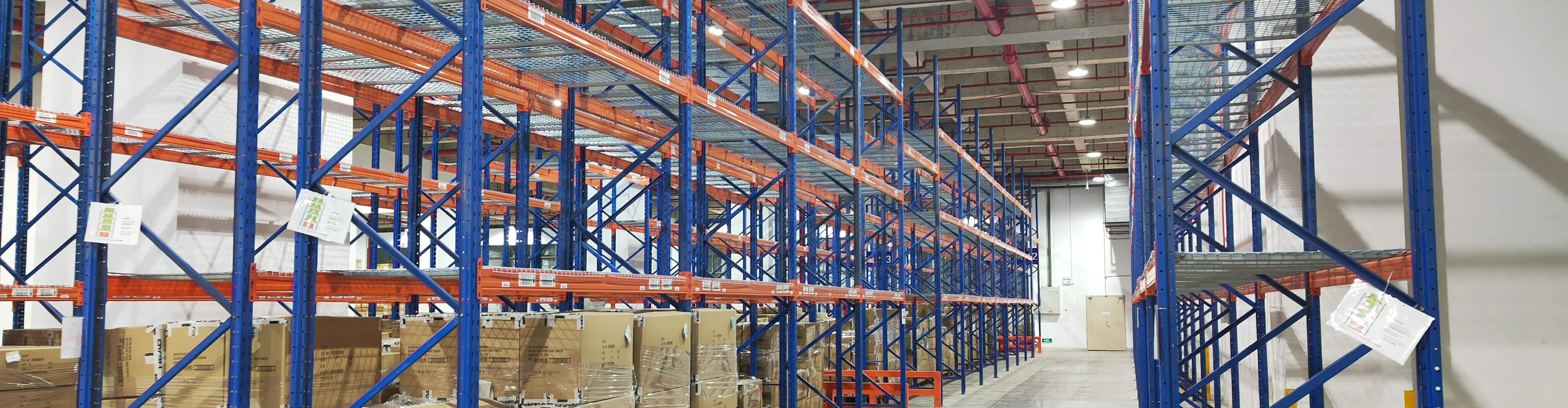
Choosing heavy duty industrial warehouse racking starts with one practical question: what exactly needs to be stored, moved, and accessed every day? The right system is not simply the one with the highest load rating or the tallest frame. It is the one that matches pallet size, SKU profile, forklift handling, available floor space, ceiling height, picking method, and future growth without creating avoidable safety or workflow problems.
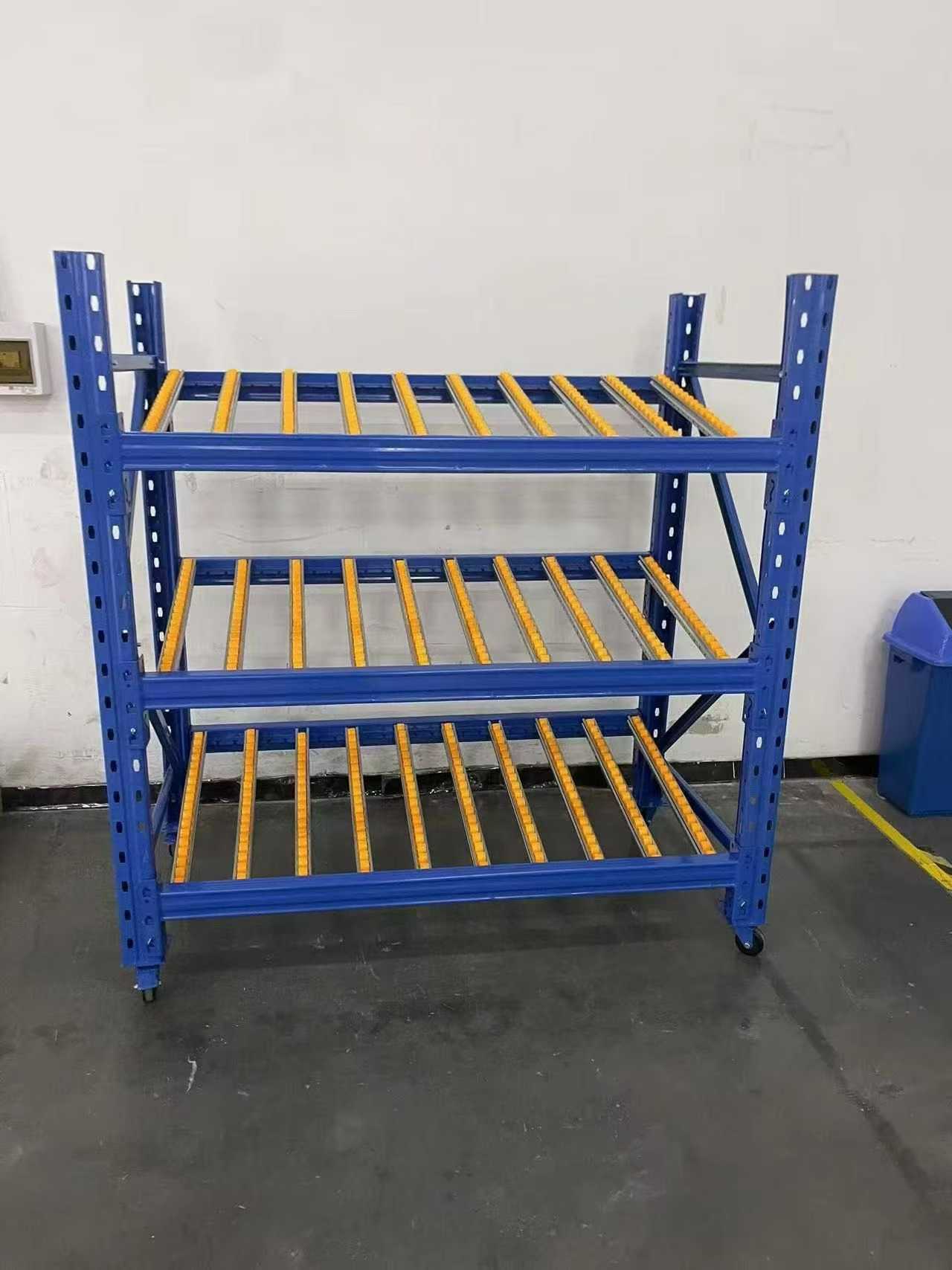
For large storage operations, heavy duty industrial warehouse racking can improve cube utilization, organize pallet positions, and support faster inventory handling. But poor selection can create congestion, damaged stock, limited access, and expensive layout changes later. A good decision depends on understanding both storage density and operational practicality.
What heavy duty industrial warehouse racking means in practice
Heavy duty industrial warehouse racking generally refers to pallet racking and related storage systems designed for substantial loads, regular mechanical handling, and demanding warehouse use. These systems are commonly used in manufacturing, logistics, wholesale, distribution, and large back-of-house storage environments.
In practical terms, the system must do more than hold weight. It needs to support safe loading, consistent pallet placement, forklift clearance, beam-level access, and ongoing inspection. A rack that works on paper may still perform poorly if aisle widths are too tight, pallets are inconsistent, or replenishment traffic conflicts with picking activity.
Start with the storage profile before comparing rack types
Before requesting quotations or layout drawings, define the storage requirement clearly. This is where most selection mistakes begin. Buyers often compare rack systems too early without confirming what the warehouse actually needs the system to do.
Key questions to answer first
- What are the pallet dimensions, weights, and load consistency?
- How many pallet positions are required now, and how many may be needed later?
- How many SKUs are stored, and how quickly do they rotate?
- Is the operation focused on full pallet storage, case picking, or both?
- What type of forklifts or reach equipment will be used?
- How much clear height is available after allowing for lighting, sprinklers, and building obstructions?
- What aisle widths are realistic for safe truck movement?
- Does the floor condition support the proposed layout and loading pattern?
These answers shape the correct heavy duty industrial warehouse racking choice far more than catalog images or generic capacity claims.
Main factors to evaluate when choosing heavy duty industrial warehouse racking
1. Load capacity and pallet consistency
Load capacity should be assessed at both beam level and bay level, but the real issue is often load consistency. If pallets vary in size, overhang, condition, or stability, the racking design needs to account for that operational reality. Uniform, well-wrapped pallets are easier to store efficiently. Mixed or damaged pallets increase the risk of beam impact, poor placement, and unsafe loading.
When evaluating heavy duty industrial warehouse racking, do not assume every pallet is handled perfectly. Plan for real use conditions, including occasional rushed loading, uneven pallet quality, and repeated forklift contact near lower levels.
2. Selectivity versus storage density
This is one of the most important trade-offs in any large warehouse. High selectivity means operators can access more pallet positions directly. High density means more pallets can fit into the same footprint, but access usually becomes more restricted.
- Selective pallet racking suits operations with many SKUs and frequent direct access needs.
- Drive-in or drive-through systems increase density but reduce direct accessibility and demand disciplined forklift operation.
- Double deep racking can improve space use but requires suitable handling equipment and changes pallet access sequence.
- Push back or pallet flow systems can support denser storage for specific stock rotation patterns, but they are not ideal for every SKU mix.
If the warehouse handles a broad SKU range with regular picking and replenishment, very dense storage may create more operational friction than value. Heavy duty industrial warehouse racking should support the inventory flow, not just maximize the number of pallet positions on a drawing.
3. Forklift type and aisle width
Racking selection cannot be separated from the material handling equipment. Counterbalance forklifts, reach trucks, and narrow aisle equipment all require different turning space, lift clearance, and operator visibility. A layout that looks efficient can become slow and damage-prone if the aisles are too narrow for the actual trucks and load dimensions.
Check not only the nominal aisle width but also pallet overhang, rack protector placement, end-of-aisle turning room, and any congested intersections. If the warehouse is busy, practical maneuvering space often matters more than theoretical minimum clearances.
4. Building height and vertical use
For large storage needs, vertical space is a major opportunity. Many businesses look at heavy duty industrial warehouse racking because they have run out of floor area, but the answer may be to use building height more effectively. That said, adding levels is only useful if pallets can be handled safely and replenishment remains efficient.
Consider usable lift height, beam spacing, sprinkler constraints, lighting, roof slope, and the impact on cycle times. Very tall systems may increase capacity, but they can also slow down access if handling equipment or operator workflow is not suited to high-level storage.
5. SKU mix and stock rotation
High-SKU warehouses usually need better access and clearer location management. Lower-SKU operations with deeper stock holding may benefit from denser layouts. Fast-moving inventory often needs easy reach and smooth replenishment paths. Slow-moving reserve stock can tolerate less direct access if space efficiency is a priority.
This is why there is no single heavy duty industrial warehouse racking system that fits every large warehouse. The right answer depends on whether the operation is driven by accessibility, throughput, storage density, or a balance of all three.
6. Picking method and workflow
If the operation involves full pallet in and full pallet out, standard pallet racking may be straightforward. If there is mixed case picking, split pallet handling, or pick-face replenishment, the design becomes more complex. In many facilities, reserve pallet storage and picking zones need to work together rather than being treated as separate decisions.
Think about travel paths, replenishment timing, congestion at popular aisles, and whether lower rack levels will be used for picking. Heavy duty industrial warehouse racking should fit the daily movement pattern, not just the storage count.
7. Floor condition and anchoring considerations
Warehouse floors are often overlooked during early planning. Uneven slabs, cracks, limited load-bearing suitability, or poor levelness can affect installation quality and long-term performance. Large storage systems depend on proper anchoring and stable alignment. If the floor condition is poor, installation can become more complicated and operating clearances may be harder to maintain.
For large projects, floor assessment should happen early, especially if high bay layouts or concentrated load areas are planned.
8. Expansion potential
A warehouse rarely stays static. Businesses add SKUs, change pallet sizes, adjust handling equipment, or increase throughput. When choosing heavy duty industrial warehouse racking, ask whether the system can be expanded or reconfigured without major disruption.
Some highly specialized high-density systems may deliver short-term space gains but reduce flexibility later. If the business expects changing inventory patterns, a more adaptable layout may be the better commercial decision.
Common heavy duty industrial warehouse racking options for large storage needs
Selective pallet racking
This is often the most practical starting point for large warehouses that need broad SKU access. Each pallet position is directly accessible, which helps inventory control, stock rotation, and operational flexibility. The trade-off is lower storage density compared with deeper-lane systems.
It is often a good fit when availability and speed of access matter more than maximum pallet density.
Double deep racking
Double deep layouts store pallets two positions deep, increasing density compared with selective racking. However, they reduce direct access and require appropriate forklifts. They work better when there are multiple pallets per SKU and the operation can manage less immediate access to rear pallets.
Drive-in racking
Drive-in heavy duty industrial warehouse racking is designed for high-density storage of similar products with lower selectivity requirements. It can be useful for large batch storage, but it demands careful forklift operation and disciplined stock management. It is less suitable for high-SKU environments or facilities that need frequent access to many different pallet positions.
Push back and pallet flow systems
These systems can improve density and support specific stock rotation strategies. They are often considered where throughput is high and lane-based storage makes sense. The limitation is that they require stronger planning discipline and are not always the most efficient choice for highly mixed inventory profiles.
When heavy duty industrial warehouse racking may be the wrong fit
Not every large storage requirement should be solved with standard pallet racking alone. In some operations, shelving, cantilever racking, mezzanine-supported areas, or hybrid storage layouts may be more suitable for part of the inventory.
Heavy duty industrial warehouse racking may be a poor fit when:
- The inventory is not palletized consistently
- The operation is dominated by small-item order picking rather than pallet storage
- The warehouse has severe floor limitations or building obstructions
- SKU variety is extremely high but each SKU has very low pallet count
- Forklift access is limited by narrow columns, doors, or traffic bottlenecks
In these cases, a mixed storage strategy is often more effective than trying to force all stock into one rack format.
Planning mistakes to avoid
Designing for maximum capacity only
A layout that chases the highest pallet count can create blocked aisles, awkward replenishment, and slow picking. Capacity matters, but operational flow matters just as much.
Ignoring pallet quality
Damaged, inconsistent, or oversized pallets can undermine an otherwise sound racking design. Rack suitability should reflect actual pallet condition, not ideal assumptions.
Underestimating safety protection needs
Busy lower levels often need protection such as upright guards or column protection in vulnerable impact zones. This is especially important where truck traffic is constant.
Overlooking inspection and maintenance access
Heavy duty industrial warehouse racking needs routine checks for impact damage, beam displacement, missing safety components, anchor issues, and overloading signs. If the layout is too tight to inspect easily, problems may go unnoticed.
Failing to plan for growth
Short-term layouts often become expensive when the business expands. Leave room for additional bays, revised picking zones, or future changes in stock profile where possible.
Safety, inspection, and ongoing management
Once installed, heavy duty industrial warehouse racking should be managed as an active warehouse asset, not forgotten infrastructure. Day-to-day use causes wear. Forklift contact, overloaded pallets, poor pallet placement, and missing beam locks can all create risk over time.
Good practice includes:
- Routine visual checks by warehouse staff
- Clear load signage based on the approved system design
- Prompt reporting of impact or damage
- Keeping aisles clear and pallet loads stable
- Replacing damaged components with compatible parts
- Periodic formal inspection by qualified professionals where required by local practice or site policy
Even a well-chosen heavy duty industrial warehouse racking system can become unsafe if it is overloaded, modified without review, or repeatedly struck by handling equipment.
A practical selection framework for buyers
If you are comparing suppliers or layout options, use a simple decision framework:
Define the load profile. Confirm pallet sizes, weights, and variability.
Map the inventory pattern. Identify SKU count, stock rotation, and reserve versus picking needs.
Review handling equipment. Match aisle widths and lift heights to actual forklift use.
Assess the building. Check clear height, obstructions, dock flow, and floor condition.
Choose the access-density balance. Decide how much direct pallet access is operationally necessary.
Plan for protection and inspection. Include rack protection, load control, and maintenance access.
Consider future changes. Evaluate whether the layout can adapt as volumes or SKU mix change.
This approach keeps the decision grounded in warehouse reality rather than purely in price per bay or headline storage numbers.
FAQ
What is the most common type of heavy duty industrial warehouse racking?
Selective pallet racking is one of the most common options because it offers direct access to each pallet position and suits many general warehouse operations.
How do I know if I need high-density racking?
High-density systems are usually worth considering when floor space is limited, pallet counts per SKU are relatively high, and direct access to every pallet is not essential.
Can heavy duty industrial warehouse racking be expanded later?
In many cases, yes, but expansion depends on the original layout, available floor space, building constraints, and whether compatible components remain available.
What should be checked before installation?
Key checks include floor condition, usable building height, pallet dimensions, load weights, forklift operating clearances, and the intended stock rotation method.
Conclusion
The right heavy duty industrial warehouse racking choice is the one that supports safe storage, efficient access, realistic forklift operation, and future flexibility. For large storage needs, buyers should focus less on headline capacity and more on how the system will perform under daily warehouse conditions. When pallet profile, SKU mix, aisle requirements, and workflow are properly assessed, heavy duty industrial warehouse racking becomes a long-term operational asset rather than a space-saving compromise.