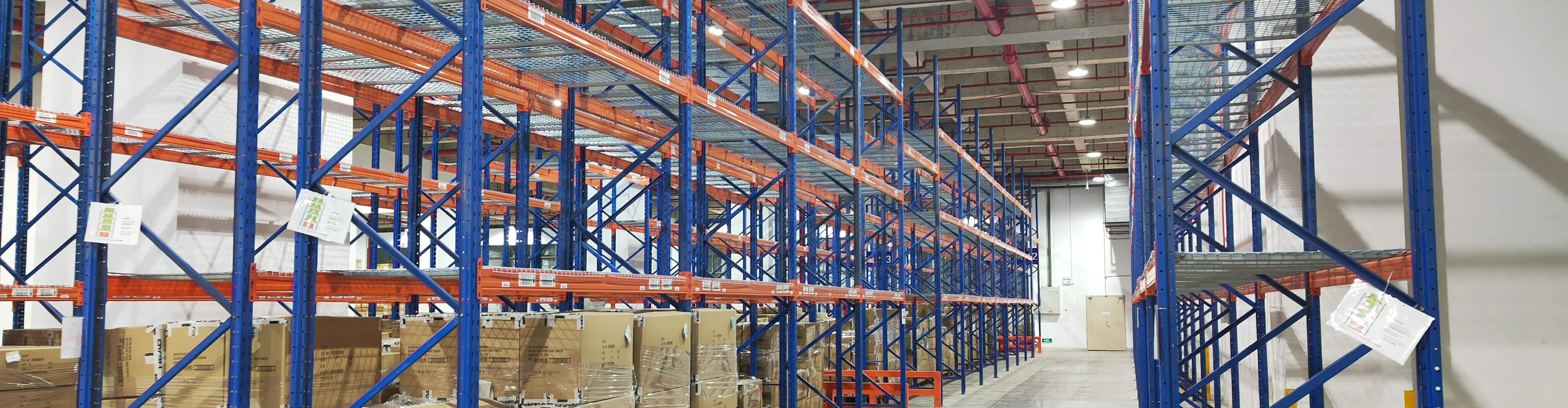
The best heavy duty storage rack for warehouse use is usually the one that matches your pallet type, forklift handling method, SKU profile, floor space, and future expansion plan. For many warehouses, selective pallet racking is the most practical starting point because it balances accessibility, flexibility, and straightforward operation. However, it is not always the right answer. A warehouse focused on high-density storage, FIFO stock rotation, long goods, hand picking, or mixed-load storage may need a different heavy duty storage rack system.
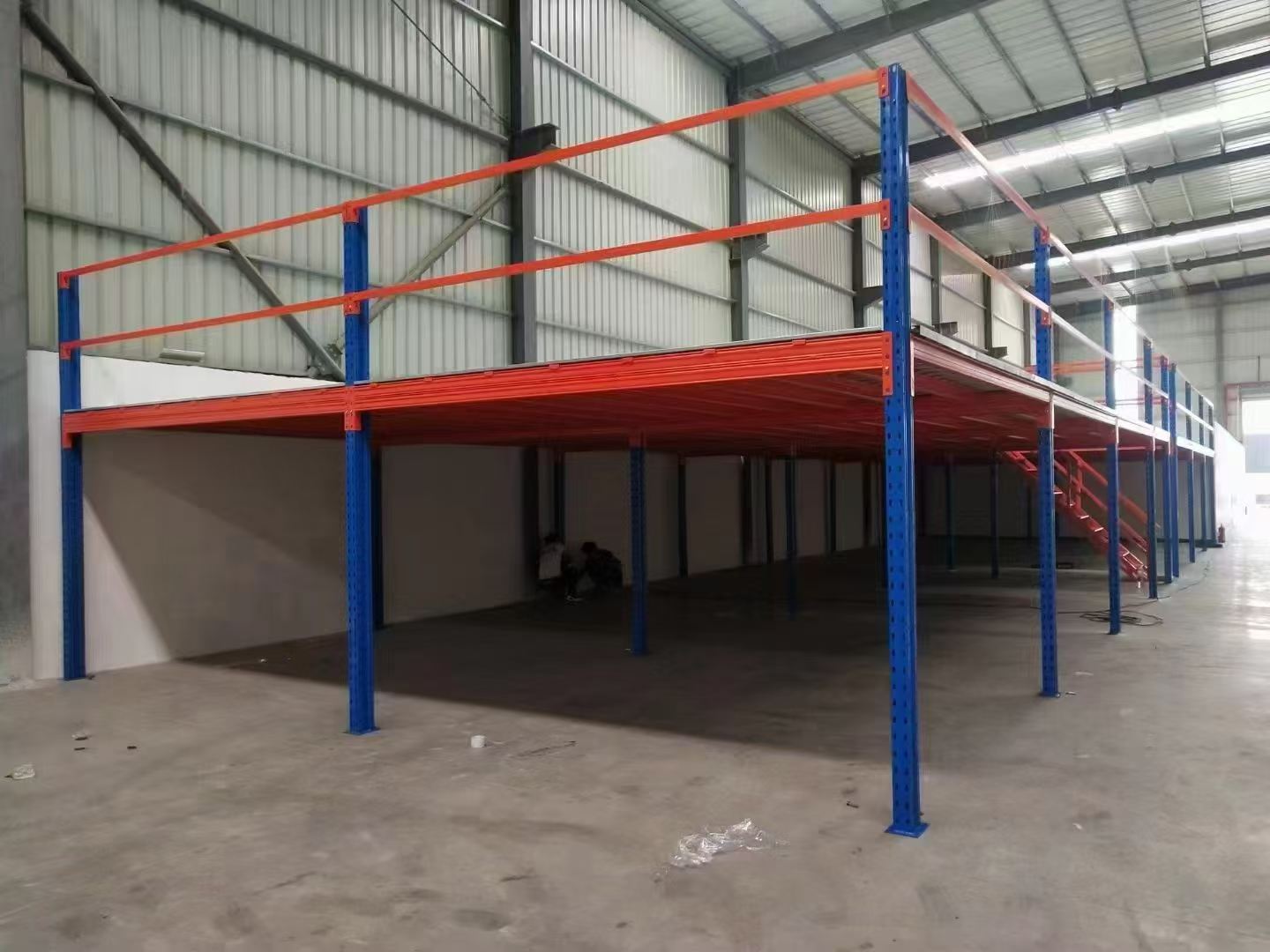
Choosing a heavy duty storage rack should be treated as an operational decision, not just a product purchase. The rack affects storage density, picking speed, forklift travel, safety risk, and how easily the warehouse can adapt when inventory changes. The right choice depends less on which system is marketed as the best and more on which one fits the way your site actually works.
What makes a heavy duty storage rack suitable for warehouse use?
A heavy duty storage rack is designed for substantial loads, regular handling, and structured warehouse storage. In practical terms, suitability comes down to five questions:
- What exactly will be stored: pallets, cartons, long materials, dies, tools, or mixed inventory?
- How will goods be handled: forklift, reach truck, pallet jack, or manual picking?
- How much direct access is needed to each SKU or pallet?
- How much floor space and clear height are available?
- How important are storage density, stock rotation, and future scalability?
If a rack system does not support the actual workflow, even a strong and well-built structure can become inefficient. For example, a dense storage system may look attractive on paper but create delays if the operation needs frequent access to many different SKUs. Likewise, a highly accessible layout may waste valuable floor area if the warehouse stores large volumes of the same pallet type.
The most common heavy duty storage rack options
Selective pallet racking
Selective pallet racking is often the most widely used heavy duty storage rack in general warehousing. It gives direct access to each pallet position, which makes it practical for operations with many SKUs, frequent stock movement, and changing inventory profiles.
This system is usually a strong fit when:
- The warehouse needs access to many pallet lines
- Stock rotation is important
- Inventory changes regularly
- Forklift operators need simple, familiar rack access
- The business wants easier future reconfiguration
The trade-off is storage density. Selective pallet racking requires more aisles than compact systems, so it may not use floor space as efficiently where pallet variety is low and volume per SKU is high.
Drive-in and drive-through racking
Drive-in and drive-through systems are a compact heavy duty storage rack option for warehouses that want higher density. Forklifts enter the rack lanes to place or retrieve pallets.
This type of system can work well when:
- There are large quantities of the same SKU
- Storage density is more important than individual pallet access
- Pallet dimensions are consistent
- Handling teams are trained for this type of operation
It is less suitable for fast-moving mixed-SKU operations because access is more limited and forklift movement inside the rack increases the chance of impact damage. It also demands tighter operating discipline than a standard selective layout.
Push back racking
Push back is a heavy duty storage rack system designed to improve density while still keeping picking faces accessible from the aisle. Pallets are loaded from the front and move backward on inclined carts or rails.
This approach is often considered when a warehouse wants:
- Higher density than selective racking
- Fewer aisles
- Better access than drive-in storage
- Efficient storage for medium numbers of SKUs with multiple pallets per SKU
The limitation is that it is not ideal for every stock rotation pattern, and pallet quality matters. Damaged or inconsistent pallets can create operating problems in systems that depend on controlled pallet movement.
Pallet flow racking
Pallet flow is another heavy duty storage rack solution used where stock rotation is critical. Pallets are loaded from one side and move by gravity to the picking face on the other side, supporting first-in, first-out handling.
It is often used in operations such as:
- Date-sensitive inventory
- Batch-controlled stock
- High-throughput pallet movement
- Separate loading and picking zones
This can be a strong system for FIFO control, but it requires careful planning, good pallet condition, and proper lane design. It is usually less forgiving than selective pallet racking and may be harder to justify for a warehouse with irregular inventory flow.
Cantilever racking
If the stored product is long, bulky, or awkwardly shaped, cantilever may be the best heavy duty storage rack option rather than pallet racking. It is commonly used for pipe, timber, steel sections, panels, and similar loads.
Cantilever is a poor fit for standard pallet storage, but it is highly practical for goods that overhang or cannot be stored safely on conventional beams. Buyers sometimes overlook this and try to force long materials into pallet rack layouts that are inefficient or unsafe.
Heavy duty shelving and longspan systems
Not every warehouse needs pallet-based storage. A heavy duty storage rack can also refer to shelving or longspan systems used for cartons, tools, components, spare parts, and hand-loaded items.
These systems are useful when:
- Items are picked manually
- Loads are too heavy for light shelving but do not require pallet racking
- SKU count is high and unit size is smaller
- Bench, bin, or parts storage is part of the operation
They are not a replacement for pallet racking in forklift-based bulk storage, but they can be the better solution for mixed warehouse environments with both reserve stock and picking stock.
How to decide which heavy duty storage rack is best
The best heavy duty storage rack is the one that supports your actual warehouse priorities. A practical selection process should include the following decision points.
1. Define the load type clearly
Start with what is being stored. Standard pallets, non-standard pallets, stillages, cartons, drums, tooling, and long goods all create different rack requirements. A system that works for standard palletized inventory may be unsuitable for unstable loads or products with variable dimensions.
Load type also affects beam spacing, level heights, handling clearance, and whether accessories such as wire decking, support bars, pallet supports, or column protection may be needed.
2. Review your SKU profile and stock depth
If the warehouse stores many SKUs with low pallet quantities per item, selective pallet racking is often the most practical heavy duty storage rack. If it stores fewer SKUs with deep stock levels, compact systems such as drive-in, push back, or flow systems may use space more efficiently.
This is one of the most common selection mistakes: choosing a dense system for a warehouse that actually needs fast access to a wide range of products.
3. Match the rack to the handling equipment
Forklift type matters. Counterbalance forklifts, reach trucks, VNA trucks, and pallet jacks all affect aisle width, lift height, turning radius, and rack accessibility. A heavy duty storage rack layout that looks efficient in a drawing may become difficult in daily use if forklift clearance is too tight or if operators need repeated repositioning to place pallets safely.
Good rack planning should consider:
- Aisle width and turning needs
- Lift height at top beam levels
- Pallet overhang and entry direction
- Visibility during put-away and retrieval
- Impact risk near end frames and lower uprights
4. Check the building constraints
The warehouse itself may limit which heavy duty storage rack is realistic. Clear height, sprinkler layout, column positions, dock flow, door access, slab condition, and floor flatness all influence the final design. A high-bay concept may not work if the building cannot support the required clearances or truck operating conditions.
Floor condition is particularly important. Rack performance depends not only on the steel structure but also on the quality and suitability of the slab beneath it.
5. Consider picking and replenishment workflow
Some warehouses are mainly reserve pallet storage. Others combine bulk storage with frequent case picking. The best heavy duty storage rack should support both storage and movement efficiency. If operators are constantly breaking pallets, replenishing lower levels, or serving fast-moving pick faces, a layout built only for density may create congestion and labor inefficiency.
In many operations, the right answer is not one rack type throughout the entire site. A mixed layout may work better, such as selective pallet racking for reserve stock and heavy duty shelving or lower-level pick faces for split-case handling.
6. Plan for inspection, maintenance, and damage control
A heavy duty storage rack should be practical to inspect and maintain. In real warehouse conditions, rack damage usually appears first at lower uprights, aisle ends, and impact-prone corners. Systems that require forklifts to enter storage lanes can carry higher damage exposure than systems with all pallet handling from the aisle face.
Buyers should think beyond initial capacity and consider:
- How easy it is to inspect frames, beams, and anchors
- Whether damaged components can be isolated and replaced efficiently
- What rack protection may be needed in high-traffic areas
- How housekeeping and pallet quality affect safe use
When selective pallet racking is usually the best choice
For many standard warehouse operations, selective pallet racking remains the most practical heavy duty storage rack. That is because it offers direct pallet access, straightforward operator training, easier stock control, and flexibility when SKU mix changes. It also tends to be easier to expand or reconfigure than more specialized dense storage systems.
If your warehouse handles a broad product range, receives and dispatches mixed pallets, and needs reliable access without complex loading rules, selective racking is often the safest starting point for evaluation.
That said, it is not automatically the best use of space. If floor area is tight and stock depth is high, a denser system may deliver better storage performance.
When another heavy duty storage rack may be better
A different heavy duty storage rack may be the better choice if your operation has a clear storage pattern that selective racking does not serve well.
- Choose drive-in or push back when pallet density matters more than access to every pallet position.
- Choose pallet flow when FIFO rotation is operationally important.
- Choose cantilever when storing long or irregular materials.
- Choose heavy duty shelving or longspan when the operation is based on manual picking rather than forklift pallet handling.
The key is to avoid treating all warehouse storage as the same problem. A rack system should be chosen around load behavior and warehouse workflow, not just maximum nominal capacity.
Common mistakes when choosing a heavy duty storage rack
- Choosing based only on storage density and ignoring access needs
- Using pallet-based systems for products that need cantilever or shelving
- Underestimating forklift clearance and aisle requirements
- Ignoring damaged pallet quality in flow-based or deep-lane systems
- Not planning for future SKU growth or expansion
- Overlooking inspection access and rack protection needs
- Assuming one rack type should be used across every warehouse zone
These mistakes usually lead to wasted space, slower handling, avoidable rack damage, or expensive layout changes later.
Practical framework for choosing the right system
If you are deciding which heavy duty storage rack to buy, use this simple framework:
List your load types and pallet dimensions.
Identify how many SKUs you store and how many pallets per SKU are typical.
Review your handling equipment and aisle constraints.
Decide whether access, density, or stock rotation is the main priority.
Check ceiling height, slab condition, and building restrictions.
Plan for inspection, protection, and future expansion.
Compare one or two realistic rack options instead of trying to evaluate every system on the market.
This approach usually produces a better result than starting with a product category and trying to force the warehouse to fit it.
FAQ
Is selective pallet racking the best heavy duty storage rack for most warehouses?
In many cases, yes. It is often the most practical option for general warehousing because it provides direct access to each pallet and adapts well to mixed inventory. It is less efficient where very high-density storage is the main goal.
What is the best heavy duty storage rack for limited floor space?
If floor space is limited, compact systems such as drive-in, push back, or pallet flow may be worth considering. The right choice depends on SKU count, pallet depth, and stock rotation method.
Can one warehouse use more than one heavy duty storage rack type?
Yes. Many warehouses benefit from a mixed layout. For example, pallet racking may be used for reserve storage, while heavy duty shelving supports picking areas and cantilever handles long materials.
What should be checked before installing a heavy duty storage rack?
Key checks include load type, pallet condition, forklift access, aisle width, building height, floor suitability, and how the system will be inspected and maintained after installation.
Conclusion
There is no single heavy duty storage rack that is best for every warehouse. For many operations, selective pallet racking is the most balanced choice because it supports accessibility, flexibility, and day-to-day control. But where density, FIFO rotation, long-load storage, or manual picking drive the operation, another system may be more suitable.
The right decision comes from matching the heavy duty storage rack to real warehouse conditions: load type, handling method, SKU profile, available space, and operational workflow. A rack system performs well when it supports the way the warehouse actually runs, not just the way it looks on a layout plan.