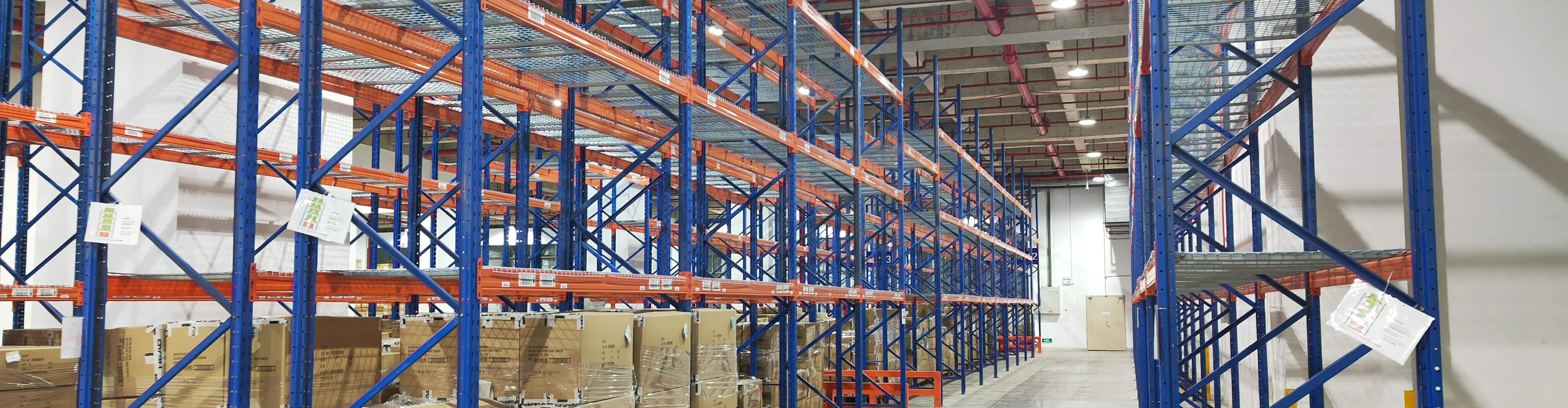
Heavy duty warehouse shelving helps businesses store large volumes of stock safely, use vertical space more effectively, improve picking access, and support heavier loads than light-duty shelving. For many warehouses, it is a practical solution for carton storage, parts storage, archive stock, tools, mixed-SKU inventory, and back-up storage where direct access matters.
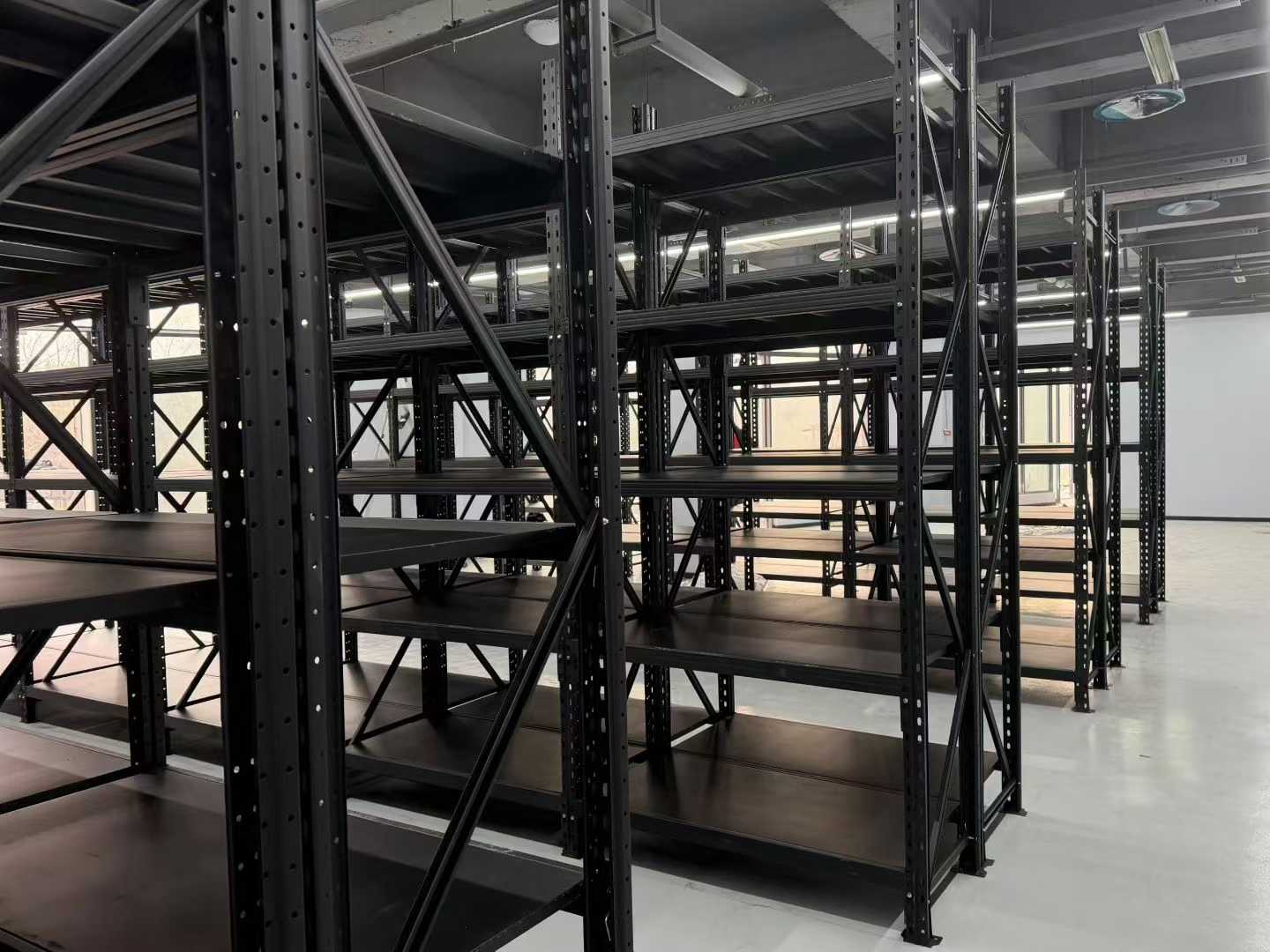
The main benefits of heavy duty warehouse shelving are not limited to load capacity. A well-planned system can improve space utilization, speed up daily handling, reduce floor congestion, support safer operations, and make future expansion easier. The real value depends on how the shelving matches your SKU profile, handling method, aisle layout, ceiling height, and workflow.
What Is Heavy Duty Warehouse Shelving?
Heavy duty warehouse shelving is a storage system designed for larger, heavier, or more demanding warehouse loads than standard commercial shelving. It is commonly used for hand-loaded inventory, cartons, bins, spare parts, tools, components, and bulk items that need direct access at shelf level.
Unlike pallet racking, which is mainly intended for palletized loads handled by forklifts, heavy duty warehouse shelving is often chosen when operators need to pick individual items or smaller case quantities. It sits between light shelving and pallet racking in many warehouse layouts, offering stronger load support while maintaining good accessibility.
In practice, heavy duty warehouse shelving is often used in:
- Parts rooms and maintenance stores
- E-commerce and order picking areas
- Industrial component storage
- Back-of-house stockrooms
- Mixed inventory warehouses with manual picking
- Overflow storage for non-palletized goods
Key Benefits of Heavy Duty Warehouse Shelving
1. Higher load capacity for demanding storage
The most obvious benefit of heavy duty warehouse shelving is that it is built to support heavier products than standard shelving systems. This matters when you are storing dense items such as metal parts, tools, hardware, industrial supplies, motors, fittings, or boxed inventory with significant weight per level.
Higher load capacity reduces the risk of shelves sagging, deforming, or becoming unsuitable as inventory changes over time. It also gives warehouse managers more flexibility to reassign stock locations without constantly worrying that a shelving bay is only suitable for very light items.
That said, load capacity should never be treated as a rough estimate. Buyers need clear load information for each shelf level and each bay, and the actual safe use of heavy duty warehouse shelving depends on load distribution, beam or shelf configuration, anchoring, and correct installation.
2. Better use of vertical warehouse space
Many warehouses run short of floor space long before they run out of building height. Heavy duty warehouse shelving helps convert unused vertical space into practical storage capacity, especially for hand-loaded inventory that does not need full pallet racking.
By increasing storage levels upward, businesses can reduce floor clutter and make better use of existing warehouse space before considering relocation or expansion. This can be especially useful in facilities with moderate to high ceilings, where shelving can be planned to suit safe picking height, access equipment, and replenishment methods.
However, adding height is only beneficial if the shelving remains usable. Picking frequency, operator reach, step access, replenishment routines, and aisle safety all need to be considered. Very tall shelving may increase capacity, but it can also slow picking if the layout is not planned around real workflow.
3. Direct access to a wide range of SKUs
Heavy duty warehouse shelving is often a strong choice when a business stores many different SKUs in relatively small to medium quantities. Because each shelf location can be accessed directly, operators can pick individual cartons, bins, or loose items without moving pallets or disturbing adjacent stock.
This direct access is one of the main reasons heavy duty warehouse shelving is widely used in spare parts operations, maintenance supply stores, and order fulfillment environments. It supports accuracy and reduces the handling time involved in retrieving small or mixed items.
For high-SKU operations, this accessibility can be more valuable than pure storage density. A denser system is not always more efficient if it creates delays in picking or replenishment.
4. Improved picking efficiency
When laid out correctly, heavy duty warehouse shelving can make daily picking faster and more organized. Operators can see stock clearly, move through aisles with fewer obstructions, and access products at shelf level without depending on pallet handling equipment for every retrieval.
Practical picking benefits may include:
- Shorter travel time for hand-picked items
- Clearer SKU separation
- Better visibility of stock locations
- More consistent replenishment routines
- Reduced product mixing in shared storage areas
The design matters. Shelf depth, bay width, aisle width, labeling, and product slotting all affect whether heavy duty warehouse shelving improves efficiency or creates bottlenecks. A system that stores more stock but slows pickers is not necessarily delivering a real operational benefit.
5. Flexible configuration for different inventory types
Another advantage of heavy duty warehouse shelving is its adaptability. Many warehouses do not store uniform products, and shelving often needs to handle changing SKU dimensions, seasonal stock shifts, repack activity, or a mix of cartons, bins, and loose items.
Heavy duty warehouse shelving can usually be configured with different shelf levels, bay sizes, and accessories depending on the application. This makes it useful for businesses that need practical storage rather than a one-size-fits-all layout.
Flexibility is especially valuable when inventory changes over time. If your product range is likely to expand, or if stock dimensions vary significantly, a system that can be adjusted without a complete redesign may offer better long-term value.
6. Supports cleaner and safer warehouse organization
Well-designed heavy duty warehouse shelving can improve housekeeping and reduce the operational risks that come with storing products on the floor or in improvised locations. Clear shelf positions help define where stock belongs, which can improve stock control and reduce aisle obstruction.
From a safety perspective, organized shelving can help with:
- Keeping walkways and forklift routes clearer
- Reducing trip hazards from floor-stored items
- Improving visibility of stored products
- Making damage or overloading easier to spot
- Supporting more disciplined storage practices
Of course, heavy duty warehouse shelving only improves safety if it is used properly. Overloaded shelves, impact damage, missing components, poor anchoring, or unsuitable manual handling practices can still create hazards. Routine inspection remains essential.
7. Cost-effective for many manual storage applications
Heavy duty warehouse shelving can be a cost-effective option when a business needs stronger manual storage without moving to a more complex automated system or using pallet racking for items that are not really pallet-based.
For many operations, it offers a practical balance between strength, accessibility, and investment level. It is often suitable where stock needs to be visible and reachable, but the business does not require the handling profile of full pallet storage.
That does not mean it is always the lowest-cost choice. The right evaluation should include not just the initial equipment price, but also installation, floor preparation, accessories, picking productivity, maintenance needs, and future reconfiguration.
Operational Benefits Beyond Storage Capacity
The benefits of heavy duty warehouse shelving are often strongest when viewed in terms of daily operations rather than just static storage numbers. A shelving system affects how people move, how products are replenished, how accurately orders are picked, and how easily supervisors can maintain order in the warehouse.
Better stock visibility
Open shelf storage makes it easier to identify slow-moving, fast-moving, and misplaced items. This can support cycle counting, stock rotation, and replenishment control, particularly in warehouses where carton and piece picking are common.
Easier inventory segmentation
Heavy duty warehouse shelving can help separate product families, batch-controlled items, maintenance parts, or customer-specific inventory. This is useful when stock control depends on clear physical zoning.
More efficient replenishment
When reserve stock and picking stock are planned together, heavy duty warehouse shelving can simplify replenishment workflows. Fast-moving items can be positioned in easier-to-reach levels, while slower-moving stock can sit higher or deeper in the layout.
When Heavy Duty Warehouse Shelving Is a Good Fit
Heavy duty warehouse shelving is usually a good fit when the warehouse stores non-palletized or partially palletized inventory that must be accessed directly. It is particularly useful when stock comes in cartons, bins, cases, or individual units rather than full pallets.
It may be suitable if your operation has the following characteristics:
- A high number of SKUs with manual picking
- Medium to heavy shelf loads
- Need for direct access to each product line
- Limited floor space but usable vertical height
- Parts storage or small-item industrial inventory
- Order fulfillment that depends on pick-face organization
It is also common in mixed environments where heavy duty warehouse shelving works alongside pallet racking. In that setup, pallet racking holds reserve stock while shelving handles broken-case or piece-pick inventory.
When It May Be Less Suitable
Heavy duty warehouse shelving is not the right answer for every warehouse. If most inventory is stored and moved as full pallets, pallet racking is usually the more appropriate system. If maximum storage density is the main goal, other storage methods may use space more efficiently depending on access requirements.
It may be less suitable when:
- Inventory is predominantly full-pallet stock
- Forklift handling is required at every storage level
- Very high-density storage is more important than direct access
- Products are oversized or irregularly shaped
- Floor loading or slab condition limits concentrated storage loads
- Picking from shelving would create excessive manual handling risk
There is also a workflow consideration. If operators need frequent ladder use, repeated high-level reaches, or awkward lifting from deep shelves, the system may create inefficiency or safety concerns unless the layout is carefully designed.
What to Evaluate Before Choosing Heavy Duty Warehouse Shelving
Load requirements
Understand the weight per shelf, total bay load, and how products will actually sit on the shelving. Dense products can create very different load conditions from light cartons.
Product dimensions and SKU mix
Measure the real size range of the items being stored. Poorly matched shelf depths and heights often waste space or create unstable storage.
Access method
Decide whether stock will be picked by hand, trolley, platform ladder, or handling equipment. This affects shelf height, aisle width, and ergonomic design.
Warehouse layout
Heavy duty warehouse shelving should fit the actual traffic pattern of the site. Consider pedestrian routes, forklift crossings, fire exits, and replenishment access.
Floor condition
Before installing heavy duty warehouse shelving, confirm that the floor is suitable for the intended loads and anchoring method. Uneven or damaged floors can affect stability and installation quality.
Future expansion
Many buyers focus only on current stock levels. It is usually smarter to consider whether the shelving layout can be extended, reconfigured, or integrated with future storage zones as the operation grows.
Maintenance and Inspection Considerations
To keep heavy duty warehouse shelving safe and serviceable, regular checks are essential. Warehouses should look for impact damage, bent uprights, loose fixings, overloaded shelf levels, missing parts, corrosion in affected environments, and poor storage practices such as items protruding into aisles.
Good maintenance practice typically includes:
- Routine visual checks by warehouse staff
- Prompt reporting of damaged components
- Load signage where appropriate
- Clear rules against overloading or unauthorized modification
- Housekeeping to keep aisles and shelf faces accessible
- Periodic formal inspection based on site risk and usage level
Heavy duty warehouse shelving is durable, but durability does not remove the need for inspection. Warehouses with regular pallet truck traffic, busy picking zones, or mixed pedestrian and equipment movement should be especially careful about accidental impact and misuse.
Common Mistakes That Reduce the Benefits
- Choosing shelving based only on price without checking real load needs
- Ignoring aisle width and access constraints
- Using heavy duty warehouse shelving for products better suited to pallet racking
- Overfilling shelves with mixed or unstable items
- Failing to plan for replenishment and picking ergonomics
- Adding storage levels without considering operator reach and safety
- Neglecting inspections after impacts or layout changes
Most of these mistakes are avoidable with better planning. The system should be selected around inventory behavior and warehouse workflow, not just around nominal capacity.
FAQ
Is heavy duty warehouse shelving the same as pallet racking?
No. Heavy duty warehouse shelving is generally used for hand-loaded or case-picked inventory, while pallet racking is designed mainly for palletized loads handled by forklifts.
Can heavy duty warehouse shelving be used for small parts and heavy cartons together?
Yes, if the shelving is configured correctly for the load and item sizes. Mixed storage is common, but shelf levels and organization need to match the actual products being stored.
Does heavy duty warehouse shelving improve warehouse efficiency?
It can, especially in operations that rely on direct access and manual picking. The improvement depends on layout quality, slotting, aisle planning, and whether the system matches the workflow.
What is the main limitation of heavy duty warehouse shelving?
Its main limitation is that it is not ideal for every storage profile. Full-pallet operations, very high-density storage needs, or oversized products may require a different system.
Conclusion
The benefits of heavy duty warehouse shelving go well beyond holding heavier products. When selected and planned properly, heavy duty warehouse shelving can improve space use, picking access, stock organization, and day-to-day warehouse control. It is especially valuable for businesses storing mixed SKUs, cartons, bins, parts, and other non-palletized inventory that needs direct access.
The key is to evaluate heavy duty warehouse shelving in the context of real operations: load profile, picking method, aisle layout, ceiling height, floor condition, and future growth. A good shelving system supports workflow as well as storage. A poor fit can create congestion, manual handling issues, and wasted space. For most warehouses, the right decision comes from matching the system to the actual inventory and handling pattern rather than choosing purely on capacity or price.