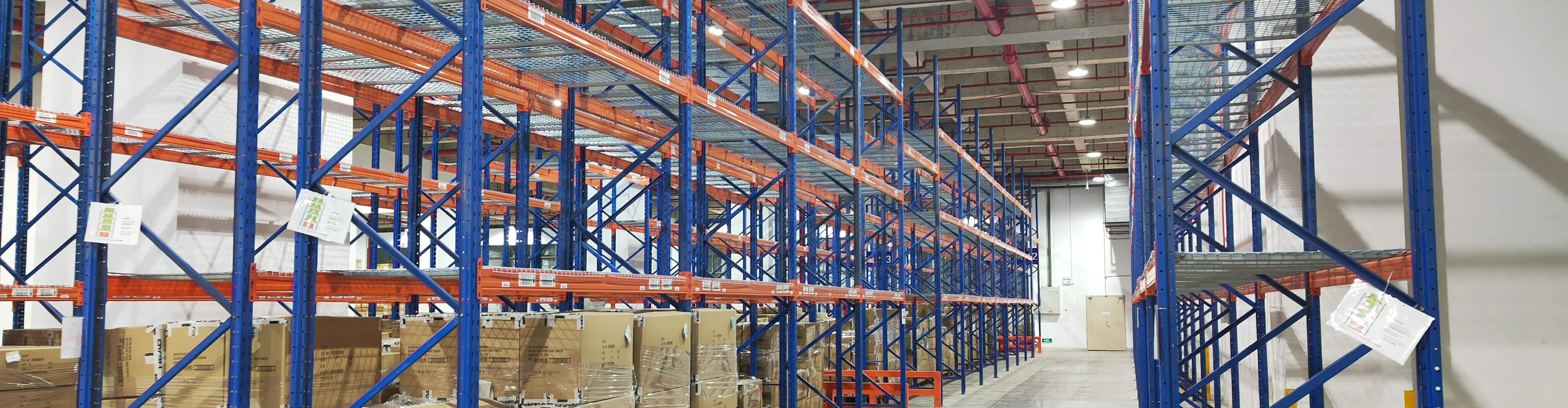
Industry Applicability Analysis of Pallet Racking Systems
Within warehouse logistics, pallet racks serve as a standardized, modular storage solution. Its high spatial efficiency and streamlined cargo management have established it as a cornerstone of warehousing operations across numerous industries. To accurately identify the sectors where pallet racks are most effective, one must deconstruct its core concepts and clarify its essential attributes and prerequisites.
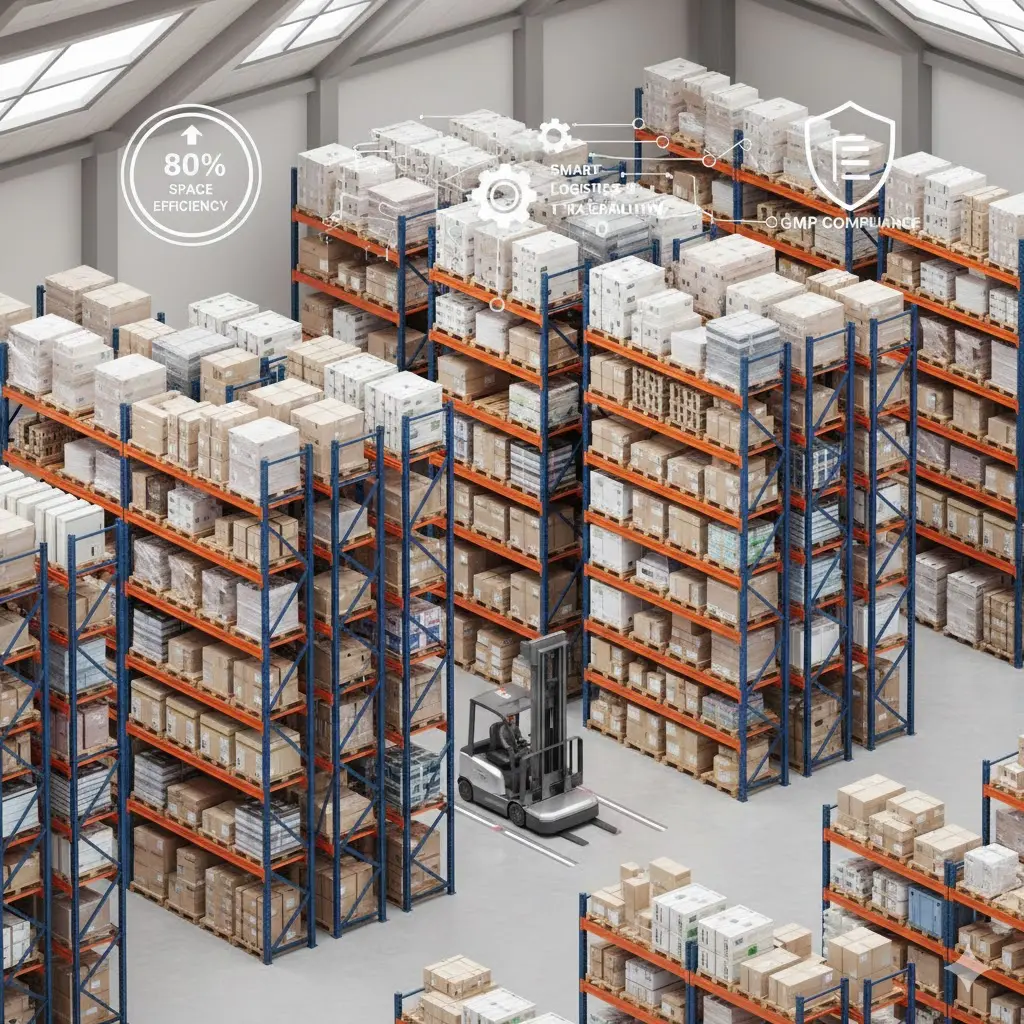
I. Breakdown of Core Concepts
Pallet racks are a shelving system that utilizes pallets as the primary load-bearing unit, enabling goods to be stored and retrieved via material handling equipment (MHE) such as forklifts. Its structural integrity relies on standardized uprights and beams, offering high load capacity and flexible height adjustments.
The fundamental value of pallet racks lies in “standardized storage + intensive space utilization.” Its primary prerequisite is that goods possess palletizable attributes—meaning they can be consolidated and secured on pallets, with individual loads adhering to the rack’s weight capacity and dimensional specifications.
Functionally, pallet racks fulfill three core roles:
Vertical Space Maximization: It transforms traditional floor storage into multi-level vertical warehousing, eliminating the waste inherent in flat stacking.
Standardized Management: By utilizing unitized storage, it facilitates precise inventory tracking, cycle counting, and traceability for inbound/outbound operations.
Mechanized Efficiency: It integrates seamlessly with forklifts and reach trucks, significantly boosting throughput while reducing manual labor intensity.
II. Frequently Asked Questions (FAQ)
Q1: Is pallet racking suitable for small-to-medium batch production? Answer: Yes. Suitability depends less on batch size and more on whether goods can be palletized. For industries with diverse product categories but small volumes, efficiency is achieved through multi-SKU consolidation on single pallets and flexible beam adjustments. This prevents the “management chaos” typical of floor stacking while allowing smaller enterprises to adopt compact, cost-effective modular designs.
Q2: Can pallet racks withstand harsh environments like cold storage or high humidity? Answer: Absolutely. The application scope is expanded through material engineering. For cold chain logistics, racks are manufactured from low-temperature resistant steel to prevent embrittlement. In high-humidity environments (e.g., seafood processing or papermaking), components undergo hot-dip galvanization to provide superior corrosion and rust resistance.
III. Core Benefits of Pallet Racking
Regardless of the industry, these systems deliver multi-dimensional optimization:
- Reduced Overhead: While floor storage utilization typically peaks at 40%, pallet racking can increase this to 60%–80%. For e-commerce and urban hubs, this drastically reduces the physical footprint and rental expenses.
- Operational Throughput: Integration with mechanized equipment can boost inbound/outbound efficiency by over 50%, supporting high-turnover sectors like FMCG and retail.
- Risk Mitigation: Standardized stacking prevents product damage caused by compression. Furthermore, the system supports RFID/Barcode integration, minimizing stockouts and inventory discrepancies—a critical factor for high-value electronics and pharmaceuticals.
- Scalability: Modular designs allow for height adjustments and system expansion as business volume grows, ensuring long-term compatibility.
IV. Determining Industry Suitability: A 4-Step Process
- Assess Palletization Feasibility: Verify if goods meet unit weight (>5kg) and dimensional regularity. Items in cartons, bags, or boxes are ideal candidates.
- Analyze Operational Requirements: High-frequency turnover and a need for precision management (e.g., FIFO/FEFO) strongly favor pallet racking.
- Evaluate Spatial and Financial Constraints: If warehouse rent is high or land is limited, vertical storage becomes a strategic necessity rather than a luxury.
- Verify Environmental Compliance: Ensure materials meet industry-specific standards, such as GMP (Good Manufacturing Practice) for food and pharmaceuticals, or anti-corrosive standards for chemical storage.
V. Sector-Specific Case Studies
- Case 1: FMCG (Fast-Moving Consumer Goods) A major snack chain transitioned from floor storage (35% utilization) to a five-tier pallet racking system. This increased utilization to 75%, reduced the required warehouse footprint by 40%, and saved approximately ¥800,000 annually in rent. Efficiency improved by 60%, supporting a 30% business expansion.
- Case 2: Pharmaceuticals A distribution company utilized hot-dip galvanized racking to meet cold-storage requirements and GMP compliance. By integrating RFID technology with the racking system, they achieved 100% traceability and doubled their storage capacity, facilitating a 40% improvement in delivery timeliness.
- Case 3: Machinery Manufacturing An automotive parts manufacturer replaced haphazard flat stacking with heavy-duty pallet racking. By standardizing storage for heavy components, retrieval time dropped from 15 minutes to 5 minutes, reducing production downtime caused by material shortages by 30%.
Conclusion
Pallet racking is a versatile solution suitable for any sector requiring vertical density and refined inventory control. It is particularly essential for FMCG, Pharmaceuticals, Automotive, E-commerce, and Cold Chain Logistics. By following a systematic assessment of product traits and operational goals, businesses can leverage these systems to optimize costs and drive supply chain excellence.