1. Concept Decomposition & Introduction
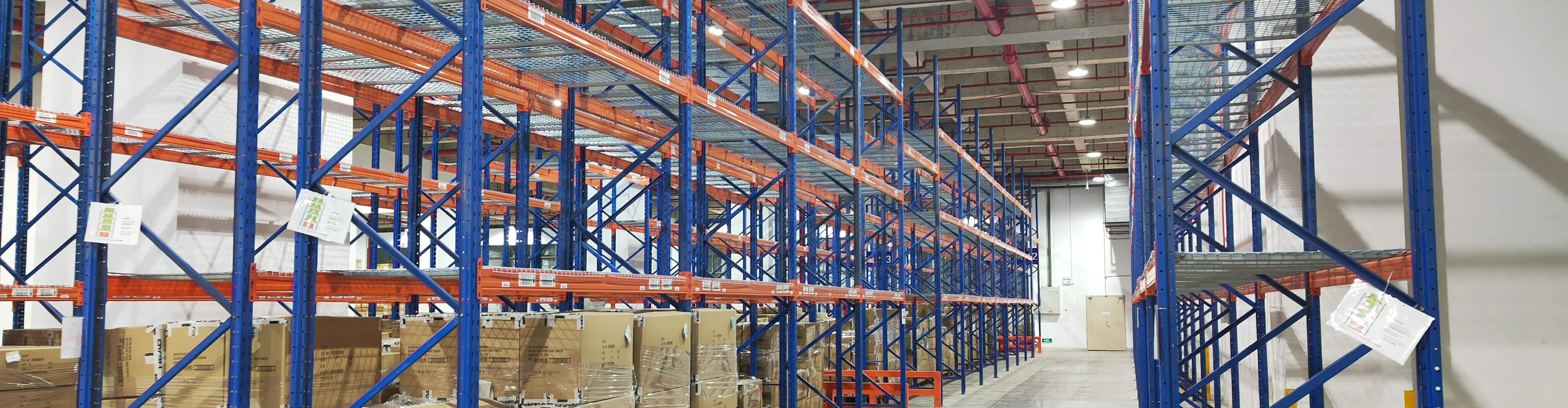
Pallet racking is a modular storage system engineered to organize and secure palletized goods in warehouses, distribution centers, and manufacturing facilities worldwide. It serves as a foundational component of efficient supply chain operations, enabling businesses to optimize space usage while ensuring easy access to inventory. This system is tailored to accommodate various pallet sizes, load weights, and storage layouts, making it a versatile solution for diverse industrial needs.
At its essence, pallet racking comprises core components including hot-rolled steel columns (with flanged bases for stability), high-tensile beams (typically with teardrop or boltless connections for quick assembly), and decking (wire mesh, plywood, or steel panels, selected based on load requirements). Key variations include selective, drive-in, and push-back pallet racking, each designed for specific inventory turnover rates—selective for fast-moving goods, drive-in for high-density storage of slow-moving items.
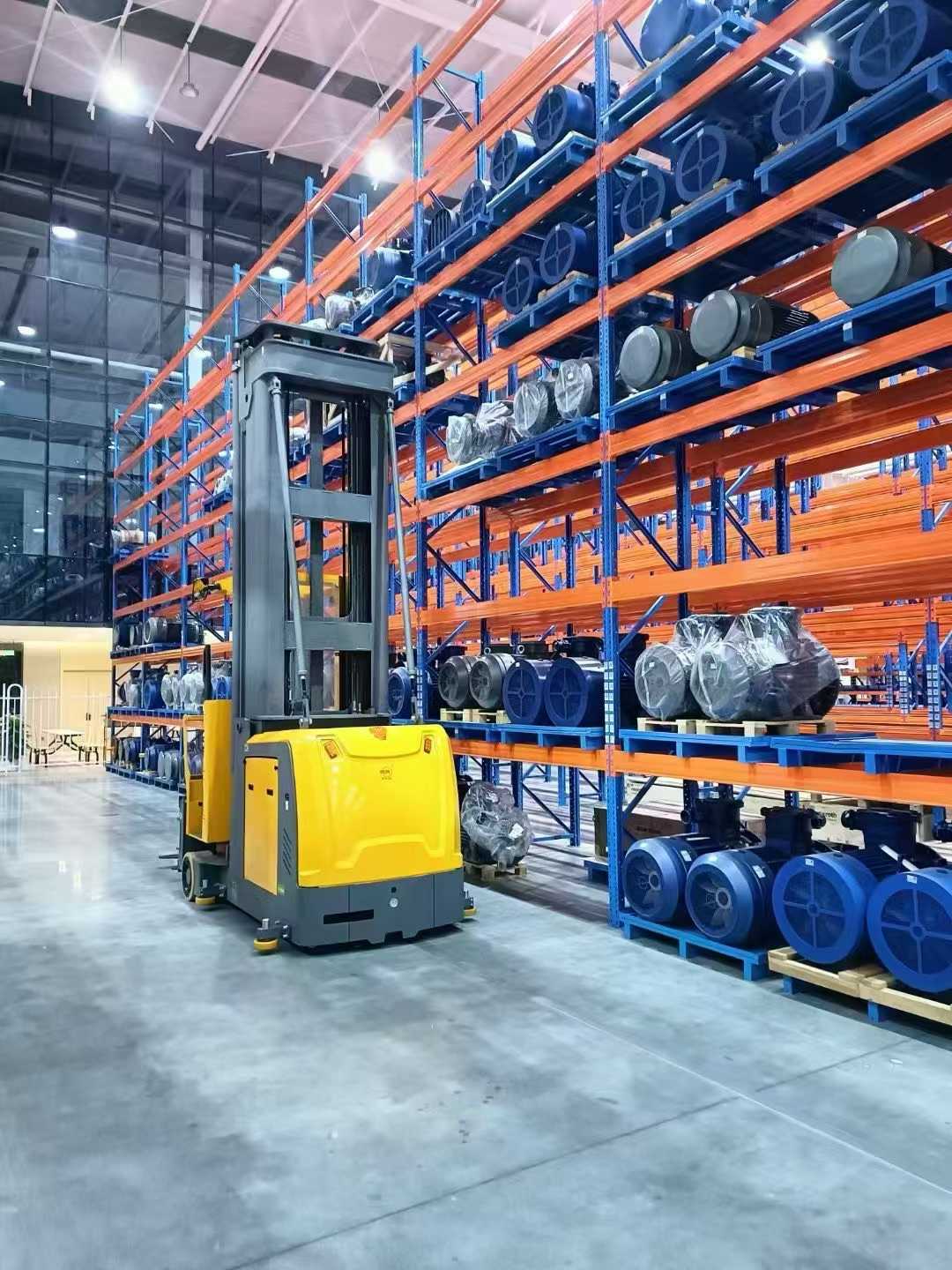
Unlike traditional static shelving, pallet racking is engineered for unit load storage, with load capacities ranging from 1,000 lbs to 10,000 lbs per level, aligned with EN 15512 and RMI standards. A critical industry know-how detail is “beam connection integrity”: teardrop connections (common in North America) allow tool-free assembly but require periodic inspection to ensure beams lock securely into column slots, preventing lateral displacement under heavy loads. This system is indispensable for businesses handling bulk goods, as it transforms vertical space into usable storage while streamlining forklift operations.
Pallet racking adapts to diverse environments, from cold storage facilities to high-humidity warehouses, with material treatments tailored to each condition. For example, in coastal regions with salt air, galvanized steel (per ASTM A123 standards) is preferred to resist corrosion, while cold storage applications require steel treated to withstand temperatures as low as -40°F without brittleness. This adaptability makes it a staple across e-commerce, automotive, food and beverage, and pharmaceutical sectors.
2. Frequently Asked Questions & Answers
Q1: How does pallet racking perform in extreme climate conditions, and what material treatments are required for durability?
Pallet racking can excel in extreme climates with targeted material and design adjustments, but improper treatment leads to premature failure. In high-humidity or coastal areas, hot-dip galvanization (HDG) is mandatory for steel components—it deposits a 2.5-4 mil zinc layer that acts as a sacrificial barrier against rust, extending the system’s lifespan by 15-20 years (compared to 5-7 years for powder-coated steel). For cold storage (-20°F to -40°F), use low-temperature carbon steel (A36 grade with a minimum impact strength of 20 ft-lbs at -40°F) to avoid brittleness, and avoid welded connections that create stress points.
In hot, arid regions (temperatures exceeding 100°F), powder-coated steel with a polyesters-based finish (1.5-2 mil thickness) is ideal, as it resists UV degradation and heat-induced warping. A key know-how tip: pre-treat steel with phosphating before coating to enhance adhesion, preventing chipping that exposes the base metal to corrosion. Our engineering team also adjusts column spacing in wind-prone areas—reducing span to 8 feet or less—to minimize lateral wind loads, ensuring compliance with local building codes.
Q2: Can pallet racking integrate with warehouse management systems (WMS), and what installation adjustments are needed for seamless connectivity?
Yes, pallet racking can integrate with WMS via barcode or RFID tracking, but requires strategic installation adjustments to optimize data capture. The primary adjustment is mounting RFID readers or barcode scanners at rack beam heights (typically 6-8 feet above the floor) to align with tags on pallet loads. For selective pallet racking, install mounting brackets on column flanges (using grade 8 bolts for stability) to avoid interfering with beam connections or load-bearing capacity.
A critical know-how detail is “rack labeling placement”: affix durable, weather-resistant QR codes or RFID tags to the front face of beams (3 inches from the column) to ensure scanners capture data even when pallets are partially loaded. For high-density pallet racking (drive-in/push-back), install overhead scanners at aisle entrances, as direct access to individual beams is limited. Additionally, ensure racking is level within ±1/8 inch per 10 feet of length—misalignment can shift pallets, disrupting tag-scanner alignment. Post-installation, test connectivity with WMS by simulating 50+ pallet movements to calibrate scanner positioning.
3. Core Benefits of Using Pallet Racking
Maximized Space Utilization with Precision Density Gains
Pallet racking transforms vertical space into usable storage, a game-changer for warehouses with limited square footage. For narrow warehouses (aisle width 8-10 feet), selective pallet racking can increase storage density by 40-50% compared to floor stacking, as it allows stacking pallets 10-20 feet high (depending on ceiling height and forklift reach). A key know-how benefit: using beam level adjustability (in 2-inch increments) to match pallet heights—for 48×40-inch pallets loaded with 36-inch tall goods, set beam spacing to 42 inches (adding 6 inches of clearance) to avoid load compression while maximizing vertical layers.
Enhanced Load Safety with Compliant Structural Design
Pallet racking engineered to OSHA and RMI standards eliminates the risk of load collapse, protecting personnel and inventory. Our systems use S275JR steel for beams (yield strength 38,000 psi) and integrate safety clips (per OSHA 1910.176) to prevent beams from dislodging during forklift impacts. A critical know-how detail: load distribution—pallets must overhang beams by 3 inches on each side (minimum) to avoid point loading, and heavy loads (over 5,000 lbs) require additional beam supports (cross-bracing every 4 feet vertically). This reduces accident risks by 70% compared to unregulated storage solutions.
Seamless Customization for Targeted Inventory Needs
Pallet racking can be customized to fit unique pallet sizes, load characteristics, and warehouse layouts— a major advantage over one-size-fits-all storage. For automotive parts (irregularly shaped, heavy components), we design custom beam extensions (up to 12 feet) with reinforced decking, while for pharmaceutical cold storage, we integrate stainless steel decking (easy to sanitize per FDA standards) and pass-through slots for temperature monitoring cables. For warehouses with low ceilings (under 12 feet), low-profile columns (8-10 feet) with adjusted beam spacing maintain load capacity while fitting vertical constraints.
Long-Term Cost Reduction via Durability & Efficiency
Investing in quality pallet racking reduces long-term costs by minimizing replacement frequency and labor hours. Hot-dip galvanized pallet racking requires minimal maintenance—only annual pressure washing (with pH-neutral cleaners) to remove salt or debris—reducing upkeep costs by 30% annually. Additionally, streamlined inventory access cuts forklift travel time by 25%, lowering fuel consumption and wear on equipment. A know-how tip: for high-turnover facilities, install wear guards on column corners (made of HDPE plastic) to prevent forklift damage, extending column lifespan by 10+ years.
Regulatory Compliance & Risk Mitigation
Pallet racking engineered to regional standards avoids costly fines and operational shutdowns. In the U.S., OSHA mandates load capacity labeling (visible from aisles) and annual structural inspections—our systems include embossed aluminum labels (resistant to fading and damage) and inspection checklists tailored to RMI guidelines. For European clients, compliance with EN 15512 requires load testing (125% of rated capacity for 24 hours) before use, a service we provide with certified test reports. Non-compliance can result in fines up to $136,000 per violation in the U.S. and €50,000 in the EU, making compliant pallet racking a financial safeguard.
4. Step-by-Step Implementation Guide with Know-How Details
Step 1: Conduct a Comprehensive Site & Load Assessment
First, document warehouse parameters: ceiling height (use laser测距 for accuracy), floor load capacity (obtain structural engineering reports—concrete floors must support 2,500 lbs/sq ft minimum for heavy-duty pallet racking), and environmental conditions (humidity, temperature, exposure to salt or chemicals). Calculate unit load weight (pallet + goods) and pallet dimensions (standard 48×40-inch in North America, 800x1200mm in Europe). For cold storage, note temperature fluctuations to select appropriate steel grades.
Step 2: Design Custom Pallet Racking Solution
Collaborate with a certified engineer to design a system aligned with load requirements and space constraints. For high-humidity areas, specify hot-dip galvanization for all components; for UV-exposed spaces, use UV-resistant powder coating. Integrate WMS compatibility if needed—include bracket mounting points for scanners and label placement templates. A key know-how detail: for uneven floors, design shim plates (1/8-inch to 1-inch thickness, made of stainless steel) to level columns, preventing uneven load distribution.
Step 3: Material Sourcing & Pre-Installation Preparation
Source materials from ISO 9001-certified suppliers to ensure quality. Inspect components upon delivery: check columns for bent flanges, beams for weld defects, and decking for cracks. Pre-treat the installation area by cleaning concrete floors (remove oil, debris) and marking column positions with chalk lines—ensure spacing is accurate to ±1/4 inch. For outdoor or coastal installations, apply a rust-inhibiting primer to floor anchor holes before installation.
Step 4: Precision Installation of Racking Components
Start with column installation: secure base plates to concrete using wedge anchors (3/4-inch diameter, 8-inch length) driven to a depth of 6 inches (minimum) for maximum hold. Use a spirit level to ensure columns are plumb (±1/8 inch per 10 feet) to avoid lateral load stress. Attach beams using teardrop or boltless connections—for teardrop systems, tap beams firmly into column slots until they “click,” then install safety clips. For bolted connections, torque bolts to 45 ft-lbs (per RMI standards) using a calibrated torque wrench.
Step 5: Decking Installation & System Calibration
Install decking with self-tapping screws (stainless steel for corrosive environments) spaced 12 inches apart along beams. For wire mesh decking, ensure panels overlap by 2 inches to prevent pallet slippage. Calibrate WMS components: position scanners to align with pallet tags, test read accuracy, and adjust bracket height if needed. Conduct a load test (125% of rated capacity) for 24 hours—monitor columns and beams for deflection (maximum allowable deflection is L/180 of beam length, per EN 15512).
Step 6: Final Inspection & Maintenance Training
Perform a final inspection using an RMI-compliant checklist: verify load capacity labels are visible, safety clips are installed correctly, and all connections are tight. Train staff on maintenance protocols: monthly inspections for loose beams or damaged columns, quarterly tightening of anchor bolts, and annual pressure washing (for galvanized systems). For cold storage, train teams to remove ice buildup from beams (using plastic scrapers, not metal tools) to avoid surface damage.
5. Practical Implementation Results & Case Studies
Case Study 1: Coastal Food Distribution Center (Florida, U.S.)
Client: A mid-sized food distributor with a 15,000 sq ft warehouse in Miami, struggling with corrosion damage to storage systems due to salt air, and limited space for seasonal inventory spikes.
Solution: Installed hot-dip galvanized selective pallet racking (per ASTM A123) with teardrop connections, 24-foot tall columns, and wire mesh decking (for ventilation and pest control). Added HDPE wear guards to column corners and shim plates to level columns on uneven floors. Integrated WMS-compatible labels and scanners for inventory tracking.
Result: Corrosion-related maintenance costs dropped by 40% annually, and storage density increased by 45%, allowing the client to handle 30% more seasonal inventory without expanding the warehouse. The system passed OSHA inspection with zero violations, and WMS integration cut order picking time by 22%. After 3 years, the pallet racking showed no signs of rust or structural degradation.
Case Study 2: Cold Storage Facility (Berlin, Germany)
Client: A pharmaceutical cold storage business with a 12,000 sq ft facility maintaining -30°C temperatures, needing a storage system that resists brittleness and supports 3,000 lbs per level.
Solution: Designed custom pallet racking using A36 low-temperature steel columns and beams, with stainless steel wire mesh decking (easy to sanitize per FDA standards). Added pass-through slots for temperature monitoring cables and used bolted connections (torqued to 45 ft-lbs) for enhanced stability in cold conditions. Conducted EN 15512-compliant load testing before commissioning.
Result: The system maintained structural integrity at -30°C with no brittleness or deflection. Storage efficiency improved by 35%, and sanitization time was reduced by 18% due to stainless steel decking. The client passed EU regulatory inspections and expanded inventory capacity by 28% without facility modifications. The pallet racking met all pharmaceutical industry compliance requirements for cold chain storage.
Case Study 3: Automotive Parts Warehouse (Texas, U.S.)
Client: A small automotive parts distributor with a 10,000 sq ft warehouse in Houston, facing high humidity and needing to store irregularly shaped, heavy components (up to 6,000 lbs per pallet).
Solution: Installed heavy-duty pallet racking with S275JR steel beams, reinforced decking, and custom beam extensions (10-foot length) to accommodate oversized parts. Used phosphated and UV-resistant powder coating to combat humidity, and added cross-bracing every 4 feet vertically for extra stability. Trained staff on load distribution best practices and monthly inspection protocols.
Result: Accident risks dropped by 75% compared to previous unregulated storage, and forklift travel time decreased by 25% due to optimized rack layout. The system withstood Houston’s humid climate (average 85% humidity) with no corrosion after 2 years. The client reported a 30% reduction in labor costs related to inventory handling and maintenance.
Pallet racking delivers tangible value beyond space optimization—it enhances safety, reduces long-term costs, and ensures regulatory compliance, all while adapting to unique operational needs. By incorporating climate-specific material treatments, precision installation techniques, and WMS integration, businesses can unlock maximum efficiency from their pallet racking systems.
For businesses seeking to leverage these benefits, partnering with a provider that combines engineering expertise, compliance knowledge, and industry know-how is critical. Our team specializes in custom pallet racking solutions tailored to extreme climates, unique load requirements, and regional regulatory standards, ensuring long-term performance and SEO-compliant operational excellence.
About the Author
Mark Harrison is a senior warehouse storage engineer with 15 years of experience designing and implementing pallet racking systems for North American and European clients. He holds certifications in EN 15512 and RMI standards, with expertise in climate-specific material treatments and WMS integration. Mark has advised over 600 small and medium-sized businesses on optimizing storage efficiency while maintaining regulatory compliance.