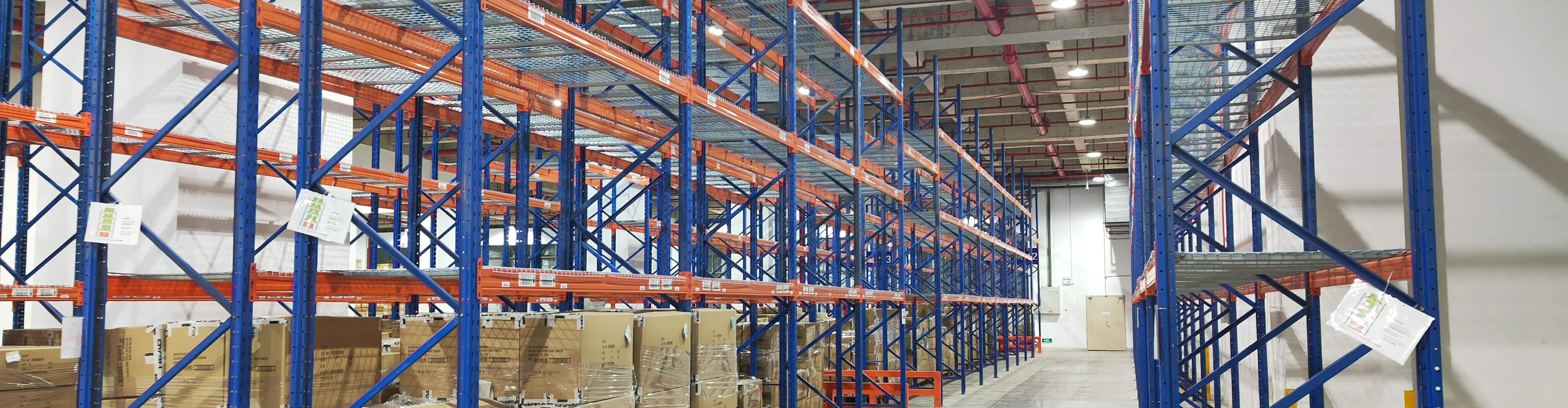
Buying heavy duty warehouse racking is not just a matter of choosing a frame height and beam length. For industrial users, the right system has to match pallet loads, forklift movement, SKU profile, picking method, floor conditions, and future growth plans. A racking layout that looks efficient on paper can become difficult to operate if aisles are too tight, loads vary too much, or access requirements were underestimated.
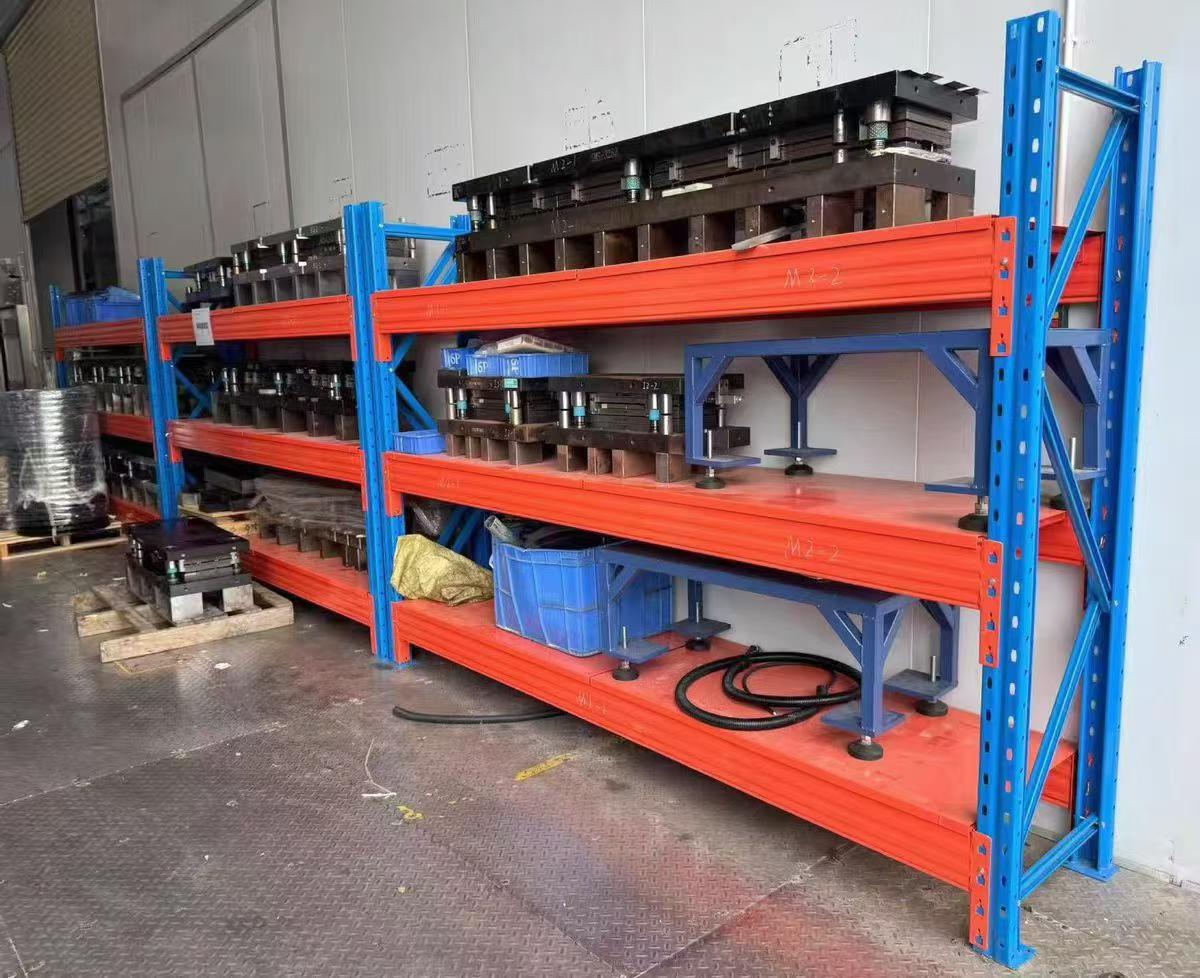
This guide explains how to evaluate heavy duty warehouse racking from a practical buying perspective. It is designed for warehouse managers, procurement teams, and project planners who need to make a commercially sound decision while avoiding common layout, safety, and operational mistakes.
What Is Heavy Duty Warehouse Racking?
Heavy duty warehouse racking generally refers to industrial storage systems designed to hold palletized or bulky goods at higher load capacities than light shelving or archive storage. In most warehouses, this means adjustable pallet racking or related systems built for forklift access, vertical storage, and repeat industrial use.
The main purpose of heavy duty warehouse racking is to use building height efficiently while keeping stock accessible and organized. The exact configuration can vary depending on whether the operation prioritizes direct pallet access, storage density, stock rotation, or picking speed.
Common applications include:
- Finished goods storage
- Raw material warehousing
- Distribution centers
- Manufacturing support storage
- Cold storage and bulk pallet handling areas
Start With the Real Operating Requirement, Not the Rack Type
A common buying mistake is to start by asking for a specific rack model before defining the actual storage need. The better approach is to assess how the warehouse works day to day, then select the most suitable heavy duty warehouse racking system around that reality.
Key questions to answer first
- What pallet sizes, weights, and load overhangs need to be stored?
- How many SKUs are stored, and how fast do they move?
- Is the operation mainly full-pallet in and out, or does it involve case picking?
- What forklift types are used, and what aisle width do they require?
- How much clear building height is available after allowing for sprinklers, lighting, and lift truck operating clearance?
- Is FIFO or LIFO stock rotation important?
- Will the storage need likely expand within the next few years?
These factors have more impact on suitability than a simple request for “heavy duty racks.” In practice, the right choice depends on the balance between accessibility, density, speed, and operating discipline.
Main Types of Heavy Duty Warehouse Racking to Consider
Selective pallet racking
Selective systems are the most common form of heavy duty warehouse racking because every pallet position can usually be accessed directly. This makes them suitable for operations with many SKUs, changing stock profiles, and routine picking from lower levels.
They are often a practical choice when stock visibility and flexibility matter more than maximum density. The trade-off is that they require more aisle space than denser systems.
Drive-in or drive-through racking
These systems reduce aisle count and increase storage density by allowing forklifts to enter the rack structure. They can suit high-volume storage of similar products with lower SKU variety.
However, they are less suitable when stock selectivity is important, when pallet quality is inconsistent, or when forklift impact risk is already a concern. They also demand disciplined operation and careful maintenance.
Double deep racking
Double deep heavy duty warehouse racking stores pallets two deep, reducing aisle requirements compared with selective layouts. It can improve space utilization, but access to the rear pallet is restricted, so it is not ideal for every stock profile.
Buyers should also consider whether their forklifts need special reach capability and whether the stock rotation method can accommodate reduced accessibility.
Push back racking
Push back systems can improve density while still offering relatively efficient loading and unloading from the front aisle. They are often considered where multiple pallets of the same SKU are stored per lane.
The limitation is that they usually work better for predictable pallet types and controlled handling conditions. Mixed pallet quality or irregular load dimensions can create operating issues.
Pallet flow racking
Pallet flow heavy duty warehouse racking uses gravity lanes to support FIFO inventory rotation. It is often considered for fast-moving goods, batch control, and operations where stock rotation matters.
The buying decision here should include maintenance access, roller quality, pallet consistency, and the operational discipline needed to keep lanes working correctly.
How to Judge Whether Heavy Duty Warehouse Racking Fits Your Operation
The right heavy duty warehouse racking system should improve storage efficiency without creating avoidable handling problems. Buyers should evaluate suitability through real operating conditions, not just theoretical capacity.
1. Pallet load consistency
If pallet sizes and weights vary widely, some dense storage systems become harder to manage. Selective heavy duty warehouse racking is usually more forgiving when loads are mixed, while high-density systems often perform better with standardized pallet formats.
2. SKU count and selectivity
Warehouses with many SKUs usually need direct access to a large number of pallet positions. In that case, selective layouts are often easier to operate. If the operation stores fewer SKUs in deeper quantities, denser systems may be commercially sensible.
3. Forklift movement and aisle width
Racking design and truck selection affect each other. A very dense layout may look attractive, but if turning space is too tight, handling slows down and rack impact risk increases. Buyers should review aisle width, lift height, truck type, and operator visibility together.
4. Ceiling height and vertical use
Heavy duty warehouse racking is often purchased to increase cubic storage, not just floor storage. But usable height depends on beam levels, pallet clearance, truck lift capability, roof obstructions, and fire protection constraints. It is not enough to know the building height; buyers need to know the safe operating height.
5. Picking method
If lower levels will be used for case or carton picking, the beam spacing and bay design should support that workflow. Some heavy duty warehouse racking layouts work well for full-pallet storage but become inefficient when frequent split-case access is required.
6. Expansion potential
A low-cost layout can become expensive if it leaves no room for extension, reconfiguration, or additional handling equipment later. Buyers should assess whether the proposed heavy duty warehouse racking can be expanded in a practical way as throughput or SKU count grows.
Important Technical and Planning Checks Before Purchase
Even when a racking type is broadly suitable, several planning details can determine whether the system works well in practice.
Load data and beam levels
Buyers should clearly define pallet weight, load dimensions, and the number of pallets per level. Ambiguity here causes many specification problems. If actual pallet loads are heavier or less stable than assumed, the racking layout may not support operations as intended.
Floor condition and slab suitability
Heavy duty warehouse racking transfers load to the warehouse floor through baseplates and anchors. An uneven or damaged slab can complicate installation, leveling, and long-term stability. Floor condition should be reviewed early, especially in older buildings or facilities with previous impact damage.
Building constraints
Columns, dock doors, fire exits, sprinkler lines, wall offsets, and lighting positions all affect layout efficiency. A nominally large warehouse can lose usable rack space quickly when these constraints are mapped properly.
Protection requirements
In active forklift environments, upright protectors, end-of-aisle barriers, and guidance measures may be necessary to reduce damage risk. Buyers should not treat these as optional extras without considering the actual traffic pattern.
Compatibility with pallets and handling equipment
Heavy duty warehouse racking should be matched to actual pallet entry direction, pallet condition, and truck handling method. If pallets are poor quality, damaged, or inconsistent, that should influence system choice and operating rules.
Common Buying Mistakes to Avoid
Choosing purely on storage density
More density is not always better. If pallets become harder to access, travel time rises, stock control becomes less reliable, or damage increases, the layout may reduce overall warehouse performance.
Ignoring operational discipline
Some heavy duty warehouse racking systems work well only when pallets are loaded consistently and operators follow strict lane rules. If the operation is fast-moving, mixed-product, or less controlled, a simpler system may perform better in reality.
Underestimating forklift clearance
Insufficient aisle width, poor turning space, or limited lift clearance can turn a workable design into a daily bottleneck. This issue often appears after installation, when correction is costly.
Buying for current stock only
A warehouse rarely stays static. If product dimensions, throughput, or SKU count are likely to change, the chosen heavy duty warehouse racking should be reviewed for flexibility as well as immediate fit.
Overlooking inspection and maintenance needs
Dense systems can create more difficult inspection access. If damage is harder to spot or repair, safety management becomes more challenging. Buyers should consider not just how the system stores goods, but how it will be checked and maintained over time.
How to Compare Supplier Proposals More Effectively
When reviewing quotations for heavy duty warehouse racking, price alone rarely gives a useful comparison. A lower initial quote may omit practical items that matter in operation.
Compare proposals on these points
- Clear stated load assumptions
- Rack type and layout logic
- Number of pallet positions versus actual accessibility
- Aisle widths and truck compatibility
- Protection accessories and safety features
- Installation scope and site assumptions
- Allowance for future extension or reconfiguration
- Inspection, repair, and replacement practicality
A good proposal should explain why the selected heavy duty warehouse racking suits the stated stock profile and handling method. If a quotation focuses only on capacity numbers without discussing workflow and constraints, it may not reflect the real operating requirement.
Operational and Safety Considerations After Installation
Buying heavy duty warehouse racking is only the first step. Long-term performance depends on how the system is used, monitored, and maintained.
Routine priorities
- Check for upright impact damage and beam deflection
- Confirm load notices and operating rules are visible and understood
- Inspect anchors, bracing, and protection barriers
- Remove damaged pallets from circulation
- Keep aisles clear to reduce collision risk
- Review whether actual pallet loads still match the original design intent
In many warehouses, rack damage is not caused by the system itself but by mismatched handling practices, poor housekeeping, and lack of routine inspection. Buyers should plan for operational control, not just initial installation.
A Simple Buying Framework for Heavy Duty Warehouse Racking
If you need a practical way to narrow down options, use this sequence:
Define pallet sizes, weights, and quantity by SKU.
Map the handling method, truck type, and required aisle width.
Decide whether direct access or density matters more.
Check building height, obstructions, and floor condition.
Identify whether FIFO, LIFO, or mixed rotation is required.
Review picking activity at lower levels.
Assess likely future expansion or stock profile change.
Compare supplier proposals based on operational fit, not quote price alone.
This approach helps buyers choose heavy duty warehouse racking that supports warehouse performance rather than simply increasing pallet count.
FAQ
What is the most common type of heavy duty warehouse racking?
Selective pallet racking is the most common because it offers direct access to each pallet position and suits a wide range of industrial storage operations.
Is heavy duty warehouse racking suitable for all warehouses?
No. The right system depends on pallet consistency, SKU count, forklift type, stock rotation, and available space. Some warehouses need high selectivity, while others benefit more from density.
How do I know if I need a high-density racking system?
If you store large volumes of the same SKU and direct access to every pallet is less important, a denser system may be worth evaluating. If your stock is mixed and fast-changing, selective access is often more practical.
Should floor condition be checked before installing racking?
Yes. Floor level, slab condition, and anchor suitability can affect installation quality, rack alignment, and long-term stability.
What is the biggest buying mistake?
One of the most common mistakes is choosing heavy duty warehouse racking based only on storage density or price without properly assessing forklift movement, access needs, and future operational changes.
Conclusion
The right heavy duty warehouse racking system should match the way your warehouse actually operates, not just the number of pallets you want to fit into the building. Industrial buyers should evaluate load profile, accessibility, forklift handling, building constraints, safety management, and future flexibility before making a decision.
If you compare options through real operating requirements rather than headline capacity alone, heavy duty warehouse racking becomes a long-term storage asset instead of a layout compromise that creates avoidable inefficiency and risk.