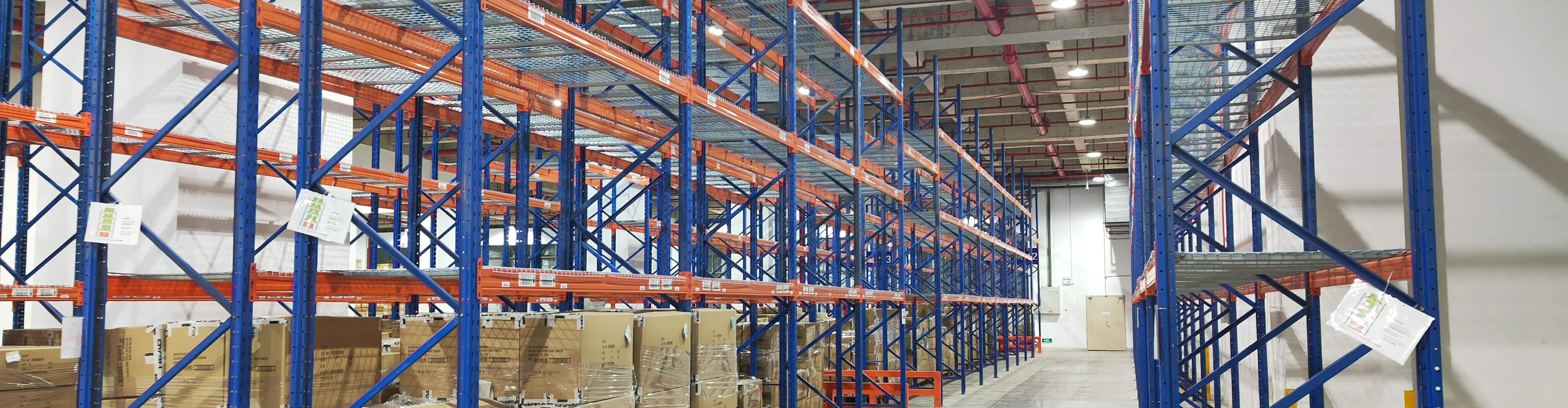
For most logistics and distribution centers, the right heavy duty pallet racking is the system that supports fast pallet access, safe forklift movement, reliable load capacity, and room for future changes in inventory profile. There is no single layout that fits every operation. The best choice depends on pallet turnover, SKU count, aisle strategy, building height, handling equipment, and how much selectivity the warehouse needs.
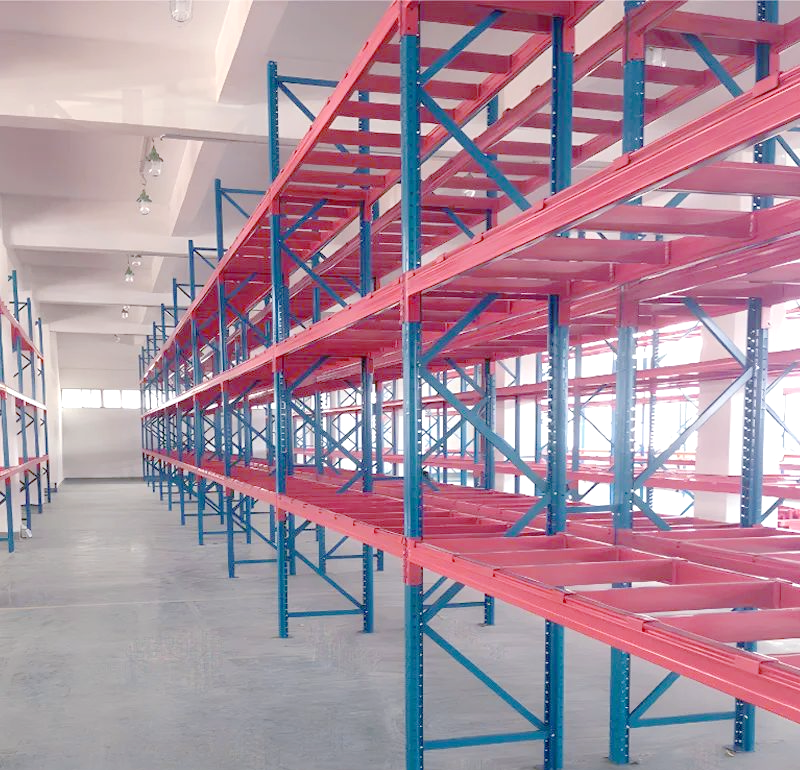
In practical terms, selective pallet racking is often the default starting point for distribution operations because it gives direct access to every pallet location. But many larger facilities improve performance by combining heavy duty pallet racking types in different zones, such as selective racking for fast-moving SKUs, double deep racking for better density, or very narrow aisle layouts where floor space is limited and vertical storage matters more.
This guide explains how to evaluate heavy duty pallet racking for logistics and distribution centers, what system types are commonly used, and which planning factors have the biggest effect on safety, efficiency, and long-term value.
What heavy duty pallet racking means in a logistics environment
Heavy duty pallet racking refers to industrial storage systems designed to hold palletized goods with significant load requirements and regular forklift handling. In logistics and distribution centers, these systems must do more than carry weight. They also need to support fast put-away, accurate replenishment, safe picking, and smooth traffic flow across changing inventory patterns.
Compared with lighter shelving or simpler warehouse storage layouts, heavy duty pallet racking is built for repeated use under demanding operating conditions. That includes high pallet throughput, frequent truck arrivals, multiple shifts, and the risk of impact from material handling equipment.
When buyers assess heavy duty pallet racking, they should look beyond basic storage capacity. The better question is whether the system works with the operation’s daily rhythm: inbound receiving, reserve storage, replenishment, order picking, stock rotation, and outbound staging.
What makes a pallet racking system suitable for logistics and distribution centers
The best heavy duty pallet racking for a distribution center usually balances five priorities:
- Accessibility: Can operators reach the right pallet quickly without excess rehandling?
- Storage density: Does the layout use enough floor area and building height efficiently?
- Forklift compatibility: Is the system matched to the truck type, turning radius, and aisle requirement?
- Operational flexibility: Can the rack layout adapt when SKU mix or pallet sizes change?
- Safety and maintainability: Can the system be inspected, protected, and used consistently without creating avoidable damage risks?
In most logistics operations, too much focus on storage density can reduce accessibility and slow picking. On the other hand, designing only for easy access may waste valuable cubic space. Good racking selection is usually a trade-off between those two pressures.
Common heavy duty pallet racking options for distribution operations
Selective pallet racking
Selective heavy duty pallet racking is the most widely used option in logistics facilities because every pallet position is directly accessible. This matters in distribution centers that handle many SKUs, mixed pallet profiles, or frequent stock rotation.
It is often the strongest choice when:
- The warehouse stores a wide SKU range
- Inventory turnover is uneven
- Operators need direct access to each pallet
- Cycle counting and stock control are important
- Replenishment and picking happen across many product lines
Its limitation is lower storage density compared with deeper lane systems. If floor space is expensive or the facility is reaching capacity, selective racking may need to be combined with higher-density zones rather than used everywhere.
Double deep pallet racking
Double deep heavy duty pallet racking increases storage density by storing pallets two positions deep. It can work well in distribution centers with moderate SKU variety and enough pallet quantity per SKU to justify reduced selectivity.
This option is often considered when a business wants more pallet positions without moving to a fully high-density system. However, it requires suitable reach truck equipment and more disciplined stock management. If SKU counts are high and pallet quantities per item are low, the reduced access can become inefficient.
Very narrow aisle pallet racking
Very narrow aisle layouts use tall heavy duty pallet racking with reduced aisle widths to maximize building height and floor utilization. This can be effective in large distribution centers where storage capacity needs to increase within an existing footprint.
The benefits can be significant, but the operating model is more specialized. Buyers should consider:
- Compatibility with turret trucks or other narrow aisle equipment
- Floor flatness and condition
- Maintenance discipline
- Traffic planning and recovery procedures if a truck is out of service
- The impact on flexibility if the warehouse process changes later
Very narrow aisle systems can perform well, but they are not automatically the best answer for every distribution center. They make more sense when space pressure is high and the operation can support the equipment and process control required.
Drive-in or drive-through racking
Drive-in and drive-through heavy duty pallet racking provide high storage density for operations with low SKU variety and multiple pallets of the same product. They are more common in bulk storage zones than in mixed-SKU distribution environments.
These systems may suit specific logistics applications such as seasonal inventory, buffer stock, or slower-moving pallets stored in volume. They are less suitable where selectivity, rapid stock access, and frequent SKU changes are priorities. They also demand careful forklift operation because rack contact risk is higher.
Push back pallet racking
Push back heavy duty pallet racking is useful when a warehouse needs more density than selective racking but still wants relatively quick access to several SKUs. It is commonly used for last-in, first-out storage in distribution environments with repeat pallet lines and controlled replenishment patterns.
It can improve space use, but it is not ideal for every product category. Buyers should confirm that pallet quality, load stability, and handling consistency are suitable for the system.
How to choose the best heavy duty pallet racking for your operation
1. Start with SKU profile and pallet quantities
The first decision point is not the rack itself. It is the inventory profile. If the facility stores many SKUs with only a few pallets per SKU, selective heavy duty pallet racking is usually more practical. If the warehouse carries fewer SKUs with deeper stock levels, denser systems may be justified.
A common planning mistake is choosing a high-density layout based only on total pallet count. That can create access problems if the operation actually needs frequent retrieval of many different product lines.
2. Review handling equipment and aisle strategy
Forklift type has a direct effect on rack layout. Counterbalance trucks, reach trucks, and turret trucks all require different aisle widths and operating clearances. A heavy duty pallet racking layout that looks efficient on paper may perform poorly if truck maneuvering is tight, slow, or unsafe.
Planners should consider:
- Truck turning radius
- Lift height capability
- Load dimensions including pallet overhang
- Battery charging or fuel support area
- Traffic separation between storage and picking zones
If the facility already uses a standard forklift fleet, changing to a more specialized rack layout may also mean changing equipment, training, and maintenance support.
3. Check clear building height and usable vertical space
In many logistics buildings, the value of heavy duty pallet racking depends on how well it uses vertical space. But clear height alone is not enough. Buyers need to account for sprinkler clearance, lighting, ventilation, beam levels, pallet height variation, and lift truck operating limits.
Warehouses sometimes overestimate usable height and then discover that top beam levels are difficult to access or unsuitable for real pallet dimensions. A practical design should leave room for safe handling rather than forcing operators to work with minimal tolerance.
4. Assess floor condition and load distribution
Heavy duty pallet racking transfers significant loads into the floor slab through baseplates and anchors. Floor condition matters, especially in older buildings, expansion projects, or layouts using tall racks and narrow aisle equipment.
This does not mean every project requires a complex redesign, but it does mean the floor should be reviewed early. Uneven surfaces, slab limitations, or anchor issues can affect installation quality, truck performance, and long-term rack stability.
5. Plan for picking and replenishment, not just storage
In distribution centers, reserve pallet storage and order picking are closely connected. The best heavy duty pallet racking layout supports efficient replenishment to picking faces and avoids unnecessary travel.
If the facility handles both full-pallet dispatch and case picking, a mixed approach may be more effective than relying on one rack type everywhere. For example, upper levels may hold reserve pallets while lower levels support picking activity in selected zones. The key is to design around workflow, not only around pallet count.
6. Leave room for growth and re-slotting
Warehouse operations change. Product ranges expand, packaging formats shift, and customer order profiles evolve. A heavy duty pallet racking system that is fully optimized for today’s exact inventory may become restrictive later.
It is usually wise to consider:
- Whether beam levels can be adjusted
- Whether bays can be extended in future phases
- Whether aisles allow process changes later
- Whether the layout can accommodate different pallet heights
- Whether spare components and replacement parts are easy to source
Expansion planning is often overlooked until capacity pressure appears. At that point, a rigid layout can be expensive to modify.
When heavy duty pallet racking is a good fit and when it is not
Heavy duty pallet racking is a strong fit for logistics and distribution centers that store palletized inventory, use forklifts regularly, and need structured, scalable storage. It is especially effective where stock control, organized pallet locations, and predictable material flow are important.
It may be less suitable as a standalone solution when:
- The operation is primarily small-parts picking rather than pallet storage
- Inventory turns are so high that flow-through automation is more relevant
- Pallet quality is inconsistent and damages rack contact surfaces
- The warehouse needs extreme density with very limited SKU variety
- The building constraints prevent safe rack height or aisle operation
In practice, many larger facilities do not choose between one rack type and another in absolute terms. They create a storage mix. Heavy duty pallet racking remains the backbone, but different zones are configured to match different inventory and handling needs.
Safety, inspection, and maintenance priorities
Even the best-designed heavy duty pallet racking can underperform if it is poorly protected or inconsistently used. In logistics environments, rack damage often comes from forklift impact, overloaded beam levels, pallet overhang, and simple housekeeping failures.
Key priorities include:
- Routine visual checks for upright damage, beam deflection, and missing safety locks
- Clear load signage that matches actual use
- Protection at vulnerable end-of-aisle positions
- Prompt reporting of impact incidents
- Good pallet quality control
- Anchor and baseplate checks in high-traffic areas
One common mistake is treating rack damage as cosmetic. Bent uprights, displaced beams, or repeated impacts at the same location should be reviewed quickly. Distribution centers are high-activity environments, and small problems can escalate if ignored.
Common buying mistakes to avoid
- Choosing density over access without checking SKU reality: High-density systems are not efficient if pallets need frequent selective retrieval.
- Ignoring forklift constraints: Aisle width, lift height, and truck type should shape the layout from the start.
- Designing only for current stock: Future product changes can make an over-optimized layout difficult to use.
- Underestimating safety protection needs: End guards, upright protection, and impact control matter in busy logistics operations.
- Overlooking inspection and maintenance: A rack system is not a one-time purchase; it needs ongoing review.
- Assuming all pallets are uniform: Variations in pallet size, quality, and load stability affect real operating performance.
Practical recommendation framework
If your logistics or distribution center handles a wide range of SKUs and needs direct access to each pallet, selective heavy duty pallet racking is usually the most practical core system. If space is tighter and pallet quantities per SKU are deeper, double deep or other denser formats may improve capacity. If the building has strong vertical potential and the operation can support specialized equipment, very narrow aisle layouts may be worth evaluating.
The right decision usually comes from reviewing four things together: inventory profile, handling equipment, building constraints, and workflow. When those factors are aligned, heavy duty pallet racking can support better throughput, safer operations, and more efficient use of warehouse space.
FAQ
What is the most common heavy duty pallet racking system for distribution centers?
Selective pallet racking is the most common because it provides direct access to every pallet and works well with mixed SKU storage.
Is high-density racking always better for logistics warehouses?
No. Higher density reduces selectivity. If the warehouse handles many SKUs or frequent order changes, a denser system can slow access and increase rehandling.
How do I know if very narrow aisle racking is suitable?
It is usually suitable when floor space is limited, building height is available, and the operation can support specialized trucks, floor quality requirements, and disciplined traffic control.
What should buyers check before installing heavy duty pallet racking?
They should review pallet dimensions and weights, SKU profile, forklift type, aisle width, clear height, floor condition, picking method, and future expansion needs.
How often should pallet racking be inspected?
Routine in-house visual checks should be part of normal warehouse management, especially in high-traffic areas. More formal inspections should follow the site’s operating policy and applicable local requirements.