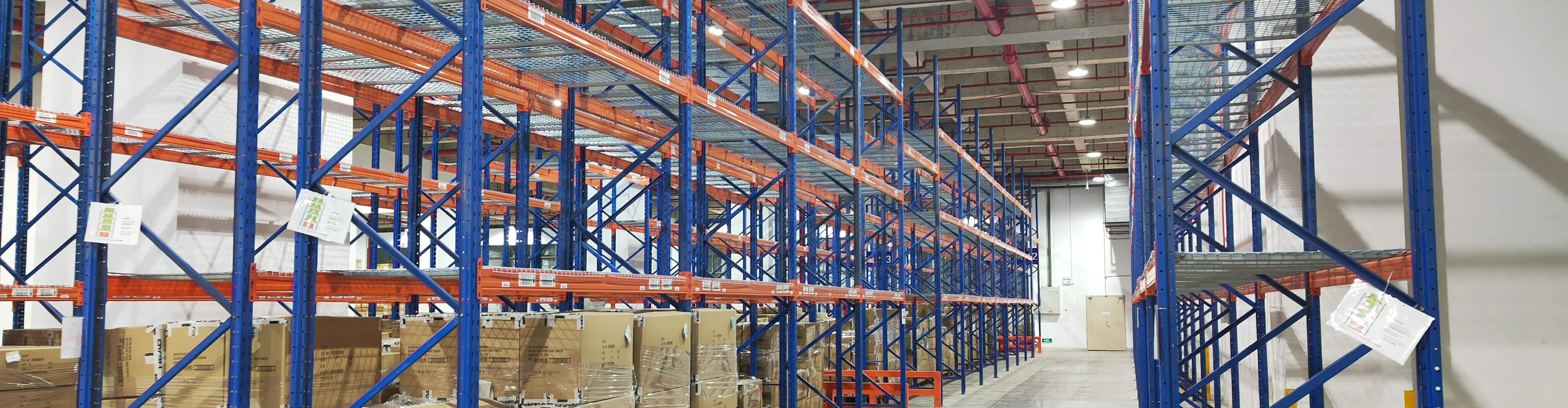
Heavy duty pallet racking is a warehouse storage system designed to hold large volumes of palletized goods safely while keeping forklift access practical and organized. For bulk warehouse storage, it is often the most straightforward solution when the operation needs strong load capacity, clear pallet locations, and the ability to scale storage vertically.
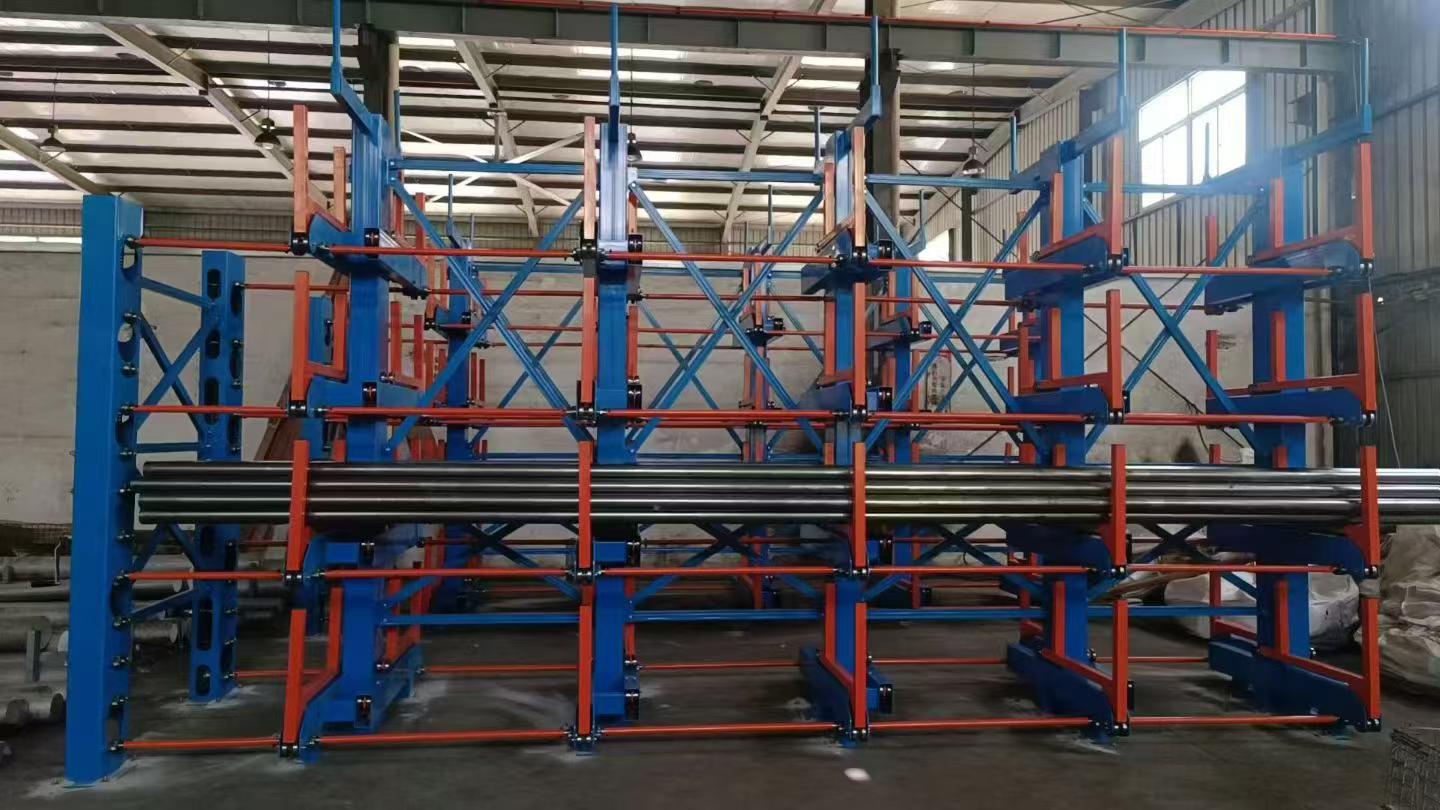
The right heavy duty pallet racking layout depends on more than load weight alone. Warehouse managers usually need to balance pallet size, SKU mix, stock rotation method, aisle width, forklift type, ceiling height, floor condition, and future expansion plans. A system that works well for full-pallet reserve storage may be less efficient for fast picking or high-density storage, so selection should be based on real operating conditions rather than rack capacity in isolation.
What heavy duty pallet racking is used for
Heavy duty pallet racking is commonly used in distribution centers, manufacturing warehouses, raw material storage areas, and third-party logistics facilities where goods are stored on pallets and handled by forklifts. Its main role is to convert floor space into organized vertical storage while keeping inventory visible and accessible.
In bulk warehouse storage, this system is especially useful when the business handles repeated pallet movements, larger inventory volumes, or heavier loads that are not suitable for light shelving. It supports structured storage for finished goods, inbound reserve stock, packaging materials, components, and other palletized items that need dependable support and clear location control.
Why heavy duty pallet racking suits bulk warehouse storage
Bulk storage operations usually need three things at the same time: load stability, space efficiency, and forklift access. Heavy duty pallet racking addresses these needs by creating multiple beam levels above floor level, allowing warehouses to store more pallets within the same footprint than simple block stacking.
Compared with floor stacking, heavy duty pallet racking can improve stock visibility, reduce pallet crushing risk, and support better inventory rotation. It also makes it easier to separate SKUs, manage batch control, and maintain cleaner traffic paths. These advantages become more important as pallet counts increase and warehouse workflows become more structured.
That said, heavy duty pallet racking is not automatically the highest-density option. If a warehouse stores a small number of SKUs in deep quantities, systems such as drive-in racking or shuttle-based solutions may use space more intensively. Standard selective heavy duty pallet racking is usually chosen when access and flexibility matter more than maximum density.
Main types of heavy duty pallet racking for bulk storage
Selective pallet racking
Selective heavy duty pallet racking is the most widely used format because it gives direct access to every pallet position. This makes it suitable for warehouses with a broad SKU range, mixed pallet turnover, and regular replenishment activity.
- Good for operations needing immediate access to individual pallets
- Works well with standard forklift handling
- Easier to adapt when inventory profiles change
- Usually requires more aisle space than dense storage systems
Double deep pallet racking
Double deep configurations reduce the number of aisles by storing pallets two deep. This can improve storage density, but it also reduces direct access and often requires suitable reach truck capability.
- Higher density than standard selective layouts
- Useful when SKU depth is moderate
- Less flexible for strict first-in, first-out rotation
- Requires careful planning for pallet retrieval and handling equipment
Drive-in and drive-through racking
These heavy duty pallet racking solutions are used when the warehouse stores larger quantities of the same SKU. Forklifts enter the rack structure to place or retrieve pallets from deep lanes.
- Higher storage density for bulk stock holding
- Suitable for lower SKU counts with high pallet volume
- Can be less efficient where stock rotation is tight or frequent selectivity is needed
- More exposure to impact damage if forklift operation is not well controlled
Push back pallet racking
Push back systems store pallets on inclined rails or carts, allowing several pallets to be stored deep while still loading and unloading from the front aisle. This can be a practical middle ground between selectivity and density.
- Useful for medium-density bulk storage
- Reduces travel time in some layouts
- Often suitable for last-in, first-out stock flow
- Needs consistent pallet quality and controlled loading practice
Pallet flow racking
Pallet flow heavy duty pallet racking uses gravity rollers so pallets move from the loading side to the picking side. It is often selected where first-in, first-out rotation is important.
- Supports FIFO stock rotation
- Can improve replenishment and picking separation
- Useful for high-throughput pallet movement
- More system complexity than basic selective racking
Key planning factors before choosing heavy duty pallet racking
Pallet dimensions and load characteristics
Not all pallets are loaded equally, even when they share the same footprint. Buyers should confirm pallet size consistency, load overhang, load stability, and typical unit weight before selecting heavy duty pallet racking. Unstable or irregular pallet loads can create handling risk and may limit how tightly the system can be configured.
It is also important to understand whether goods are uniformly distributed across the pallet. Concentrated point loads, damaged pallets, or poor wrapping can affect safe storage and handling performance.
Forklift type and aisle width
The choice of forklift has a direct effect on rack layout. Counterbalance forklifts usually require wider aisles, while reach trucks can support narrower layouts. If the goal is to increase pallet count, aisle design is just as important as rack height. A heavy duty pallet racking system that looks efficient on paper may become slow or difficult to use if forklift turning space is too tight for actual operations.
Building height and clearances
Bulk storage often depends on vertical cube utilization, so clear height under lights, sprinklers, and roof structures should be reviewed early. Heavy duty pallet racking can improve storage capacity significantly when ceiling height is used properly, but practical lift height, beam spacing, and safety clearances must be considered together.
Floor condition and load-bearing capacity
Warehouse floors need to be suitable for the rack loads and forklift traffic involved. Uneven floors can affect rack installation quality and beam level accuracy. In heavier-duty applications, floor condition should never be treated as a minor detail because it influences anchoring, upright alignment, and long-term system stability.
Inventory profile and stock rotation
A warehouse storing many SKUs in low pallet quantities usually benefits from selective heavy duty pallet racking. A warehouse storing fewer SKUs in larger pallet volumes may justify a denser configuration. The right decision depends on whether the operation values selectivity, storage density, FIFO rotation, LIFO handling, or rapid replenishment most.
Operational benefits of heavy duty pallet racking
When properly specified, heavy duty pallet racking can deliver practical day-to-day improvements beyond simple pallet storage.
- Better use of vertical space
- Clear pallet locations for inventory control
- Reduced product damage compared with unmanaged floor stacking
- Improved forklift traffic organization
- Easier stock counting and location labeling
- More structured replenishment and dispatch workflows
- Scalable layout options as storage demand grows
These benefits are most noticeable in warehouses that need reserve pallet storage behind active picking operations. In that environment, heavy duty pallet racking helps separate fast-moving pick faces from bulk back-up inventory, which can improve replenishment discipline and reduce floor congestion.
Limitations and trade-offs to consider
Heavy duty pallet racking is not a universal answer for every warehouse. In some operations, it may create avoidable cost or complexity if the storage profile does not justify it.
For example, if goods are non-palletized, frequently hand-picked at carton level, or highly irregular in size, shelving or multi-tier picking solutions may be more suitable. If storage density is the main priority and SKU count is low, a dense lane-based pallet system may outperform standard selective heavy duty pallet racking.
There are also operating trade-offs. Taller systems increase capacity but may slow handling if lift cycles become longer. Narrower aisles improve space use but demand tighter forklift discipline. Deeper storage can increase density but reduce direct access. The right solution depends on what the warehouse can operate reliably every day, not just what fits into a layout drawing.
Common mistakes when specifying heavy duty pallet racking
- Choosing a layout based only on pallet count without reviewing forklift movement
- Ignoring future SKU growth or changes in stock profile
- Using inconsistent pallet sizes in a system designed for standard loads
- Underestimating the effect of floor condition on installation quality
- Focusing on density while overlooking access and replenishment speed
- Failing to protect uprights in high-traffic impact zones
- Running heavy duty pallet racking without clear load notices and operator guidance
Many of these issues appear after installation, when the warehouse starts operating at real throughput levels. Early planning should involve operations, safety, maintenance, and procurement rather than treating racking as a simple fixture purchase.
Safety, inspection, and maintenance priorities
Heavy duty pallet racking should be treated as working warehouse equipment, not passive steelwork that can be ignored after installation. Regular visual checks help identify impact damage, beam displacement, missing safety locks, loose anchors, overloaded levels, and poor pallet placement before they turn into larger problems.
High-risk areas usually include end frames near traffic routes, lower uprights exposed to forklift contact, and lanes where pallet overhang is inconsistent. Good housekeeping matters as well. Debris in aisles, damaged pallets, and poor visibility around rack corners can all increase the chance of impact or unsafe loading.
Practical maintenance priorities include:
- Checking uprights and beams for visible damage
- Confirming anchors and protection devices remain in place
- Replacing damaged pallets before storage
- Keeping load notices clear and current
- Reviewing rack alignment after impacts or operational changes
- Training operators on correct pallet placement and load handling
Any formal assessment of structural suitability or repair requirements should be handled by qualified specialists. Routine warehouse teams can identify visible issues, but they should not guess about damaged load-bearing components.
How to evaluate whether heavy duty pallet racking is the right fit
A practical evaluation usually starts with a few direct questions:
- Are most goods stored on pallets consistently sized for forklift handling?
- Does the warehouse need direct access to many pallet locations?
- Is vertical storage needed to increase capacity within the current building?
- Will the operation benefit more from selectivity or from maximum density?
- Can the available forklift fleet operate safely within the proposed aisle layout?
- Is the floor suitable for the intended rack load and traffic pattern?
- Will the system still work if pallet volume or SKU count changes over time?
If the answer to most of these questions is yes, heavy duty pallet racking is often a strong candidate for bulk warehouse storage. If not, the project may need a different configuration or a different storage approach altogether.
Planning for growth and layout flexibility
Bulk storage requirements rarely stay fixed. Product lines expand, pallet counts change seasonally, and handling equipment may be upgraded. For that reason, heavy duty pallet racking should be planned with some flexibility where possible. That may include room for additional bays, future beam level changes, protected traffic lanes, or phased installation by warehouse zone.
Expansion planning is especially important in facilities where current storage pressure is already high. A layout that uses every available square meter on day one may leave little room for staging, returns, battery charging, or outbound preparation later. Good rack planning should support the full warehouse workflow, not just maximize theoretical pallet positions.
FAQ
What is the difference between heavy duty pallet racking and standard pallet racking?
Heavy duty pallet racking generally refers to systems designed for higher load demands, larger palletized goods, and more demanding warehouse use. The exact capacity depends on the rack design, beam levels, bay dimensions, and load profile.
Is heavy duty pallet racking suitable for all bulk storage warehouses?
No. It is highly suitable for many palletized storage operations, but the best configuration depends on SKU count, pallet volume, rotation method, available space, and forklift handling requirements.
Can heavy duty pallet racking improve storage capacity without moving to a larger building?
Often yes. By using vertical height and organized aisle layouts, heavy duty pallet racking can increase pallet positions within the same footprint, provided the building and equipment support the design.
What is the main risk if the wrong racking layout is chosen?
The warehouse may lose efficiency rather than gain it. Common problems include poor forklift flow, low selectivity, difficult replenishment, avoidable damage, and storage space that looks efficient but does not work well in daily operations.
Conclusion
Heavy duty pallet racking remains one of the most practical storage solutions for bulk warehouse storage because it combines structural strength, organized pallet access, and scalable use of vertical space. The most effective system is not simply the one with the most steel or the highest pallet count. It is the one that fits the warehouse’s pallet profile, forklift operation, stock rotation method, safety priorities, and growth plans.
For buyers and warehouse planners, the key decision is to match heavy duty pallet racking to real operating conditions. When layout, handling equipment, floor suitability, and inventory behavior are assessed properly, the system can support safer storage, better inventory control, and more efficient use of available warehouse space.