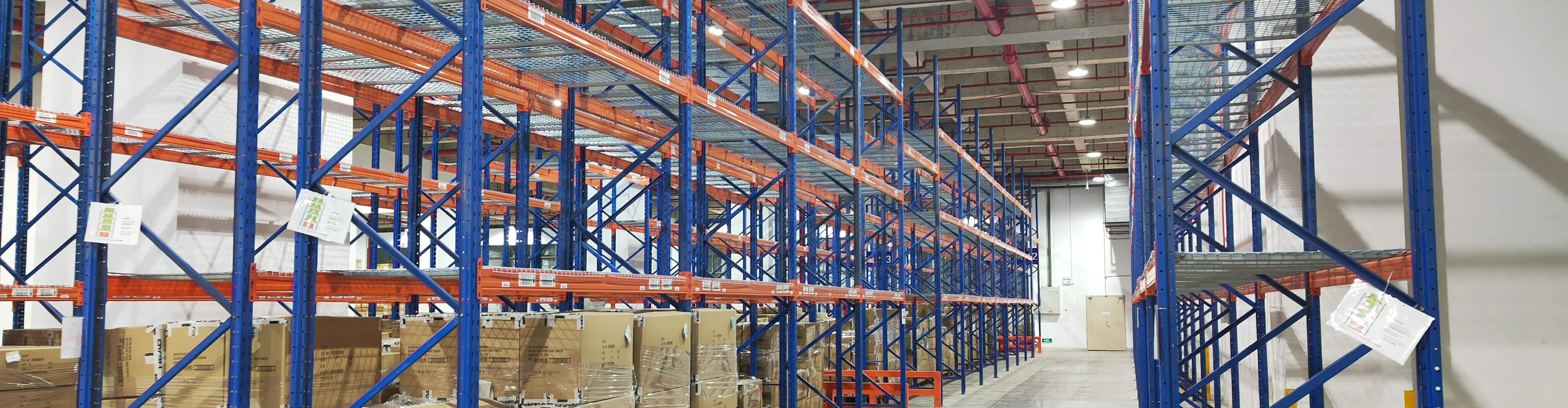
Heavy duty pallet racking is widely used because it improves storage capacity, keeps palletized goods accessible, supports orderly warehouse operations, and can be adapted to different load sizes and layouts. For warehouses handling full pallets with forklifts, it offers a practical balance of strength, selectivity, scalability, and cost control.
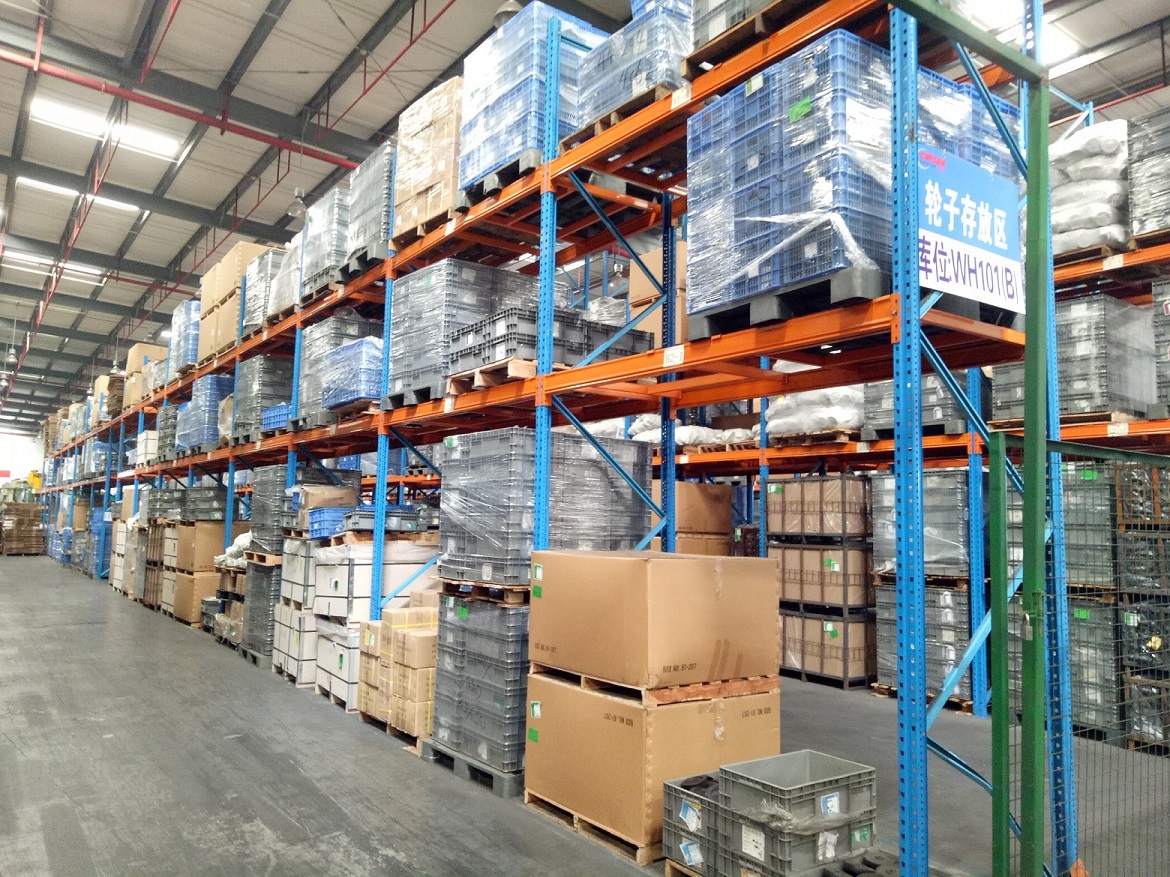
The main advantage of heavy duty pallet racking is that it turns vertical warehouse space into usable storage without sacrificing basic access to inventory. That matters for operations trying to increase pallet positions, improve stock organization, and maintain safe handling routes for lift trucks.
What Is Heavy Duty Pallet Racking?
Heavy duty pallet racking is a storage system designed to hold palletized goods on horizontal beam levels supported by upright frames. It is typically used in warehouses, distribution centers, manufacturing plants, cold stores, and reserve storage areas where loads are moved by forklifts or other material handling equipment.
In practical terms, heavy duty pallet racking is built for higher load demands than light shelving or manual storage systems. It is suitable for storing heavier pallets, bulk goods, industrial components, packaged products, and other unit loads that need structured, repeatable storage positions.
While there are several pallet racking configurations, the standard selective layout is the most common reference point when people discuss the advantages of heavy duty pallet racking. It provides direct access to most pallet locations and is relatively straightforward to plan, inspect, and expand.
Main Advantages of Heavy Duty Pallet Racking
1. Better use of warehouse height
One of the clearest advantages of heavy duty pallet racking is vertical space utilization. Many facilities run out of floor space before they run out of clear height. A well-planned racking layout allows a warehouse to store more pallets upward rather than spreading inventory across valuable floor area.
This can delay the need for a building extension or off-site storage. It can also free up space for staging, packing, value-added work, or forklift circulation. The actual storage gain depends on ceiling height, fire protection requirements, lift truck reach, pallet dimensions, and safe operating clearances.
2. Direct pallet access in day-to-day operations
For many warehouses, accessibility matters as much as storage density. Heavy duty pallet racking, especially in selective layouts, allows operators to access individual pallets without moving multiple loads first. That supports faster putaway and retrieval, simpler stock rotation, and fewer handling steps.
This is particularly useful when the operation carries many SKUs, receives mixed pallets, or needs flexible dispatch sequencing. If the business regularly picks specific pallet positions rather than moving large quantities of the same item in batches, heavy duty pallet racking can be a practical fit.
3. Improved organization and inventory control
Heavy duty pallet racking creates defined storage locations, which helps warehouses assign bin codes, separate SKUs, and reduce stock confusion. Organized pallet positions make it easier to count inventory, check replenishment status, and trace product locations.
From an operational perspective, this structure reduces the risk of pallets being placed randomly on the floor, where they can block aisles, create safety issues, or complicate stock checks. Clean location control also supports warehouse management systems and barcode-based processes.
4. Strong load support for industrial storage
Another advantage of heavy duty pallet racking is its suitability for demanding industrial loads. Warehouses storing raw materials, finished goods, spare parts, drums, cartons on pallets, or dense packaged products often need a system designed for substantial weight and regular forklift handling.
That does not mean every rack suits every load. Load capacity depends on beam length, upright profile, bay configuration, pallet type, load distribution, and installation quality. The practical benefit is that heavy duty pallet racking can be engineered around real pallet weights and operational conditions instead of forcing goods into a lighter-duty storage format.
5. Flexible layout options
Heavy duty pallet racking is not limited to one warehouse shape or one inventory profile. It can be arranged in single-deep rows, back-to-back rows, narrow aisle layouts, or integrated with different handling methods depending on the operation. This flexibility helps planners adapt the system to building columns, dock flow, picking zones, and traffic routes.
It also allows businesses to reserve some areas for high-access SKUs and other areas for slower-moving reserve stock. In practice, this makes heavy duty pallet racking useful for warehouses that need a mix of accessibility and structured bulk storage.
6. Easier expansion as the business grows
Many companies choose heavy duty pallet racking because it can usually be expanded more easily than fixed masonry storage or ad hoc floor stacking. Additional bays, levels, row extensions, and related accessories can often be added when inventory volume changes, provided the original design allows for future growth.
This is commercially important for operations with seasonal peaks, product line expansion, or changing customer demand. Expansion planning is easier when the initial layout leaves room for aisle continuity, forklift turning space, and compatible component selection.
7. Cleaner and safer warehouse layout
Heavy duty pallet racking supports a more disciplined warehouse layout. Pallets are stored in designated positions rather than stacked loosely on the floor, which can improve aisle visibility and reduce obstruction. A structured rack system also makes it easier to separate pedestrian routes, forklift lanes, and staging areas.
Safety still depends on correct use. Heavy duty pallet racking is only an advantage when loads are placed properly, impact damage is monitored, and the rack is not overloaded or modified without review. Even so, compared with unmanaged floor storage, a properly used rack system generally supports better housekeeping and more predictable traffic flow.
8. Faster handling and labor efficiency
When pallet locations are clear and access routes are consistent, operators spend less time searching for stock or rearranging loads. Heavy duty pallet racking helps reduce unnecessary touches, especially in facilities where pallets move frequently between receiving, reserve storage, replenishment, and dispatch.
The time savings may come from simpler putaway decisions, easier forklift approach angles, and reduced need to shift pallets just to reach stock behind them. For many operations, that translates into smoother daily workflow rather than dramatic headline gains.
9. Suitable for many industries
Heavy duty pallet racking is used across manufacturing, logistics, food distribution, retail supply, automotive parts storage, building materials, and general industrial warehousing. Its broad use comes from its ability to handle standard palletized loads in a structured and scalable way.
That said, suitability still depends on the product and handling method. Warehouses storing long goods, irregular items, hand-loaded cartons, or very high-density batch stock may need a different or mixed storage approach.
Operational Benefits That Matter in Real Warehouses
Forklift access and aisle planning
The practical value of heavy duty pallet racking depends heavily on forklift compatibility. The rack may offer good storage potential on paper, but if aisle widths are too tight for the chosen trucks, productivity and safety suffer. Reach trucks, counterbalance forklifts, and VNA equipment all have different turning and operating requirements.
When evaluating the advantages of heavy duty pallet racking, aisle width should be considered together with pallet overhang, beam level spacing, floor flatness, and operator visibility. A layout that maximizes pallet count but creates awkward handling can become costly in daily use.
SKU mix and stock rotation
Heavy duty pallet racking is especially effective where the operation needs direct access to a wide range of SKUs. If each pallet position may hold a different item, selectivity becomes more valuable than pure density. This is common in distribution environments, spare parts warehouses, and mixed-product storage areas.
Where stock rotation is important, accessible pallet positions also help teams manage FIFO or batch control more consistently. The benefit is not only storage capacity but more reliable inventory movement.
Reserve storage and replenishment support
In many warehouses, heavy duty pallet racking works well as reserve storage feeding lower-level picking zones or shelving systems. Bulk pallets can be stored overhead while forward pick faces are replenished as needed. This separation supports cleaner workflows and better use of labor.
For operations with both pallet handling and piece picking, heavy duty pallet racking often performs best as part of a broader storage strategy rather than as the only storage format in the building.
Commercial Advantages for Buyers and Facility Planners
Standardized storage structure
Heavy duty pallet racking gives procurement and operations teams a repeatable storage framework. Standard bay sizes, beam levels, and pallet positions make it easier to plan capacity, estimate expansion, and manage warehouse changes over time.
Long service life with proper use
When correctly specified, installed, and maintained, heavy duty pallet racking can provide long operational value. The commercial advantage is not just initial storage gain, but a durable storage structure that supports ongoing warehouse activity. Regular inspection, damage reporting, and component replacement are part of protecting that value.
Adaptability to changing inventory patterns
Warehouses rarely stay static. Product dimensions change, order profiles shift, and throughput patterns evolve. Heavy duty pallet racking can often be reconfigured by adjusting beam levels or extending rows, though changes should be reviewed carefully to avoid load and clearance problems. This adaptability is useful for businesses that expect operational change over time.
Limitations and Trade-Offs to Consider
The advantages of heavy duty pallet racking are significant, but the system is not ideal for every situation. Understanding the trade-offs helps buyers choose the right layout instead of assuming standard pallet racking is always the answer.
It may not deliver the highest storage density
If the main goal is to store very large quantities of the same SKU in minimal floor space, higher-density systems such as drive-in or shuttle-based solutions may use space more intensively. Heavy duty pallet racking, especially selective racking, trades some density for accessibility.
It depends on disciplined forklift operation
Rack damage often comes from forklift impact, poor pallet placement, overloaded levels, or careless handling. In busy warehouses, upright protectors, clear markings, and operator training are just as important as the rack itself.
Floor condition matters
Heavy duty pallet racking relies on suitable floor condition and proper anchoring. Uneven or damaged floors can affect installation quality, load distribution, and truck operation. This is a common planning issue in older facilities.
Not all pallets are equally suitable
Weak, damaged, or inconsistent pallets can create handling and storage problems, even if the racking is correctly designed. Pallet quality should be part of the assessment, especially where loads are heavy or stored at higher levels.
What to Check Before Choosing Heavy Duty Pallet Racking
Actual pallet dimensions, including overhang and load shape
Maximum pallet weight and whether loads are evenly distributed
Forklift type, lift height, turning radius, and aisle requirements
Building clear height, column positions, doors, and fire protection constraints
Floor condition and anchoring suitability
Number of SKUs and required pallet selectivity
Need for FIFO, batch control, or fast replenishment
Expected future expansion or layout changes
Inspection access and maintenance procedures
These points determine whether heavy duty pallet racking will perform efficiently in practice, not just whether it fits inside the building.
Common Mistakes When Evaluating the Advantages
Focusing only on pallet count and ignoring forklift maneuverability
Using estimated load weights instead of verified pallet data
Choosing a layout without considering SKU access needs
Overlooking floor condition and installation constraints
Assuming future expansion will be easy without planning for it
Neglecting rack protection, inspection routines, and damage reporting
Heavy duty pallet racking delivers the most value when storage design, handling equipment, and operating discipline are aligned.
FAQ
Is heavy duty pallet racking suitable for all warehouses?
No. Heavy duty pallet racking is well suited to palletized goods and forklift handling, but it may be less suitable for very high-density storage, long items, irregular products, or operations centered on manual picking.
What is the biggest advantage of heavy duty pallet racking?
For most warehouses, the biggest advantage of heavy duty pallet racking is the combination of vertical space use and direct pallet access. It increases storage capacity while keeping inventory organized and reachable.
Can heavy duty pallet racking improve warehouse efficiency?
Yes, if the layout matches the operation. It can improve putaway, retrieval, stock control, and replenishment efficiency by creating defined pallet locations and better traffic flow.
Does heavy duty pallet racking require regular inspection?
Yes. Regular checks are important for identifying impact damage, beam displacement, loose anchors, missing safety components, overloading, and general wear from daily forklift activity.
Conclusion
The advantages of heavy duty pallet racking come down to usable height, organized pallet storage, direct access, operational flexibility, and the ability to support demanding warehouse loads. For many businesses, it is a dependable storage foundation that improves space use and day-to-day handling without forcing inventory into a rigid or inaccessible format.
Still, heavy duty pallet racking works best when it is matched to real operating conditions. Pallet size, load weight, forklift type, aisle width, floor condition, SKU profile, and future growth plans all shape whether the system will deliver the expected benefit. A good racking decision is not just about fitting more pallets into a building. It is about creating storage that remains safe, workable, and commercially efficient over time.