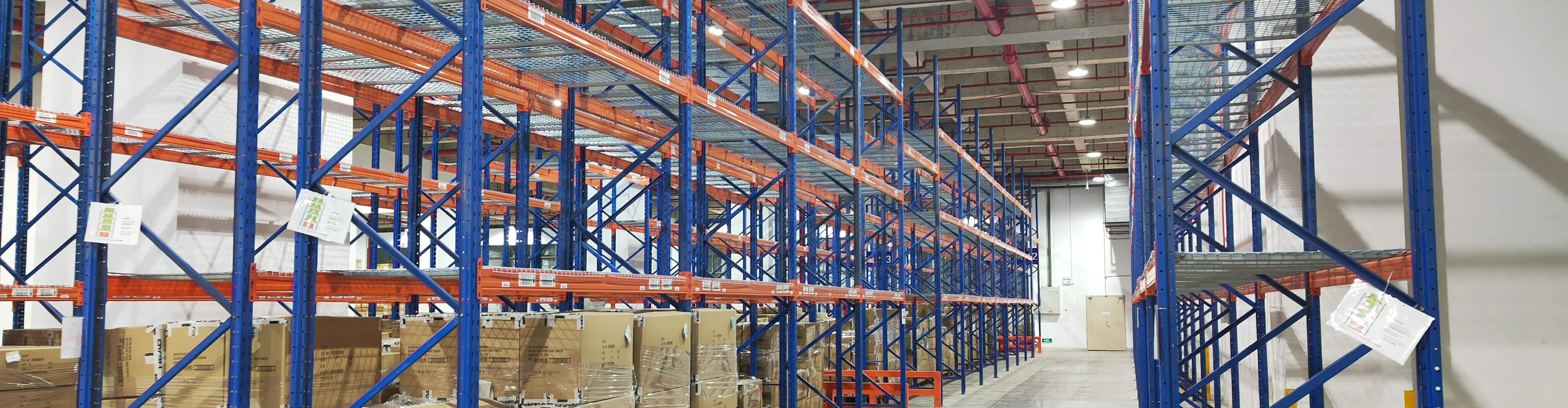
Choosing heavy duty pallet racking is not just a matter of fitting more pallets into a building. The right system has to match pallet size, load weight, forklift movement, SKU profile, replenishment method, and future growth. For most industrial warehouses, heavy duty pallet racking is a good fit when the operation needs reliable pallet storage, clear stock access, and scalable layout planning. It becomes a poor choice when buyers focus only on price and ignore aisle space, floor condition, beam levels, or handling equipment limitations.
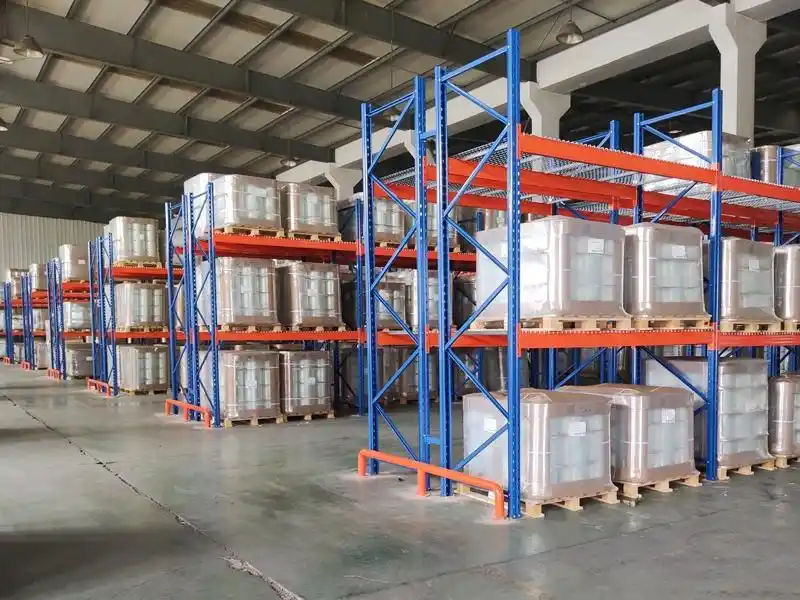
This guide explains how to evaluate heavy duty pallet racking before you buy, what practical questions to ask, and which common mistakes can create problems later in daily warehouse use.
What heavy duty pallet racking means in practical warehouse use
Heavy duty pallet racking is a storage system designed to hold palletized goods on horizontal load beams supported by upright frames. In most industrial settings, it is used for full pallet storage with forklift access and configurable beam levels. The system is popular because it is modular, widely understood by operators, and suitable for many sectors including manufacturing, distribution, spare parts, food packaging, and general industrial storage.
From a buying perspective, heavy duty pallet racking should be assessed as part of the whole warehouse workflow, not as a standalone steel structure. A system that looks efficient on a drawing can become awkward if pallet overhang is not considered, if turning radius is too tight, or if replenishment and picking happen in the same congested aisle.
When heavy duty pallet racking is the right choice
Heavy duty pallet racking usually works well in warehouses that need direct access to many pallet positions. It is especially suitable when stock rotation matters, when SKU variety is moderate to high, or when operators must retrieve specific pallets without moving other loads first.
- Warehouses storing multiple SKUs in pallet quantities
- Operations using counterbalance forklifts or reach trucks
- Facilities that need selective access to pallet locations
- Businesses planning phased expansion over time
- Sites that require a balance between storage density and accessibility
It may be less suitable where maximum storage density is the main priority and direct access to every pallet is not required. In those cases, buyers may need to compare selective heavy duty pallet racking with denser options such as drive-in racking, double deep racking, or shuttle-based systems.
Key buying factors before selecting heavy duty pallet racking
1. Pallet type, load size, and weight consistency
One of the first checks is whether pallet dimensions and loads are consistent. Heavy duty pallet racking can be configured for different pallet sizes, but inconsistent load footprint often causes avoidable problems. Overhanging cartons, irregular pallets, damaged skids, or mixed load heights can reduce usable capacity and increase collision risk during putaway.
Buyers should define:
- Standard pallet dimensions
- Maximum pallet weight
- Typical and maximum load height
- Whether loads are stable, wrapped, or irregular
- Whether pallets are wood, plastic, metal, or mixed
If the actual pallet profile varies more than expected, the beam spacing and clearances may need to be more conservative. That protects handling safety but also affects storage density.
2. Forklift type and aisle width
Heavy duty pallet racking layout should always be planned around the material handling equipment that will actually use it. Counterbalance forklifts generally need wider aisles than reach trucks. If buyers select a dense layout without checking turning requirements, the result can be slow handling, more rack impact, and operator frustration.
Ask practical questions such as:
- Which forklift models will operate in the racking area?
- What lift height is required at the top beam level?
- What aisle width is needed for safe pallet handling?
- Will the same truck be used for putaway and replenishment?
- Is floor flatness suitable for the planned lift height and truck type?
In many projects, aisle width is where paper efficiency and real operating efficiency start to diverge. A slightly wider aisle can improve throughput and reduce damage if the site has frequent movement or less experienced operators.
3. Ceiling height and usable vertical space
Heavy duty pallet racking is often bought to improve cube utilization, but buyers should look at usable height rather than total building height. Roof obstructions, lighting, fire protection systems, ventilation ducting, and lift clearance all affect how many beam levels can be installed safely and practically.
More levels do not automatically mean a better result. Additional height can slow handling if lift cycles increase or if top positions are difficult to access during peak activity. In some warehouses, a slightly lower rack with better cycle time and less damage risk is the more efficient commercial decision.
4. SKU profile and stock rotation
Heavy duty pallet racking is usually strongest where selective access matters. If the warehouse stores many SKUs with varying movement rates, direct access to each pallet position becomes valuable. Fast-moving lines may need lower, easier-to-reach locations, while reserve stock can be placed higher.
Buyers should review:
- Number of active SKUs
- Pallets per SKU
- Fast-moving versus slow-moving items
- FIFO or LIFO expectations
- Seasonal changes in stock profile
If the operation mainly stores deep quantities of the same product, standard selective heavy duty pallet racking may underuse space. A denser layout or a mixed storage strategy may be more appropriate.
5. Picking method and ground-level activity
Some warehouses use heavy duty pallet racking only for reserve storage. Others combine pallet storage with case picking from lower levels. That changes the design priorities. Picking activity can create congestion, especially if replenishment trucks share the same aisle. Beam heights, bay width, and bottom-level accessibility should reflect the actual workflow.
If lower levels will be used for picking, buyers should consider pallet protection, pedestrian safety, and whether separate picking zones would reduce conflict between people and forklifts.
6. Floor condition and anchoring
Heavy duty pallet racking relies on the floor as part of the installed system performance. Uneven or damaged slabs can complicate installation and affect rack alignment. Buyers sometimes focus heavily on rack specification while giving too little attention to the condition of the warehouse floor.
Important checks include:
- General slab condition
- Visible cracking or settlement issues
- Level tolerances across rack rows
- Suitability for anchors and imposed loads
- Drainage or moisture concerns in certain areas
This does not replace engineering review, but commercially it is a critical planning step. A poor floor can delay installation, increase adjustment work, or limit the practicality of taller heavy duty pallet racking layouts.
How to compare heavy duty pallet racking configurations
Not all heavy duty pallet racking layouts serve the same purpose. Buyers should compare configurations based on access, density, and handling efficiency rather than assuming one standard arrangement fits every warehouse.
Selective pallet racking
This is the most common form of heavy duty pallet racking. It gives direct access to each pallet location and works well for mixed SKUs, routine stock rotation, and general industrial use. The trade-off is lower storage density compared with compact systems.
Double deep racking
Double deep layouts can improve density, but they reduce immediate access and usually require suitable handling equipment. This can make stock control and selectivity less straightforward.
Very narrow aisle layouts
These can increase storage capacity by reducing aisle width, but they depend on compatible trucks, floor quality, and disciplined operation. They are not automatically the right answer for every warehouse, especially where traffic is variable or maintenance support is limited.
Wide aisle layouts
Wide aisle heavy duty pallet racking uses more floor space but can support simpler truck movement, easier operator training, and lower impact risk. In busy operations, that can be commercially sensible even if nominal pallet density is lower.
Questions to ask suppliers before buying heavy duty pallet racking
Good procurement decisions usually come from asking detailed operational questions, not just requesting a quotation by square meter or pallet count. Buyers should expect a supplier to discuss application details and layout constraints clearly.
- What pallet dimensions and load weights is the system being designed around?
- What clearances are assumed between pallets, beams, and aisles?
- What forklift type and lift height has been considered?
- How will the layout support current throughput and future growth?
- What protection options are recommended for end frames and impact-prone areas?
- How easy will it be to add bays or adjust beam levels later?
- What installation tolerances and floor assumptions apply?
- What inspection and maintenance practices are recommended after installation?
If a proposal does not clearly explain these points, buyers may end up comparing prices on systems that are not equivalent in operational suitability.
Common buying mistakes to avoid
Buying only on pallet count
A layout that maximizes pallet positions on paper may weaken access, slow truck movement, and increase damage. Effective heavy duty pallet racking should support throughput as well as storage volume.
Ignoring actual pallet overhang and load shape
Real pallets are not always neat rectangles. If the design allows too little clearance, daily handling becomes harder and the chance of impact rises.
Using one layout for all inventory types
Mixed operations often need zoning. Fast movers, awkward loads, reserve stock, and picking stock do not always belong in identical rack areas.
Underestimating future change
SKU count, pallet height, and operational flow often change over time. Heavy duty pallet racking should be planned with some allowance for reconfiguration or expansion where possible.
Neglecting protection and inspection planning
Even well-designed heavy duty pallet racking can be damaged by repeated forklift contact. Upright protection, load signage, housekeeping, and routine inspection should be part of the buying conversation, not an afterthought.
Safety, inspection, and maintenance considerations
Once heavy duty pallet racking is installed, safe use depends on discipline in operation and regular checks. Procurement teams should think beyond installation and consider how the system will be maintained across its service life.
Practical priorities include:
- Routine visual checks for upright damage, beam displacement, and missing components
- Clear load labeling where required by site procedures
- Prompt reporting of forklift impact
- Good pallet quality control
- Keeping aisles clear and rack elevations visible
- Periodic formal inspection based on site risk and usage intensity
Heavy duty pallet racking is durable, but it is not damage-proof. The more demanding the forklift environment, the more important it is to build inspection responsibility into normal warehouse management.
Planning for growth and operational flexibility
Many buyers treat heavy duty pallet racking as a fixed asset with a single target capacity. In practice, warehouses change. Product mix shifts, order profiles change, and reserve storage can turn into active picking space. A good buying decision considers whether the system can adapt without major disruption.
Useful planning questions include:
- Can beam levels be adjusted if pallet heights change?
- Can additional bays be added later in the same profile range?
- Will current aisle layout still work if throughput increases?
- Is there room for future rack rows, staging, or charging areas?
- Will the chosen system still suit the business if SKU count expands?
This is where heavy duty pallet racking often performs well. Its modular nature can make phased growth easier than more specialized compact systems, provided the original layout leaves practical room for expansion.
How to make a sound buying decision
If you are evaluating heavy duty pallet racking for an industrial warehouse, start with the operation rather than the steel. Define your pallet loads, truck types, aisle requirements, stock profile, and picking method first. Then review how different rack layouts affect access, density, safety, and future flexibility.
For many warehouses, heavy duty pallet racking is the right choice because it balances accessibility, configurability, and operational simplicity. But it delivers the best value only when the system is matched to real handling conditions and maintained properly after installation.
A practical buying decision usually comes down to five points: fit the rack to the load, fit the layout to the forklift, fit the beam levels to the workflow, fit the design to the building, and fit the investment to future change. If those five points are handled well, heavy duty pallet racking can support reliable warehouse performance for years.
FAQ
What is the main advantage of heavy duty pallet racking?
The main advantage of heavy duty pallet racking is direct access to palletized stock with a flexible layout that can suit many industrial warehouse operations.
Is heavy duty pallet racking suitable for all warehouses?
No. It is widely suitable, but not universal. Warehouses focused mainly on maximum density for large volumes of the same SKU may need a more compact storage system.
What should buyers check before ordering heavy duty pallet racking?
Key checks include pallet size and weight, forklift type, aisle width, ceiling height, floor condition, SKU profile, stock rotation, and future expansion needs.
Can heavy duty pallet racking be expanded later?
In many cases yes, provided the original system, layout, and available floor space allow for extension or reconfiguration.
How often should pallet racking be inspected?
That depends on usage intensity and site risk. Most warehouses should combine regular in-house visual checks with periodic formal inspections as part of routine safety management.