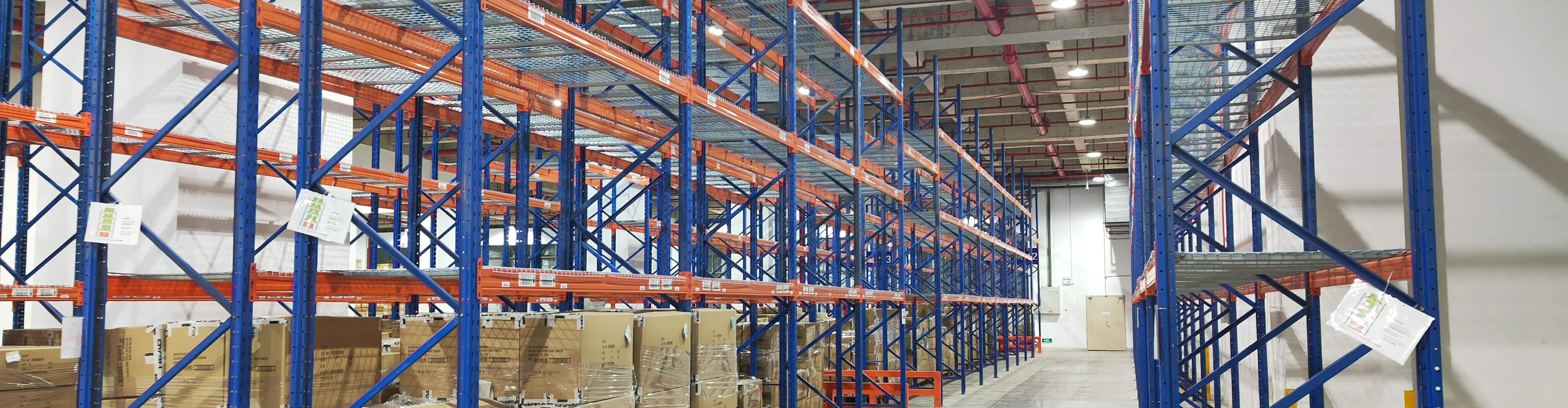
Choosing between industrial warehouse shelving and pallet racking comes down to one practical question: are you storing individual items for manual picking, or palletized loads for forklift handling? In most warehouses, shelving works better for smaller SKUs, hand-loaded cartons, parts, and picking locations, while pallet racking is designed for heavier pallet storage, higher vertical use, and forklift access.

That sounds simple, but real warehouse decisions are rarely that clean. Many facilities carry mixed inventory, uneven pallet sizes, changing SKU counts, and pressure to improve both storage density and picking speed. The right choice depends on how goods move through your operation, how often they are accessed, what equipment is used, and whether your layout needs to support future growth.
This guide compares industrial warehouse shelving and pallet racking in practical terms so warehouse managers, planners, and buyers can decide which system fits their space, inventory, and workflow.
What is industrial warehouse shelving?
Industrial warehouse shelving is a storage system built for hand-loaded goods, cartons, totes, bins, components, and smaller unit loads. It is commonly used in picking areas, spare parts storage, back-of-house stockrooms, e-commerce operations, maintenance stores, and mixed-SKU warehouses where staff need direct access to individual products.
Unlike pallet racking, industrial warehouse shelving is generally intended for manual access rather than forklift loading. Shelves may be adjustable and can support a wide range of inventory profiles, from archive boxes to small packaged goods. In practice, shelving is selected when accessibility and item-level organization matter more than full-pallet storage density.
Typical uses for industrial warehouse shelving
- Small parts and component storage
- Carton picking and order fulfillment
- Maintenance, repair, and operations inventory
- Retail backroom or wholesale stock holding
- Slow to medium-moving SKUs that need direct visual access
What is pallet racking?
Pallet racking is a structural storage system designed to hold palletized goods, usually loaded and retrieved by forklifts or other material handling equipment. It allows warehouses to store heavier loads vertically and organize pallet positions in rows and bays.
Pallet racking is usually the better choice when inventory arrives, moves, and ships by pallet. It supports higher storage capacity than most industrial warehouse shelving systems and is more suitable for operations where forklift traffic, pallet turnover, and vertical cube utilization are major planning priorities.
Typical uses for pallet racking
- Bulk pallet storage
- Finished goods warehouses
- Distribution centers with forklift handling
- Reserve stock above picking zones
- Operations with consistent pallet dimensions and load types
Industrial warehouse shelving vs pallet racking: the core difference
The main difference is the unit of storage. Industrial warehouse shelving is built for item-level or carton-level access. Pallet racking is built for pallet-level storage and mechanical handling.
That difference affects almost every planning decision:
- Access method: shelving is usually hand-loaded; racking is usually forklift-loaded
- Load size: shelving suits smaller and lighter units; racking suits larger and heavier pallet loads
- Picking style: shelving supports piece picking and carton picking; racking supports pallet in, pallet out movement
- Aisle design: shelving layouts often support pedestrian picking; racking layouts must account for forklift turning and operating clearances
- Height use: racking often makes better use of high clear height, especially in bulk storage areas
For many businesses, the decision is not either-or across the whole building. A more practical solution is often a combination: industrial warehouse shelving for active picking locations and pallet racking for reserve stock.
When industrial warehouse shelving is the better fit
Industrial warehouse shelving is often the better choice when your operation depends on manual picking, a broad SKU range, and frequent access to individual items. If staff need to see, sort, count, and retrieve products quickly without forklifts, shelving usually improves usability.
Choose industrial warehouse shelving if you have:
- High SKU variety: Many different items in small quantities are easier to organize on shelving than on pallet positions.
- Piece-picking or carton-picking workflows: If orders are built from individual units rather than full pallets, shelving supports faster access.
- Smaller products: Parts, bins, tools, hardware, packaged goods, and archive materials are usually better suited to industrial warehouse shelving.
- Low to moderate load weights per level: Shelving is practical when loads do not require heavy-duty pallet support.
- Limited forklift use: If operators mainly work on foot, shelving can reduce unnecessary equipment movement.
Operational advantages of industrial warehouse shelving
One of the biggest strengths of industrial warehouse shelving is accessibility. Staff can reach individual SKUs without moving an entire pallet. This helps in operations where order accuracy, visibility, and quick replenishment matter more than maximum pallet density.
Shelving can also be more flexible in smaller spaces. It often works well in stockrooms, mezzanine levels, narrow picking zones, and support areas where forklift access is either limited or undesirable.
Where industrial warehouse shelving may be less suitable
Industrial warehouse shelving is not the right answer for every warehouse. It becomes less efficient when goods are heavy, bulky, or consistently handled by pallet. It may also underuse available building height if the operation could store full pallets safely at greater vertical levels.
If your warehouse receives inbound goods by pallet and ships outbound loads by pallet with limited item-level picking, shelving may create extra labor by forcing unnecessary breakdown and manual handling.
When pallet racking is the better fit
Pallet racking is usually the stronger choice when load weights are higher, pallets are the standard storage unit, and forklift access is already part of daily operations. It is designed to support vertical storage and organized pallet movement at scale.
Choose pallet racking if you have:
- Full-pallet storage requirements: If goods are stored, moved, and shipped on pallets, racking is generally more efficient.
- Heavier loads: Pallet racking is built for higher load demands than standard industrial warehouse shelving.
- Higher ceiling clearance: Warehouses with good vertical space often gain more capacity from racking.
- Forklift-based workflows: If trucks are already central to your process, racking integrates more naturally.
- Reserve stock needs: Racking works well for bulk stock held above forward picking areas.
Operational advantages of pallet racking
Pallet racking helps maximize cubic storage, especially where floor space is expensive and the building has usable height. It also reduces manual handling for palletized inventory and supports clearer slotting for inbound and outbound pallet flow.
For businesses with stable pallet dimensions and predictable handling patterns, racking often brings better long-term storage efficiency than industrial warehouse shelving alone.
Where pallet racking may be less suitable
Pallet racking is less suitable for very small SKUs, high-mix hand-picking operations, or facilities where operators need direct access to many individual products. Storing small cartons on pallet racking without proper accessories or lower-level pick arrangements often wastes space and slows picking.
It also requires more attention to forklift aisle width, impact protection, floor flatness, and ongoing inspection. In a warehouse with limited truck access or mostly pedestrian movement, racking may introduce unnecessary complexity.
Key decision factors before you choose
1. Inventory profile
Start with what you actually store, not what the system brochure shows. If most inventory is in bins, cartons, or loose units, industrial warehouse shelving usually makes more sense. If most inventory stays palletized until dispatch, pallet racking is the more practical base system.
Also look at SKU count and stock depth. High SKU count with low quantity per SKU points toward shelving. Low SKU count with deeper pallet quantities points toward racking.
2. Picking method
Your order fulfillment method matters. Piece picking and carton picking generally favor industrial warehouse shelving. Full-pallet picking favors racking. Mixed operations often need both, with shelving in the forward pick face and pallet racking behind or above for replenishment stock.
3. Material handling equipment
If the warehouse relies on forklifts, reach trucks, or pallet stackers, pallet racking is usually easier to integrate. If most activity is done by walking pickers with trolleys or carts, industrial warehouse shelving may support a more efficient workflow.
Do not ignore aisle implications. Racking needs enough turning radius and operating clearance for the equipment being used. Shelving layouts can often support denser pedestrian access, but only if replenishment and housekeeping are managed properly.
4. Building height and floor space
Warehouses with limited floor area but good clear height often benefit from pallet racking because it uses vertical space more effectively. Industrial warehouse shelving can also be configured in taller layouts or integrated with mezzanine levels, but that depends on access method, load limits, and picking practicality.
In lower buildings or support rooms, shelving may be more space-efficient because it avoids overspecifying a pallet-based solution where height cannot be fully used.
5. Load requirements
Load capacity should never be treated casually. Buyers should review not only average product weight, but also peak load conditions, shelf level loads, beam loads, and how stock may change over time. Industrial warehouse shelving is suitable for many commercial storage applications, but if inventory may become heavier or more palletized later, expansion planning matters.
6. Growth and reconfiguration
If your SKU profile changes frequently, industrial warehouse shelving can offer useful flexibility for re-slotting and reorganizing pick locations. If your business is scaling pallet throughput, pallet racking may provide a stronger long-term framework.
Think beyond current stock. A system that fits today but cannot adapt to new product dimensions, new handling equipment, or higher throughput can become costly to modify later.
Common mistakes buyers make
- Choosing by price alone: A cheaper system can increase labor, reduce accessibility, or waste space if it does not match the workflow.
- Ignoring replenishment logic: Many operations need both industrial warehouse shelving and pallet racking, not one system everywhere.
- Underestimating aisle needs: Forklift access, pedestrian movement, and emergency routes must all be planned properly.
- Using shelving for loads that should be palletized: This creates safety and maintenance issues.
- Using racking for small-item picking without proper design: This often causes poor ergonomics and inefficient picking.
- Forgetting inspection and damage risk: Any storage system needs routine checks, especially in active warehouse environments.
Safety, maintenance, and inspection considerations
Whether you choose industrial warehouse shelving or pallet racking, the system must be used within its intended load and access conditions. Damage usually comes from overloading, impact, poor housekeeping, improvised modifications, or using the wrong handling method for the system.
For industrial warehouse shelving, pay attention to:
- Level loading and weight distribution
- Loose or missing components
- Deformed shelves, frames, or braces
- Unsafe climbing by staff
- Blocked aisles and poor picking ergonomics
For pallet racking, pay attention to:
- Upright damage from forklift impact
- Beam displacement or connector damage
- Missing safety locks or anchors
- Overloaded pallet positions
- Pallet overhang and inconsistent pallet quality
Routine visual checks and a clear reporting process are important for both systems. If the warehouse is busy, equipment contact and misuse can develop slowly into a larger safety problem if not addressed early.
Should you use both systems in one warehouse?
In many real operations, yes. A combined layout is often the most efficient answer. Industrial warehouse shelving can be used for active picking, small parts, and split-case orders, while pallet racking holds reserve pallets, inbound stock, or slower-moving bulk inventory.
This hybrid approach is common because it matches storage type to handling reality. It can improve pick speed without sacrificing reserve capacity. The main challenge is planning replenishment flow carefully so pick faces stay stocked without creating congestion between pedestrian and forklift zones.
Simple selection framework
If you need a quick way to decide, use this framework:
- Choose industrial warehouse shelving if your inventory is mostly small items, cartons, bins, or hand-picked SKUs.
- Choose pallet racking if your inventory is mostly palletized, heavy, and moved by forklift.
- Choose a combination if you store reserve pallets but pick orders at item or carton level.
Then confirm the decision against these checkpoints:
- What is the main storage unit: item, carton, or pallet?
- How is stock accessed: by hand or by forklift?
- Do you need direct access to many SKUs?
- How much vertical height can you use effectively?
- Will the system still work if inventory mix changes next year?
FAQ
Is industrial warehouse shelving cheaper than pallet racking?
It can be, especially for smaller manual storage areas, but total value depends on workflow. A lower upfront cost does not help if the system increases labor or limits future capacity.
Can industrial warehouse shelving store pallets?
That depends on the specific shelving design and load rating, but in general pallets are better stored on systems intended for pallet handling. Buyers should avoid assuming that shelving can safely replace pallet racking for heavy pallet loads.
Which system is better for e-commerce picking?
Industrial warehouse shelving is usually better for e-commerce operations with many SKUs and piece-picking requirements. Pallet racking may still be used for reserve stock.
Can I convert from shelving to racking later?
Possibly, but it is better to plan for future change early. Layout, floor loading, aisle width, and equipment type all affect how easy a later conversion will be.
Conclusion
There is no universal winner between industrial warehouse shelving and pallet racking. The right choice depends on inventory form, picking method, handling equipment, available height, and how the warehouse actually operates day to day.
If your business needs direct access to a wide range of smaller items, industrial warehouse shelving is usually the more suitable option. If your operation is built around pallet movement and forklift storage, pallet racking will usually deliver better capacity and handling efficiency. For many facilities, the strongest answer is a mixed layout that uses each system where it performs best.
Before buying, review your SKU profile, load characteristics, aisle constraints, replenishment process, and expansion plans. A storage system should support the way your warehouse works now while still leaving room for operational change.