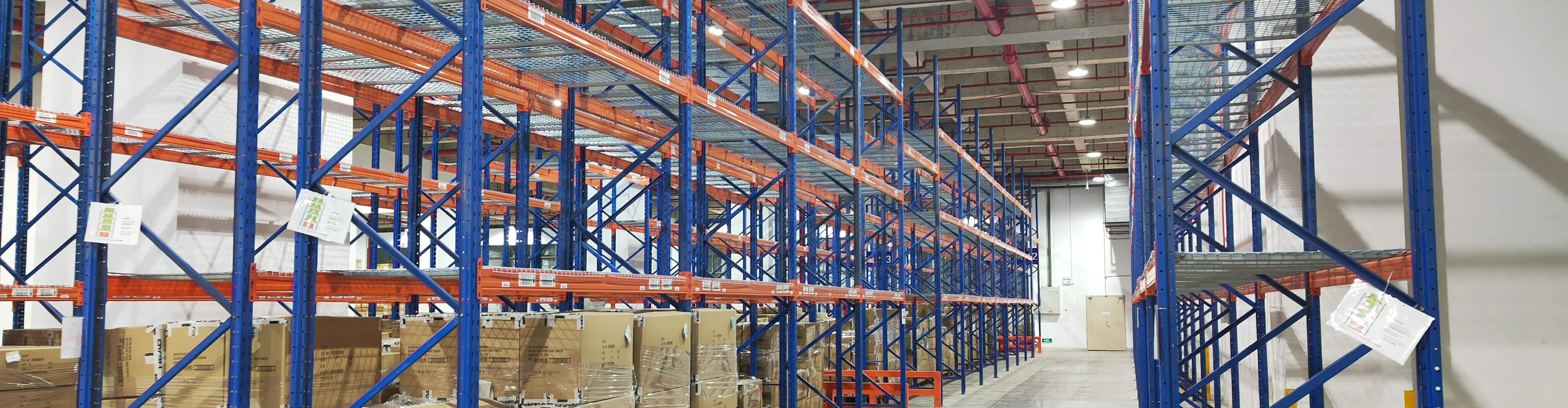
For most distribution centers, the best heavy duty industrial pallet racking is the system that matches pallet throughput, SKU profile, forklift movement, and available building height without creating access or safety problems. In practical terms, selective pallet racking is often the starting point because it offers direct access to every pallet, while higher-density options such as drive-in, push back, or pallet flow may be better for specific inventory patterns and space constraints.
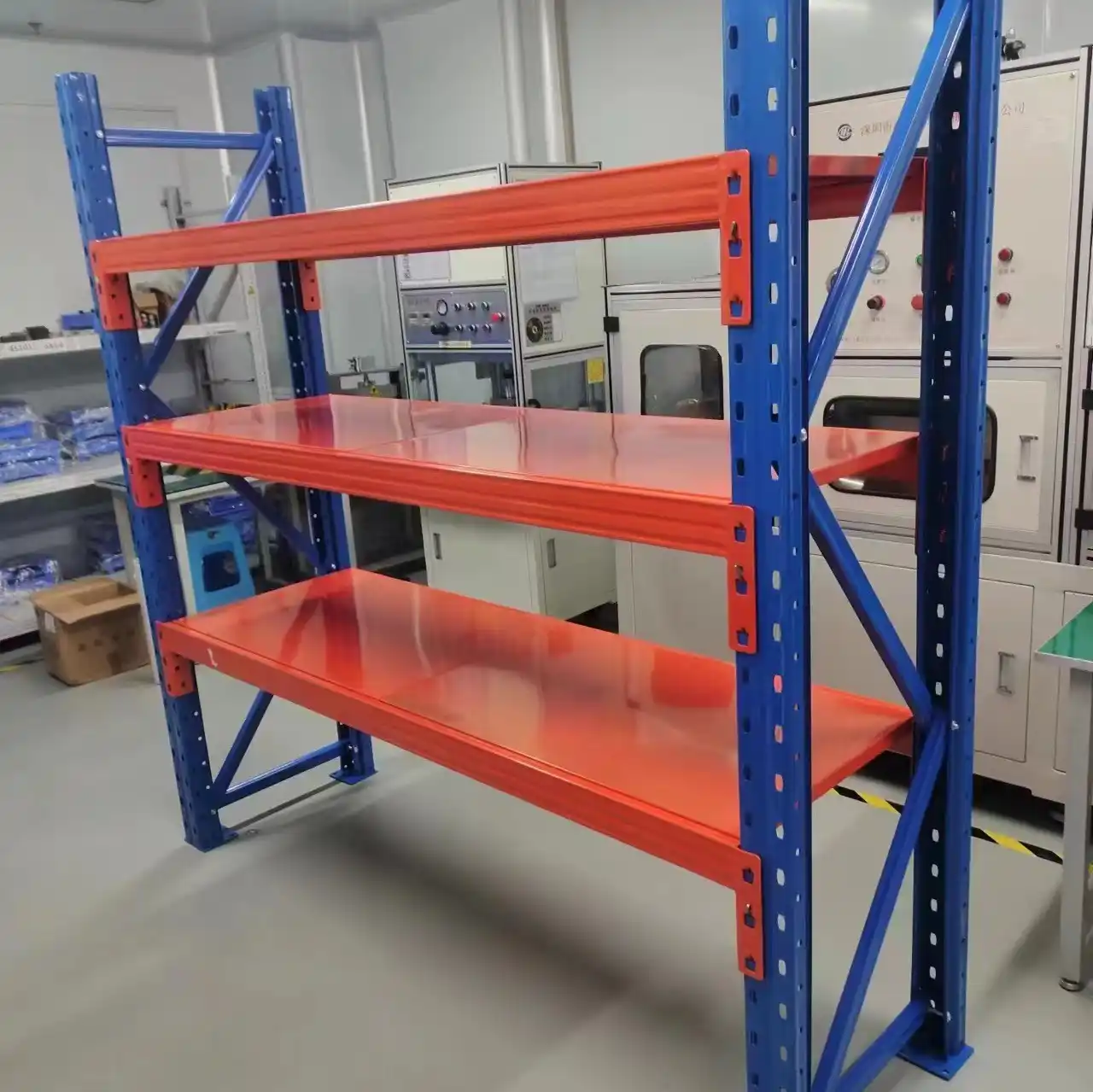
Choosing heavy duty industrial pallet racking for a distribution center is not only about load capacity. The right system has to support daily handling speed, reduce congestion, fit the aisle layout, and remain manageable for inspections, repairs, and future expansion. A system that looks efficient on paper can become a bottleneck if it does not suit the way pallets are actually received, stored, replenished, and dispatched.
What heavy duty industrial pallet racking means in a distribution center
Heavy duty industrial pallet racking refers to storage systems designed to hold palletized goods at commercial warehouse scale, typically under frequent forklift handling and higher load demands than light shelving or hand-loaded storage. In a distribution center, these systems are expected to support repetitive pallet movements, vertical storage, and dependable structural performance when used correctly.
The term covers several racking formats rather than one single design. The main difference between them is how they balance three factors:
- Accessibility: how quickly each pallet can be reached
- Storage density: how much stock fits into the available footprint
- Handling efficiency: how easily forklifts can load, unload, and replenish stock
That balance matters because distribution centers rarely operate with one simple storage objective. Many need reserve storage, fast-moving pallet dispatch, replenishment for picking zones, and room for seasonal stock changes.
Best heavy duty industrial pallet racking types for distribution centers
Selective pallet racking
Selective systems are the most widely used form of heavy duty industrial pallet racking in distribution centers because every pallet position is directly accessible. This makes them suitable for operations with a broad SKU range, mixed pallet locations, and regular stock rotation.
Selective racking is usually the most practical choice when:
- The warehouse stores many SKUs
- Operators need immediate access to individual pallets
- Inventory changes frequently
- Order profiles require flexible replenishment
- Warehouse managers want a straightforward system to inspect and maintain
Its main limitation is storage density. Because each aisle provides direct access, more floor space is consumed by forklift travel lanes than with compact storage systems. In a distribution center where access speed matters more than maximum density, that trade-off is often acceptable.
Double deep pallet racking
Double deep racking stores pallets two positions deep, reducing the number of aisles compared with selective layouts. It can improve space utilization, but it also reduces immediate accessibility because the rear pallet cannot be reached until the front pallet is moved.
This format may suit distribution centers that hold moderate pallet quantities per SKU and can manage stock in pairs or batches. It is less suitable where strict first-in, first-out handling or highly mixed pallet access is required.
Double deep systems also require compatible forklift equipment and skilled operators. That should be considered early, because storage gain can be offset by slower handling or equipment changes if the operation is not set up for it.
Drive-in pallet racking
Drive-in heavy duty industrial pallet racking is designed for high-density storage of similar pallets. Forklifts enter the storage lanes and place pallets on rail supports, allowing a large amount of stock to be stored in a compact footprint.
Drive-in racking can work well when:
- There are large quantities of the same SKU
- Storage density is more important than selectivity
- Stock turnover can work on a last-in, first-out basis
- Cold storage or expensive floor space makes compact storage attractive
However, it is not ideal for high-SKU distribution centers with constant location changes. It can be slower to operate, more vulnerable to impact damage, and harder to manage if pallet quality is inconsistent or forklift discipline is weak.
Push back pallet racking
Push back systems store multiple pallets deep on inclined carts or rails. When a pallet is loaded, it pushes the previous pallet back. When a pallet is removed, the next one rolls forward into the pick face.
This can be a strong option for distribution centers that want higher density than selective racking without the operational constraints of drive-in lanes. It is often suited to medium-turn inventory with multiple pallets per SKU.
The trade-off is that push back systems are more specialized and should be matched carefully to pallet condition, load consistency, and operator training. Uneven pallets, damaged bases, or poor loading practice can create handling issues over time.
Pallet flow racking
Pallet flow racking uses gravity rollers to move pallets from the loading side to the picking side. This supports first-in, first-out stock rotation and can be useful in distribution centers handling date-sensitive goods or fast-moving pallet replenishment.
Pallet flow heavy duty industrial pallet racking is often considered when:
- FIFO rotation is operationally important
- There is enough pallet volume per SKU to justify lane-based storage
- Receiving and dispatch can be separated for smoother flow
- High-throughput pallet movement is a priority
It is generally less suitable for very mixed inventory with low pallet counts per SKU. The system needs disciplined loading, consistent pallet quality, and careful lane planning to perform well.
How to choose the right heavy duty industrial pallet racking
The best heavy duty industrial pallet racking for a distribution center depends on how the building and operation work together. Buyers should evaluate the system in the context of actual warehouse movement, not just nominal storage capacity.
1. Review SKU mix and pallet quantities
If the facility stores many SKUs with only a few pallets of each, selective racking is usually the most practical route. If there are fewer SKUs with deeper pallet quantities, higher-density systems become more realistic.
A common planning mistake is choosing a dense system for a warehouse that still needs frequent access to individual pallets. This often leads to reshuffling, blocked access, and lower real productivity.
2. Check forklift type and aisle requirements
Forklift turning radius, lift height, mast type, and aisle width all influence racking design. A distribution center using standard counterbalance trucks will need a different layout from one using reach trucks or very narrow aisle equipment.
Before selecting heavy duty industrial pallet racking, confirm:
- Required working aisle width
- Maximum safe lift height
- Visibility at upper beam levels
- Clearance for pallet overhang and load handling
- Whether current trucks are suitable for the proposed layout
Ignoring handling equipment at the planning stage often creates expensive redesigns later.
3. Measure clear height and building constraints
Available vertical space is one of the biggest cost drivers in warehouse storage. A low building may limit the benefit of certain layouts, while a taller building may make selective racking more competitive because additional beam levels can offset lower floor density.
Planners should also account for:
- Sprinkler clearances
- Lighting positions
- Dock and door interference
- Column spacing
- Slab condition and floor flatness
Even strong heavy duty industrial pallet racking performs poorly when the building geometry forces awkward aisles or unusable bays.
4. Consider throughput, not just storage volume
Distribution centers are operating environments, not static storage rooms. A rack layout that increases pallet positions but slows put-away and retrieval may hurt overall performance.
Ask practical questions such as:
- How many pallet movements happen per shift?
- Which SKUs need fastest access?
- Are pallets mainly reserve stock or active dispatch stock?
- Does the layout create forklift congestion at peak times?
- Will replenishment interfere with picking or outbound loading?
The right heavy duty industrial pallet racking should support flow, not just storage density.
5. Plan for inspections, repairs, and future changes
Some systems are easier to inspect and maintain than others. Selective layouts generally provide better visibility for checking uprights, beams, anchors, and accessories. High-density systems can reduce access for routine inspection and may experience more concentrated forklift contact in specific zones.
Buyers should also think ahead. If the distribution center expects SKU growth, changing pallet sizes, or phased expansion, a flexible racking format may be more valuable than a tightly optimized layout that leaves little room for adjustment.
When selective pallet racking is usually the safest choice
Although several systems can be described as the best in the right setting, selective heavy duty industrial pallet racking is usually the safest default for general distribution centers. That is because it works well across a wide range of inventory profiles and operational patterns.
It is especially suitable when the warehouse has:
- A large number of SKUs
- Frequent stock rotation
- Mixed pallet sizes or changing product lines
- Direct pallet access requirements
- Routine cycle counting and location control needs
It may not deliver the highest density, but it often provides the best balance of access, simplicity, and operational control.
When higher-density heavy duty industrial pallet racking makes more sense
Higher-density heavy duty industrial pallet racking becomes more attractive when floor space is tight and the inventory profile supports lane-based or multi-deep storage. This is common in facilities with fewer SKUs, larger pallet batches, or dedicated reserve stock zones.
For example:
- Drive-in may suit bulk storage of the same palletized item
- Push back may suit medium-depth storage where access speed still matters
- Pallet flow may suit FIFO operations and high-throughput replenishment
- Double deep may suit operations that can trade some selectivity for space savings
The key is to match the system to inventory behavior. A dense system used in the wrong environment often creates hidden labor cost, slower retrieval, and more handling errors.
Common mistakes when buying heavy duty industrial pallet racking
- Choosing by price alone: the cheapest layout may create long-term operating inefficiencies
- Ignoring pallet quality: damaged or inconsistent pallets can cause problems in deep-lane or gravity-fed systems
- Underestimating forklift impact risk: tight layouts increase the chance of upright and rail damage
- Planning only for current stock: future SKU growth and layout changes should be considered early
- Overlooking floor condition: slab issues can affect installation accuracy and long-term performance
- Not defining load requirements clearly: pallet weight, load height, and beam level use must be understood before specification
These mistakes are common because racking is often treated as a simple product purchase. In reality, heavy duty industrial pallet racking is part of the warehouse operating system.
Inspection and safety priorities for distribution centers
Any heavy duty industrial pallet racking system should be supported by routine visual checks and formal inspection practices appropriate to the operation. Distribution centers expose racks to repeated forklift contact, pallet overhang, accidental overloading, and wear around busy aisles.
Priority inspection points typically include:
- Upright damage from truck impact
- Beam deflection or displaced beam connectors
- Loose or missing floor anchors
- Damaged safety locks or accessories
- Overloaded or incorrectly placed pallets
- Obstructions that affect aisle safety or pallet seating
Good housekeeping, clear load labeling, driver training, and prompt reporting of damage are just as important as the initial rack choice.
A practical selection framework
If you are comparing options for a distribution center, a simple decision framework can help narrow the choice:
- Choose selective racking if direct access, flexibility, and mixed SKU storage are the priority
- Choose double deep if you need better density and can accept reduced selectivity
- Choose drive-in if you store large volumes of similar pallets and want maximum compact storage
- Choose push back if you want a balance of density and faster access than drive-in
- Choose pallet flow if FIFO handling and throughput justify a more specialized system
In many facilities, the best answer is not one system throughout the entire building. A distribution center may use selective heavy duty industrial pallet racking for core storage, with denser systems reserved for bulk reserve stock or fast-moving pallet lanes.
FAQ
What is the most versatile heavy duty industrial pallet racking for a distribution center?
Selective pallet racking is usually the most versatile because it provides direct access to every pallet and adapts well to mixed SKU storage.
Is drive-in racking a good choice for general distribution use?
It can be useful for bulk storage of similar products, but it is often less suitable for general mixed-SKU distribution centers that need rapid access to individual pallet positions.
How do I know if higher-density racking is worth it?
It is usually worth evaluating when floor space is limited, pallet quantities per SKU are higher, and the operation can tolerate lower selectivity or lane-based storage rules.
Does heavy duty industrial pallet racking require regular inspection?
Yes. Regular checks for impact damage, loose anchors, beam issues, and loading problems are essential in active distribution environments.
Conclusion
The best heavy duty industrial pallet racking for a distribution center is the one that fits the real operating pattern of the site. For many warehouses, selective racking remains the most dependable choice because it supports direct access, layout flexibility, and easier day-to-day control. Higher-density systems can deliver better space use, but only when pallet volumes, SKU profile, and handling methods genuinely support them.
Before committing to any heavy duty industrial pallet racking system, review pallet flow, forklift access, building limits, inspection needs, and future growth plans. That approach leads to a storage solution that works in daily operations, not just in a layout drawing.