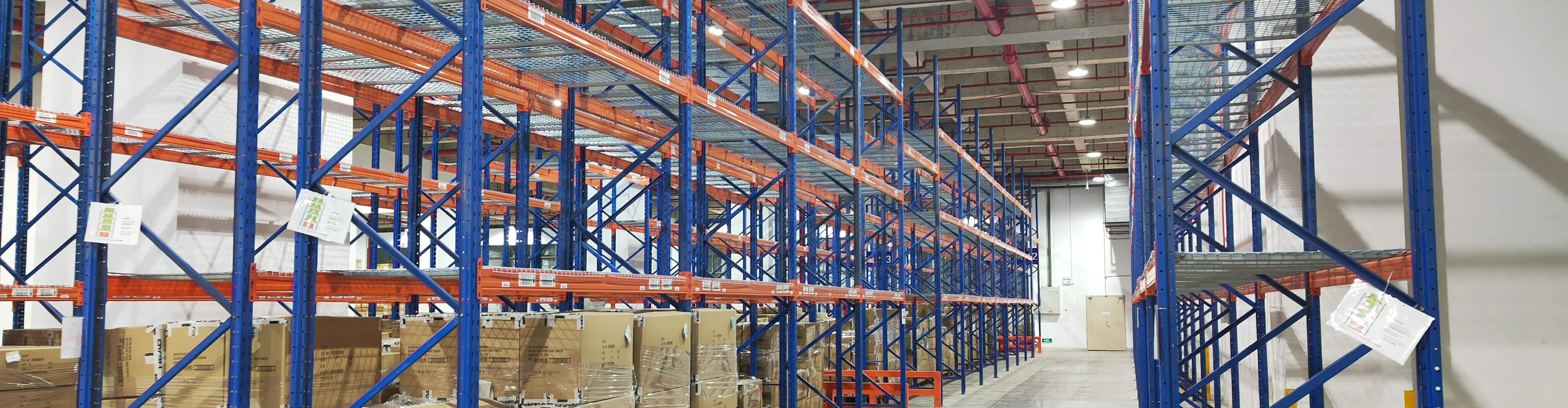
Choosing the right heavy duty industrial pallet racking system is mainly a planning decision, not just a product decision. The right setup must match pallet loads, forklift movement, SKU profile, ceiling height, floor condition, and future expansion plans. For industrial projects, buyers should assess operational fit first, then compare load capacity, layout efficiency, safety requirements, and supplier support before placing an order.
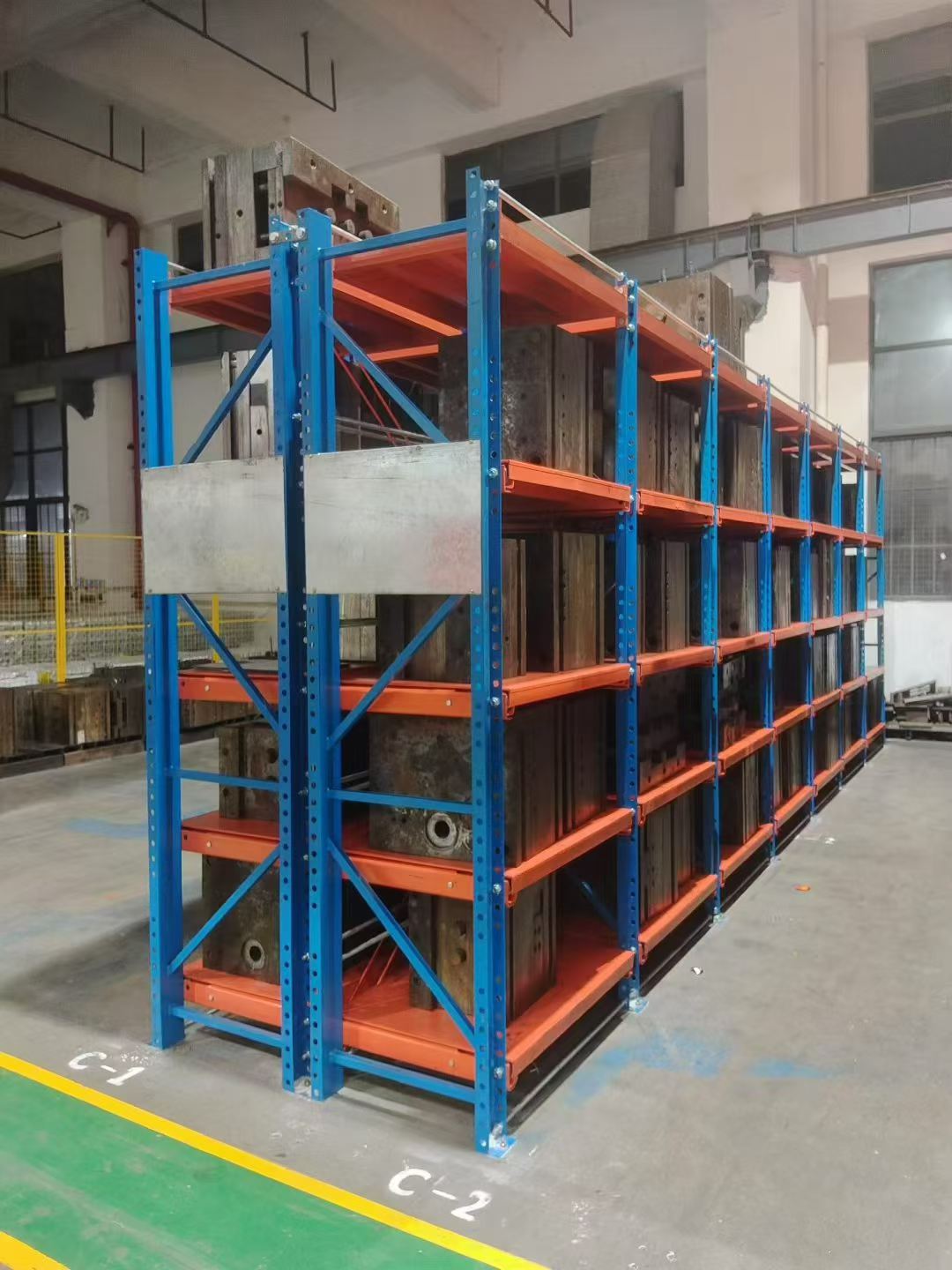
This guide explains how to evaluate heavy duty industrial pallet racking for real warehouse use. It is written for warehouse managers, procurement teams, project planners, and industrial buyers who need a system that supports daily operations without creating avoidable access, safety, or maintenance problems.
What heavy duty industrial pallet racking is designed to do
Heavy duty industrial pallet racking is used to store palletized goods in a structured, accessible, and scalable way. It is commonly selected for warehouses, production facilities, distribution centers, and industrial storage areas where loads are too large or too frequent for light shelving systems.
In practical terms, the system must do more than hold pallets. It must also support safe forklift access, efficient stock rotation, stable load placement, and predictable daily handling. A rack that looks suitable on paper can still cause operational issues if aisle widths are too tight, beam levels do not match pallet heights, or rack depth does not suit the pallet type being used.
That is why industrial projects should evaluate heavy duty industrial pallet racking as part of the wider warehouse layout, not as an isolated equipment purchase.
Key questions to answer before buying heavy duty industrial pallet racking
Before comparing quotations or layouts, buyers should define the operating conditions clearly. This step prevents costly redesigns later.
- What are the pallet dimensions and load weights? Rack design depends on real pallet size and actual loaded weight, not assumptions.
- How many pallet positions are required now and later? A system that fits current demand but blocks expansion can become expensive quickly.
- What forklifts will be used? Different trucks require different aisle widths, lift heights, and turning clearances.
- Is the operation focused on full pallet storage, picking, or both? Access requirements change significantly depending on the workflow.
- How fast does inventory move? Fast-moving pallet storage may need easier access and better slotting logic than bulk reserve storage.
- What is the SKU mix? High-SKU warehouses usually need selectivity, while low-SKU bulk storage may favor denser systems.
- What is the clear building height? Available vertical space affects storage density and equipment choice.
- Is the floor suitable? Floor flatness, condition, and load-bearing capability matter in any racking project.
If these questions are not answered early, buyers often end up choosing heavy duty industrial pallet racking that fits the budget but not the operation.
Main types of heavy duty industrial pallet racking to consider
Selective pallet racking
This is the most common form of heavy duty industrial pallet racking. It provides direct access to every pallet location, which makes it suitable for mixed inventory, multiple SKUs, and operations where selectivity matters more than maximum density.
It is often a practical choice for general warehousing because it is straightforward to manage, inspect, and reconfigure. The trade-off is that it uses more aisle space than denser storage systems.
Drive-in or drive-through racking
These systems increase storage density by reducing the number of aisles. They are more suitable for lower SKU counts and larger quantities of similar pallets. They can work well for bulk storage, but they are less selective and require disciplined forklift operation. They are usually less suitable where product variety is high or stock rotation is complex.
Double deep racking
Double deep layouts can improve storage density compared with standard selective systems, but pallet access becomes less direct. Operations may need suitable handling equipment and tighter stock control. This option can make sense when floor space is limited but some selectivity can be sacrificed.
Very narrow aisle configurations
Very narrow aisle designs can increase pallet positions within the same footprint by reducing aisle width. However, they depend on compatible handling equipment, disciplined traffic control, and accurate floor and layout planning. This is not automatically the right answer for every industrial site, especially if operational simplicity and equipment flexibility are priorities.
How to judge whether heavy duty industrial pallet racking is the right fit
Heavy duty industrial pallet racking is usually a strong fit when the operation stores palletized goods, needs organized vertical storage, and wants a system that can be expanded or adapted over time. It is especially relevant when floor stacking is limiting capacity, reducing stock visibility, or creating safety concerns.
It may be less suitable as the main solution if the warehouse relies heavily on piece picking from many small cartons, stores mostly non-palletized items, or has unusual load shapes that standard pallet handling cannot support efficiently. In those cases, a mixed solution with shelving, cantilever storage, mezzanine floors, or specialized racking may be more practical.
For many industrial projects, the real answer is not whether to use heavy duty industrial pallet racking, but which configuration delivers the right balance of access, density, cost, and operating control.
Load planning: the detail buyers should not treat lightly
One of the most common mistakes in racking procurement is underdefining the load. Buyers sometimes provide only an approximate pallet weight, but safe and efficient rack planning depends on more than that.
Important load factors include:
- Maximum pallet weight, not average weight
- Pallet dimensions and overhang
- Load stability and packaging condition
- Whether loads are uniform or inconsistent
- Beam level spacing required for actual pallet height
- Whether pallets are placed manually with standard forklifts or specialized equipment
If pallet loads vary significantly across product lines, that should be discussed at the planning stage. A warehouse storing stable, consistent pallets behaves differently from one handling damaged pallets, soft packaging, or uneven outbound preparation.
Warehouse layout factors that affect buying decisions
Aisle width and forklift movement
A rack layout that looks space-efficient can become inefficient if forklifts struggle to turn, position, or retrieve loads. Buyers should check aisle dimensions against the actual truck fleet, not a generic assumption. If truck replacement is planned later, that should also be considered.
Ceiling height and lift clearance
More height can improve storage capacity, but only if the handling equipment can safely reach the upper levels and the building allows enough operating clearance. Sprinklers, lighting, columns, doors, and roof obstructions all affect usable height.
Column grid and building restrictions
Industrial buildings rarely offer a perfectly open layout. Structural columns, dock areas, fire exits, charging zones, and production interfaces all affect how heavy duty industrial pallet racking can be arranged. A good layout works with these restrictions instead of forcing a theoretical design into a real building.
Inbound and outbound workflow
Racking should support the way goods actually move. If receiving, reserve storage, replenishment, and dispatch are poorly connected, the warehouse may lose time every day even if the rack capacity looks good on paper.
Operational trade-offs buyers should compare
No heavy duty industrial pallet racking layout is ideal in every category. Most projects involve trade-offs, and clear priorities make selection easier.
- High selectivity vs high density: Direct pallet access usually means more aisles and lower density.
- Lower capital cost vs future flexibility: A simpler system may cost less initially but limit expansion or reconfiguration.
- Maximum pallet count vs easy operation: Dense layouts can increase capacity but may slow handling and complicate stock rotation.
- Vertical storage gain vs equipment demands: Taller systems improve cube utilization but often require tighter operating control.
- Fast installation vs detailed planning: Rushing layout decisions often creates avoidable changes later.
Good buying decisions come from understanding which trade-offs matter most to the site.
Safety, inspection, and maintenance considerations
Heavy duty industrial pallet racking should be selected with ongoing use in mind, not only installation. Industrial sites should plan for regular inspection, impact awareness, load discipline, and basic rack protection where traffic is heavy.
Practical points to review include:
- Visibility of load notices and location identification
- Protection for vulnerable uprights in high-traffic zones
- Clear reporting process for impact damage
- Routine checks for beam displacement, damaged frames, and loose anchors
- Housekeeping standards around rack bases and aisles
- Training for correct pallet placement and load limits
Even well-specified heavy duty industrial pallet racking can become a risk if pallets are overloaded, impacts go unreported, or damaged components remain in service. Buyers should think beyond procurement and consider who will manage rack safety after handover.
Common buying mistakes in industrial pallet racking projects
Buying only on price per pallet position
Low cost per position can be attractive, but it does not reflect labor efficiency, stock access, future modifications, or maintenance exposure. A cheaper layout may cost more operationally if it slows throughput or creates frequent handling conflicts.
Ignoring future growth
Some projects are designed too tightly around current volume. If the facility expects SKU growth, higher pallet throughput, or layout changes, the racking plan should leave room for adaptation.
Using estimated rather than verified load data
Approximate pallet weights and dimensions often lead to design mismatches. Verification is worth the effort.
Overlooking floor and building constraints
Racking performance depends partly on the building itself. Uneven floors, obstructions, and restricted access can limit what is practical.
Choosing density over usability
Some high-density layouts look efficient but are difficult to manage in mixed inventory operations. If stock access is a daily priority, selectivity may be more valuable than squeezing in extra pallet positions.
How to compare suppliers and quotations more effectively
When sourcing heavy duty industrial pallet racking, buyers should compare more than total price. A useful comparison should cover scope clarity, layout assumptions, component suitability, installation expectations, and after-sales support.
Ask suppliers to clarify:
- What pallet size and load assumptions are used
- How many pallet positions are included in the proposal
- Which aisle widths and truck types the layout assumes
- Whether installation, anchoring, and protection items are included
- What documentation is provided for load use and rack identification
- How future extension or reconfiguration can be handled
This reduces the risk of comparing quotations that appear similar but are based on different assumptions.
A practical buying checklist for heavy duty industrial pallet racking
- Confirm actual pallet dimensions, heights, and maximum weights
- Define the number of SKUs and pallet positions required
- Review forklift type, lift height, and aisle requirements
- Measure usable building height and note obstructions
- Assess floor condition and layout restrictions
- Decide the priority balance between selectivity and density
- Plan for stock rotation, replenishment, and picking workflow
- Allow for future expansion where possible
- Review rack protection, inspection, and maintenance needs
- Compare supplier proposals based on assumptions, not just price
FAQ
What is the main advantage of heavy duty industrial pallet racking?
The main advantage is organized vertical pallet storage with better accessibility and space use than floor stacking. It can also improve stock control and workflow when matched properly to the operation.
Is heavy duty industrial pallet racking suitable for every warehouse?
No. It is most suitable for palletized goods and forklift-based handling. Warehouses focused on carton picking, irregular loads, or non-palletized storage may need a mixed storage approach.
How do I know which racking type to choose?
Start with pallet profile, SKU count, stock rotation method, available space, and forklift type. Selective racking suits many mixed-inventory operations, while denser systems are more suitable for lower SKU bulk storage.
What should buyers check before installation?
They should verify load data, layout dimensions, aisle widths, floor condition, building constraints, and operational flow. It is also sensible to confirm how the system will be inspected and managed after installation.
Final decision takeaways
Buying heavy duty industrial pallet racking for an industrial project requires more than choosing a frame and beam layout. The right system must suit pallet loads, forklift operation, storage density targets, stock profile, and the physical limits of the building. Buyers who define these factors early are more likely to get a layout that works in daily use, not just in a drawing.
If you are evaluating heavy duty industrial pallet racking, focus first on operational fit, then on capacity and price. A well-planned system supports safety, access, and future growth; a poorly matched one creates handling delays, maintenance issues, and avoidable redesign costs.