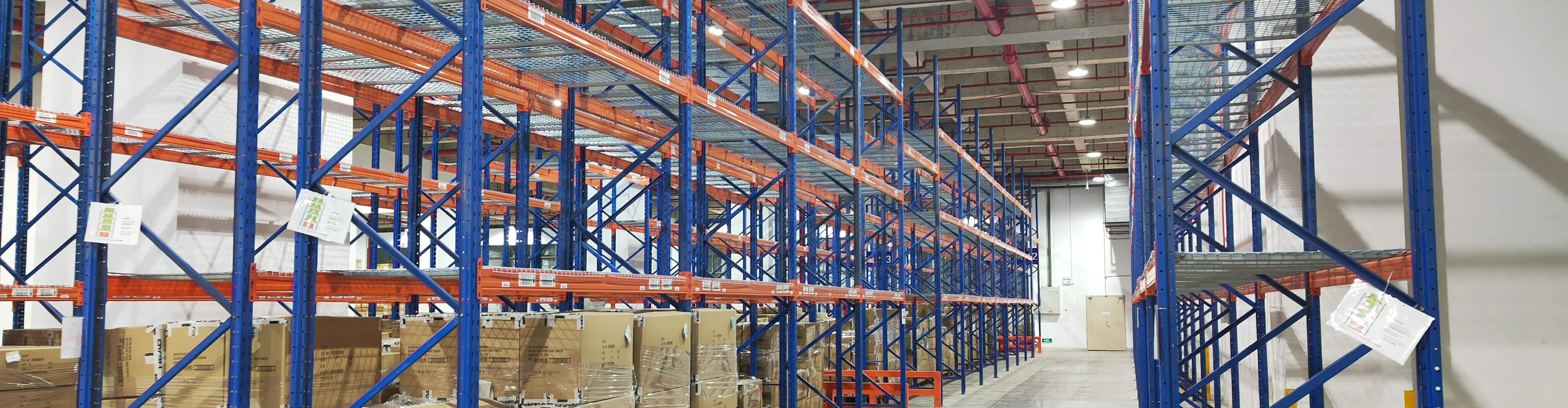
Choosing a heavy duty storage rack is not just a matter of load capacity. The right system must match your pallet type, SKU profile, forklift handling, floor conditions, building height, and day-to-day workflow. A rack that looks suitable on paper can become inefficient, hard to maintain, or unsafe if it does not fit the actual operation.
For most industrial buyers, the best approach is to start with how goods move through the facility, then work backward to rack type, layout, beam levels, aisle width, and future expansion. This article explains the main decision factors so warehouse managers, planners, and procurement teams can choose a heavy duty storage rack that supports both storage capacity and operational efficiency.
What a heavy duty storage rack should do in an industrial setting
A heavy duty storage rack is designed for storing substantial loads in demanding warehouse, factory, and distribution environments. In practice, that usually means palletized goods, large containers, bulky components, dies, cartons on pallets, or other industrial inventory that requires strong structural support and reliable access.
In industrial applications, the rack should do more than hold weight. It should also:
- Support safe loading and unloading by forklifts or other handling equipment
- Fit the dimensions and weight distribution of your pallets or unit loads
- Make efficient use of floor area and building height
- Allow practical access for storage, replenishment, and picking
- Remain manageable for inspection, maintenance, and future reconfiguration
If a heavy duty storage rack meets load requirements but disrupts workflow or creates access problems, it may still be the wrong choice.
Start with your inventory profile
The first step is to understand exactly what the rack will store. Many selection mistakes happen because buyers focus on a generic rack category before defining the loads.
Review load type and dimensions
Check whether you are storing standard pallets, oversized pallets, stillages, drums, tooling, long items, or mixed unit loads. Length, width, height, and overhang all affect beam length, level spacing, and aisle planning.
If load sizes vary widely, a standard pallet rack layout may create wasted space or inconsistent handling conditions. In those cases, a more tailored heavy duty storage rack configuration may be needed.
Confirm actual load weight
Do not estimate loosely. Real pallet weight, including packaging and seasonal variation, directly affects upright and beam selection. If loads can change over time, build that into the planning process. A rack selected too close to current limits may restrict future use or create compliance issues later.
Consider SKU mix and movement speed
High-SKU operations usually need better accessibility. Lower-SKU, high-volume operations may benefit more from dense storage. If fast-moving items need frequent access, the heavy duty storage rack should support efficient replenishment and retrieval rather than maximizing storage density alone.
Match the rack to your handling method
The right rack depends heavily on how goods are moved. Forklift type, turning radius, lift height, and operator visibility all influence layout and rack suitability.
Forklift access and aisle width
Counterbalance forklifts generally require wider aisles than reach trucks or very narrow aisle equipment. If your current fleet needs wide operating space, choosing a dense rack layout without reviewing aisle requirements can reduce productivity and increase impact risk.
A heavy duty storage rack should be selected with realistic operating clearances, not idealized drawings. Tight aisles may improve storage capacity on paper, but they can slow down movement, increase rack damage, and make picking more difficult.
Loading style and pallet positioning
Some operations handle full pallets only. Others combine pallet storage with case picking, replenishment, or mixed-load handling. If operators regularly place pallets that are not perfectly uniform, the rack design should account for practical tolerances. Systems that are too tight for real handling conditions often lead to beam impact, pallet overhang issues, and unsafe placement.
Choose the right rack type for the application
Heavy duty storage can be achieved through several rack formats. The right choice depends on accessibility, density, stock rotation, and load consistency.
Selective pallet racking
This is often the most practical heavy duty storage rack option when direct access to every pallet is important. It suits warehouses with a broad SKU range, regular stock rotation, and mixed picking needs.
It is usually a strong choice when:
- You need immediate access to each pallet location
- You store many SKUs in moderate quantities
- You want simpler inspection and maintenance access
- You may need future layout adjustments
Its limitation is lower storage density compared with deep-lane systems.
Drive-in or drive-through racking
These systems increase storage density by reducing access aisles. They can work for large quantities of similar products with fewer SKUs.
They may be less suitable when:
- Stock rotation is strict
- Pallet quality is inconsistent
- Frequent SKU changes are expected
- Forklift impact risk is already high
A dense system can look attractive from a space-saving perspective, but it may require tighter operational discipline and more careful handling.
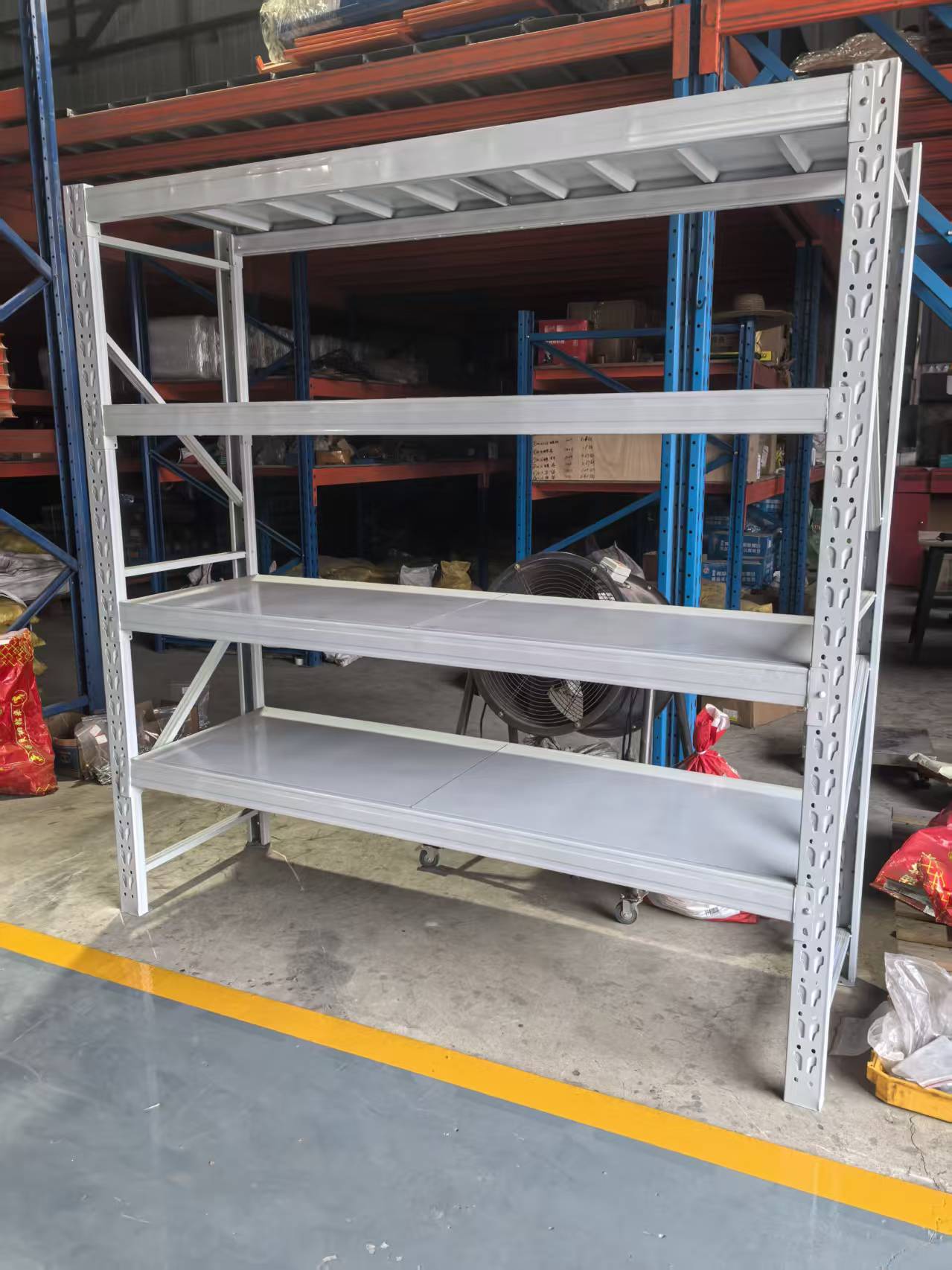
Heavy duty shelving or longspan systems
For hand-loaded items, cartons, components, tools, or mixed industrial parts, a shelving-based heavy duty system may be more practical than pallet racking. This is especially relevant where staff pick individual items rather than full pallets.
If the operation combines bulk pallet storage with piece picking, the best solution may involve more than one storage format rather than forcing everything into a single heavy duty storage rack layout.
Cantilever or specialized racks
Long materials, pipes, bars, timber, or awkward products often require specialized support. Standard pallet racks are not automatically suitable for these items. If the load does not sit safely on a pallet, a different rack style should be considered early in the planning stage.
Assess building constraints before finalizing the rack
A heavy duty storage rack must fit the building as it really exists, not as shown in a basic floor plan. Ceiling height, columns, doors, sprinklers, lighting, and floor quality all affect what is practical.
Use available height carefully
Higher storage can improve cube utilization, but only if your handling equipment can reach the upper levels safely and efficiently. Adding more beam levels is not always productive if replenishment becomes slower or access becomes difficult.
Also check clearances around lighting, ventilation, fire protection systems, and roof structure. Vertical capacity is useful only when it remains workable in daily operation.
Review floor condition and flatness
Rack performance depends on the floor beneath it. Poor floor condition, uneven slabs, or damage in high-traffic areas can affect installation quality and long-term stability. This is particularly important for taller systems and tighter forklift operating environments.
Before choosing a heavy duty storage rack, confirm whether the existing floor can support the layout and loading pattern being planned.
Plan around columns and obstructions
Building columns, dock areas, fire exits, and wall projections often reduce the usable footprint. A rack layout should work around these constraints without creating dead zones or difficult access points. A high-capacity design that ignores obstructions often underperforms once installed.
Evaluate storage density versus accessibility
One of the most important trade-offs in selecting a heavy duty storage rack is density versus access. More density usually means less selectivity. More direct access usually means more aisles and lower space efficiency.
Ask these practical questions:
- Do you need access to every pallet every day?
- Are most pallets full loads or reserve stock?
- How often does inventory rotate?
- Will operators pick from lower levels?
- Is storage capacity or handling speed the bigger priority?
For example, a business with many SKUs and frequent order preparation may lose more time from poor access than it gains from higher storage density. On the other hand, a facility storing a small range of bulk products may benefit from a denser rack arrangement.
Think beyond purchase price
The lowest initial quote does not always lead to the best commercial outcome. A heavy duty storage rack should be evaluated on total operational value, not just upfront cost.
Consider labor efficiency
If a rack layout reduces travel time, shortens replenishment routes, or improves picking access, it may justify a higher initial investment. Conversely, a cheaper but awkward layout can create daily inefficiencies that cost more over time.
Review maintenance and inspection access
Some rack systems are easier to inspect, clean, and repair than others. If upright damage is hard to see or beam levels are difficult to access, maintenance routines become weaker. Industrial buyers should consider how practical the system will be for ongoing safety checks.
Allow for future changes
Warehouse operations rarely stay static. SKU range, pallet dimensions, throughput, and handling equipment often change over time. A heavy duty storage rack with some flexibility for reconfiguration can be a better long-term choice than a layout optimized too narrowly for current conditions.
Key safety and inspection points to review before buying
Safety should be part of the selection process from the start. A rack that is difficult to operate safely will create ongoing risk regardless of stated capacity.
Before choosing a heavy duty storage rack, review:
- Expected load per level and per bay
- Pallet condition and consistency
- Forklift traffic patterns and likely impact zones
- Need for rack protection such as guards or barriers
- Anchor requirements and installation conditions
- Visibility of load notices and bay identification
- Access for regular inspection of uprights, beams, and anchors
It is also worth planning how damaged components will be identified and replaced. A rack system should be manageable not only when new, but also after months or years of real warehouse use.
Common mistakes when selecting a heavy duty storage rack
Several avoidable errors appear repeatedly in industrial storage projects.
Choosing by load rating alone
Capacity matters, but it is only one part of the decision. A structurally strong rack can still be operationally inefficient if it does not suit the inventory profile or handling method.
Ignoring pallet quality
Damaged, inconsistent, or non-standard pallets can create problems even when the rack itself is correctly specified. Load support assumptions should match real pallet conditions.
Over-optimizing for maximum density
Very dense layouts can reduce flexibility, slow access, and increase handling damage. Warehouses with changing stock profiles often need balance rather than maximum compression.
Not planning for growth
A heavy duty storage rack should be reviewed in the context of future SKU expansion, volume changes, and possible equipment upgrades. A layout with no room to adapt can become a constraint sooner than expected.
Underestimating maintenance needs
Even a well-designed rack requires periodic inspection, housekeeping, and damage control. If the system is selected without considering maintenance access, issues may go unnoticed longer.
A practical selection checklist
Before making a final decision, use this checklist to evaluate whether a heavy duty storage rack is suitable for the application:
- What exactly will be stored, and what are the real load dimensions and weights?
- How many SKUs are involved, and how often are pallets accessed?
- What handling equipment will be used, and what aisle width does it require?
- Is the operation focused on full-pallet storage, picking, or both?
- How much storage density is needed, and how much direct access is required?
- What building constraints affect layout and height?
- Is the floor suitable for the proposed rack and traffic pattern?
- How will the system be inspected, protected, and maintained?
- Can the layout adapt if inventory or workflow changes?
If any of these questions remain unclear, the rack specification is probably not ready yet.
FAQ
What is the most versatile heavy duty storage rack for general warehouse use?
For many facilities, selective pallet racking is the most versatile option because it provides direct access to each pallet and adapts well to mixed SKU storage. However, it is not always the best choice if maximum density is the main priority.
How do I know if a dense storage system is worth it?
It is usually worth considering when you store large quantities of similar products and do not need constant access to every pallet position. If SKU variety is high or stock rotation is complex, dense systems may reduce efficiency.
Should I choose the tallest rack possible?
Not automatically. The usable height depends on forklift reach, safe clearances, replenishment efficiency, and building constraints. More height is only beneficial when it remains practical to operate.
Does pallet condition matter when choosing a rack?
Yes. Damaged or inconsistent pallets can affect safe load support and handling. Rack planning should reflect the actual pallet quality used in the warehouse, not ideal assumptions.
Final decision takeaways
The right heavy duty storage rack is the one that fits the load, the building, and the way the warehouse actually works. Buyers should assess inventory characteristics, forklift access, aisle requirements, storage density goals, floor condition, safety needs, and future flexibility before committing to a system.
If you approach selection as an operational decision rather than a simple product purchase, you are more likely to choose a heavy duty storage rack that supports safe handling, efficient use of space, and manageable long-term performance.