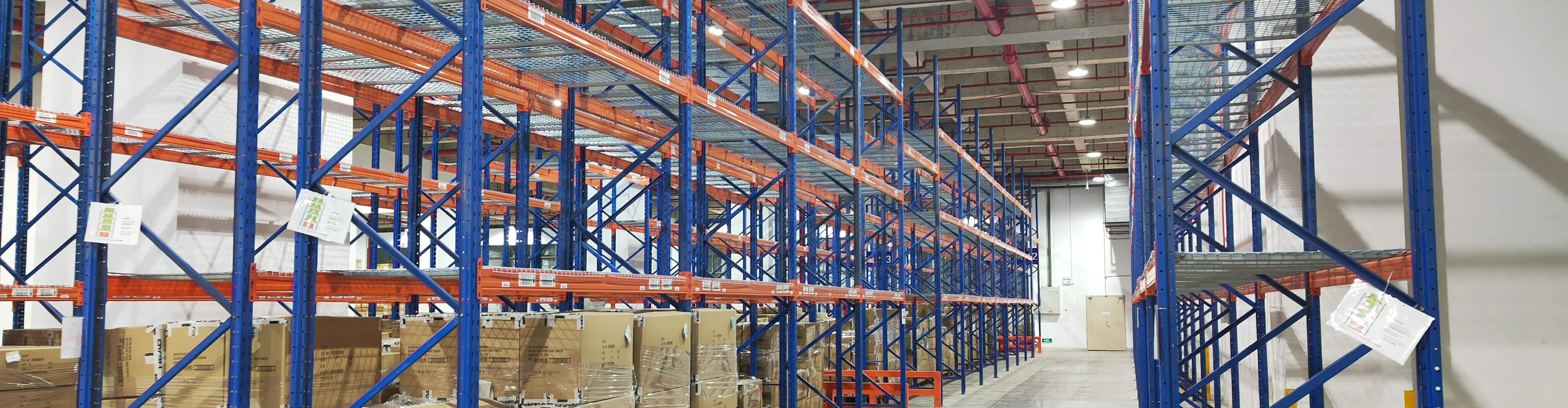
A heavy duty storage rack can hold anything from a few hundred kilograms per shelf to several tonnes per bay, but there is no single safe load figure that applies to every system. The actual capacity of a heavy duty storage rack depends on its design, upright size, beam length, beam profile, shelf material, bay configuration, floor condition, anchoring, and how the load is placed and handled in daily use.
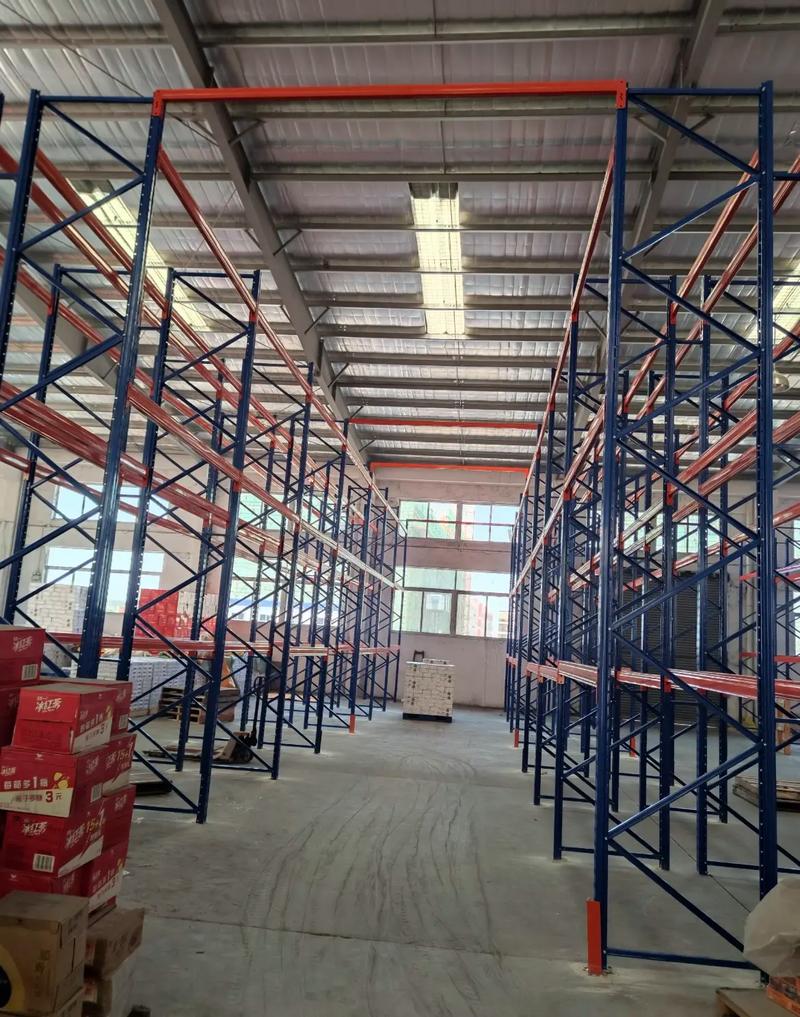
That is the most important point for warehouse managers and buyers: capacity is a system-specific rating, not a generic product label. If you need to know how much weight a heavy duty storage rack can hold, you should look at the load notice for the exact rack configuration or confirm the rating with the rack supplier or engineer responsible for the installation.
What determines the load capacity of a heavy duty storage rack?
The load capacity of a heavy duty storage rack is controlled by several connected factors. Buyers often focus only on beam size or shelf thickness, but safe capacity comes from the whole structure working together.
1. Upright frame strength
The upright frames carry the vertical load down to the floor. Their capacity depends on height, steel thickness, bracing pattern, column profile, and how the rack is anchored. A taller frame generally has different capacity limits than a shorter one, even if the beam levels look similar.
2. Beam capacity
Beams support the load at each storage level. Their safe working load depends on beam section, beam length, connector design, and the type of load being stored. A longer beam span usually reduces the weight it can safely carry compared with a shorter span using the same beam profile.
3. Shelf or decking material
Some heavy duty storage rack systems use steel panels, wire mesh decking, timber shelves, or direct pallet support. Each deck type has its own limit. Even if the beams can carry a certain load, the shelf surface itself may be the weaker point.
4. Load distribution
Evenly distributed loads are easier for a heavy duty storage rack to support than point loads or off-centre loads. A rack level rated for a certain weight may not be safe if heavy items are concentrated in one small area or loaded unevenly from front to back.
5. Bay configuration
Single bays and continuous runs do not always perform the same way. The number of levels, the spacing between levels, and the overall bay width all affect the structural rating. Changes made after installation can alter the original load capacity.
6. Floor quality and anchoring
A heavy duty storage rack transfers load into the slab. If the floor is uneven, cracked, weak, or unsuitable for the point loads involved, the rack may not perform as intended. Proper anchoring also matters, especially in forklift-operated environments.
7. Handling method
Manual loading, pallet jacks, and forklifts create different risks. Repeated forklift impact can damage uprights or beam connectors over time. A heavy duty storage rack that is structurally adequate on paper can still become unsafe if it is regularly hit or misused.
Typical weight ranges for a heavy duty storage rack
In practical terms, a heavy duty storage rack may be designed for:
- Moderate shelf loads for cartons, bins, tools, or spare parts
- Higher per-level loads for bulky components, dies, moulds, or industrial materials
- Very high bay loads in pallet racking systems designed for full pallet storage
Because product designs vary so much, it is better to think in terms of rated shelf load, rated beam level load, and rated bay load rather than asking for one universal figure. For example, one heavy duty storage rack may be suitable for hand-loaded parts storage, while another is built for palletized goods handled by forklift. Both are called heavy duty racks, but their capacities can be very different.
This is why commercial buyers should avoid comparing racks by appearance alone. Two systems may look similar in photos, but their steel profiles, connector strength, bracing, and tested configuration can differ significantly.
How rack capacity is usually rated
When reviewing a heavy duty storage rack, there are three load ratings that matter most.
Per shelf or per beam level load
This is the maximum safe load for one storage level. It applies only when the load is distributed in the way the manufacturer specifies.
Per bay load
This is the total load the complete bay can carry, including all loaded levels combined. A common mistake is to multiply the per-level capacity by the number of levels without checking the overall bay limit.
Frame load
The upright frame itself has a maximum allowable load. If you add more levels or increase stored weight without checking frame capacity, you can overload the structure even if each individual beam level appears acceptable.
For this reason, a heavy duty storage rack should always be assessed as a complete configuration, not as separate parts chosen independently.
Why the same heavy duty storage rack may hold different weights in different layouts
Rack capacity is highly sensitive to layout details. The same components can produce different safe working loads depending on how they are assembled.
- Increasing beam length usually lowers beam capacity
- Increasing upright height can reduce frame capacity
- Adding more beam levels increases total bay load
- Changing level spacing changes how force is distributed through the frame
- Using different decking can change the allowable shelf load
- Moving from hand loading to forklift loading may increase impact risk and operational stress
This is especially relevant when a warehouse expands or reconfigures. A heavy duty storage rack that worked safely in one facility may need re-evaluation if it is relocated to a new building with different floor conditions, aisle widths, or handling equipment.
Common mistakes when estimating heavy duty storage rack capacity
Assuming all heavy duty racks are the same
The term heavy duty storage rack is broad. It may refer to industrial shelving, longspan shelving, pallet racking, die racks, or other reinforced storage systems. Capacity varies widely between these categories.
Using old load figures after modifying the rack
If beams are moved, levels are added, bays are extended, or components are mixed from different systems, the original rating may no longer apply. This is a common issue in growing warehouses where layouts change faster than documentation is updated.
Ignoring the difference between static and operational loading
A rack may hold a certain load under controlled conditions, but real warehouse use includes impact, uneven placement, rushed loading, and damaged pallets. Operational reality should be part of the decision, not just the catalog number.
Overlooking floor limitations
A heavy duty storage rack can only perform safely if the floor can support the concentrated load. In older buildings, slab condition and flatness should be reviewed before installing high-capacity systems.
Loading bulky items improperly
Large or awkward items may create point loads, overhang, or unstable placement. Even if the total weight is within the stated limit, the way the load sits on the rack can still create a risk.
How to calculate what your heavy duty storage rack needs to hold
If you are selecting a system, start with the real storage requirement rather than the rack specification. A practical planning process usually looks like this:
Step 1: Identify the unit load
Define what will be stored on each level. This may be pallets, cartons, tooling, containers, drums, or loose parts. Record the weight of the heaviest expected load, not just the average load.
Step 2: Check load dimensions
Weight alone is not enough. Length, width, height, and support points matter. A compact steel component and a wide pallet of lighter goods behave differently on the same heavy duty storage rack.
Step 3: Decide how the goods will be handled
Will the rack be hand-loaded, loaded by reach truck, counterbalance forklift, stacker, or order picker? Handling method affects clearances, impact risk, and practical loading consistency.
Step 4: Define the number of levels and bay width
These choices affect both level capacity and total bay load. More levels can improve vertical storage efficiency, but they also increase the overall load transferred to the frame and floor.
Step 5: Review the building conditions
Check ceiling height, sprinkler clearance, aisle width, slab condition, and any obstructions such as columns or doors. A heavy duty storage rack should fit both the load requirement and the physical constraints of the warehouse.
Step 6: Confirm the rated configuration
Before purchase or installation, confirm the exact safe working load for the full rack layout. This should include beam levels, frame size, decking, and total bay load.
Operational factors that affect safe loading over time
Even a properly specified heavy duty storage rack can become unsafe if daily operations are not controlled. Capacity is not only a design issue; it is also an inspection and discipline issue.
Forklift impact
Upright damage near floor level is one of the most common rack safety problems in active warehouses. Even minor repeated contact can weaken the system and reduce confidence in the original rating.
Missing or damaged components
Load notices, beam locks, anchors, bracing members, and deck panels should all remain in place. If parts are missing or damaged, the heavy duty storage rack should be checked before continued full loading.
Uncontrolled changes by operators
Teams sometimes move beam levels or swap components to create more clearance for larger products. Unless these changes are reviewed properly, the rack may be carrying loads outside its intended design.
Poor load placement
Overhanging pallets, broken pallets, and uneven loading can create local stress. Training operators to place loads correctly is a simple but important way to protect the heavy duty storage rack and maintain safe use.
When a heavy duty storage rack may not be the right solution
A heavy duty storage rack is useful for many industrial storage needs, but it is not always the most suitable option.
- If you need very high-density pallet storage with limited SKU variety, drive-in or shuttle systems may use space more efficiently
- If you need fast access to many small SKUs, shelving, carton flow, or multi-tier picking systems may be more practical
- If loads are extremely heavy and concentrated, a specialized die storage system may be more appropriate than standard rack shelving
- If product turnover is high and picking speed matters more than raw load capacity, the storage method should be planned around workflow, not just strength
In other words, the right question is not only how much a heavy duty storage rack can hold, but whether that rack type matches the inventory profile and handling process.
What buyers should ask before ordering a heavy duty storage rack
- What is the rated load per level?
- What is the total rated load per bay?
- What assumptions apply to load distribution?
- What decking or shelf surface is included in the rating?
- What upright height and beam length were used for the stated capacity?
- Is the rating based on hand loading or forklift loading?
- What floor and anchoring conditions are required?
- Can the system be expanded later without changing the original load assumptions?
- Will load notices be provided for installed bays?
These questions help procurement teams compare solutions on a like-for-like basis rather than relying on broad marketing descriptions.
FAQ
Can I increase the load on a heavy duty storage rack by adding thicker shelves?
Not necessarily. Shelf material is only one part of the system. Beam capacity, frame capacity, bay load, and anchoring must also be checked.
Is a pallet rack the same as a heavy duty storage rack?
Pallet racking is one type of heavy duty storage rack, but the term can also include other industrial rack systems designed for high loads.
Can I use a heavy duty storage rack for hand-loaded goods and pallets together?
Sometimes, but the system must be configured for the actual load type and handling method. Mixed-use layouts need careful planning so shelf surfaces, clearances, and capacities remain suitable.
How do I know if my existing rack is overloaded?
Check the load notice for each bay, compare it with the actual stored weight, and inspect for signs of damage, deflection, missing components, or unauthorized modifications. If there is any doubt, get the rack reviewed before continued use.
Conclusion
A heavy duty storage rack can hold a substantial amount of weight, but the safe limit depends on the exact rack design and installed configuration. There is no reliable universal answer without checking per-level load, total bay load, frame capacity, decking, floor condition, and real operating conditions.
For warehouse planning, the safest approach is to match the heavy duty storage rack to the actual unit load, handling method, and building environment, then confirm the rated capacity for that exact setup. That gives buyers a more useful answer than any generic load estimate and helps prevent costly mistakes in storage design, purchasing, and day-to-day operation.