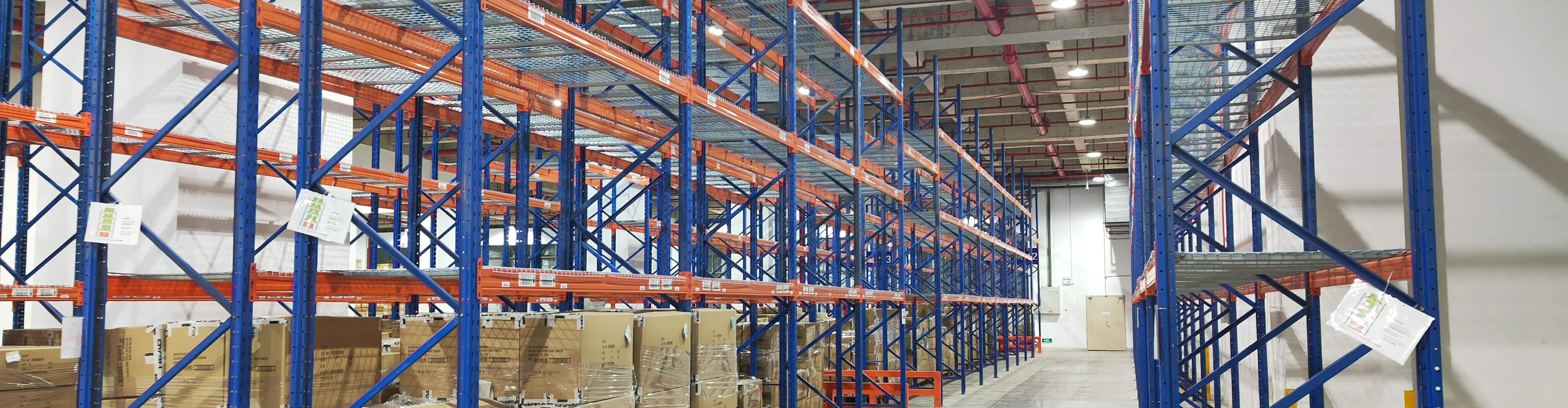
Choosing heavy duty industrial shelving is not just a matter of finding shelves that look strong. The right system must match the actual load weight, item dimensions, picking method, aisle layout, floor condition, and future growth of the operation. If the shelving is underspecified, it can create safety risks and operating inefficiencies. If it is oversized for the application, it can add unnecessary cost and reduce storage flexibility.
For most buyers, the best way to choose heavy duty industrial shelving is to start with the load, then work outward. Define what will be stored, how much each shelf level must carry, how the items will be loaded and picked, and what constraints exist in the warehouse. That decision process leads to a shelving system that is safer, easier to use, and more practical over the long term.
What heavy duty industrial shelving is designed to do
Heavy duty industrial shelving is used to store bulky, dense, or high-weight items that exceed the practical limits of light-duty or standard commercial shelving. It is commonly used for cartons of parts, tooling, components, maintenance stock, dies, hardware, archives with high point loads, and mixed warehouse inventory that needs direct access at shelf level.
Unlike pallet racking, shelving is typically intended for hand-loaded or hand-picked stock, although some systems may support bins, cartons, or selected non-palletized items in industrial environments. The key difference is accessibility. Shelving gives operators direct access to individual items without needing to move a full pallet first.
That makes it useful in operations where SKU count is high, picking is frequent, and stock is too heavy for light shelving but does not justify pallet racking at every position.
Start with the load, not the frame size
The most important step in selecting heavy duty industrial shelving is understanding the real load requirement at shelf level. Buyers often focus on overall bay size first, but load planning should come before dimensions.
Key load questions to answer
- What is the maximum weight per shelf level?
- What is the total weight per bay?
- Is the load evenly distributed or concentrated in small areas?
- Will the shelf carry loose parts, cartons, metal components, tools, or containers?
- Will the heaviest load be stored routinely or only occasionally?
A shelf rated for a uniformly distributed load may not perform the same way if the weight is concentrated in one small area. This matters in warehouses storing machine parts, molds, dense cartons, or containers with metal content. Point loading can create stresses that are different from evenly spread product loads.
When comparing options, ask for clarity on shelf-level capacity, bay capacity, and the assumptions behind those figures. Capacity should never be treated as a rough estimate.
Match the shelving to the product profile
Heavy duty industrial shelving works best when the shelf dimensions and configuration reflect the actual stock profile. A common mistake is choosing a standard shelf width and depth before reviewing product dimensions and handling needs.
Consider these product factors
- Item length, width, and height
- Weight per unit and weight per stored group
- Whether items are loose, boxed, binned, or stored in totes
- Need for dividers, decking, back stops, or side panels
- Whether stock rotates quickly or stays in storage for long periods
For example, small dense items may require strong shelves with close level spacing and bin organization. Large irregular items may need fewer levels with more open vertical clearance. If cartons overhang the shelf edge or bins sit too close to the upright, picking becomes awkward and damage risk increases.
Good shelving selection is not only about strength. It is also about how well the stored item fits the shelf without wasted space or difficult handling.
Check whether shelving is the right system at all
Not every heavy-load application should use heavy duty industrial shelving. In some cases, pallet racking, cantilever racking, or a mixed storage layout may be more suitable.
Heavy duty shelving is usually a good fit when
- Items are hand-loaded or hand-picked
- Many SKUs need direct access
- Stock is too heavy for light shelving but not stored as full pallets
- Order picking speed matters more than maximum pallet density
- Inventory is varied in size but still manageable at shelf level
It may be a poor fit when
- Loads are primarily full pallets handled by forklifts
- Products are very long and need cantilever support
- Storage density is the main priority and selective access is less important
- Items are too heavy or awkward for safe manual handling
- Very high bay heights would make shelf picking inefficient
This step matters because buyers sometimes force shelving into roles better served by racking. That usually creates poor ergonomics, wasted cube, and more difficult replenishment.
Evaluate access, picking, and workflow
The best heavy duty industrial shelving for one facility may be the wrong choice for another if the operating workflow is different. A shelving system should support how stock moves through the warehouse, not just how it looks on a layout drawing.
Questions to review with operations teams
- Will staff pick by hand, trolley, ladder, or platform?
- How often are shelves replenished?
- Are fast-moving items stored at waist height?
- Will forklifts operate nearby?
- Do aisles allow safe access for people and equipment at the same time?
If shelving is placed in narrow aisles with frequent pedestrian traffic and regular forklift movement, upright protection and aisle discipline become more important. If replenishment stock arrives in larger units but picking happens in small quantities, the layout should allow efficient restocking without blocking order picking.
Access planning also affects shelf height. Very tall shelving may increase storage capacity on paper, but if upper levels are slow to reach or require additional access equipment, daily productivity can drop.
Review warehouse dimensions and physical constraints
Heavy duty industrial shelving must fit the building as well as the inventory. Practical site conditions often shape the final design more than buyers expect.
Important site checks
- Clear ceiling height and usable vertical space
- Sprinkler clearance and building services
- Column positions and wall obstructions
- Floor levelness and floor load condition
- Door access, staging areas, and traffic routes
A shelving bay that fits in theory may create problems if roof bracing, lighting, ducts, or fire protection systems limit usable height. Floor condition is another critical issue. Heavy loaded shelving needs a stable base, and uneven floors can affect installation, alignment, and long-term performance.
Buyers should also think about how the shelving interacts with surrounding systems such as pallet racking, packing benches, conveyors, or mezzanine structures. A storage system rarely operates in isolation.
Choose the right shelf configuration
Once load and layout requirements are clear, the next step is choosing the shelf format. Heavy duty industrial shelving can vary in bay width, depth, number of levels, shelf material, bracing arrangement, and accessories.
Common configuration choices
- Shelf depth: should suit product depth without causing overhang or wasted space
- Bay width: should balance capacity, access, and structural stability
- Level spacing: should reflect item height and picking convenience
- Open or closed sides/back: depends on containment needs and visibility
- Decking type: steel shelves, panels, or reinforced surfaces depending on product and load pattern
More shelf levels can improve cube utilization, but only if the stored items genuinely fit and remain easy to access. Deep shelves may hold more stock, but they can reduce visibility and make stock rotation harder if products are not well organized.
In fast-moving environments, simple and accessible layouts usually outperform dense but awkward shelf arrangements.
Do not overlook safety margins and real operating abuse
In live warehouse conditions, shelving does not experience ideal textbook use. It gets bumped, overloaded, climbed on, restocked in a hurry, and used by different shifts with different levels of discipline. That is why heavy duty industrial shelving should be selected with realistic operating conditions in mind.
Common real-world risks
- Overloading individual shelf levels
- Uneven loading across a bay
- Forklift or pallet truck impact near aisle ends
- Damaged uprights from nearby traffic
- Unsafe manual handling of oversized items
It is sensible to plan around the heaviest realistic use case, not the average day. Load notices, staff training, and clear SKU allocation all help, but the system still needs to tolerate normal industrial use without becoming fragile in practice.
Where forklift traffic is present, end-of-aisle and upright protection should be considered early rather than treated as an optional extra after installation.
Think about future expansion before you buy
A shelving decision should not only solve the current storage problem. It should also leave room for changes in SKU mix, stock volume, and operating method. Many businesses outgrow their original shelving layout because expansion was treated as a later issue.
Useful expansion questions
- Will the SKU count increase over the next few years?
- Could heavier items be introduced later?
- Will picking volumes change?
- Can additional bays be added in the same system?
- Will the layout still work if a mezzanine or adjacent racking is added?
Future planning does not mean overspending on a much larger system than needed. It means choosing heavy duty industrial shelving that can be extended, reconfigured, or integrated into a larger storage plan without forcing a full replacement too soon.
Maintenance and inspection should influence the choice
Buyers often focus on installation cost and capacity, but long-term usability matters just as much. Heavy duty industrial shelving should be easy to inspect, maintain, and repair when necessary.
What to consider
- Can damaged components be identified easily?
- Are shelf levels easy to clean and access?
- Will staff be able to spot bent members or missing parts quickly?
- Are replacement components straightforward to source?
- Can load labels and bay identification be displayed clearly?
A shelving system used in dusty, dirty, or high-traffic environments should support practical housekeeping and routine inspection. If maintenance is difficult, small issues are more likely to be missed until they become operational problems.
Regular checks should focus on visible damage, loose fixings, shelf deflection, anchor condition, and signs of misuse. Buyers do not need to turn shelving selection into a technical compliance exercise, but they should avoid systems that are difficult to manage once installed.
Common buying mistakes to avoid
Many shelving problems start at the specification stage. The following mistakes are common when selecting heavy duty industrial shelving for heavy loads:
- Choosing based on general appearance rather than verified load requirements
- Using average load figures instead of the heaviest realistic shelf load
- Ignoring point loads from dense items or containers
- Planning shelf dimensions before reviewing actual product sizes
- Assuming shelving is suitable when the operation really needs pallet racking or cantilever racking
- Underestimating aisle width and replenishment access needs
- Overbuilding the system without a clear operational reason
- Failing to plan for inspection, protection, and future expansion
A practical selection process usually saves more money than simply choosing the lowest initial price. Poor fit leads to rework, congestion, damaged stock, and inefficient labor.
A simple decision framework for buyers
If you are comparing options, use this sequence to narrow down the right heavy duty industrial shelving:
Define the heaviest load per shelf and per bay.
Measure the actual products, containers, and picking units.
Confirm whether shelving is the right system versus pallet racking or other storage methods.
Review aisle width, access method, and replenishment workflow.
Check ceiling height, floor condition, and site constraints.
Choose shelf spacing, depth, and bay width based on product fit and usability.
Include protection, inspection access, and load labeling in the plan.
Allow for future expansion where realistic.
This approach keeps the decision grounded in warehouse reality rather than catalog comparisons alone.
FAQ
How is heavy duty industrial shelving different from pallet racking?
Heavy duty industrial shelving is generally used for hand-loaded or hand-picked items stored at shelf level. Pallet racking is designed mainly for palletized loads handled by forklifts. If you need direct access to many individual SKUs, shelving may be more suitable.
Can heavy duty industrial shelving store very dense metal parts?
It can, but the load pattern matters. Dense metal parts may create high point loads, so shelf capacity and load distribution need careful review. Do not assume all heavy shelves are suitable for concentrated loads.
How tall should heavy duty industrial shelving be?
The right height depends on ceiling clearance, picking method, replenishment process, and safety. More height is not automatically better if upper levels are slow or awkward to access.
When is shelving a poor choice for heavy loads?
Shelving is often a poor choice when stock is mainly full pallets, when items are too long for shelf support, or when products are too heavy for safe manual handling. In those cases, pallet racking, cantilever racking, or another system may be more appropriate.
Final takeaway
The right heavy duty industrial shelving is the system that matches your real load, product profile, access method, and warehouse constraints without creating avoidable safety or workflow problems. Start with load requirements, verify how the stock will be handled, and make sure the shelving supports both current operations and realistic future changes. Buyers who follow that process are more likely to end up with a storage solution that is durable, practical, and commercially sound.