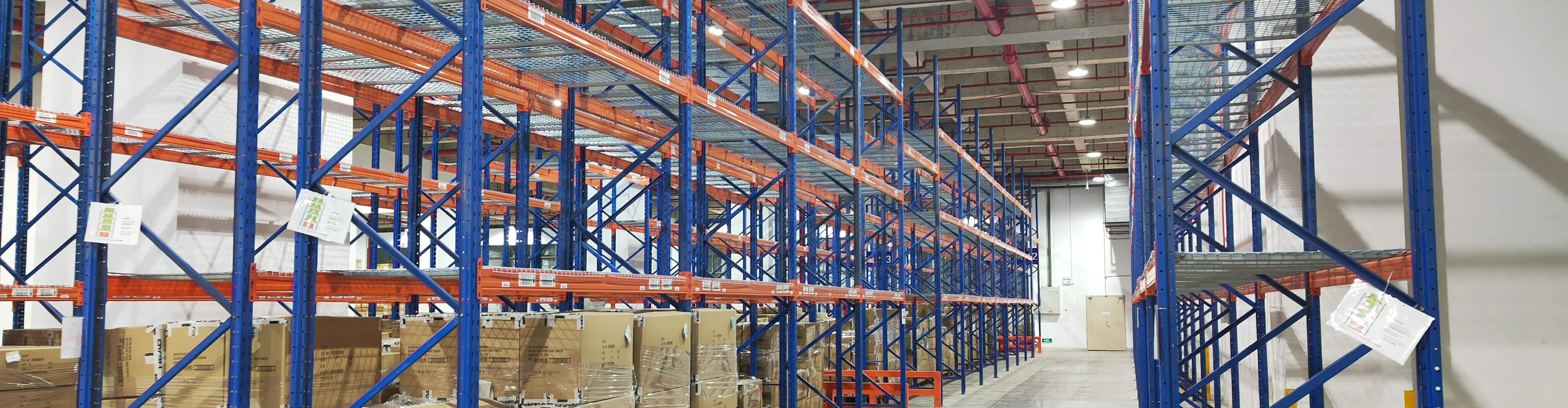
A heavy duty racking system improves warehouse capacity by using vertical space more effectively, organizing pallet storage more efficiently, and reducing wasted floor area caused by poor layout or low-density storage. For many warehouses, the biggest capacity gain does not come from moving buildings or adding square meters. It comes from choosing the right rack configuration, aisle plan, beam levels, and handling method for the actual inventory profile.
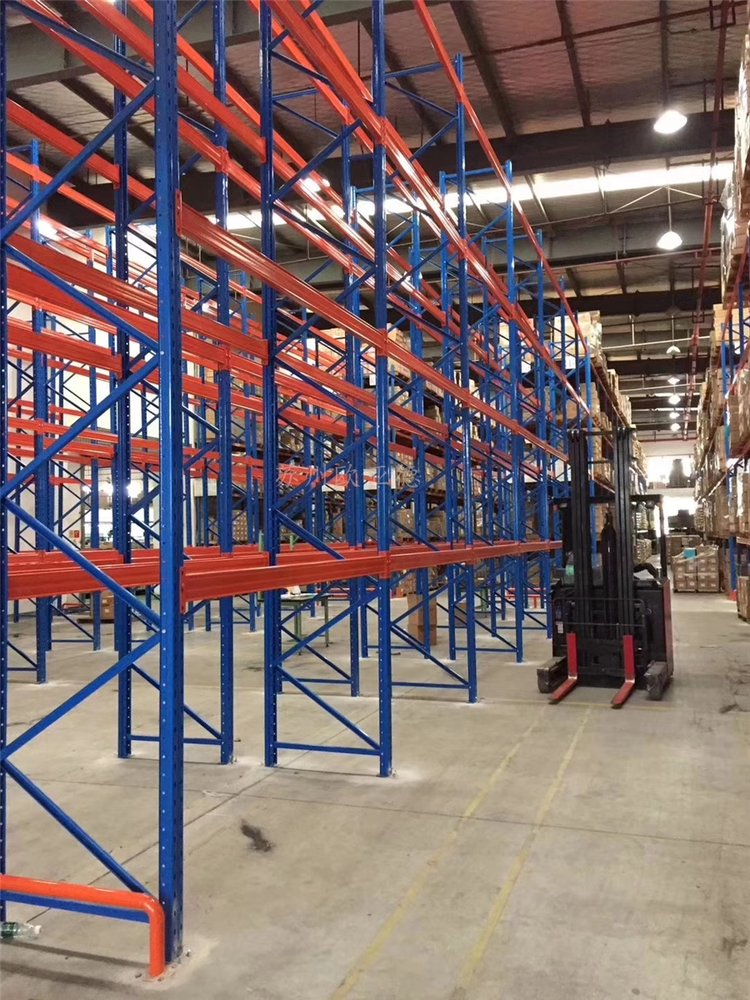
If your warehouse is running out of space, a heavy duty racking system can help you store more pallets safely while keeping access practical for forklifts, replenishment, and stock control. The key is to treat racking as part of the full warehouse operation, not just as steel frames and beams.
What a Heavy Duty Racking System Does in a Warehouse
A heavy duty racking system is designed for storing palletized goods and heavier loads in a structured, accessible layout. In most warehouses, it is used to support selective pallet storage, higher bay utilization, and better use of clear building height.
The main capacity advantage comes from three areas:
- Vertical storage: more pallet positions can be created by adding safe beam levels within the available ceiling height.
- Space discipline: defined rack locations reduce scattered floor storage and improve slotting control.
- Layout efficiency: aisles, rack rows, and pallet positions can be planned around actual handling equipment and stock movement.
A heavy duty racking system is often a good fit for warehouses storing palletized finished goods, raw materials, reserve stock, or mixed SKU inventories that need direct access to many pallet locations. It may be less efficient where storage density matters more than selectivity, or where pallet dimensions and load stability vary too much for a standard layout.
Why Many Warehouses Lose Capacity Before They Reach Full Storage Volume
Warehouses often appear full long before they are truly optimized. The problem is usually not only lack of floor space. It is a combination of layout losses, handling restrictions, and poor slotting.
Common causes of lost capacity
- Wide aisles that do not match the actual forklift requirement
- Low storage height with unused vertical clearance
- Too much floor stacking for slow-moving pallets
- Rack layouts that ignore pallet size variation
- Beam spacing that creates empty air rather than usable pallet positions
- Poor SKU allocation that mixes fast and slow movers inefficiently
- Blocked access caused by overflow stock or temporary staging areas
A heavy duty racking system addresses these issues when it is planned around real operating conditions. Simply installing more racks without reviewing forklift movement, pallet overhang, turning radius, fire clearance, and replenishment flow can create congestion rather than capacity.
How a Heavy Duty Racking System Increases Capacity in Practical Terms
1. It converts unused building height into pallet positions
Many warehouses underuse the vertical cube of the building. A heavy duty racking system allows you to add storage levels above floor level, provided the building height, forklift lift height, sprinkler arrangement, and safety clearances allow it. Even one additional beam level across multiple rows can create a meaningful increase in pallet count.
This is often the fastest route to higher capacity in buildings where floor area is already constrained.
2. It replaces inconsistent floor stacking
Floor stacking can work for limited SKU ranges and stable pallet loads, but it wastes access and often reduces visibility. Once pallets are stacked in blocks, selectivity drops, older stock can become harder to reach, and staging areas tend to spread. A heavy duty racking system gives each pallet a defined location, helping the warehouse hold more stock without losing control.
3. It improves aisle planning
Capacity is not only about how many racks fit into a building. It is also about whether forklifts can move safely and efficiently. A well-planned heavy duty racking system balances aisle width with truck type, pallet dimensions, and throughput. If aisles are too wide, floor space is wasted. If they are too narrow for real operations, damage and delays increase.
4. It supports better slotting
When pallet locations are structured, fast-moving SKUs can be positioned in more accessible areas while reserve stock is stored higher or deeper in the layout. This reduces unnecessary travel and helps prevent prime rack space from being occupied by items that do not need it.
5. It makes expansion more manageable
A heavy duty racking system can be planned in phases. Instead of redesigning the full warehouse later, businesses can install a layout that allows future bay additions, row extensions, or extra beam levels if stock volume grows. Expansion planning is one of the most overlooked ways to protect long-term capacity.
Key Planning Factors Before Installing a Heavy Duty Racking System
Not every warehouse gains capacity in the same way. The right heavy duty racking system depends on the stock profile, building constraints, and handling process.
Pallet size and load consistency
If pallet sizes vary widely, beam spacing and bay dimensions need careful planning. A layout designed around one pallet footprint can lose efficiency quickly if oversized or unstable loads are common. Consistent pallet standards usually allow better capacity planning and safer storage.
Ceiling height and clearances
Available height matters, but usable height matters more. Lighting, sprinklers, roof structure, dock doors, and lift truck mast clearance all affect how many safe rack levels can be installed. A heavy duty racking system should be designed around realistic operating clearance, not just maximum theoretical height.
Forklift type and aisle width
Counterbalance trucks, reach trucks, and narrow aisle equipment each require different aisle allowances. Warehouses sometimes lose capacity because the racking layout is based on assumptions rather than the actual truck fleet. If equipment changes later, the original layout may no longer be efficient.
SKU mix and selectivity needs
If you store many SKUs with frequent access requirements, selective access usually matters more than maximum density. If you store fewer SKUs in deeper volume, denser systems may deserve consideration. A heavy duty racking system is often strongest where direct pallet access and operational flexibility are both important.
Inbound, picking, and outbound flow
Capacity should not be improved at the cost of movement efficiency. If the storage area becomes too dense or hard to navigate, labor time and forklift travel can increase. The right heavy duty racking system should support receiving, replenishment, and dispatch without creating bottlenecks.
Floor condition and load-bearing considerations
Rack performance depends partly on floor quality. Uneven slabs, damaged surfaces, or inadequate load-bearing performance can affect installation quality, anchor reliability, and long-term stability. Floor review is a practical part of capacity planning, especially in older facilities.
Choosing the Right Heavy Duty Racking System Layout for Capacity Gains
When warehouse managers ask how to improve capacity, the answer is rarely just “add more racks.” The layout should match the storage objective.
Selective pallet racking for access and flexibility
This is the most common heavy duty racking system format for warehouses that need direct access to each pallet. It works well for mixed inventory, moderate to high SKU counts, and operations where stock rotation and retrieval flexibility matter. It may not deliver the highest possible density, but it is often the most manageable option for general warehousing.
Double-deep or higher-density adaptations
Where stock profile allows, some warehouses improve capacity by reducing selectivity in exchange for more storage density. This can increase pallet positions within the same footprint, but it also changes handling requirements and stock access. It is more suitable where pallet turnover patterns are predictable and inventory can be managed accordingly.
Very narrow aisle strategies
Aisle reduction can create significant capacity gains, but only if the operation is ready for the equipment, discipline, and maintenance demands that come with it. This approach can be effective in high-cost space environments, but it is not always the right move for mixed-use warehouses with variable truck traffic or frequent operational change.
In many cases, a standard heavy duty racking system with better beam planning and cleaner slotting delivers a safer and more practical return than pushing for the absolute highest storage density.
How to Improve Capacity Without Creating New Problems
The most successful warehouse upgrades improve storage volume and daily usability together. A heavy duty racking system should increase pallet capacity while still allowing safe forklift operation, stock visibility, and maintenance access.
Prioritize real pallet positions, not just tighter layouts
On paper, a compressed layout may look efficient. In practice, awkward aisles, poor turning space, and restricted access can slow operations and cause rack impacts. Capacity gains should be measured in usable pallet positions that can be handled safely and consistently.
Separate storage from staging
One common mistake is using rack aisles or row ends as overflow staging areas. This quickly reduces effective capacity. A heavy duty racking system works better when receiving, picking, and dispatch staging are clearly defined outside core storage zones.
Review beam levels against actual inventory
If beam spacing is too generous, air space is wasted. If it is too tight, pallet handling becomes difficult and damage risk increases. Beam levels should reflect pallet height, load stability, and forklift placement tolerance.
Allow for inspection and maintenance access
Capacity planning should not make rack inspection harder. Uprights, anchors, beam locks, row spacers, and protection elements need to remain visible and accessible enough for regular checks. A heavy duty racking system that cannot be inspected easily can become a safety issue over time.
Operational Mistakes That Reduce the Value of a Heavy Duty Racking System
- Using inconsistent pallets: damaged or non-standard pallets reduce safe storage efficiency.
- Ignoring load limits: overloading levels can create safety risks and force operational restrictions later.
- Poor rack protection: repeated forklift impact damages uprights and reduces long-term reliability.
- Weak location control: if stock is not assigned properly, the warehouse loses the organizational benefit of the system.
- No growth allowance: a layout that fills the building completely can become difficult to manage when SKU count changes.
- Overdesigning for peak stock only: extreme density may not be worth the operational compromise if it only serves short seasonal peaks.
A heavy duty racking system should be part of a broader warehouse planning decision, not just a procurement item.
Maintenance and Safety Considerations
Any capacity improvement must remain safe over time. A heavy duty racking system should be inspected regularly for impact damage, beam displacement, loose anchors, missing safety locks, and signs of misuse. Capacity gains can disappear quickly if damaged components create blocked locations or force sections of racking out of service.
Basic good practice includes:
- Routine visual checks by warehouse staff
- Prompt reporting of rack impact or bent components
- Clear load signage and location discipline
- Forklift operator awareness around rack protection zones
- Housekeeping that keeps aisles and base areas clear
Maintenance is not separate from capacity. A well-kept heavy duty racking system preserves usable pallet positions and reduces avoidable downtime.
When a Heavy Duty Racking System May Not Be the Only Answer
A heavy duty racking system is often the right foundation for warehouse capacity improvement, but it is not the only lever. Some warehouses also need better slotting rules, SKU rationalization, faster stock rotation, revised replenishment logic, or a review of obsolete inventory. If slow-moving pallets occupy prime locations for long periods, even a well-designed rack layout will underperform.
In other words, storage equipment can solve part of the capacity problem, but operating policy often determines whether the gain is sustained.
FAQ
How much capacity can a heavy duty racking system add?
The increase depends on ceiling height, aisle width, pallet size, and current layout efficiency. In many warehouses, the biggest gains come from adding vertical levels and reducing wasted floor storage rather than changing the whole building footprint.
Is a heavy duty racking system suitable for all warehouses?
No. It is highly suitable for many palletized storage operations, but the right format depends on SKU mix, handling equipment, load consistency, and access needs. Some operations may need denser or more specialized systems instead.
What should be checked before installation?
Key checks include pallet dimensions, load weights, floor condition, forklift type, aisle requirements, clear building height, stock rotation, and future expansion needs.
Can a heavy duty racking system improve picking efficiency as well as storage capacity?
Yes, if the layout supports sensible slotting and access. Better location control and clearer stock organization often reduce travel time and improve replenishment accuracy.
Conclusion
A heavy duty racking system improves warehouse capacity when it is planned around real stock, real equipment, and real workflow. The strongest results usually come from better use of vertical space, more disciplined pallet organization, and a layout that balances storage density with safe access. For warehouse managers and buyers, the right question is not simply how many racks can fit into the building. It is how many pallet positions can be used efficiently, safely, and consistently over time. That is where a heavy duty racking system delivers real value.