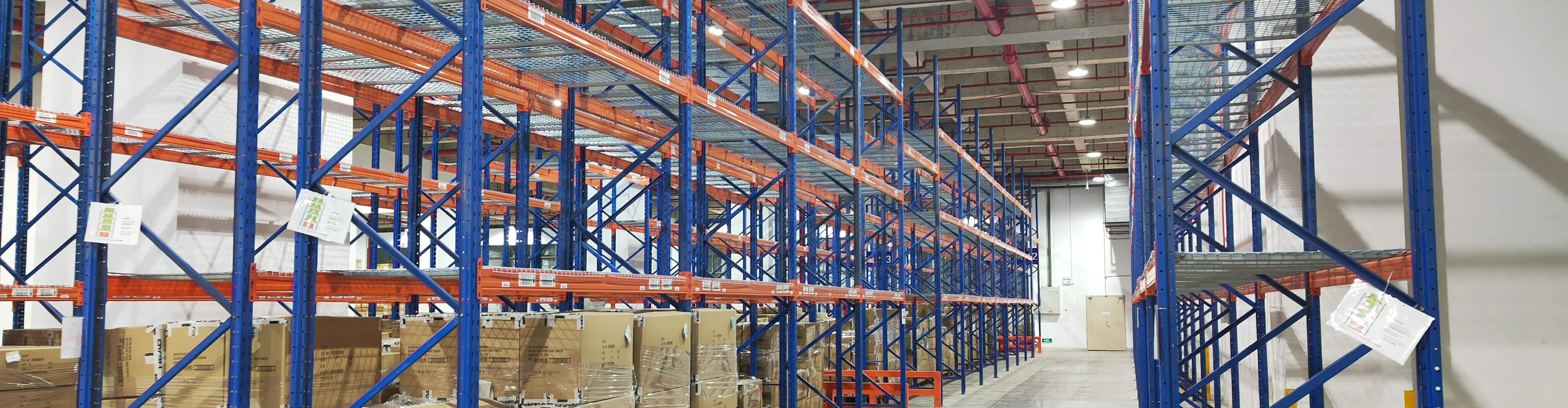
Choosing between heavy duty industrial shelving and warehouse racking is not just a matter of storage capacity. The better fit depends on what you store, how you pick it, whether forklifts are involved, how often inventory changes, and how much accessibility you need at each storage location.
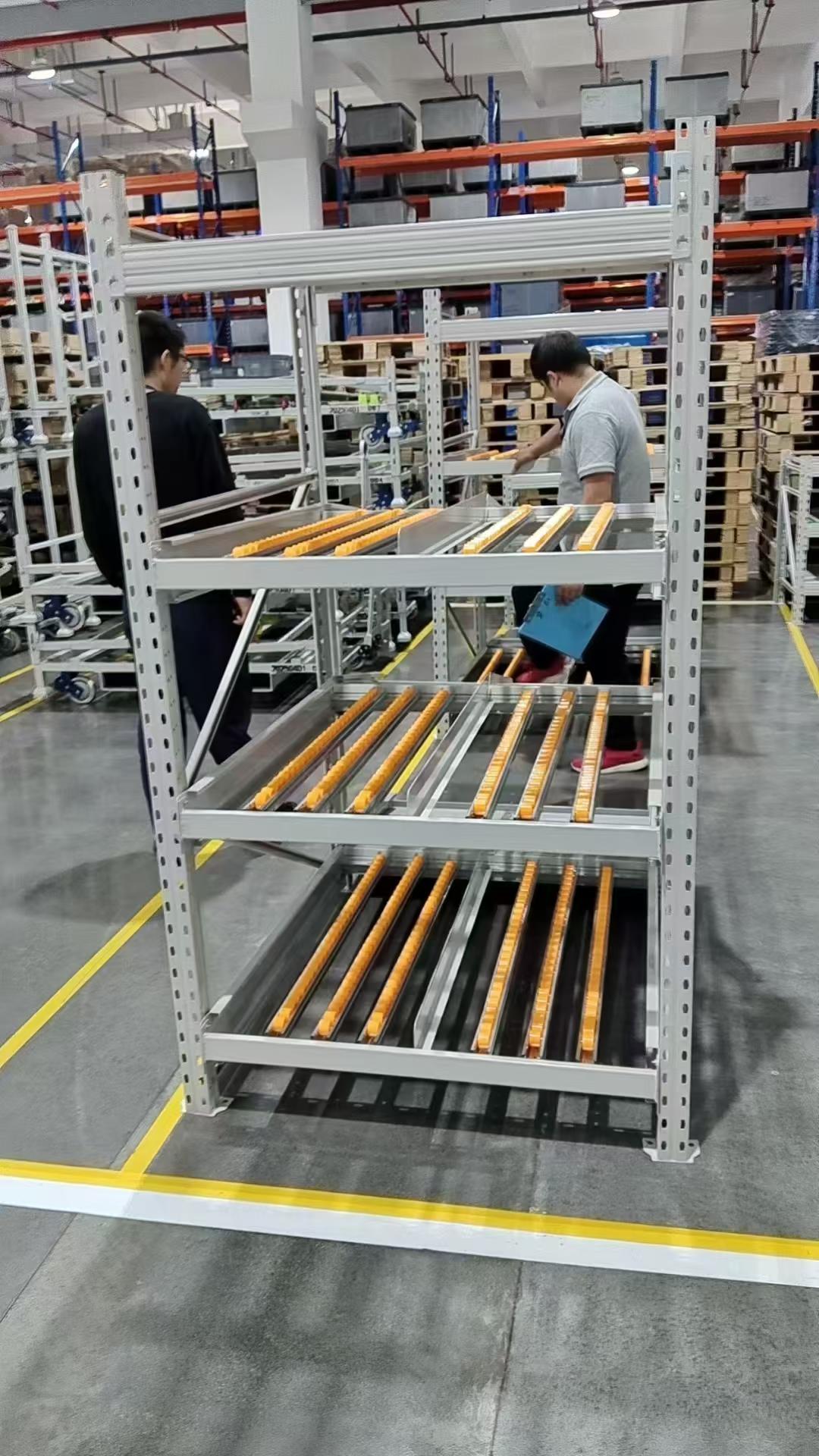
In simple terms, heavy duty industrial shelving is usually the stronger choice for hand-loaded goods, carton picking, mixed SKUs, parts storage, and operations that need direct access to many items. Warehouse racking is generally the better option for palletized loads, forklift handling, and higher-density bulk storage. Many facilities actually need both, because each system solves a different storage problem.
This guide compares the two in practical warehouse terms so you can decide which solution fits your operation more effectively.
What is heavy duty industrial shelving?
Heavy duty industrial shelving is a storage system designed for manual or semi-manual access to goods that are too heavy, too bulky, or too operationally important for light shelving. It is commonly used for cartons, archive boxes, components, tools, spare parts, maintenance stock, e-commerce picking, and mixed inventory that needs shelf-level visibility.
Unlike pallet racking, heavy duty industrial shelving is usually intended for individual item access rather than full-pallet handling. Workers can retrieve goods directly from shelves without requiring a forklift for every movement. That makes it useful in picking areas, back-of-house storage rooms, workshops, spare parts departments, and warehouses with a broad SKU range.
What is warehouse racking?
Warehouse racking is a broader category of storage systems built mainly for palletized or unitized loads. Standard pallet racking, drive-in racking, cantilever racking, and similar systems are all forms of warehouse racking. In most cases, these systems are designed around mechanical handling equipment such as forklifts, reach trucks, or stackers.
Warehouse racking is usually the right choice when inventory arrives, moves, and ships in pallet quantities. It supports vertical storage well and can increase cubic utilization, but it often provides less convenient access for piece picking unless combined with other systems.
Heavy duty industrial shelving vs warehouse racking: the main difference
The core difference is how the storage system matches the handling method.
- Heavy duty industrial shelving supports shelf-level access for cartons, bins, parts, and mixed items.
- Warehouse racking supports pallet storage and forklift-based handling.
If your team regularly picks individual units, replenishes small quantities, or works with many SKUs, heavy duty industrial shelving is often more practical. If your operation is built around pallets, forklift traffic, and bulk movement, racking is usually more efficient.
This is why selection should start with workflow, not just load capacity.
When heavy duty industrial shelving fits better
1. You store many SKUs in small to medium quantities
Heavy duty industrial shelving works well when inventory is diverse and each item needs a clearly visible storage location. This is common in spare parts operations, maintenance stores, hardware distribution, automotive components, medical supplies, and e-commerce fulfillment.
In these environments, pallet positions alone are often too large and too inefficient. Shelving improves slotting flexibility and reduces time spent searching, opening pallets, or breaking down loads at floor level.
2. Your operation depends on hand picking
If staff pick cartons, bins, or individual products throughout the day, heavy duty industrial shelving is usually easier to work with than pallet racking. Shelf access supports faster order picking, easier cycle counting, and better visibility of stock conditions.
It is particularly useful when order profiles involve many lines per order rather than full-pallet dispatch.
3. You need better use of low to medium height storage areas
Not every warehouse benefits equally from high-bay pallet storage. In lower-clearance buildings, back rooms, production support areas, or mezzanine levels, heavy duty industrial shelving often makes better use of space than standard racking.
It can also be easier to integrate with workstations, packing benches, bin systems, and manual replenishment zones.
4. Forklift access is limited or unnecessary
Some facilities do not want heavy forklift traffic in every storage area. Narrow support rooms, maintenance departments, and high-pick-frequency zones may operate more safely and efficiently with shelving rather than pallet racking. Heavy duty industrial shelving reduces dependence on lift equipment for day-to-day access to stock.
5. You need flexible shelf adjustment for changing stock profiles
SKU dimensions change. Packaging changes. Product ranges expand. Heavy duty industrial shelving is often easier to reconfigure at shelf level than pallet racking layouts built around fixed pallet dimensions and forklift clearances.
That flexibility matters when buyers are unsure how inventory profiles will evolve over the next one to three years.
When warehouse racking fits better
1. You store goods mainly on pallets
If goods arrive on pallets, remain on pallets, and ship on pallets, warehouse racking is the more logical solution. Using heavy duty industrial shelving for pallet-heavy operations usually creates unnecessary labor because stock has to be broken down and handled more times than needed.
2. You need higher storage density for bulk inventory
Warehouse racking is generally better for maximizing vertical pallet storage, especially in facilities with good clear height and established forklift operations. Standard shelving can be efficient for small-item storage, but it is not the most effective answer for dense pallet holding.
3. Your workflow is built around forklift movement
Where lift trucks are already central to receiving, putaway, replenishment, and dispatch, racking aligns with the operating model. Trying to replace pallet racking with heavy duty industrial shelving in this type of environment often slows down throughput.
4. Your products are too large or too heavy for shelf-based picking
Even heavy duty industrial shelving has practical limits. If units are oversized, awkward to handle manually, or better managed as pallet loads, warehouse racking is usually safer and more efficient.
Operational comparison: what the difference means in daily use
Accessibility
Heavy duty industrial shelving gives direct access to individual items and cartons. That improves picking speed for mixed orders. Racking gives direct access to pallet positions, but not always to individual cartons unless lower levels are used as picking faces.
Storage density
Warehouse racking usually delivers better pallet density and better use of building height. Heavy duty industrial shelving can still use vertical space effectively, especially in multi-tier or mezzanine-supported layouts, but its strength is accessibility rather than maximum pallet density.
Labor efficiency
For hand-picked inventory, heavy duty industrial shelving can reduce travel time, pallet breaking, and unnecessary material handling. For pallet-based movement, racking is more labor-efficient because it matches forklift workflows.
Inventory visibility
Shelving generally makes it easier to see mixed stock, identify empty locations, and perform quick visual checks. This is one reason heavy duty industrial shelving is common in parts storage and fast-moving pick modules.
Replenishment
Warehouse racking often needs a clear replenishment process when reserve pallets feed lower picking zones. Heavy duty industrial shelving may simplify access for small-item stock, but it can also require more frequent manual replenishment if demand is high.
Planning factors buyers should evaluate before choosing
SKU profile
Start with the number of SKUs, the size range, and the average quantity held per SKU. A wide SKU mix with low to moderate stock per item often points toward heavy duty industrial shelving. Fewer SKUs with larger pallet volumes usually point toward racking.
Order picking method
If your operation picks by piece, inner pack, or carton, heavy duty industrial shelving is often the better fit. If you pick by full pallet, racking is usually more suitable. Many warehouses need a combination: shelving for active picking and racking for reserve stock.
Aisle width and traffic pattern
Racking layouts depend heavily on forklift aisle requirements. Shelving layouts depend more on pedestrian flow, trolley movement, and pick-face access. If floor space is limited, compare not only storage capacity but also how much aisle space each system consumes in real operation.
Ceiling height
High-clearance buildings favor racking for pallet storage. Lower-clearance spaces may favor heavy duty industrial shelving, especially where manual access is the priority. If vertical expansion is possible through mezzanines or multi-tier shelving, that can change the decision.
Floor condition and load distribution
Both systems require attention to floor condition, levelness, and load distribution. Buyers should not assume any storage system can be installed anywhere without checking practical floor suitability. This becomes especially important when concentrated loads, forklifts, or tall installations are involved.
Expansion plans
Do not choose only for current stock levels. If product lines are growing or order profiles are changing, heavy duty industrial shelving may offer easier shelf-level adaptation, while racking may support large increases in pallet holding. The right answer depends on how inventory is expected to evolve.
Common mistakes when comparing heavy duty industrial shelving and racking
- Choosing based only on upfront storage capacity without considering picking labor.
- Using pallet racking for high-SKU hand-pick operations that really need heavy duty industrial shelving.
- Using shelving for bulky pallet stock that should remain in forklift-handled storage.
- Ignoring replenishment workflow between reserve storage and pick faces.
- Underestimating aisle needs, especially where trucks and pedestrians share space.
- Adding storage positions without reviewing load limits, access safety, and inspection needs.
Safety, inspection, and maintenance considerations
Whether you choose heavy duty industrial shelving or racking, the system should be used within its intended load conditions and inspected regularly for damage, loose components, missing fixings, distortion, corrosion, and misuse.
For shelving, common concerns include overloaded shelves, altered beam or shelf spacing without review, damaged uprights, and poor housekeeping that blocks access. For racking, impact damage from forklifts is a major issue, along with beam dislodgement, upright damage, and missing safety accessories where applicable.
Buyers should also think about how easy the system will be to inspect and maintain after installation. A storage solution that looks efficient on paper can become harder to manage if access for inspection, cleaning, or replenishment is poor.
In many warehouses, the right answer is not either-or
A common planning mistake is trying to force one system to handle every storage need. In practice, many operations work best with a mix of warehouse racking and heavy duty industrial shelving.
For example:
- Racking can hold reserve pallet stock.
- Heavy duty industrial shelving can support active picking of cartons and parts.
- Lower rack levels may feed pick areas, while shelving handles fast-access SKUs.
- Mezzanine levels can expand shelving-based picking where floor space is tight.
This combination often improves both density and accessibility, especially in facilities that handle pallet receipts but ship mixed orders.
How to decide which one fits better
Use this simple decision framework:
- Choose heavy duty industrial shelving if you need direct access to many SKUs, hand picking, flexible shelf configuration, and efficient storage for cartons, bins, or parts.
- Choose warehouse racking if you store mainly pallets, rely on forklifts, and need stronger vertical bulk storage performance.
- Choose both if you have reserve pallet stock plus active picking requirements.
The better system is the one that matches your actual handling method, not just the one that appears to store more on a layout drawing.
FAQ
Can heavy duty industrial shelving store pallets?
In general, heavy duty industrial shelving is better suited to shelf-loaded goods rather than standard forklift pallet storage. If your inventory is mainly palletized, warehouse racking is usually the more appropriate system.
Is heavy duty industrial shelving cheaper than pallet racking?
It depends on layout, load requirements, height, and application. Shelving may be cost-effective for hand-loaded SKU storage, but the real comparison should include labor efficiency, picking speed, and future adaptability, not just initial equipment cost.
Which is better for e-commerce or spare parts storage?
Heavy duty industrial shelving is often the better choice for e-commerce picking, spare parts, and mixed small-to-medium inventory because it improves direct access and slotting flexibility.
Can a warehouse use both systems together?
Yes. Many facilities combine pallet racking for reserve stock with heavy duty industrial shelving for forward picking, parts storage, or carton handling.
Conclusion
If your operation depends on shelf-level access, mixed SKUs, and manual picking, heavy duty industrial shelving will usually fit better than warehouse racking. If your workflow is built around pallets, forklifts, and bulk storage, racking is usually the stronger option. For many businesses, the most effective layout uses both systems in clearly defined roles.
Before deciding, review your SKU mix, order profile, handling method, aisle requirements, ceiling height, and replenishment process. That practical review will tell you far more than a simple capacity comparison.