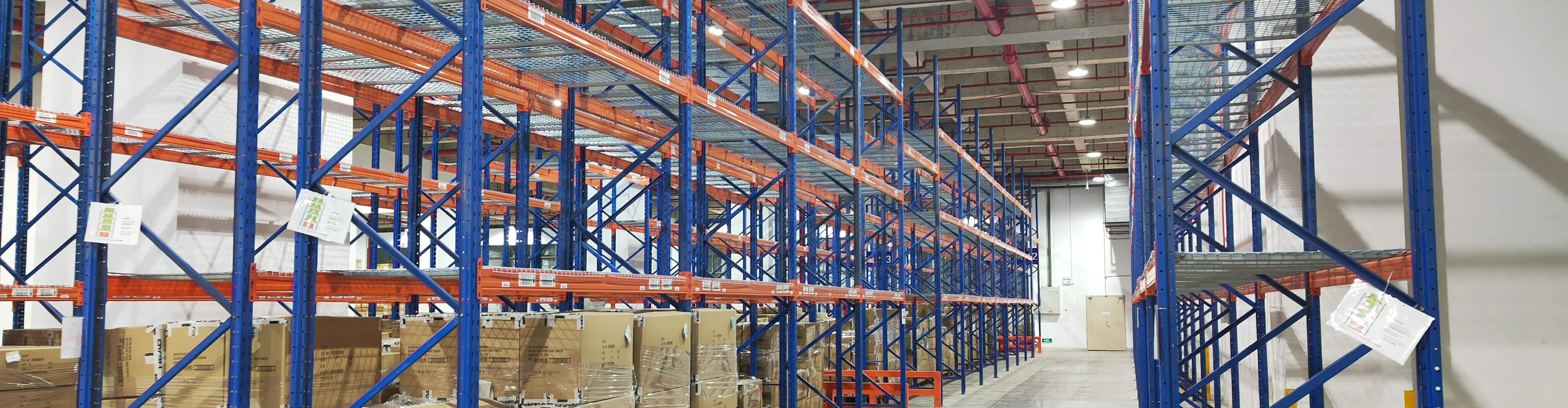
In modern warehousing and logistics management, heavy-duty shelving has become the mainstream choice for numerous factories and warehouses due to its robust structure, high load-bearing capacity, flexible usage, and excellent cost-effectiveness. It not only meets the centralized storage needs for bulk goods but also works efficiently with various mechanized equipment (such as forklifts), significantly enhancing warehouse operational efficiency.However, every storage system has its limitations. Despite their widespread adoption, heavy-duty racks still present certain shortcomings in terms of space utilization and aisle space allocation. Below is a detailed analysis of heavy-duty racks, examining both their advantages and disadvantages.
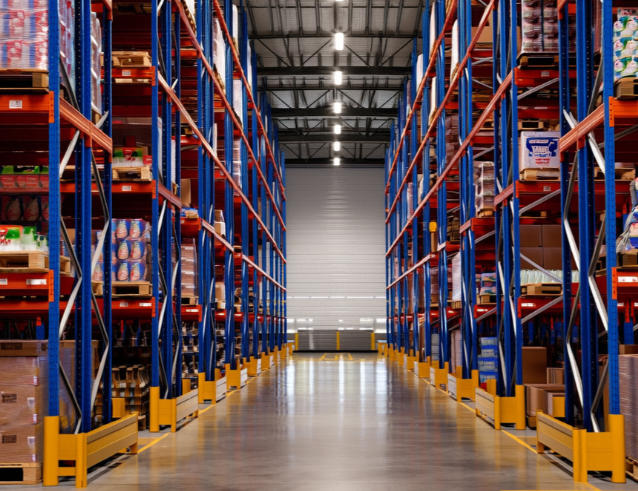
Ⅰ. Key Advantages of Heavy-Duty Shelving
- Exceptional load-bearing capacity
Heavy-duty shelving, as the name suggests, excels in its outstanding load-bearing capacity. Typically, a single layer can support 1,000kg to 3,000kg, with each storage bay easily accommodating two pallets of goods. This makes it suitable for warehousing needs across most industries, including machinery manufacturing, automotive parts, hardware, chemicals, and food. Such robust load-bearing capability ensures safe storage of goods while extending the shelving’s service life.
- Simple structure, flexible and adjustable
Heavy-duty shelving systems typically feature a column-and-beam modular design requiring no welding, making installation and disassembly exceptionally convenient. Shelf heights can be freely adjusted to accommodate varying cargo dimensions, enhancing storage layout flexibility. For larger warehouses, a combination of main and auxiliary frames can be employed—this approach reduces costs while maintaining structural integrity, making it ideal for businesses requiring frequent storage location adjustments.
- Suitable for mechanized operation
Heavy-duty racking systems are primarily designed for storing large or heavy goods, making their integration with mechanical equipment such as forklifts and stackers particularly crucial. Adequate forklift aisles are typically reserved between racks to allow machinery direct access to any storage location for loading and unloading. This “goods-to-person” approach significantly enhances warehouse efficiency, reduces manual handling intensity, and lowers labor costs.
- Low cost investment, economical and practical
Compared to high-density storage systems such as drive-in racking and automated storage and retrieval systems (AS/RS), heavy-duty shelving offers significantly lower manufacturing and installation costs. Its high versatility allows adaptation to various warehouse types without requiring complex control systems or specialized environments, delivering exceptional cost-effectiveness. Consequently, heavy-duty shelving remains the most popular storage solution among small and medium-sized enterprises (SMEs) and traditional manufacturing industries.
II. Major Shortcomings of Heavy-Duty Shelving
- Space utilization is relatively low.
Heavy-duty racking systems offer convenience and flexibility, but their storage density is relatively low due to the need to reserve sufficient aisle space for forklift operations. Typically, overall space utilization rates range only between 40% and 45%, whereas narrow aisle racking systems can achieve over 60%, and drive-in racking can even exceed 90%.However, the latter two systems impose certain restrictions on goods types and storage/retrieval sequences (e.g., first-in-first-out). Heavy-duty racking, on the other hand, accommodates nearly any type of goods, offering greater versatility.
- Large channel footprint and high venue requirements
To accommodate forklift access and turning maneuvers, heavy-duty shelving systems typically require wider aisles.Aisle widths are determined based on forklift models and turning radii, resulting in relatively lower storage capacity per unit area for heavy-duty racking. When rack heights exceed 8 meters, specialized high-reach forklifts or stackers become mandatory, demanding higher technical proficiency from operators. Simultaneously, the safety of high-level installations and construction precision impose stricter standards on manufacturers’ design and construction capabilities.
III. Summary and Application Recommendations
Overall, heavy-duty shelving systems have become the most widely used type in modern warehousing due to their high load capacity, flexible structure, moderate cost, and ease of operation.For warehouses prioritizing inbound/outbound efficiency, handling diverse goods, and possessing ample space, heavy-duty shelving is undoubtedly the ideal choice. However, if warehouse space is limited and maximizing storage density is desired, consider combining heavy-duty shelving with other systems—such as narrow aisle racking, drive-in racking, or automated storage and retrieval systems (AS/RS)—to achieve higher space utilization.
Overall, heavy-duty shelving combines practicality with cost-effectiveness, making it the preferred solution for most traditional warehousing enterprises seeking to enhance storage efficiency and achieve standardized management. By ensuring proper layout during the planning and design phase and selecting appropriate models based on actual warehouse requirements, heavy-duty shelving can deliver maximum value in modern warehouse management.