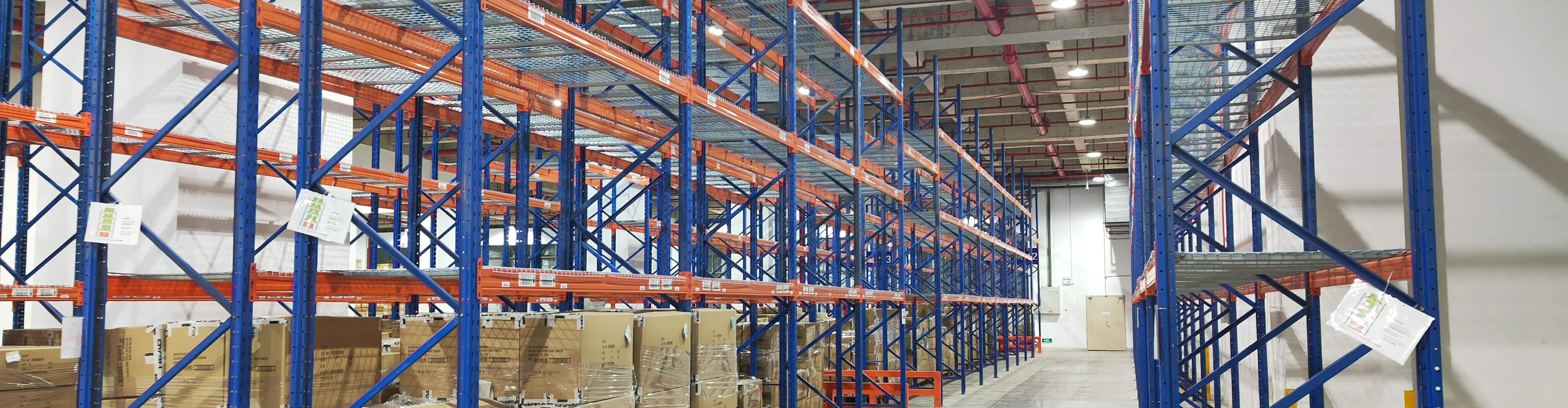
Heavy duty industrial warehouse racking improves warehouse efficiency by using vertical space better, reducing travel time, supporting safer pallet storage, and making stock access more predictable. When the system is matched to your pallet type, forklift operation, SKU profile, and building limits, it can increase throughput without expanding the warehouse footprint.
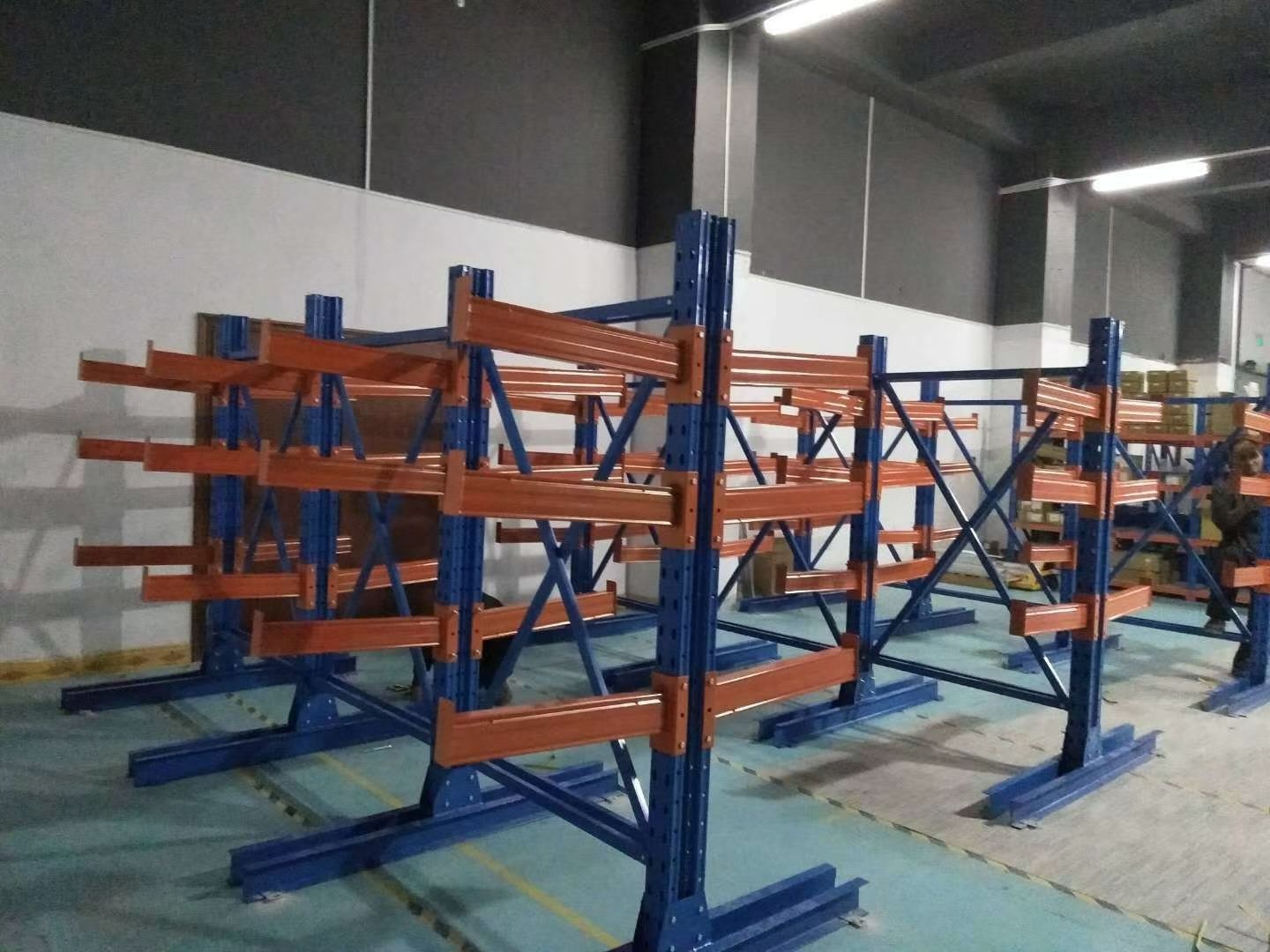
For most warehouses, efficiency does not come from adding more steel alone. It comes from choosing a heavy duty industrial warehouse racking layout that fits how goods actually move through receiving, putaway, replenishment, picking, and dispatch. A well-planned system helps operators work faster with fewer handling errors, while a poorly planned one can create congestion, damage risk, and wasted space.
Why heavy duty industrial warehouse racking affects warehouse efficiency
Warehouse efficiency is usually measured by a combination of storage capacity, access speed, labor productivity, and operational safety. Heavy duty industrial warehouse racking influences all four.
It increases usable cube space: vertical storage reduces pressure on floor area.
It improves location control: defined pallet positions make inventory easier to track.
It supports faster handling: clear aisles and beam levels help forklift operators place and retrieve loads consistently.
It reduces product damage: properly sized racking lowers the chance of unstable storage and double handling.
It helps workflow planning: stock can be arranged by velocity, weight, replenishment frequency, or dispatch priority.
In practical terms, heavy duty industrial warehouse racking can improve efficiency only when the storage design matches the operation. A high-density layout may look good on paper but slow the warehouse down if fast-moving SKUs need immediate access. On the other hand, a low-density selective layout may waste valuable floor space if the business stores deep pallet quantities of the same item.
Start with the real causes of inefficiency
Before changing or expanding heavy duty industrial warehouse racking, identify where time and space are being lost. Many warehouses assume they need more racking when the real issue is poor slotting, unsuitable aisle widths, inconsistent pallet sizes, or weak replenishment planning.
Common efficiency problems linked to storage layout
Forklifts waiting for aisle access during busy periods
Too many pallet moves to reach the right stock
Underused height because beam levels are spaced poorly
Picking staff walking long distances between fast-moving items
Mixed pallet sizes causing unstable storage positions
Congestion near receiving or dispatch zones
Damaged uprights or beams leading to blocked locations
Once these issues are clear, heavy duty industrial warehouse racking can be planned as an operational tool rather than just a storage structure.
Choose the right racking type for your stock profile
Not every warehouse should use the same form of heavy duty industrial warehouse racking. The right choice depends on whether you need direct pallet access, higher storage density, FIFO stock rotation, or a combination of pallet storage and case picking.
Selective pallet racking
This is often the most flexible option for warehouses with many SKUs and a need for direct access to each pallet. It works well when stock lines are varied and replenishment frequency is high. Efficiency comes from easy access and simple location control, but storage density is lower than deep-lane systems.
Drive-in or drive-through racking
These systems can improve space utilization for operations storing larger volumes of similar pallets. They reduce aisle requirements and increase density, but access is slower and forklift impact risk can be higher. They are less suitable when stock rotation is complex or when many SKUs need immediate availability.
Push back racking
Push back systems can improve pallet density while maintaining relatively good access. They are useful for medium-SKU operations that hold multiple pallets per line. However, they require careful load consistency and may not be ideal for every pallet type.
Pallet flow racking
Pallet flow supports FIFO handling and can improve replenishment and dispatch efficiency in the right environment, especially where stock rotation matters. It is more specialized and needs careful planning around pallet quality, lane design, and maintenance access.
The key point is simple: heavy duty industrial warehouse racking improves efficiency only when the storage method matches inventory behavior, not just when it maximizes pallet count.
Use vertical space without creating handling problems
One of the biggest advantages of heavy duty industrial warehouse racking is the ability to use building height. Many warehouses have available headroom that is not being converted into productive storage. Adding levels can increase capacity significantly, but only if the handling equipment, floor condition, and safety clearances support it.
What to check before going higher
Clear internal height under lights, sprinklers, ducts, and doors
Forklift lift height and residual capacity at upper levels
Floor flatness and load-bearing condition
Pallet stability and wrapping quality
Safe clearance between top loads and building services
Inspection access and visibility at upper beam levels
Adding extra beam levels can improve storage density, but if upper pallets are hard to place accurately, cycle times may increase and damage risk may rise. In some operations, a slightly lower but faster and safer layout is more efficient than pushing every bay to maximum height.
Align aisle width with forklift movement
Aisle planning has a direct effect on labor productivity. Heavy duty industrial warehouse racking should allow forklifts to move, turn, lift, and retreat without repeated corrections. If aisles are too wide, you lose storage space. If they are too narrow for the equipment and load type, you create delays and increase impact risk.
When evaluating aisle width, consider:
Type of forklift or reach truck in use
Pallet dimensions and overhang
Operator visibility during putaway and retrieval
Traffic volume during peak shifts
Cross-aisle connections and turning points
Heavy duty industrial warehouse racking works best when aisle geometry supports smooth traffic rather than forcing operators into tight maneuvers. This is especially important in facilities with high pallet turnover or frequent replenishment tasks.
Improve slotting and stock positioning
Even a well-built heavy duty industrial warehouse racking system will underperform if stock is placed randomly. Slotting strategy often delivers faster gains than adding more storage.
Practical slotting rules that improve efficiency
Place fast-moving pallets close to dispatch or picking zones
Store heavier or more stable loads on lower levels where practical
Group related SKUs to reduce travel time
Separate reserve storage from active picking areas if traffic is high
Avoid mixing incompatible pallet sizes in the same beam configuration
Review seasonal stock movement and adjust locations before peak periods
Heavy duty industrial warehouse racking supports better slotting because it creates defined, repeatable storage positions. The efficiency gain comes from how those positions are assigned and managed, not only from the steel structure itself.
Reduce pallet handling and double-touching
One of the hidden causes of low warehouse efficiency is unnecessary pallet movement. If staff must relocate stock repeatedly to reach the correct pallet, labor cost rises and damage risk increases. Heavy duty industrial warehouse racking can reduce this by improving direct access and by organizing reserve stock more logically.
For example, a warehouse with many active SKUs may gain more from selective access than from a higher-density system that requires extra pallet moves. A warehouse storing bulk quantities of the same line may accept lower selectivity in exchange for denser storage. The right balance depends on how often pallets are touched.
Support safer operations to avoid downtime
Efficiency is not only about speed. A warehouse that suffers frequent rack damage, blocked aisles, or unstable loads will lose time through interruptions, rework, and restricted storage positions. Heavy duty industrial warehouse racking should be planned with safety in mind from the start.
Safety-related factors that affect efficiency
Load limits clearly matched to pallet weight
Rack protectors in impact-prone areas
Consistent pallet quality and condition
Visible bay marking and location identification
Routine checks for beam displacement, upright damage, and anchor condition
Operator training on correct loading and unloading practice
When heavy duty industrial warehouse racking is overloaded, struck by forklifts, or used with damaged pallets, efficiency drops quickly. A few unusable bays in a busy area can disrupt the whole flow of goods.
Plan around picking method, not just pallet storage
Some warehouses focus only on pallet count when designing heavy duty industrial warehouse racking. That can be a mistake if order picking drives most of the labor cost. The storage layout should reflect whether the operation is full-pallet dispatch, case picking, split-case picking, or a mix.
If pickers need regular access to lower levels, beam spacing, aisle layout, and replenishment timing all matter. If the warehouse is mostly full-pallet in and out, density and forklift speed may matter more than lower-level picking access. In mixed operations, it is often more efficient to separate reserve pallet storage from active picking zones rather than force one racking layout to do everything.
Think about future expansion before installation
Heavy duty industrial warehouse racking is a long-term infrastructure decision. Efficiency gains can be lost if the system becomes restrictive after the business grows, changes packaging, or adds new SKUs.
Questions to ask during planning
Will pallet sizes remain consistent over the next few years?
Is the SKU count likely to increase?
Will order profiles shift toward more picking and less bulk storage?
Can additional bays or levels be added later?
Will forklift types or handling methods change?
Is there enough allowance for future traffic growth?
A heavy duty industrial warehouse racking layout that is highly optimized for current stock only may become inefficient if the operation changes. Some flexibility is worth preserving, even if it slightly reduces initial pallet density.
Common mistakes that reduce racking efficiency
Many warehouse inefficiencies come from planning shortcuts rather than from the racking system itself.
Choosing the highest-density option without considering access needs
Ignoring forklift turning behavior and real aisle use
Using inconsistent pallet types across the same rack layout
Adding beam levels that are difficult to use safely
Failing to protect end frames and high-impact zones
Not reviewing floor condition before installation
Leaving no room for growth, inspection access, or maintenance
Heavy duty industrial warehouse racking should be part of a broader warehouse design review, not a stand-alone purchase decision.
A practical process to improve efficiency with heavy duty industrial warehouse racking
1. Review current warehouse performance
Measure capacity use, pallet moves, travel distance, congestion points, and damaged locations. Identify whether the main issue is space, access, workflow, or stock control.
2. Analyze inventory and handling patterns
Look at SKU count, pallets per SKU, stock rotation method, pallet dimensions, load weight, and daily movement frequency.
3. Match racking type to operating reality
Select a heavy duty industrial warehouse racking configuration based on selectivity, density, forklift access, and replenishment needs.
4. Validate building and equipment constraints
Check ceiling height, floor condition, fire protection clearances, and truck capability before finalizing the layout.
5. Plan slotting and traffic flow
Decide where fast movers, reserve stock, and picking lines should sit. Make sure aisle routes support peak activity.
6. Build in inspection and protection measures
Protect impact zones, label load limits, and create a routine for checking visible damage and safe use.
7. Review performance after implementation
Monitor travel time, storage utilization, loading errors, and congestion. Fine-tuning after installation often delivers meaningful efficiency gains.
FAQ
How does heavy duty industrial warehouse racking improve warehouse productivity?
It improves productivity by increasing storage capacity, organizing pallet locations, reducing unnecessary handling, and supporting smoother forklift movement. The biggest gains usually come when the layout matches stock turnover and handling patterns.
Is heavy duty industrial warehouse racking suitable for every warehouse?
No. It is widely used, but the exact configuration must suit the operation. A warehouse with many SKUs may need selective access, while a bulk storage operation may prioritize density. The wrong layout can reduce efficiency rather than improve it.
What should be checked before installing heavy duty industrial warehouse racking?
Key checks include pallet size and weight, forklift type, aisle width, building height, floor condition, stock rotation method, and expected future growth. These factors affect both safety and day-to-day efficiency.
Can racking improve efficiency without expanding the building?
Yes. In many cases, better use of vertical space and a more suitable storage layout can increase capacity and reduce travel time within the existing footprint.
Conclusion
Heavy duty industrial warehouse racking can improve warehouse efficiency in a measurable way, but only when it is selected and planned around real operating conditions. The most effective approach is to balance storage density with access speed, forklift practicality, pallet safety, and future flexibility. If you evaluate inventory profile, aisle use, building constraints, and stock flow before choosing the system, heavy duty industrial warehouse racking becomes more than a storage upgrade; it becomes a practical tool for faster, safer, and more controlled warehouse operations.