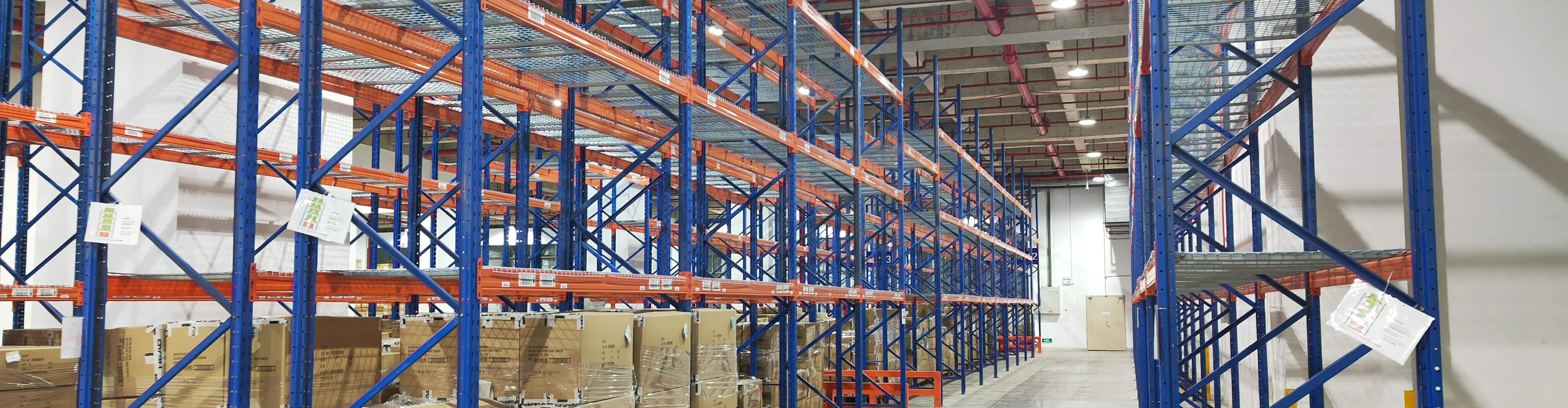
Heavy duty metal shelving works best when the design is matched to the way an industrial facility actually stores, picks, replenishes, and moves stock. Good design is not just about adding more shelves. It is about load capacity, access method, SKU profile, aisle layout, floor condition, and how the shelving fits into daily operations without creating congestion or safety problems.
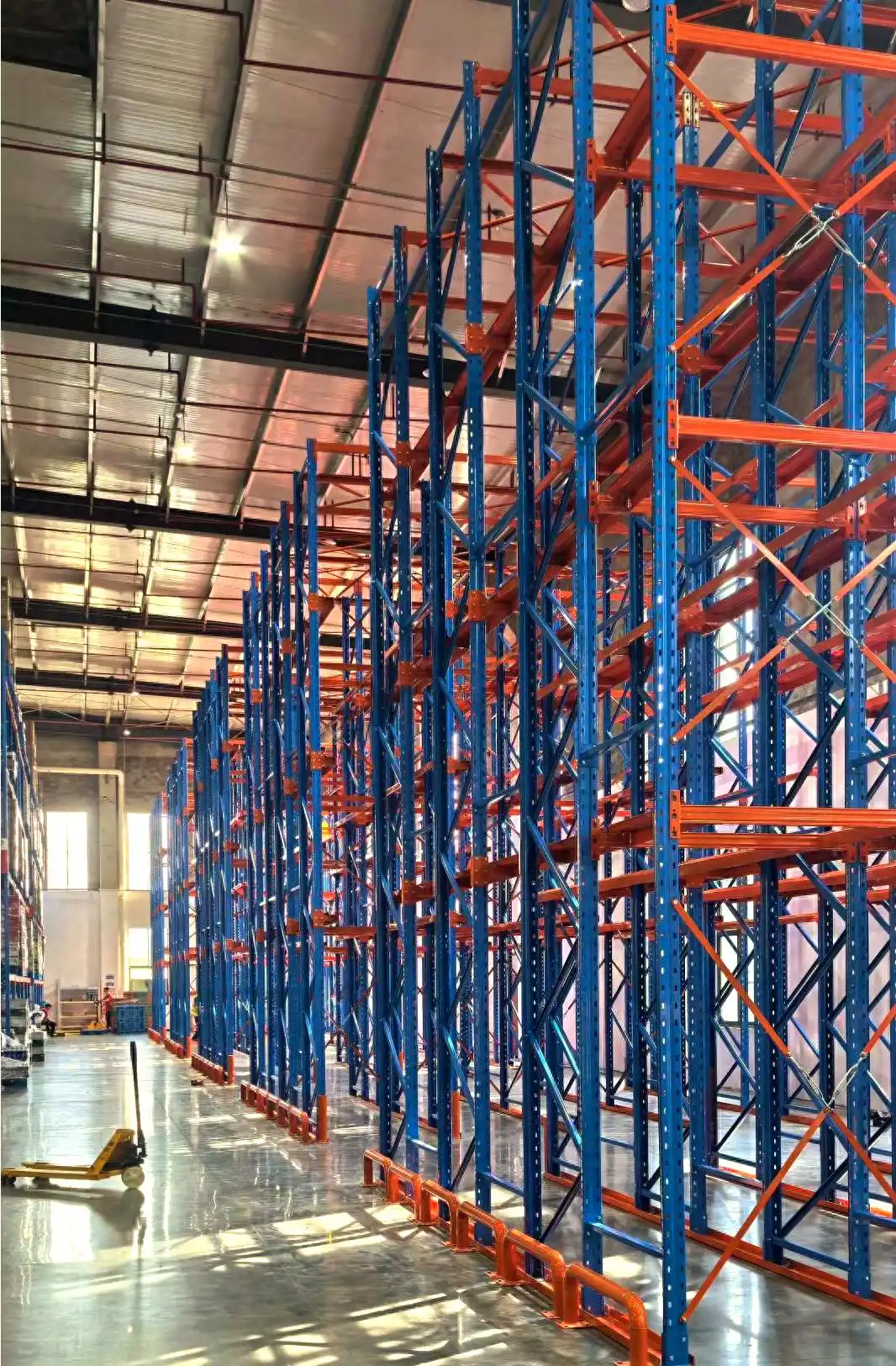
For industrial facilities, the most effective heavy duty metal shelving design ideas usually combine four priorities: safe load support, efficient use of vertical space, practical access for staff or equipment, and flexibility for future changes. A shelving layout that looks efficient on paper can become difficult to use if shelf depths, bay widths, or aisle spacing do not match the products and handling methods in the building.
What heavy duty metal shelving is used for in industrial facilities
Heavy duty metal shelving is commonly used for hand-loaded inventory, cartons, bins, tools, components, maintenance parts, archive materials, and mixed-SKU stock that needs direct access. In many facilities, it fills the gap between light-duty shelving and pallet racking. It is especially useful where operators need to store a high number of SKUs in a relatively compact footprint while still being able to reach each item without moving pallets first.
Typical applications include spare parts rooms, maintenance stores, industrial supply areas, back-of-house warehouse storage, picking zones, assembly support areas, and e-commerce or service-parts operations. In some facilities, heavy duty metal shelving also supports hybrid layouts where shelving is used for split-case or piece picking and pallet racking is used for reserve stock.
The key design question is not whether heavy duty metal shelving can fit the space, but whether it supports the required workflow. A facility with fast-moving small parts has different needs from one storing bulky cartons, long items, or maintenance supplies with irregular dimensions.
Core design principles before choosing a layout
1. Start with the inventory profile
Before choosing bay sizes or shelf spacing, review what will actually be stored. Important factors include:
- Item dimensions and weight range
- Number of SKUs
- Pick frequency
- Whether stock is hand-loaded or equipment-assisted
- Need for bins, dividers, or carton flow accessories
- Future changes in product mix
Heavy duty metal shelving should be designed around the real item mix, not around a standard bay size chosen only for convenience. If shelf heights are too tall, vertical space is wasted. If they are too tight, replenishment becomes awkward and picking errors increase.
2. Match shelving to the handling method
Some industrial facilities use heavy duty metal shelving only for manual picking. Others use rolling ladders, order pickers, carts, or nearby forklifts for replenishment. The design should reflect who needs access and how often. A shelving run placed in a narrow aisle may work for low-volume manual access but become a bottleneck in a busy picking area.
3. Respect floor loading and building constraints
High-capacity shelving places concentrated loads on the floor. Facilities should confirm that floor condition, levelness, and load-bearing capability are suitable for the planned installation. Ceiling height, sprinkler clearance, lighting, columns, doors, and fire exits also affect the final layout. Heavy duty metal shelving often looks straightforward, but real buildings rarely offer a clean rectangular space without obstructions.
Practical heavy duty metal shelving design ideas
Use adjustable shelf levels for mixed inventory
One of the most practical heavy duty metal shelving design ideas is to use adjustable shelf positions across different bays instead of repeating the same vertical spacing throughout the facility. Industrial operations often store cartons, bins, loose parts, and odd-sized items in the same area. Adjustable levels make it easier to fit stock to the shelving rather than forcing stock into inefficient gaps.
This approach is particularly useful in maintenance stores and spare parts rooms, where SKU dimensions vary widely. It also helps reduce wasted cube, which matters when floor space is tight and expansion options are limited.
Create dedicated shelving zones by SKU velocity
Not every item should be stored in the same style of heavy duty metal shelving layout. Fast-moving SKUs should be positioned in the most accessible pick faces, usually between waist and shoulder height. Slower-moving items can be placed on lower or higher shelves. This simple zoning approach improves labor efficiency and reduces unnecessary bending, reaching, and travel time.
In larger facilities, it is often useful to separate shelving into:
- Fast-pick zones for daily order lines
- Medium-velocity reserve pick zones
- Slow-moving or service-parts sections
- Oversize or irregular-item shelving areas
This design logic supports better slotting and makes future reorganization easier.
Combine shelving with bin storage for small parts
Heavy duty metal shelving is often more effective when paired with bins, dividers, labels, and location markers. For small parts, loose storage on open shelves can quickly become disorganized. Bins improve count accuracy, help maintain product separation, and support faster picking. They also make cycle counting more manageable.
If the operation handles many small components, the shelving design should leave room for labeling, barcode scanning, and visual identification. A shelf that can carry weight is not automatically an efficient picking shelf.
Use back-to-back rows to increase storage density
Where access from both sides is not required, back-to-back heavy duty metal shelving rows can improve floor utilization. This is a common option in stockrooms and warehouse picking areas where aisle count needs to be controlled. Back-to-back arrangements can create a denser layout than single rows placed against walls or spaced too generously.
However, this design is less suitable if the operation relies on frequent cross-access or if replenishment and picking need to happen from opposite sides. Dense layouts can save space but may reduce flexibility if the workflow changes later.
Design shelving heights around real picking ergonomics
Many facilities try to maximize vertical storage by making heavy duty metal shelving as tall as possible. That can work, but only if the access method is realistic. If operators are picking manually, very tall shelving may slow the process unless ladders, platforms, or equipment are planned into the workflow. If upper levels become difficult to reach, they often end up underused or used inconsistently.
A practical design approach is to reserve the most ergonomic shelf heights for high-frequency items and use upper levels for reserve stock, infrequent picks, or lighter materials. This improves productivity and reduces strain on staff.
Add shelving for line-side or work-in-process support
In manufacturing environments, heavy duty metal shelving is not only for warehouse storage. It can also support line-side inventory, tools, packaging materials, or work-in-process items. In these applications, the shelving design should focus on access speed, visual control, and replenishment simplicity rather than maximum density.
Shorter shelving runs near production areas can help maintain flow while avoiding overstock at the line. Open access is useful, but shelf organization becomes more important because production areas can become cluttered quickly if no slotting rules are in place.
Use modular layouts for future expansion
Industrial facilities rarely stay static. SKU counts change, packaging changes, and departments often claim storage space over time. A modular heavy duty metal shelving layout makes it easier to extend runs, reconfigure bays, or adapt shelf levels later. This is especially valuable for growing operations or facilities that expect changes in inventory profile.
Rigid layouts with no room for expansion may force a premature redesign. It is usually more practical to leave some planned flexibility in aisle spacing, bay sequencing, or adjacent floor area than to fill every square meter immediately.
Layout ideas based on facility type
Warehouse picking areas
For general warehouse use, heavy duty metal shelving is often most effective in straight rows with clearly marked aisles, location labels, and a logical pick path. The design should minimize travel distance while keeping aisles wide enough for carts, trolleys, or other handling equipment. If replenishment is frequent, avoid layouts where pickers and replenishment staff constantly block each other.
Maintenance and MRO stores
Maintenance stores usually benefit from a mixed-format layout. Heavy duty metal shelving can handle boxed spares, tools, filters, and components, while bins and drawer units may be added for smaller items. In this setting, visibility and organization matter as much as load capacity. Poorly labeled shelving leads to stock duplication and time lost searching for parts.
Manufacturing support areas
Manufacturing facilities often need heavy duty metal shelving close to assembly or production lines. The design should prioritize accessibility, replenishment discipline, and clean separation of parts. Shelving that is too deep can make stock rotation harder. Shelving that is too shallow may not support the required buffer stock.
Archive and records storage
Some industrial facilities use heavy duty metal shelving for boxed records or retained documents. In these cases, uniform carton sizes make layout planning easier, but floor loading and aisle access still matter. Dense storage may be appropriate, but only if staff can retrieve boxes safely and efficiently when needed.
Common planning mistakes to avoid
- Designing around shelf dimensions instead of inventory: Standard sizes are useful, but the stored product should drive the design.
- Ignoring aisle needs: A dense heavy duty metal shelving layout can restrict carts, ladders, and replenishment access.
- Overbuilding shelf height: Extra height is only useful if staff can access it safely and consistently.
- Mixing incompatible items: Heavy, awkward, fragile, or high-pick items often need different shelf positions or separate zones.
- Leaving no expansion capacity: Facilities that fill every available space often struggle when SKU count grows.
- Weak labeling and slotting control: Even well-built heavy duty metal shelving performs poorly if items are not clearly assigned and maintained.
Safety, inspection, and maintenance considerations
Heavy duty metal shelving should be treated as an operational asset, not just a static fixture. Regular inspection matters, especially in facilities with frequent replenishment, high loads, or nearby equipment traffic. Managers should watch for bent members, overloaded shelves, loose fixings, corrosion, damaged decking, and poor housekeeping around the base of the shelving.
Load limits should be clearly understood by the operation. Staff should not treat every shelf level as interchangeable if capacities differ by bay size, shelf type, or configuration. If inventory changes significantly over time, the original load assumptions may no longer be valid.
Good maintenance practice includes:
- Routine visual checks for damage or distortion
- Clear load labeling where appropriate
- Prompt replacement of damaged components
- Keeping aisles clear and shelf contents organized
- Reviewing anchoring and stability where required
- Checking that adjustments or add-ons do not compromise safe use
Facilities should also consider how cleaning, fire protection access, and housekeeping will work around the shelving layout. A design that is hard to clean or inspect often becomes harder to manage over time.
How to decide which heavy duty metal shelving design is right
The right heavy duty metal shelving design depends on what matters most in the operation: storage density, direct access, pick speed, flexibility, or support for a specific department. A useful decision process is to review five practical questions:
- What items will be stored, and how heavy or variable are they?
- Will access be manual, cart-based, ladder-assisted, or equipment-supported?
- How many SKUs need direct access at the same time?
- Is the priority density, ergonomics, replenishment speed, or inventory visibility?
- How likely is the storage profile to change in the next few years?
If the operation handles many small to medium items with frequent direct access needs, heavy duty metal shelving is often a strong fit. If most stock is palletized and moved by forklift, pallet racking may be the more efficient primary system, with shelving used only for split-case or parts storage.
FAQ
What is the main advantage of heavy duty metal shelving in an industrial facility?
The main advantage is direct access to a wide range of SKUs without the need to move pallets first. It is particularly useful for hand-loaded inventory, parts storage, and picking operations.
How tall should heavy duty metal shelving be?
The best height depends on ceiling clearance, access method, and picking frequency. Taller shelving increases capacity, but only if upper levels can be used safely and efficiently.
Is heavy duty metal shelving suitable for all warehouse products?
No. It is generally better for cartons, bins, parts, tools, and mixed items that need direct access. Full pallets, very bulky goods, or forklift-only storage may be better suited to pallet racking or other systems.
Can heavy duty metal shelving be expanded later?
Many systems can be expanded or reconfigured, but expansion is easier when the original layout leaves room for added bays, revised aisles, and changing SKU requirements.
Conclusion
The most effective heavy duty metal shelving design ideas are grounded in operational reality. Shelf capacity, bay layout, aisle width, item size, and picking method all need to work together. For industrial facilities, the goal is not simply to install more storage, but to create a shelving system that supports safe access, efficient workflow, and future flexibility. When heavy duty metal shelving is planned around the actual inventory and daily movement patterns, it becomes a practical long-term storage solution rather than a short-term space fix.