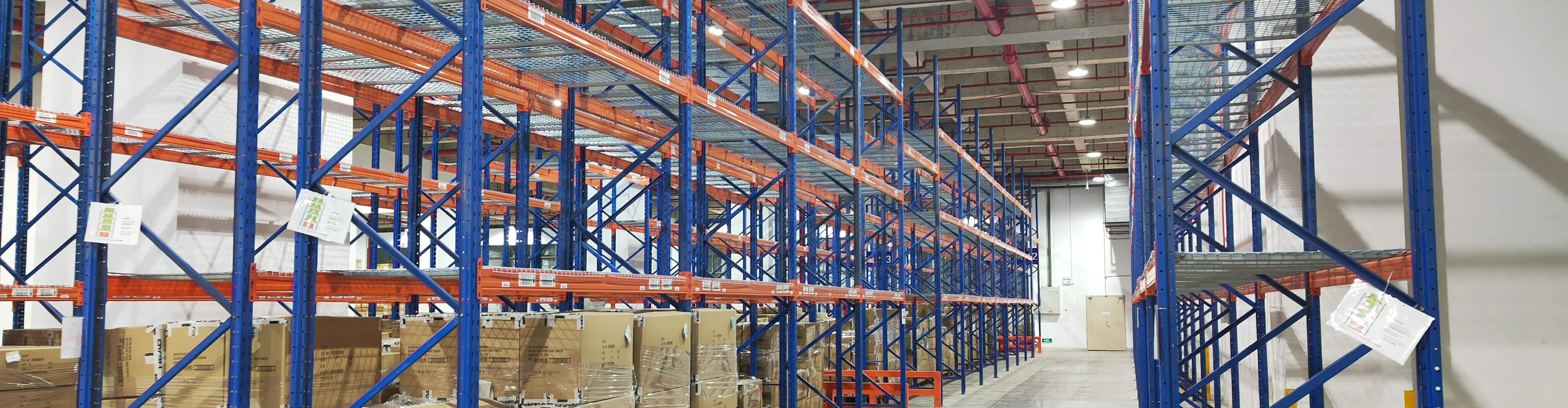
Heavy duty metal shelving is widely used in commercial warehouses where operators need strong, accessible storage for cartons, bins, parts, tools, archived stock, and hand-loaded inventory. It is especially useful when goods are too varied for pallet racking alone, when fast picking matters, or when warehouse teams need better organization for medium-weight items that do not belong on the floor.
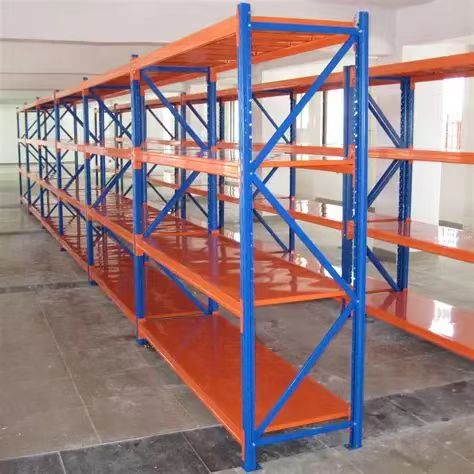
In practice, heavy duty metal shelving works best in warehouses with mixed SKU profiles, frequent manual access, and a need to balance storage capacity with visibility and picking efficiency. It is not a replacement for every storage system, but it fills a very important role between light shelving and full pallet racking.
What heavy duty metal shelving is used for in warehouses
Heavy duty metal shelving is a shelving system designed to carry higher loads than standard office or light commercial shelves. In warehouse use, it is typically selected for hand-loaded inventory, reserve stock, boxed goods, spare parts, maintenance items, and picking operations where direct access to each item is needed.
Unlike pallet racking, which is built mainly for palletized loads handled by forklifts, heavy duty metal shelving supports locations where workers pick, sort, replenish, and organize smaller or mixed items. That makes it a practical choice for warehouses that manage both bulk storage and piece-pick activity.
1. Small parts and component storage
One of the most common applications of heavy duty metal shelving is storing small parts, fittings, components, and maintenance inventory. Warehouses supporting manufacturing, equipment distribution, automotive supply, or industrial service operations often need many shelf locations for a wide range of SKUs.
Heavy duty metal shelving helps separate similar items, reduce picking mistakes, and keep stock visible. This matters when teams are handling cartons, bins, or loose-packed products that would be inefficient to store on pallets.
Why it works well for parts storage
- Easy access to individual SKUs
- Better visibility for counting and replenishment
- Supports bin storage and labeled shelf positions
- Useful for medium-weight items that exceed light shelving capacity
The main limitation is density. If the warehouse stores very high volumes of the same item, shelving may use more floor space than palletized storage. In those cases, heavy duty metal shelving is often better for active pick faces than for deep reserve stock.
2. Carton storage for order picking
Many commercial warehouses use heavy duty metal shelving for carton storage in piece-picking or case-picking zones. This is common in e-commerce support, wholesale distribution, spare parts operations, and service parts warehouses where workers need quick access to many different products.
For these operations, heavy duty metal shelving can improve pick speed because every SKU is directly accessible without moving pallets or opening bulk loads in aisle space. Shelf levels can also be arranged to support ergonomic picking, with faster-moving SKUs placed between knee and shoulder height.
Planning points for carton picking areas
- Match shelf spacing to carton dimensions to avoid wasted vertical space
- Allow enough aisle width for carts, ladders, or picking equipment
- Separate fast-moving SKUs from slow movers to reduce congestion
- Plan replenishment access so pick aisles stay clear during busy periods
If pick rates are very high, shelving layout becomes as important as the shelving itself. Poor aisle design can create bottlenecks even when the storage system is technically suitable.
3. Spare parts storage for maintenance and service inventory
Heavy duty metal shelving is also widely used for MRO inventory, spare parts, and service components. Warehouses and industrial facilities often need a reliable way to store motors, tools, repair kits, filters, hardware, and replacement parts that vary in size and turnover rate.
This application benefits from shelving because parts can be grouped by equipment type, maintenance category, or usage frequency. It also supports cycle counting and visual control, which is difficult when service stock is scattered across pallets, cabinets, and floor areas.
For spare parts, the main concern is not only load capacity but also organization discipline. Even strong heavy duty metal shelving becomes inefficient if shelf labels are unclear, bins are overfilled, or similar parts are mixed together.
4. Archive stock and slow-moving inventory
Not every warehouse item needs prime picking space. Heavy duty metal shelving is often used for archived stock, discontinued lines, seasonal reserves, packaging materials, and low-turn inventory that still requires orderly storage and occasional access.
Compared with leaving cartons on the floor or stacking them loosely, shelving gives better stock protection and cleaner inventory control. It also helps preserve aisle access and reduces the chance that old stock becomes invisible behind active goods.
When this application makes sense
- The stock is not palletized efficiently
- Access is occasional but still necessary
- Items need to be stored by SKU rather than bulk lot
- The business wants cleaner warehouse housekeeping and easier stock checks
However, if slow-moving stock remains palletized and rarely touched, pallet racking may still be the more space-efficient choice. Heavy duty metal shelving is more suitable when direct shelf access is part of the requirement.
5. Packing station and dispatch support storage
In many warehouses, heavy duty metal shelving is installed near packing benches, dispatch zones, or staging areas to hold packing supplies and outbound support items. These may include cartons, labels, inserts, tape, protective materials, and sorted order components.
This application is less about maximum load and more about operational convenience. Shelving keeps supplies close to the work area, reduces unnecessary walking, and helps teams maintain a more consistent packing workflow.
For dispatch support, shelf layout should reflect actual usage. Frequently used consumables should be on the most accessible levels, while backup stock can be placed higher or on less convenient bays. If replenishment is frequent, keep restocking routes separate from packing traffic where possible.
6. Bulk bin and tote storage
Warehouses that use plastic bins, metal containers, or totes often rely on heavy duty metal shelving as the supporting structure. This is common in electronics parts handling, assembly support, returns processing, and multi-SKU fulfillment operations.
Heavy duty metal shelving is well suited to bin storage because it provides clear shelf lanes and stable support for repetitive handling. It also allows operators to group similar inventory and create logical pick sequences.
Key considerations for bin-based shelving
- Confirm shelf depth matches bin size and overhang limits
- Use clear labeling to support location accuracy
- Avoid excessive shelf heights for frequently picked bins
- Review whether open shelving creates dust exposure issues for sensitive stock
Where stock control is critical, the shelving layout should be designed alongside barcode, labeling, or bin numbering processes rather than treated as a stand-alone hardware purchase.
7. Returns, inspection, and quarantine areas
Another practical application of heavy duty metal shelving is in returns processing, quality inspection, and quarantine zones. These areas often handle mixed items in changing quantities, which makes pallet racking less convenient for day-to-day sorting.
Shelving allows teams to separate returned goods by status, inspection stage, supplier issue, or disposition decision. It is also useful for temporarily holding goods pending checking, repacking, or system updates.
The main advantage here is visibility. When returns are placed directly on shelves with clear labeling, it is easier to prevent stock from becoming mixed with saleable inventory. The main risk is that temporary storage becomes permanent. If quarantine shelving is not actively managed, it can quickly become a holding area for unresolved stock.
8. Tool, fixture, and workshop support storage inside warehouse environments
Commercial warehouses with in-house maintenance teams or light workshop functions often use heavy duty metal shelving to store tools, jigs, fixtures, fasteners, and equipment support items. This application is common in facilities that maintain conveyors, forklifts, packaging lines, or production-adjacent equipment.
Heavy duty metal shelving helps create structured storage that is stronger and more scalable than standard workshop shelving. It also supports better separation between operational stock and maintenance support materials.
Where tools or parts are valuable or sensitive, open shelving may need to be combined with controlled access, cages, or stricter stock procedures. The shelving itself improves organization, but it does not solve security or issue-control problems on its own.
9. Multi-level shelving installations for high-SKU storage
In some warehouses, heavy duty metal shelving is used as part of a multi-tier or raised shelving arrangement to increase storage capacity for small and medium items. This approach is typically considered where floor space is tight, SKU count is high, and picking is largely manual.
Used correctly, heavy duty metal shelving can support a much denser small-item storage layout than a simple single-level arrangement. It is particularly useful when the business needs to expand upward rather than outward.
Important planning concerns
- Ceiling height and building clearances
- Safe access between levels
- Load distribution and floor suitability
- Fire protection and local code considerations
- Replenishment method for upper levels
This application offers strong space utilization, but it is not automatically the right answer for every warehouse. If stock is bulky, turnover is low, or forklift handling dominates, pallet racking or mezzanine-supported alternatives may be more practical.
10. Hybrid warehouse layouts that combine shelving and racking
One of the most effective uses of heavy duty metal shelving is as part of a hybrid storage layout. Many commercial warehouses need pallet racking for bulk reserve stock and heavy duty metal shelving for split cases, open cartons, and active pick locations.
This combination is often more efficient than trying to force one storage system to handle all inventory types. Reserve pallets can stay in racking, while forward pick faces are stored on shelving closer to packing or dispatch zones.
For mixed operations, this is usually where heavy duty metal shelving delivers the most operational value. It supports faster picking, cleaner SKU organization, and better use of floor space across different inventory profiles.
How to decide whether heavy duty metal shelving fits the application
Not every warehouse need points to the same solution. Heavy duty metal shelving is usually a good fit when stock is hand-loaded, SKU variety is high, and direct access matters more than maximum pallet density.
Questions to ask before selecting heavy duty metal shelving
- Will the stored items be handled manually or by forklift?
- Are the goods cartons, bins, loose parts, or irregular items rather than full pallets?
- How important is direct access to every SKU?
- What are the weight ranges per shelf level and per bay?
- Does the building floor support the intended load concentration?
- How much aisle width is needed for picking and replenishment?
- Will the shelving need to expand as SKU count grows?
If the operation depends mainly on pallet storage, very high load capacities, or forklift-only handling, heavy duty metal shelving may play only a supporting role rather than a primary storage role.
Common mistakes when using heavy duty metal shelving
The system itself is straightforward, but problems usually come from poor planning or misuse.
- Choosing shelving based only on available space without checking actual load requirements
- Using shelf depths or heights that do not match carton and bin sizes
- Creating aisles too narrow for picking carts or replenishment access
- Mixing fast and slow movers without slotting logic
- Ignoring floor condition or uneven surfaces
- Allowing overloading because shelf labels or load limits are unclear
- Failing to inspect for damage, corrosion, loose components, or impact near active traffic areas
These issues reduce the value of heavy duty metal shelving even when the original application is appropriate.
Maintenance and safety considerations
Commercial warehouses should treat heavy duty metal shelving as working equipment, not static furniture. Regular visual checks help identify loose bolts, bent members, overloaded shelves, missing components, corrosion, and impact damage from carts or handling equipment.
Housekeeping also matters. Shelves that accumulate damaged cartons, loose wrapping, or unstable loads become harder to inspect and less safe to use. Clear load guidance, proper staff training, and routine inspection all support longer service life and more reliable operation.
If the shelving is installed near forklift traffic, end protection and traffic management should be reviewed. Even when shelving is designed for hand-loaded inventory, nearby vehicle impact can still create risk.
Conclusion
Heavy duty metal shelving has a clear role in commercial warehouses: it supports organized, accessible storage for cartons, bins, parts, service stock, returns, and active picking locations that are not well suited to pallet racking alone. Its strongest applications are usually found in mixed-SKU environments where direct access, visibility, and manual handling efficiency matter more than bulk pallet density.
When selected carefully, heavy duty metal shelving can improve picking flow, stock control, and use of available space. The right choice depends on item weight, access method, aisle planning, floor conditions, and how the shelving will fit into the wider warehouse layout rather than being treated as a stand-alone purchase.
FAQ
Is heavy duty metal shelving suitable for pallet storage?
Usually no. Heavy duty metal shelving is generally better for hand-loaded cartons, bins, parts, and medium-weight items. Full pallet storage is typically better handled by pallet racking.
Where does heavy duty metal shelving work better than pallet racking?
It works better in areas that require direct access to many SKUs, such as picking zones, spare parts storage, returns areas, and carton storage for manual handling.
Can heavy duty metal shelving be used in small warehouses?
Yes, especially where floor space must be used carefully and stock variety is high. In smaller warehouses, good shelf sizing and aisle planning are especially important.
What should buyers check before installing heavy duty metal shelving?
They should review load requirements, shelf dimensions, aisle width, floor condition, ceiling height, access method, and whether future expansion or reconfiguration is likely.