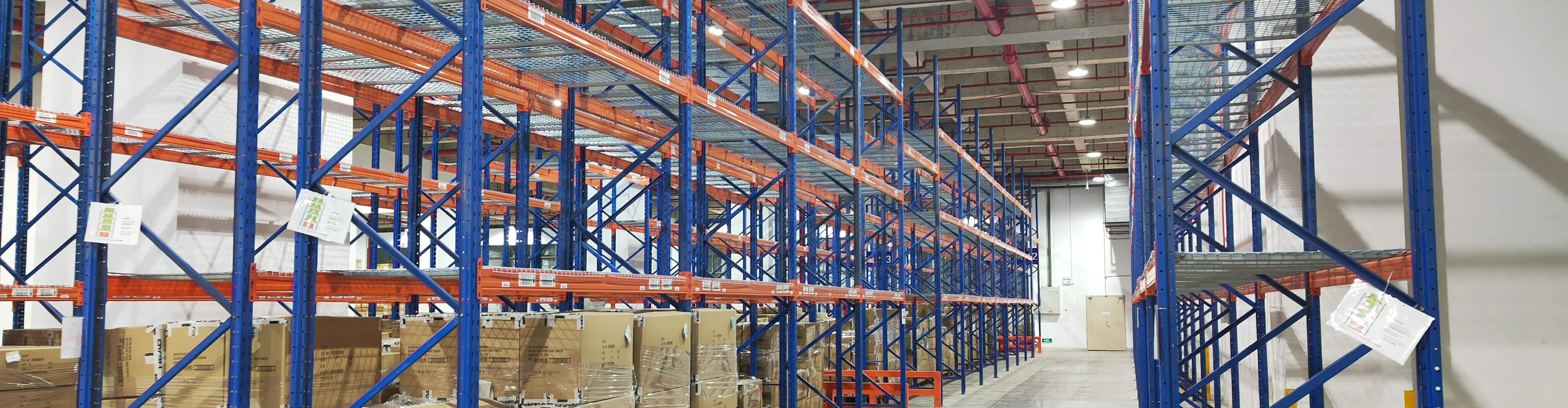
For most warehouses, heavy duty metal shelving and pallet racking serve different purposes rather than competing as direct substitutes. Heavy duty metal shelving is usually the better choice for hand-loaded inventory, carton storage, mixed SKUs, and frequent piece picking. Pallet racking is typically the better option for forklift-handled pallet loads, higher storage density, and bulk stock movement. The right system depends on how your products move, how they are picked, and how much selectivity you need.
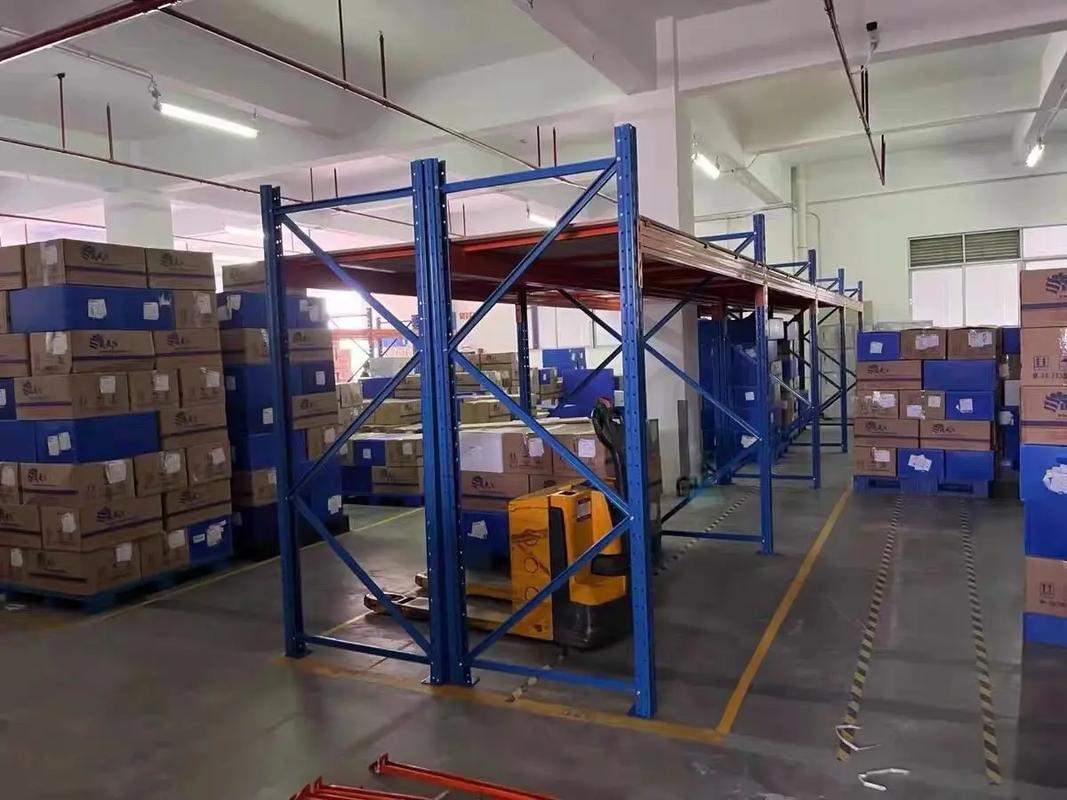
If you are deciding between the two, the practical question is not which system is universally better. It is which one fits your inventory profile, handling equipment, floor space, and daily workflow with the fewest compromises.
What is heavy duty metal shelving?
Heavy duty metal shelving is a storage system designed for manual access to cartons, bins, loose parts, tools, archive items, and medium-weight inventory. It is commonly used in stockrooms, spare parts areas, maintenance stores, back-of-house storage, and warehouse picking zones where operators need direct access to individual items without using a forklift.
Compared with pallet racking, heavy duty metal shelving usually offers:
- Better access to individual SKUs
- Faster hand picking for small or mixed items
- More practical storage for cartons, totes, and irregular goods
- Lower dependence on material handling equipment
- Flexible shelf height adjustment for changing stock profiles
It is less suitable when inventory is stored mainly on pallets or when load weights exceed what shelving levels are designed to carry.
What is pallet racking?
Pallet racking is a structural storage system built to hold palletized goods, normally loaded and retrieved by forklift or other mechanical handling equipment. It is widely used in distribution centers, manufacturing warehouses, cold rooms, and bulk storage operations where products arrive, move, and ship in pallet quantities.
Pallet racking is generally preferred when a warehouse needs:
- Storage for full pallets
- Vertical use of clear building height
- Fast forklift handling
- Higher cube utilization for bulk stock
- Clear load management at bay and beam level
It becomes less practical for operations that rely heavily on manual order picking from many small SKUs unless lower picking levels are combined with shelving, carton flow, or other pick-face solutions.
Heavy duty metal shelving vs pallet racking: the core difference
The main difference is access method and load format. Heavy duty metal shelving is designed for people to access products directly at shelf level. Pallet racking is designed for machines to place and retrieve pallet loads. That single distinction affects layout, productivity, safety, aisle design, and storage economics.
In day-to-day warehouse use, the choice usually comes down to this:
- Choose heavy duty metal shelving if staff pick individual items, cartons, or bins by hand.
- Choose pallet racking if stock is stored and moved mainly as pallets.
Problems usually start when a warehouse tries to use one system for a job the other is better suited to handle. For example, using pallet racking for a dense small-parts picking area often creates wasted space and poor ergonomics. Using heavy duty metal shelving for palletized loads creates obvious load and safety issues.
When heavy duty metal shelving is the better choice
1. High-SKU, low-to-medium volume inventory
If your warehouse holds many product lines with relatively low quantities per SKU, heavy duty metal shelving often makes more operational sense. It allows each SKU to have a visible, accessible location without committing a full pallet position to small stock quantities.
This is common in spare parts storage, maintenance inventory, hardware distribution, e-commerce picking zones, and service depots.
2. Manual picking is a major part of the workflow
Where operators walk aisles and pick items directly into totes, cartons, or pick carts, heavy duty metal shelving supports faster access and clearer stock presentation. Shelf levels can be set to match product size, and picking faces are usually easier to organize than pallet positions.
It also reduces unnecessary forklift traffic in areas where people are working closely around stored inventory.
3. Products are not pallet-friendly
Some goods are too small, too mixed, too irregular, or too frequently split to store efficiently as pallets. In these situations, heavy duty metal shelving often provides better space use than pallet racking, especially when inventory turns are moderate and direct item access matters more than bulk storage density.
4. You need flexible shelf adjustments
Operations with changing product dimensions often benefit from the adjustability of heavy duty metal shelving. If carton heights change seasonally or SKU profiles evolve over time, shelf spacing can usually be reconfigured more easily than redesigning pallet storage for fragmented stock.
5. The space is a stockroom, not a full forklift warehouse
In smaller backroom or service environments, heavy duty metal shelving is often more practical because the storage area is not designed around forklift aisles, turning radius, impact protection, and pallet handling clearances.
When pallet racking is the better choice
1. Inventory is stored and shipped by pallet
If your products arrive on pallets, remain on pallets, and leave on pallets, pallet racking is usually the straightforward choice. It supports efficient putaway and retrieval without extra handling steps.
2. You need more vertical storage from the building height
Pallet racking generally makes better use of clear height in warehouses with suitable floor loading and forklift reach capability. While heavy duty metal shelving can use vertical space to a point, it is usually less efficient for very high storage unless supported by multi-tier layouts or access platforms.
3. Bulk stock levels are high
For operations carrying large quantities of the same SKU, pallet racking allows stock to be stored in larger units with fewer replenishment touches. That can simplify inventory handling and improve labor efficiency compared with breaking stock down into shelf locations too early.
4. Forklift access is already part of the operation
Where forklifts, reach trucks, or stackers are already central to the warehouse flow, pallet racking often integrates better with inbound, reserve storage, and outbound staging.
5. Load weights exceed shelving practicality
Even robust heavy duty metal shelving has practical limits. If products are consistently heavy, dense, or palletized, pallet racking is usually the safer and more suitable structural solution.
Comparing heavy duty metal shelving and pallet racking by decision factor
Accessibility
Heavy duty metal shelving gives direct access to each shelf location, which is valuable for piece picking and mixed inventory. Pallet racking provides direct access to pallet positions in selective layouts, but it is less convenient for repeated hand access to individual cartons stored at height.
Storage density
Pallet racking can deliver better cubic use for palletized goods, especially in taller buildings. Heavy duty metal shelving may use floor area more efficiently for small-item storage because it avoids the wasted pallet footprint associated with low-volume SKUs.
Picking efficiency
For manual order picking, heavy duty metal shelving is often more efficient. For full pallet movement, pallet racking is usually faster and cleaner operationally.
Aisle requirements
Shelving aisles can often be narrower because operators access stock on foot. Pallet racking requires aisle widths suited to the handling equipment, load dimensions, and turning needs. This affects total storage capacity and traffic planning.
Load handling
Heavy duty metal shelving is intended for shelf loads within its rated capacity and should be selected carefully based on product weight and shelf span. Pallet racking is built specifically for pallet loads and generally suits heavier unit loads more naturally.
Layout flexibility
Heavy duty metal shelving is often easier to adapt for changing SKU mixes, carton sizes, and pick profiles. Pallet racking is flexible in bay configuration, but it is less adaptable for highly fragmented small-item storage unless paired with other systems.
Safety management
Both systems need proper installation, load control, and regular inspection. Pallet racking faces more frequent forklift impact risk. Heavy duty metal shelving faces risks related to overloading, poor shelf adjustment, unstable stock placement, and misuse as a substitute for pallet storage.
Cost should be judged by use case, not just purchase price
Some buyers compare only the initial equipment cost, but that can lead to the wrong decision. Heavy duty metal shelving may cost less than pallet racking in some applications, especially where forklift infrastructure is limited. But if your operation stores full pallets, the labor cost of repeatedly breaking pallets down into shelf stock can outweigh any upfront savings.
Likewise, pallet racking may look like the more industrial option, but using it for small-parts picking can increase travel time, waste vertical pick space, and create awkward replenishment routines.
A better cost comparison should include:
- Handling method
- Labor time for picking and replenishment
- Aisle space consumption
- Load requirements
- Future expansion needs
- Need for forklifts or other equipment
- Inspection and repair exposure
Common selection mistakes
Using heavy duty metal shelving for pallet loads
This is one of the clearest mistakes. Heavy duty metal shelving should never be treated as pallet racking unless the system is specifically designed and rated for that use. Load misuse creates avoidable structural and safety risks.
Choosing pallet racking for every warehouse zone
Not every area benefits from pallet storage. Picking zones, spare parts rooms, returns areas, and maintenance stores often work better with shelving because operators need direct item access.
Ignoring SKU behavior
The right system depends not only on product size and weight, but also on how often the item is touched, in what quantity, and by whom. Slow-moving pallet stock and fast-moving split-case stock rarely belong in the same storage format.
Not planning for replenishment
Many warehouses need both systems because reserve stock is palletized while forward pick faces are shelf-based. If replenishment is not planned properly, either system can become inefficient.
Forgetting floor and building constraints
Ceiling height, floor condition, slab capacity, column positions, fire protection layout, and aisle access all affect the practical choice. A good storage decision must fit the building as well as the inventory.
In many warehouses, the answer is not either-or
A common real-world solution is to combine pallet racking and heavy duty metal shelving. Pallet racking holds reserve or bulk stock, while shelving supports the forward picking area. This approach often improves labor efficiency because operators pick from accessible shelf locations and replenish from pallet stock when needed.
This combined layout is especially useful when:
- You carry many SKUs but also keep reserve pallets
- Some items ship by piece and others by pallet
- You want to reduce congestion in picking aisles
- You need a clear separation between bulk storage and active pick faces
For many operations, the better question is not which system wins overall, but how each system should be used in the right zone.
How to choose between heavy duty metal shelving and pallet racking
Step 1: Review your stock unit
Ask whether products are mainly stored as pallets, cartons, bins, or loose items. If most stock is handled below pallet level, heavy duty metal shelving becomes more relevant.
Step 2: Review your picking method
If staff pick individual items by hand, shelving often supports better ergonomics and access. If forklift operators move full loads, pallet racking is usually the logical base system.
Step 3: Check your warehouse constraints
Measure aisle width, clear height, floor condition, and available handling equipment. A storage system that looks efficient on paper may fail in practice if the building does not support it.
Step 4: Consider growth and SKU change
If your inventory mix changes often, heavy duty metal shelving may offer better day-to-day flexibility. If volume growth is mainly in pallet quantities, pallet racking may scale more effectively.
Step 5: Think about inspection and upkeep
Both systems require load discipline and regular checks. Shelving should be inspected for shelf deflection, damaged components, missing clips or fasteners where applicable, and overloaded levels. Pallet racking needs close attention to upright damage, beam seating, anchor condition, and impact exposure from trucks.
FAQ
Is heavy duty metal shelving stronger than pallet racking?
Not in general. They are designed for different load types. Heavy duty metal shelving can be very robust for shelf-stored goods, but pallet racking is the more suitable system for palletized and heavier unit loads.
Can heavy duty metal shelving replace pallet racking?
Only if the operation does not require pallet storage. If your warehouse handles pallets regularly, shelving is not a full replacement for pallet racking.
Is pallet racking more space-efficient than heavy duty metal shelving?
For palletized stock, usually yes. For small-item and mixed-SKU storage, heavy duty metal shelving can be more space-efficient because it avoids underused pallet positions.
Which is better for order picking?
For hand picking of individual items, heavy duty metal shelving is usually better. For full pallet picking, pallet racking is better.
Final decision framework
If your operation depends on manual picking, mixed SKUs, cartons, bins, or loose inventory, heavy duty metal shelving is often the better fit. If your warehouse is built around forklift handling, pallet loads, and bulk reserve stock, pallet racking is usually the stronger choice. If you do both, a hybrid layout is often the most efficient answer.
The best decision comes from matching the system to the stock unit, handling method, available space, and replenishment flow. In practical warehouse planning, heavy duty metal shelving is not better than pallet racking in every case, but it is often the better tool for the right part of the operation.