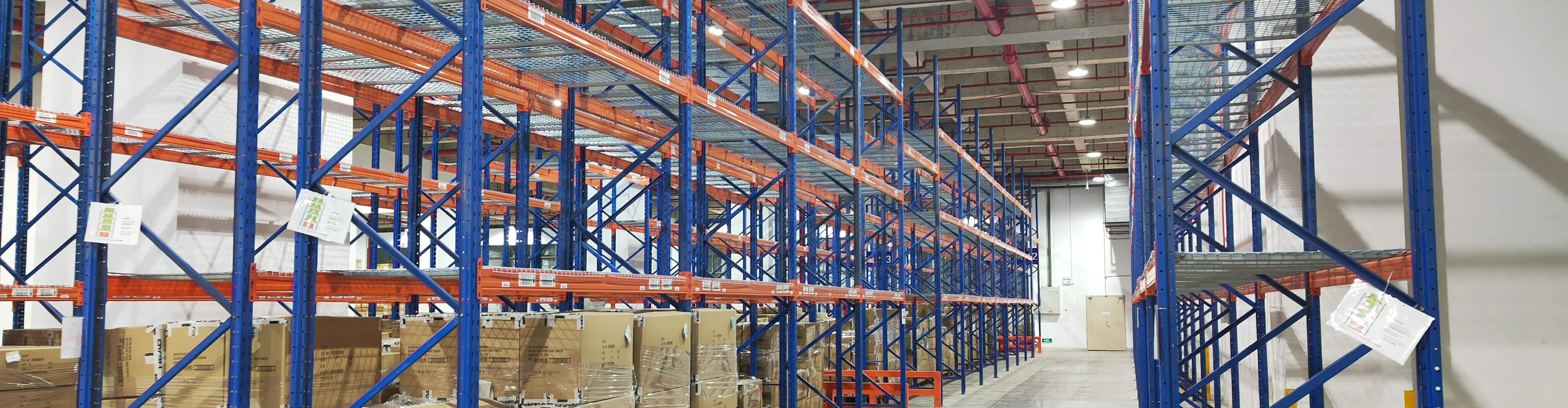
A heavy duty racking system is designed to store palletized or bulky loads safely while making better use of warehouse height, floor space, and handling efficiency. Its main benefits are higher storage capacity, stronger load support, better inventory organization, improved forklift access, and a layout that can scale as operations grow.
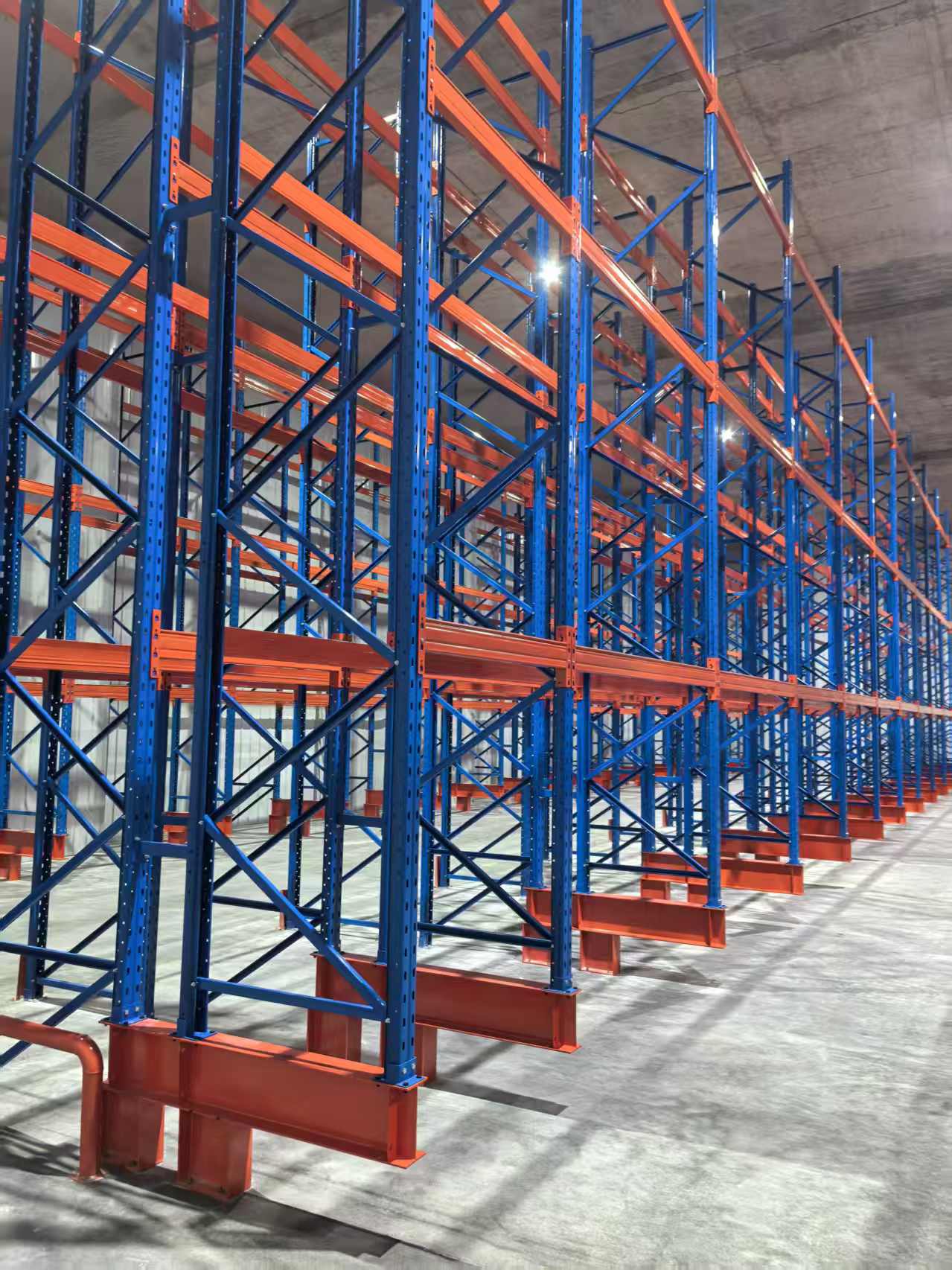
For warehouse managers and procurement teams, the value of a heavy duty racking system is not just that it holds more goods. The real advantage is that it helps match storage capacity with operational needs such as pallet movement, SKU mix, replenishment speed, aisle planning, and future expansion. When selected and installed correctly, it can support both day-to-day efficiency and long-term warehouse planning.
What Is a Heavy Duty Racking System?
A heavy duty racking system is a warehouse storage structure built to handle substantial unit loads, usually pallets, containers, or large industrial goods. It typically includes uprights, beams, bracing, base plates, and anchoring components designed to support significant weight across multiple levels.
These systems are commonly used in manufacturing plants, distribution centers, cold storage facilities, spare parts warehouses, and industrial stockrooms. Depending on the layout, a heavy duty racking system may support selective access, higher-density storage, or specialized handling methods.
In practical terms, it is chosen when standard shelving is not enough for the load size, weight, or volume of stock being stored.
Key Benefits of a Heavy Duty Racking System
1. Better Use of Vertical Space
One of the biggest benefits of a heavy duty racking system is that it turns unused building height into productive storage space. Many warehouses run short of floor area long before they fully use the available clear height. Racking allows stock to be stored upward rather than spreading inventory across more floor space.
This matters in facilities where expansion is expensive or not immediately possible. By increasing the number of storage levels, businesses can often delay the need for relocation or building extension.
Vertical storage does require proper planning. Ceiling height, sprinkler clearance, lighting, flue space, and forklift lift height all need to be reviewed before finalizing the rack design.
2. Higher Load Capacity for Industrial Storage
A heavy duty racking system is built for loads that would be unsuitable for light shelving or manual storage methods. This makes it appropriate for palletized raw materials, packaged goods, molds, components, drums, and other heavy inventory.
For industrial users, this load-bearing capability supports more stable storage and more predictable warehouse operations. Instead of placing goods on the floor or relying on mixed storage methods, stock can be stored in a structured system designed around the actual load profile.
That said, load capacity is only a benefit when it is correctly matched to the real pallet weight, beam span, pallet overhang, and handling conditions. Overestimating pallet consistency is a common mistake, especially where inbound loads vary by supplier.
3. Improved Inventory Organization
A heavy duty racking system helps create clear storage locations, better slotting discipline, and easier stock identification. This is especially useful in warehouses handling multiple SKUs, batch-controlled items, or products with different turnover rates.
Organized rack locations make it easier to:
- assign fixed pallet positions
- separate fast-moving and slow-moving stock
- reduce misplaced inventory
- support cycle counting
- improve replenishment accuracy
- maintain cleaner picking and dispatch processes
In real warehouse use, organization is not only about neatness. It directly affects labor time, forklift travel distance, stock visibility, and the risk of handling errors.
4. Faster Access to Stored Goods
Many heavy duty racking layouts are designed to work efficiently with forklifts, reach trucks, or pallet handling equipment. When the system is planned well, operators can access stored pallets more quickly, which supports smoother inbound, storage, and outbound movement.
Selective pallet racking, for example, gives direct access to each pallet position and is often used when SKU variety is high. Other heavy duty racking system formats may trade some accessibility for better storage density. The right choice depends on whether the warehouse prioritizes selectivity, pallet throughput, or compact storage.
Faster access can improve productivity, but only if aisle widths, turning space, pallet dimensions, and truck type are aligned. A rack layout that looks efficient on paper can become slow in practice if operators struggle with tight clearances or inconsistent pallet quality.
5. More Efficient Use of Floor Space
Beyond vertical storage, a heavy duty racking system can improve overall floor utilization by defining storage lanes, reducing clutter, and creating a more disciplined layout. This often helps warehouses separate storage zones from staging, picking, packing, and transit areas.
When stock is stored in a structured rack layout instead of on the floor, businesses can usually improve housekeeping and reduce blocked aisles. This has operational value because forklift movement becomes more predictable and emergency access is easier to maintain.
Space efficiency should still be balanced against accessibility. Very dense storage layouts can save floor area but may slow retrieval if the operation needs regular access to many different SKUs.
6. Better Warehouse Safety When Properly Managed
A heavy duty racking system can support a safer warehouse environment by keeping loads off the floor, reducing unstable stacking, and creating defined storage positions. This is especially important in facilities where palletized goods would otherwise be block stacked or stored inconsistently.
However, safety is not automatic. Racking only improves safety when it is specified, installed, loaded, and maintained correctly. Key safety factors include:
- correct load ratings for each beam level and bay
- proper floor anchoring and base support
- load distribution suited to pallet size and weight
- clear impact protection in forklift traffic areas
- routine checks for damaged uprights, beams, and anchors
- visible load notices and operator awareness
In other words, a heavy duty racking system can reduce storage risk, but it also introduces a need for disciplined inspection and operating control.
7. Supports Scalable Warehouse Growth
Another major benefit of a heavy duty racking system is scalability. Many businesses install racking in phases, adding bays, levels, or adjacent runs as inventory volume grows. This makes the system commercially useful for operations that expect future expansion but do not want to overbuild on day one.
Scalability matters when planning for seasonal peaks, product line growth, or a move from manual storage to more formal warehouse processes. A modular approach can also make budgeting easier, since investment can be staged.
Even so, expansion is smoother when it is considered early. Floor loading, aisle layout, fire protection, handling equipment, and rack compatibility should all be reviewed before assuming future additions will be straightforward.
8. Better Stock Protection Than Floor Storage
Storing goods in a heavy duty racking system can help reduce product damage compared with floor stacking or ad hoc storage. Pallets are held in defined positions, reducing the chance of crushing lower loads, mixing incompatible items, or blocking access to the wrong stock.
This can be particularly valuable for packaged consumer goods, finished products, spare parts, and any inventory where damaged packaging creates downstream handling issues.
That said, stock protection still depends on pallet condition and operator behavior. Poor pallet quality, overhanging loads, and forklift impacts can all undermine the benefit if not controlled.
9. Supports Better Workflow and Throughput
A heavy duty racking system is not just a storage structure. It affects how goods move through the warehouse. A well-planned layout can shorten travel paths, improve replenishment logic, and make receiving and dispatch areas easier to manage.
For example, operations with clear pallet flow requirements may benefit from assigning rack zones by turnover rate, product family, or dispatch sequence. This can reduce unnecessary truck movement and support more consistent throughput during busy periods.
The benefit becomes stronger when the rack layout is planned alongside actual workflow rather than treated as a standalone purchase. Storage, picking, staging, and forklift routes need to work together.
10. Useful for a Wide Range of Industries and Load Types
A heavy duty racking system is versatile enough to support many industrial storage environments. It may be used for full pallets, bulk goods, raw materials, cartons on pallets, or large packaged items. This flexibility makes it suitable for operations with changing stock profiles or mixed storage demands.
Versatility does not mean every system suits every product. Long items, very small picks, irregular loads, and high-density deep-lane storage may require specialized solutions or a combination of systems. In many warehouses, heavy duty racking works best as part of a broader storage plan rather than as the only storage method.
Practical Considerations Before Choosing a Heavy Duty Racking System
The benefits of a heavy duty racking system are clear, but suitability depends on planning details. Before investing, buyers should evaluate the following points:
- Load details: actual pallet weight, dimensions, consistency, and overhang
- Handling equipment: forklift type, turning radius, mast height, and aisle requirements
- Warehouse height: clear height, obstructions, and vertical safety clearance
- Floor condition: slab flatness, strength, and anchoring suitability
- SKU profile: number of SKUs and need for direct access versus dense storage
- Stock rotation: FIFO, LIFO, batch control, or seasonal storage patterns
- Expansion plans: whether the layout should allow future bays or altered workflows
- Inspection needs: access for maintenance checks and damage reporting
A common buying mistake is focusing only on storage capacity while ignoring handling reality. If pallets are difficult to place, aisles are too narrow, or operators cannot safely maneuver, the theoretical benefit of the system will not translate into daily performance.
When a Heavy Duty Racking System May Be Less Suitable
A heavy duty racking system is highly effective, but it is not the right answer for every storage challenge. It may be less suitable when:
- inventory consists mainly of very small hand-picked items better suited to shelving
- load sizes are highly irregular and difficult to palletize safely
- the operation needs extreme storage density with limited SKU variety, where other systems may use space more efficiently
- the floor cannot support the required loads or anchoring arrangement
- warehouse traffic is poorly controlled, increasing impact risk
In some facilities, a mixed approach works better, such as combining heavy duty pallet racking with shelving, cantilever racking, or mezzanine-supported storage depending on the product profile.
How to Get the Full Benefit From a Heavy Duty Racking System
To get the most value from a heavy duty racking system, businesses should treat it as an operational infrastructure decision rather than a simple steel purchase. A practical approach includes:
Define the real load profile, not the assumed one.
Match the rack layout to forklift movement and pallet handling method.
Plan around ceiling height, fire protection, and floor conditions.
Allow for growth, but do not overcomplicate the initial layout.
Train operators on loading limits and impact awareness.
Inspect regularly for damage, loose components, and misuse.
These steps help ensure the heavy duty racking system delivers practical gains in capacity, access, and safety rather than creating avoidable operating problems.
FAQ
What is the main advantage of a heavy duty racking system?
The main advantage of a heavy duty racking system is that it stores heavy palletized goods efficiently while improving warehouse space usage, access, and organization.
Is a heavy duty racking system suitable for all warehouses?
No. It works well for many pallet storage operations, but suitability depends on load type, ceiling height, floor condition, forklift access, SKU mix, and storage density requirements.
Does a heavy duty racking system improve safety?
It can improve safety by reducing floor stacking and creating defined storage locations, but only when the system is properly specified, installed, loaded, and inspected.
Can a heavy duty racking system be expanded later?
Many systems can be expanded, but future growth is easier when expansion is considered during the initial layout, especially for aisle planning, floor loading, and system compatibility.
Conclusion
The key benefits of a heavy duty racking system are stronger load support, better use of warehouse height, improved stock organization, more efficient access, and a more scalable storage layout. For industrial operations handling pallets or bulky goods, it can be a practical way to improve both storage capacity and daily workflow.
The right heavy duty racking system is the one that fits the real warehouse environment, not just the available floor plan. Load characteristics, equipment, aisle design, floor condition, and future expansion all matter. When those factors are planned carefully, the system becomes a reliable part of warehouse operations rather than just a storage structure.