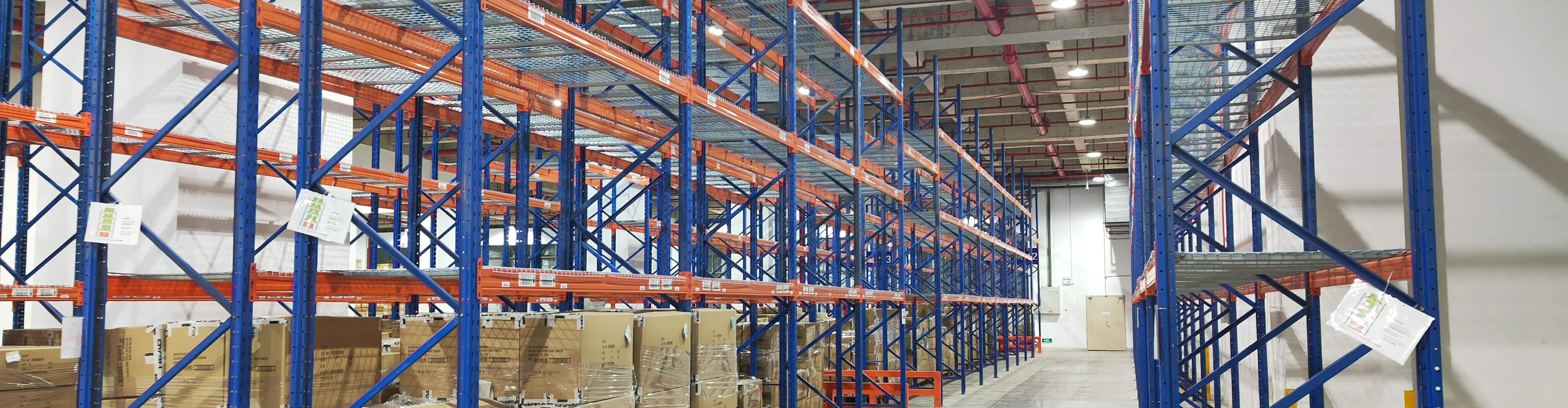
A heavy duty storage rack is not a one-size-fits-all purchase. For warehouse managers, the right system depends on load weight, pallet dimensions, SKU profile, forklift access, building constraints, and how the operation needs to grow over time. A good buying decision improves storage capacity and workflow. A poor one creates congestion, damage risk, and expensive layout changes later.
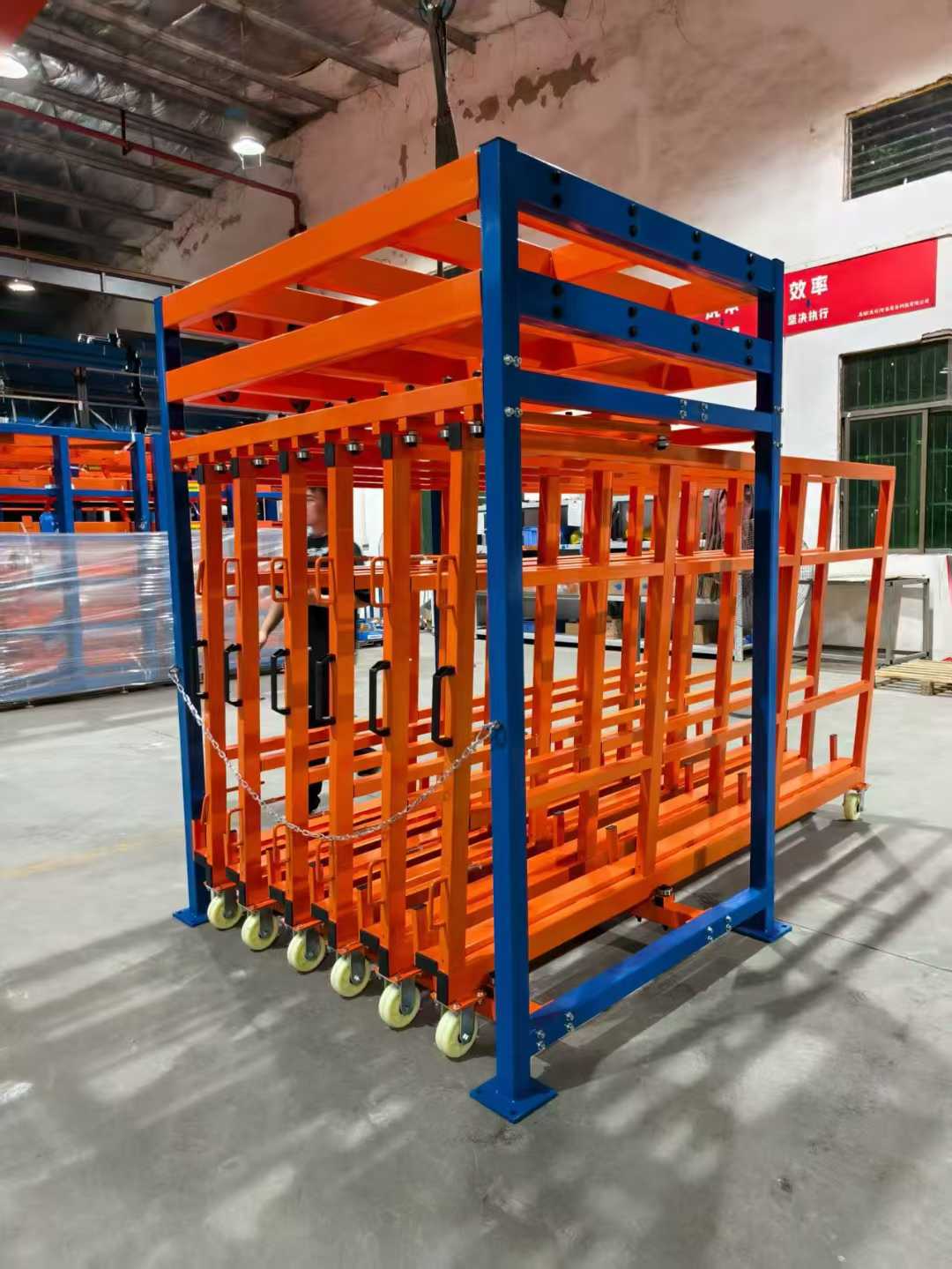
This guide explains how to evaluate a heavy duty storage rack for real warehouse use, what questions to ask before buying, and where common selection mistakes happen.
What a heavy duty storage rack is and what it is used for
A heavy duty storage rack is a warehouse storage system designed to hold substantial unit loads, pallets, cartons, or industrial materials in a structured vertical layout. In most warehouse settings, the term usually refers to pallet racking or other robust rack systems built for frequent handling by forklifts, reach trucks, or manual replenishment equipment.
Warehouse managers typically consider a heavy duty storage rack when standard shelving is no longer suitable for the weight, size, or handling method of stored goods. These systems are used in distribution centers, manufacturing stores, spare parts areas, cold storage rooms, and bulk goods warehouses.
The key point is not just load capacity. A heavy duty storage rack also needs to match operational behavior: how products arrive, how they are stored, how often they are picked, and how they leave the building.
Start with the warehouse operation, not the rack itself
Many buying problems begin when teams focus first on rack dimensions or price per bay. A better approach is to define the operating requirement before comparing rack options.
Questions to answer before requesting quotations
- What products will the heavy duty storage rack hold?
- Are loads palletized, loose, boxed, long, irregular, or mixed?
- What is the maximum pallet weight and the typical pallet weight?
- What pallet sizes are used, and are they consistent?
- How many SKUs need direct access?
- Is the operation full-pallet storage, case picking, or both?
- What handling equipment is used now, and could that change later?
- What clear height is available under lights, sprinklers, or other building services?
- What aisle width can be supported safely?
- Does the floor condition support the planned rack layout and loading pattern?
- Will the system need to expand in the next few years?
These answers affect rack type, bay width, beam level spacing, aisle design, and whether a selective system or a higher-density solution makes more sense.
Main factors to evaluate when buying a heavy duty storage rack
1. Load weight and load consistency
The first decision factor is the actual load. A heavy duty storage rack must be selected around real pallet or unit-load weights, not rough estimates. If loads vary significantly, the rack design and level planning become more complicated. Mixed pallet weights can reduce usable flexibility if some bays need stronger beams or stricter loading rules.
It is also important to consider load shape and stability. Two pallets may weigh the same but behave very differently in storage. A stable, evenly loaded pallet is easier to store safely than a soft, overhanging, or poorly wrapped load.
2. SKU count and access requirement
If the warehouse carries many SKUs and needs direct access to most pallets, a selective heavy duty storage rack is often easier to operate. If SKU count is lower and the priority is higher storage density, deeper storage systems may be considered. The trade-off is that denser storage can reduce immediate accessibility and may require tighter inventory discipline.
Warehouse managers should be realistic here. A high-density rack system can look efficient on paper but become difficult in daily use if stock rotation, replenishment, and order picking are complex.
3. Handling equipment and aisle design
A heavy duty storage rack should always be planned together with the material handling method. Counterbalance forklifts, reach trucks, and very narrow aisle equipment all have different aisle requirements, lift behavior, and productivity implications.
Narrower aisles may increase storage positions, but they can also demand more precise truck operation, different equipment investment, and stricter floor tolerances. Wider aisles use more floor area but may simplify movement and reduce impact risk in some operations.
4. Building height and vertical use
One reason companies invest in a heavy duty storage rack is to use vertical cube more effectively. But maximum rack height is not simply a matter of ceiling height. Managers also need to account for sprinkler clearance, lighting, roof slope, column positions, ducting, and safe handling clearance at top beam levels.
In some buildings, a slightly lower rack with better accessibility may perform better than pushing height to the limit and slowing down forklift cycles.
5. Floor condition and anchoring considerations
Warehouse floors are often overlooked during buying discussions. A heavy duty storage rack relies on proper installation and stable support conditions. Uneven floors, damaged slabs, or areas with limited load-bearing performance can complicate installation and long-term rack alignment.
This does not mean every floor issue prevents a project, but it does mean floor review should happen early. Otherwise, installation delays or layout revisions can appear after equipment is ordered.
6. Future flexibility
A heavy duty storage rack should fit current operations, but it should also leave room for change. Many warehouses later face shifts in SKU mix, pallet size, replenishment pattern, or throughput. A system that is too tightly optimized for one fixed condition can become restrictive.
Flexibility matters in beam adjustability, bay configuration, aisle planning, and the ability to add bays or reconfigure zones without major disruption.
Common heavy duty storage rack types and when they fit
Selective pallet racking
This is often the most practical heavy duty storage rack option for warehouses that need direct access to every pallet location. It is widely used because it is straightforward to understand, adaptable, and suitable for mixed SKU environments.
It may be less space-efficient than denser systems, but it is often easier to manage, inspect, and adjust as inventory changes.
Drive-in or drive-through racking
These systems support higher storage density by reducing aisle count. They can be useful when storing larger quantities of similar products. However, they are less suitable when the warehouse needs fast access to many SKUs or when pallet quality is inconsistent. They also require disciplined forklift operation because rack contact risk is higher.
Push back racking
Push back can improve density while maintaining better selectivity than some deep-lane systems. It can work well for operations with medium SKU variety and multiple pallets per SKU. It may be less attractive where inventory rotation rules are strict or where operators are not comfortable managing lane-based storage behavior.
Pallet flow racking
Pallet flow is often used when FIFO stock rotation is important. It can support efficient replenishment and picking separation, but it introduces more planning complexity and relies on good pallet quality and proper lane control. For some warehouse managers, the operational discipline required is worth it; for others, a simpler heavy duty storage rack layout is easier to sustain.
Cantilever racking
When the load is long, awkward, or not well suited to standard pallets, cantilever may be more appropriate than conventional pallet racking. This applies to pipe, timber, bars, panels, or similar materials. It is a heavy duty storage rack solution for specific product types, not a general answer for all warehouses.
How to match a heavy duty storage rack to your inventory profile
The right rack choice usually becomes clearer when inventory is grouped by storage behavior rather than by product name alone.
Good fit scenarios
- Large numbers of palletized goods with consistent dimensions
- Operations needing better vertical storage utilization
- Warehouses where forklifts handle most stock movement
- Sites that need structured storage locations for inventory control
- Businesses planning to improve space use before expanding the building
Less suitable scenarios without adaptation
- Highly irregular products that do not sit safely on pallets
- Operations dominated by small-item hand picking better suited to shelving
- Warehouses with poor floor condition and frequent truck impact issues
- Very fast-moving mixed-case picking operations where pallet storage alone will not solve workflow problems
In many facilities, the answer is not a single system. A heavy duty storage rack may handle reserve pallet storage, while shelving, carton flow, cantilever, or mezzanine-supported areas address other functions.
Planning dimensions that affect day-to-day performance
Pallet overhang and beam spacing
Beam length and pallet placement should be planned around actual pallet dimensions, not nominal assumptions. If pallets overhang too much or sit inconsistently, the rack becomes harder to use safely and efficiently.
Lift height and top-level usability
Some warehouses install extra top levels that look good in layout drawings but are slow to access in real operation. If upper levels are difficult to reach or rarely used, the theoretical storage gain may not justify the operational drag.
Aisle width versus productivity
Reducing aisle width increases storage density, but only if truck movement remains efficient. If operators slow down, queue more often, or struggle with placement accuracy, the gain in pallet positions may be offset by lower throughput.
Protection and damage exposure
A heavy duty storage rack in a busy forklift area should be planned with protection in mind. Upright protectors, end-of-aisle barriers, and clear traffic routes can reduce impact damage. This is especially relevant near corners, charging areas, staging lanes, and fast-turnover picking faces.
Buying mistakes warehouse managers should avoid
- Choosing a heavy duty storage rack based only on price per position
- Using estimated pallet weights instead of verified maximum loads
- Ignoring future SKU growth or handling changes
- Focusing on storage density without considering accessibility
- Overlooking floor condition and installation constraints
- Adding too many beam levels without checking practical forklift access
- Assuming all pallets are consistent when they are not
- Failing to plan for inspection, maintenance, and damaged component replacement
Most of these mistakes are not technical in isolation. They happen because purchasing, warehouse operations, and layout planning are handled separately. A better buying process brings those views together early.
Inspection, maintenance, and safety points to consider before purchase
A heavy duty storage rack is not just a capital purchase. It becomes part of the warehouse’s daily risk profile. Before buying, managers should think about how the system will be inspected, how damaged parts will be identified, and how loading rules will be communicated to operators.
Practical points include:
- Clear load notices for each rack configuration
- Routine visual checks for upright damage, beam displacement, and anchor condition
- Housekeeping around rack bases and aisles
- Operator awareness of pallet quality and placement rules
- Access to replacement parts if damage occurs
- Procedures for isolating damaged bays until reviewed
A heavy duty storage rack that is difficult to inspect or frequently exposed to careless truck movement can create ongoing maintenance issues. Ease of operation is part of safety.
Questions to ask a supplier before placing an order
- What load information is required to configure the heavy duty storage rack correctly?
- How much adjustability is available in beam levels and bay layout?
- What assumptions are being made about pallet size, load overhang, and handling equipment?
- What installation conditions could affect the final layout?
- What rack protection options are available for high-traffic areas?
- How are future extensions or reconfigurations typically handled?
- What maintenance or inspection guidance is provided after installation?
Good suppliers usually ask detailed operational questions. If the conversation stays limited to rack height and quoted price, the planning may be too shallow.
How to make the final buying decision
For most warehouse managers, the right heavy duty storage rack is the one that balances four things: safe load support, usable capacity, practical access, and room for operational change. The cheapest system may not provide the best long-term value if it slows handling or creates avoidable damage. The densest system may not be the right choice if the warehouse needs frequent access to many SKUs.
A sound decision process usually looks like this:
- Verify product, pallet, and weight data.
- Map current and expected workflow.
- Review building and floor constraints.
- Compare rack types based on access versus density.
- Check equipment compatibility and aisle requirements.
- Plan for inspection, protection, and future expansion.
If those steps are handled properly, a heavy duty storage rack becomes a practical warehouse asset rather than a layout compromise.
FAQ
What is the most common heavy duty storage rack for general warehouses?
Selective pallet racking is often the most common choice because it offers direct pallet access, layout flexibility, and relatively simple operation for mixed inventory.
How do I know if a high-density rack system is worth it?
It is usually worth considering when floor space is tight and multiple pallets of the same SKU are stored together. It may be less suitable if the warehouse needs fast access to many different SKUs.
Can a heavy duty storage rack be expanded later?
In many cases, yes, but expansion depends on the original layout, available floor space, handling equipment, and whether compatible components remain available. Expansion planning should be discussed before the first installation.
Does a heavier rack always mean a better rack?
No. A heavier-duty system is not automatically the right choice. The rack should match actual load requirements and operating conditions. Overspecifying can add cost without improving workflow.
What is the biggest buying mistake?
One of the most common mistakes is choosing a heavy duty storage rack based mainly on storage capacity or price while overlooking access, pallet consistency, forklift movement, and future changes in inventory profile.
Conclusion
Buying a heavy duty storage rack is a planning decision as much as a product decision. Warehouse managers should evaluate load data, inventory behavior, handling methods, building constraints, and future flexibility before comparing quotations. The right heavy duty storage rack supports safer storage, smoother movement, and more usable capacity. The wrong one may still hold pallets, but it will do so with more friction, more damage exposure, and less adaptability than the operation really needs.