Choosing the right heavy duty storage rack for large and bulky items depends less on finding one universal “best” system and more on matching the rack to the load, handling method, and warehouse layout. For most industrial users, the right choice comes down to four practical questions: how heavy the items are, how they are loaded and retrieved, how much floor and vertical space is available, and whether fast direct access matters more than storage density.
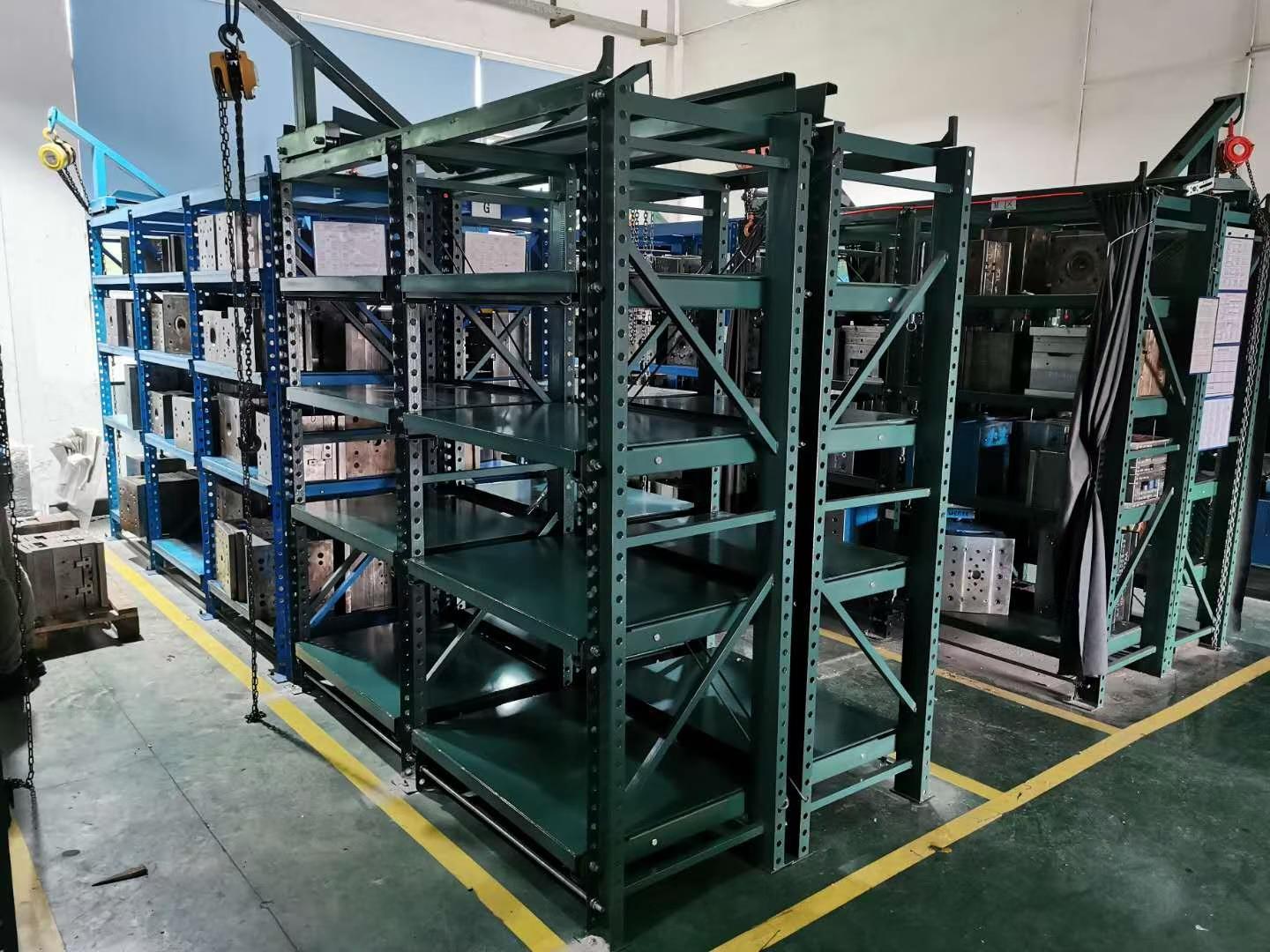
Large and bulky items create planning problems that standard shelving cannot solve. Long products, oversized cartons, tooling, drums, dies, furniture components, large spare parts, and irregular industrial goods often need stronger frames, wider bay options, better forklift access, and more careful load control. A heavy duty storage rack can solve these issues, but only if the system is selected with real operating conditions in mind.
What makes a heavy duty storage rack suitable for bulky items?
A heavy duty storage rack is designed for higher load capacity, larger unit sizes, and tougher warehouse use than light-duty shelving. In practice, that means stronger uprights, beams or arms designed for heavier loads, and a structure that can support palletized or non-palletized goods handled by forklifts, reach trucks, or manual equipment depending on the layout.
For large and bulky items, suitability usually depends on these factors:
- Load weight per level and per bay
- Load dimensions, especially width, depth, and height
- Item shape, including long, irregular, or unstable products
- Handling method, such as forklift loading, crane handling, or manual picking
- Access requirement, whether each item needs direct access or can be stored in blocks
- Warehouse constraints, including ceiling height, floor condition, column spacing, and aisle width
The best system for bulky items is usually the one that supports the load safely without wasting space or slowing down daily operations.
Best heavy duty storage rack options for large and bulky items
There is no single heavy duty storage rack that fits every oversized product. Different rack types suit different load profiles. The most practical approach is to match the rack design to the physical characteristics of the inventory.
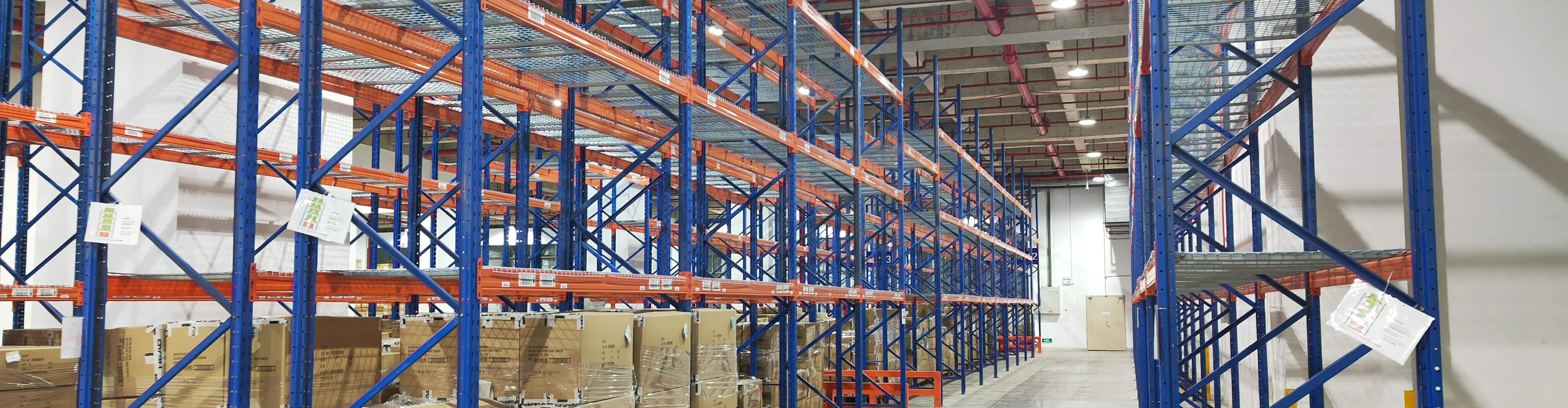
Selective pallet racking for palletized bulky loads
If large items are stored on pallets, skids, or stillages, selective pallet racking is often the most practical starting point. It gives direct access to every load position, which is useful when stock rotation, SKU variety, or order picking flexibility matters.
This type of heavy duty storage rack works well when:
- Bulky items can be palletized consistently
- Each SKU needs individual access
- Forklifts require clear loading positions
- Storage density is important, but not at the expense of accessibility
Its limitation is space efficiency. If you have many lanes and many SKUs, aisle space can consume a large part of the warehouse. For operations with low SKU count and high volume per item, denser systems may be more efficient.
Cantilever racking for long, awkward, or oversized products
For long and bulky goods such as pipes, timber, metal sections, boards, furniture parts, or bar stock, cantilever is often the better heavy duty storage rack option. Because it uses arms instead of front uprights across each bay opening, it allows easier storage of long items without beam obstruction.
Cantilever racking is usually the right fit when:
- Products are too long for standard pallet rack bays
- Loads are awkward or irregularly shaped
- Side loading by forklift is required
- Items cannot be stored safely on conventional pallets
The trade-off is that cantilever needs disciplined loading. Uneven arm loading, overhang errors, or poor load support can create stability issues. It also requires careful planning for arm spacing, base depth, and lift truck approach.
Heavy duty shelving for large hand-loaded items
Some bulky items are large but not necessarily handled by pallet trucks or forklifts. In spare parts storage, maintenance stores, archive boxes, carton storage, and industrial components, a heavy duty storage rack in shelving form may be more suitable than pallet racking.
This approach works well when:
- Operators pick items by hand
- Load weights are substantial but manageable at shelf level
- SKU count is high
- Goods need visible, organized storage
It becomes less suitable when units are too heavy, too deep, or too large for safe manual handling. In those cases, pallet-based storage is usually safer and more efficient.
Drive-in or high-density rack for bulky loads with low SKU variety
Where bulky products are stored in volume and direct access to every pallet is not essential, a high-density heavy duty storage rack such as drive-in racking may improve floor utilization. This is more common for batch storage, buffer stock, or low-SKU inventory with larger quantities per item.
This option can make sense when:
- The warehouse needs higher storage density
- There are many pallets of the same item
- Stock rotation method supports lane-based storage
- Forklift operators are trained for this rack type
However, it is not ideal for mixed SKU operations or fast selective picking. It also places higher demands on forklift discipline because rack impact risk is greater than in standard selective layouts.
How to choose the right heavy duty storage rack
When buyers ask for the “best” heavy duty storage rack, the real task is evaluating operational fit. A rack that performs well in one facility can be inefficient or difficult to manage in another. The following decision points usually matter most.
1. Define the actual load, not just the product name
Do not specify a rack based on a broad label such as “machinery parts” or “large cartons.” The rack supplier or planner needs the real storage unit details: dimensions, weight, support points, pallet type, overhang, and whether the load is rigid or unstable.
Common mistakes include underestimating load weight, ignoring uneven load distribution, and assuming all pallets are the same. A heavy duty storage rack must be selected around the actual load presented to the beam, arm, or shelf.
2. Check how the goods are handled
Forklift access often determines the rack layout as much as load size does. Large and bulky items may need wider aisles, larger turning radius, different beam spacing, or lower first beam levels depending on the truck type.
Ask practical questions such as:
- Will goods be loaded front-on, side-on, or manually?
- What lift equipment is already in use?
- Is there enough clearance for safe placement and retrieval?
- Will operators handle full pallets only, or mixed picking too?
A heavy duty storage rack that looks efficient on paper can become slow and damage-prone if forklift movement is too tight for the actual load and truck combination.
3. Review warehouse height and floor condition
Bulky storage often pushes operations to use more vertical space, but clear height alone is not enough. You also need to consider sprinkler clearance, lighting, roof obstructions, door access, and the reach capability of the handling equipment.
Floor condition matters as well. A heavy duty storage rack transfers significant load to the slab through the uprights and baseplates. Weak, uneven, or damaged floors can affect installation quality, load stability, and long-term performance. Floor review should happen before finalizing the rack layout.
4. Balance accessibility against storage density
Many buyers want both maximum density and full direct access, but these goals often conflict. Selective systems offer easier access but need more aisle space. Dense systems reduce aisle area but limit selectivity and can slow retrieval.
If the inventory includes many SKUs, frequent order changes, or time-sensitive picking, a selective heavy duty storage rack is often easier to manage. If the stock profile is deeper and more repetitive, denser layouts may justify the trade-off.
5. Plan for change, not just current stock
Warehouse storage requirements rarely stay fixed. Product dimensions change, pallet types change, and throughput can increase after installation. A heavy duty storage rack should be reviewed not only for current loads but also for likely future changes in SKU profile, stockholding volume, and handling methods.
Expansion planning may include:
- Leaving room for additional bays or rows
- Choosing adjustable beam levels where product sizes may change
- Reserving aisle flexibility for different forklift types
- Allowing for later integration with mezzanine, shelving, or picking areas
When one rack type is a poor fit
Good rack selection also means knowing what not to choose. A heavy duty storage rack can still be the wrong solution if the load shape, process, or access pattern does not match the design.
- Selective pallet racking is a poor fit for very long loose items that are hard to palletize safely.
- Cantilever racking is less suitable for standard pallet loads where beam-supported pallet rack gives better density and simpler layout.
- Heavy duty shelving is a poor fit for forklift-handled loads or units too heavy for safe manual picking.
- High-density rack systems are less suitable when every SKU needs immediate access or stock rotation is complex.
This is why the “best” heavy duty storage rack should always be judged by application fit rather than by capacity alone.
Key safety and maintenance considerations
Large and bulky items increase the consequences of poor rack use. Even a correctly specified heavy duty storage rack can become unsafe if loads exceed design assumptions or if impact damage is ignored.
Load control
Each storage level should be used within its intended load limits. Problems often arise when operators place non-standard oversized items into positions intended for regular pallets, or when loads overhang too far and shift the center of gravity.
Impact protection
Forklift contact with uprights and end frames is common in busy warehouses, especially where aisles are narrow and loads are bulky. Upright protection, end-of-row barriers, and clear traffic discipline can reduce damage risk.
Routine inspection
A heavy duty storage rack should be visually checked regularly for upright damage, beam deflection, missing safety locks, loose anchors, and signs of misuse. Housekeeping matters too. Damaged pallets, floor debris, and poor load positioning often create avoidable rack incidents.
Operator training
Even the right rack system performs poorly if the loading method is inconsistent. Operators should know where oversized loads can be stored, how to avoid overloading, and when to report damage rather than continuing to use a compromised bay.
Common buying mistakes to avoid
Buyers looking for a heavy duty storage rack for large and bulky items often run into the same issues:
- Choosing a system based on price alone without checking load suitability
- Using nominal pallet size instead of actual load footprint
- Ignoring forklift aisle and turning requirements
- Assuming all bulky items can be handled in one rack format
- Failing to review floor capacity and installation conditions
- Not planning for damaged pallet control and routine inspection
- Overlooking future inventory changes and expansion needs
These mistakes usually lead to wasted space, slower handling, or avoidable rack damage rather than immediate failure. In commercial terms, that often means the system is technically installed but operationally inefficient.
A practical selection framework
If you are evaluating a heavy duty storage rack for large and bulky items, use this simple decision framework:
Identify the storage unit: pallet, loose item, long load, crate, carton, or irregular product.
Confirm weight and dimensions: per item, per pallet, and per storage level.
Define the handling method: forklift type, manual picking, side loading, or crane support.
Set the access priority: direct access to every load or higher density with reduced selectivity.
Review the building: clear height, columns, slab condition, doors, and aisle space.
Match the rack type: selective pallet rack, cantilever rack, heavy duty shelving, or high-density system.
Plan for operation: inspection, damage protection, future adjustment, and expansion.
This approach usually leads to a more reliable decision than starting with a generic product category and trying to force every load into it.
FAQ
What is the best heavy duty storage rack for oversized items?
The best option depends on the item shape and handling method. Selective pallet racking suits palletized bulky goods, while cantilever racking is often better for long or awkward items.
Can heavy duty shelving store bulky industrial parts?
Yes, if the items are hand-loaded and the shelf load capacity matches the actual weight. For forklift-handled or very heavy units, pallet racking is usually more appropriate.
Is a high-density heavy duty storage rack good for mixed SKUs?
Usually not. High-density systems work better for larger volumes of fewer SKUs. Mixed inventory with frequent access often performs better in selective layouts.
What should be checked before installing a heavy duty storage rack?
Key checks include load details, forklift access, aisle width, ceiling height, floor condition, and whether the layout supports safe loading and inspection.
Conclusion
The right heavy duty storage rack for large and bulky items is the one that fits the load, the equipment, and the workflow without creating avoidable handling problems. For palletized bulky goods, selective pallet racking is often the most flexible choice. For long or awkward products, cantilever racking is usually more practical. For hand-loaded industrial stock, heavy duty shelving may be the better fit. And where density matters more than direct access, high-density systems can be worth considering.
The strongest buying decision comes from reviewing real load dimensions, access needs, forklift movement, floor conditions, and future expansion before choosing the rack format. That is usually the difference between a heavy duty storage rack that simply holds inventory and one that supports efficient, safe warehouse operation over time.