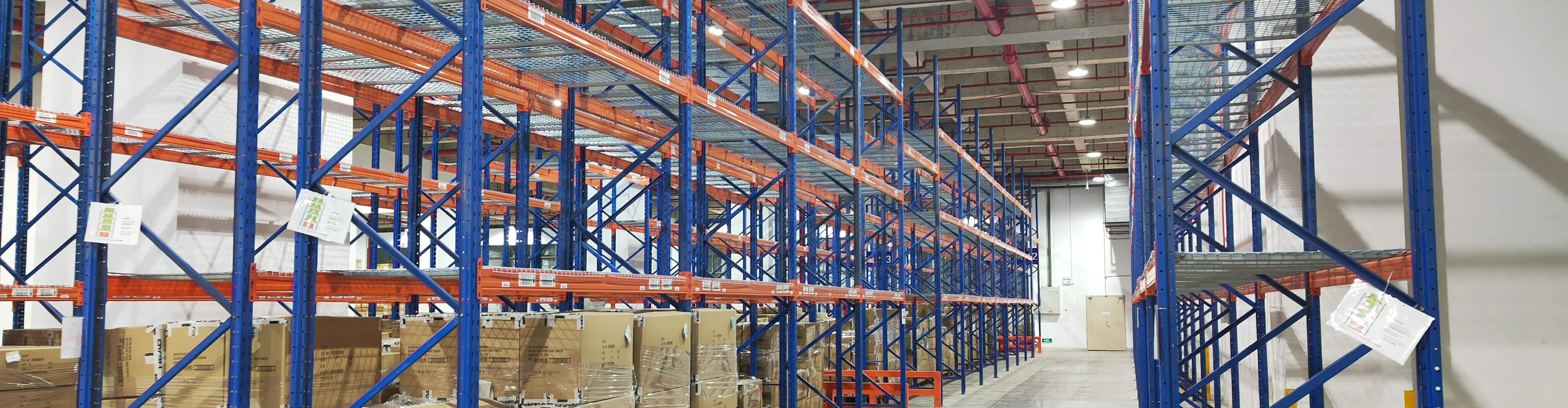
Heavy duty warehouse racking helps warehouses store more palletized goods safely, use vertical space more effectively, and improve daily handling efficiency. For many operations, the main benefits are higher storage capacity, better stock access, stronger load support, and a layout that can be planned around forklifts, SKU movement, and future expansion.
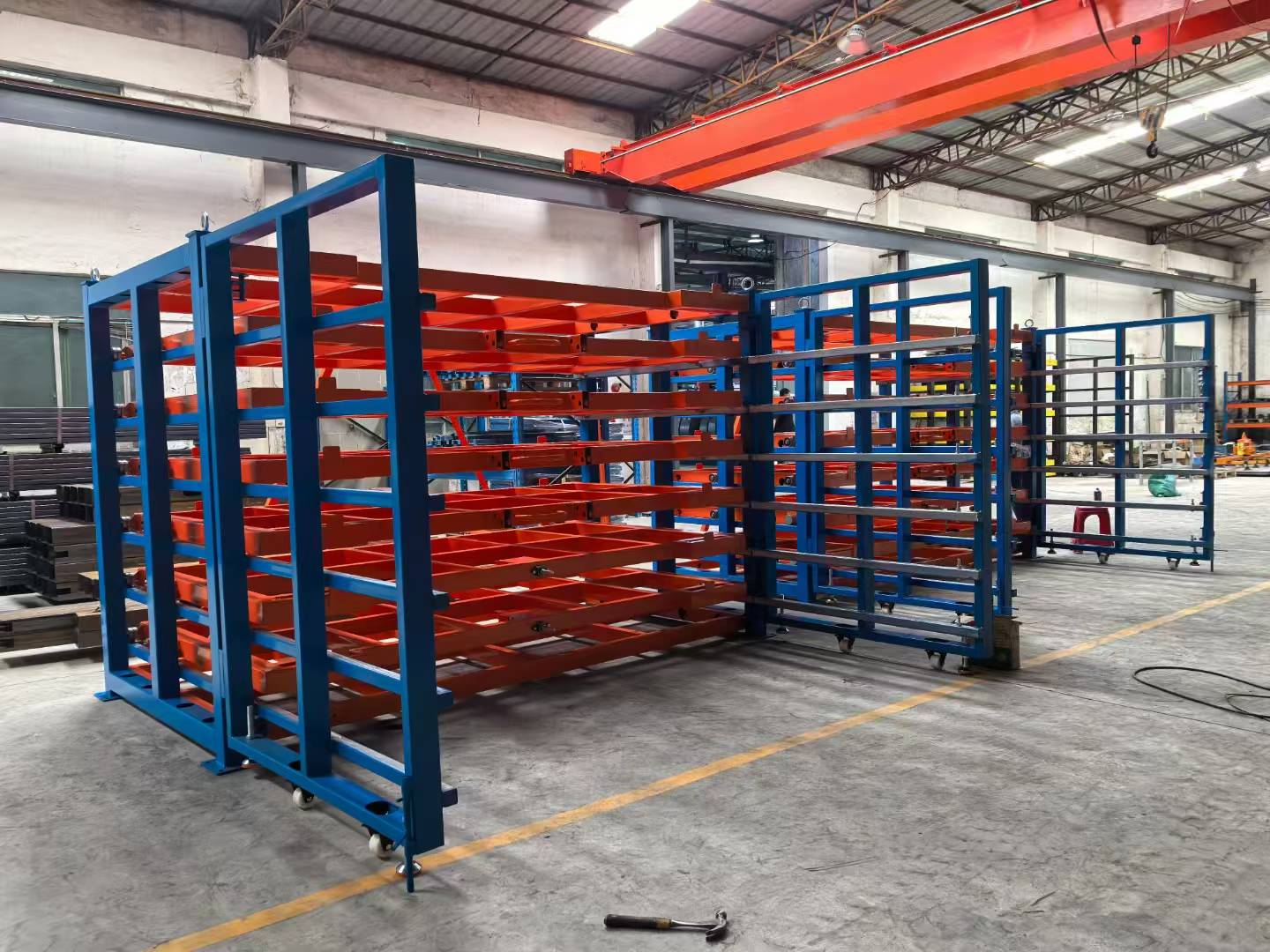
That simple answer matters because storage equipment affects much more than where pallets sit. The right heavy duty warehouse racking system influences aisle design, replenishment speed, picking accuracy, damage risk, labor efficiency, and how easily a site can scale as inventory changes. When selected and installed correctly, it becomes part of the warehouse operating system rather than just a static structure.
What is heavy duty warehouse racking?
Heavy duty warehouse racking is a storage system designed to hold substantial pallet loads and support demanding warehouse operations. It is commonly used in distribution centers, manufacturing plants, wholesale facilities, cold storage sites, and other industrial environments where goods are stored in bulk and handled by forklifts or other material handling equipment.
Unlike light shelving, heavy duty warehouse racking is intended for larger units, higher bay loads, and repeated pallet movement. Depending on the layout and inventory profile, it may be configured for selective access, higher density storage, or specialized handling methods. The exact format can vary, but the core purpose is the same: organize heavy inventory safely while making better use of floor area and building height.
Key benefits of heavy duty warehouse racking
1. Better use of vertical space
One of the clearest benefits of heavy duty warehouse racking is that it turns unused building height into productive storage capacity. Many warehouses run short of floor space before they fully use the available clear height. Racking allows pallets to be stored upward in multiple beam levels instead of spread across the floor.
This can delay the need for relocation or building expansion, which is often far more expensive than improving the storage layout inside the existing facility. For operations paying close attention to occupancy cost per pallet position, vertical storage is often one of the first practical improvements to review.
2. Higher storage capacity without losing control
Heavy duty warehouse racking increases the number of pallet positions in a structured way. That matters because more capacity only helps if inventory remains accessible and manageable. A well-planned system creates defined storage locations, clearer lane logic, and better organization for receiving, putaway, replenishment, and dispatch.
For warehouses handling mixed stock, this structure also supports better slotting decisions. Faster-moving items can be placed in more accessible areas, while slower inventory can be stored in less premium locations. The result is not just more storage, but more usable storage.
3. Improved accessibility to palletized goods
In many operations, accessibility is as important as storage density. Heavy duty warehouse racking can be configured to provide direct access to pallets or to increase density depending on stock rotation and handling needs. This flexibility is a major operational advantage.
For example, a warehouse with many SKUs and regular picking requirements may prioritize direct pallet access. A site storing larger quantities of the same product may accept denser storage with more selective retrieval. The benefit is that heavy duty warehouse racking can be matched to how the warehouse actually works instead of forcing operations into a poor fit.
4. Better warehouse organization and inventory visibility
Pallets stored on the floor often create congestion, inconsistent stacking, and hard-to-track storage locations. Heavy duty warehouse racking introduces defined bays, levels, and positions. That makes stock easier to identify, count, and manage.
Clear storage locations support cycle counting, reduce misplaced pallets, and help warehouse teams maintain cleaner replenishment logic. If a warehouse management system is in place, structured racking also makes location control more effective. Even in simpler operations, visual organization alone can improve day-to-day discipline.
5. Faster handling and workflow efficiency
Heavy duty warehouse racking can improve travel paths and reduce unnecessary handling when the layout is planned around real movement patterns. Receiving, reserve storage, picking faces, staging, and dispatch zones all work better when pallet locations are predictable and aisle access is appropriate for the equipment in use.
In practice, this means forklift operators spend less time searching for open space or repositioning blocked pallets. Picking teams also benefit when replenishment stock is stored in a logical sequence. Over time, these gains can have a meaningful effect on throughput, especially in facilities with frequent inbound and outbound activity.
6. Stronger support for heavy and bulky loads
Another major benefit of heavy duty warehouse racking is load-bearing capability. Industrial facilities often need to store pallets containing raw materials, finished goods, components, drums, cartons, or bulky packaged products that are not suitable for light shelving or floor stacking.
Using a system designed for heavier loads allows the warehouse to store these items in a controlled and repeatable way. It also helps separate storage from ad hoc practices that may create safety issues, such as unstable floor stacks or overloaded non-industrial shelving.
7. Safer storage when properly specified and maintained
Heavy duty warehouse racking can improve warehouse safety by creating designated storage positions and reducing random stacking on the floor. Clear aisles, defined beam levels, and proper pallet support all contribute to a more orderly storage environment.
That said, safety depends on correct load planning, installation quality, operator behavior, and ongoing inspection. Racking is not automatically safe just because it is strong. Warehouses still need to monitor upright damage, beam deflection, missing safety components, anchor condition, and overloading risk. The benefit is greatest when the system is treated as operational equipment that requires routine attention.
8. Better adaptability for changing stock profiles
Inventory rarely stays the same for long. Product dimensions change, SKU counts increase, customer order patterns shift, and seasonal peaks create temporary pressure on space. Heavy duty warehouse racking offers a degree of adaptability because beam levels, bay layouts, and storage zones can often be adjusted to fit revised operating needs.
This makes the system useful for businesses that expect growth or product mix changes. Expansion planning is still important, but a modular racking layout is generally easier to modify than a warehouse built around floor stacking or improvised storage methods.
9. Reduced product damage in a controlled storage layout
When goods are stacked directly on the floor, pallets may be crushed, blocked, or repeatedly moved to access other stock. Heavy duty warehouse racking reduces some of these issues by assigning loads to dedicated storage levels. That can help protect packaging, improve stock rotation, and reduce unnecessary pallet disturbance.
The actual result depends on aisle design, pallet quality, forklift discipline, and whether the chosen racking type suits the inventory. Still, compared with unmanaged bulk floor storage, a structured rack layout usually gives warehouse teams better control over product handling.
10. More professional use of warehouse space for growth planning
Heavy duty warehouse racking supports long-term planning because it gives the business a more measurable storage framework. Managers can estimate pallet positions, occupancy rates, replenishment zones, and future expansion options more accurately when storage is built around a planned system.
This is especially useful for companies evaluating whether to add more racking, re-slot inventory, change aisle widths, introduce different forklift types, or create separate areas for reserve and picking stock. A structured racking layout makes those decisions easier to analyze.
How heavy duty warehouse racking supports different warehouse operations
Full-pallet storage
For operations handling pallets in and out with limited piece picking, heavy duty warehouse racking provides clear reserve storage and efficient forklift access. This is common in wholesale, raw material storage, and finished goods warehousing.
Mixed SKU environments
Warehouses with many SKUs often need a balance between storage density and direct access. Heavy duty warehouse racking can support this by separating fast movers, slow movers, and reserve stock into different zones. The real benefit here is flexibility rather than one single layout advantage.
Manufacturing support
In production environments, heavy duty warehouse racking can hold components, packaging materials, or finished goods waiting for dispatch. Organized storage helps reduce line-side disruption and makes replenishment more predictable.
Seasonal or growth-oriented businesses
For businesses with fluctuating stock volumes, heavy duty warehouse racking offers a more scalable way to manage peaks. Additional bays or revised beam levels may be easier to implement than redesigning the entire warehouse around floor storage.
Important planning factors before choosing heavy duty warehouse racking
The benefits of heavy duty warehouse racking are real, but they depend heavily on correct planning. A system that looks efficient on paper may create problems if the operating details are ignored.
- Pallet type and load consistency: Uneven pallets, damaged pallets, or variable load sizes can affect safe storage and handling.
- Forklift type and turning radius: Aisle width should match the equipment actually used, not an idealized layout.
- Ceiling height and clearances: Available height should be reviewed together with sprinkler clearance, lighting, and lift access.
- Floor condition and slab capacity: Weak or uneven floors can limit what the racking system can safely support.
- SKU profile and stock rotation: High-SKU operations often need more selectivity, while low-SKU bulk storage may prioritize density.
- Picking method: Full-pallet handling, case picking, and split-case picking create different layout requirements.
- Expansion plans: It is usually better to consider future growth early than to force difficult modifications later.
When heavy duty warehouse racking may be less suitable
Heavy duty warehouse racking is not automatically the right answer for every storage problem. In some situations, another approach may be more efficient or more economical.
For example, if an operation stores mostly small hand-loaded items, shelving or mezzanine-supported picking areas may be more practical than pallet racking. If stock is highly irregular in size or shape, custom storage solutions may be needed. If the warehouse has poor floor conditions, limited lift equipment, or very low clear height, the expected benefits of heavy duty warehouse racking may be reduced.
There is also a trade-off between density and accessibility. A warehouse that wants maximum pallet selectivity may need to accept lower storage density than one using a denser configuration. The right decision depends on stock profile, throughput, and handling priorities.
Common mistakes that reduce the benefits
- Choosing a layout based only on maximum pallet count without considering forklift movement.
- Ignoring pallet overhang, load dimensions, or beam level clearances.
- Using heavy duty warehouse racking without clear load notices and operator guidance.
- Failing to inspect for impact damage, loose anchors, or missing safety locks.
- Allowing poor housekeeping to block aisles or reduce safe access.
- Adding different pallet types later without reviewing compatibility.
- Planning only for current stock volume and not future changes in SKU mix or throughput.
Maintenance and inspection still matter
Even when the main goal is storage capacity, heavy duty warehouse racking should be reviewed as part of routine warehouse safety management. Uprights are vulnerable to forklift impact, especially at lower levels and aisle ends. Beams, connectors, baseplates, and anchors should also be checked regularly.
Warehouse teams should watch for obvious signs of misuse such as overloaded levels, displaced pallets, bent members, missing components, or repeated impacts in the same area. A strong racking system performs best when daily use, housekeeping, and inspections are taken seriously.
FAQ
What is the main benefit of heavy duty warehouse racking?
The main benefit of heavy duty warehouse racking is that it increases pallet storage capacity while keeping inventory more organized and accessible. It also helps warehouses use vertical space more efficiently.
Is heavy duty warehouse racking suitable for all warehouses?
No. It is most suitable for palletized goods and industrial storage environments. Warehouses storing mostly small items, irregular products, or low-volume hand-picked inventory may need different storage systems.
Does heavy duty warehouse racking improve safety?
It can improve safety by reducing random floor stacking and creating defined storage locations, but only if loads are correctly specified, the system is properly installed, and regular inspections are carried out.
How do I know if my warehouse needs heavy duty warehouse racking?
If your operation stores palletized goods, needs better use of height, struggles with floor congestion, or wants more controlled stock locations, heavy duty warehouse racking is worth evaluating. The final decision should consider load type, handling equipment, aisle space, and growth plans.
Conclusion
The benefits of heavy duty warehouse racking go beyond adding more pallet positions. A well-planned system can improve space utilization, stock control, handling efficiency, and operational discipline across the warehouse. It also gives businesses a stronger platform for growth, provided the layout matches the inventory profile, equipment, and workflow.
For most industrial operations, heavy duty warehouse racking is most valuable when it is selected with practical judgment rather than simply chasing maximum density. Load characteristics, forklift access, floor condition, inspection routines, and future expansion all affect whether the system delivers long-term value. In other words, the benefit comes not just from installing racking, but from planning it properly.