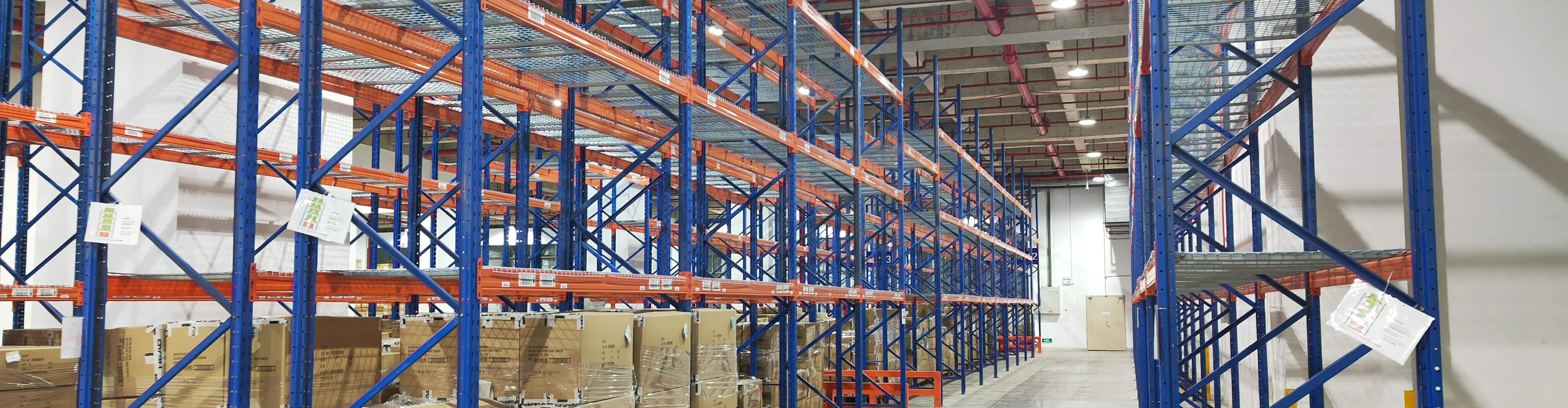
Heavy duty warehouse racking improves storage capacity by using vertical space more effectively, organizing pallet positions more efficiently, and matching rack layout to inventory flow. In practical terms, the right heavy duty warehouse racking system can increase usable storage without automatically requiring a building expansion, but results depend on pallet sizes, aisle widths, forklift access, ceiling height, floor condition, and SKU profile.
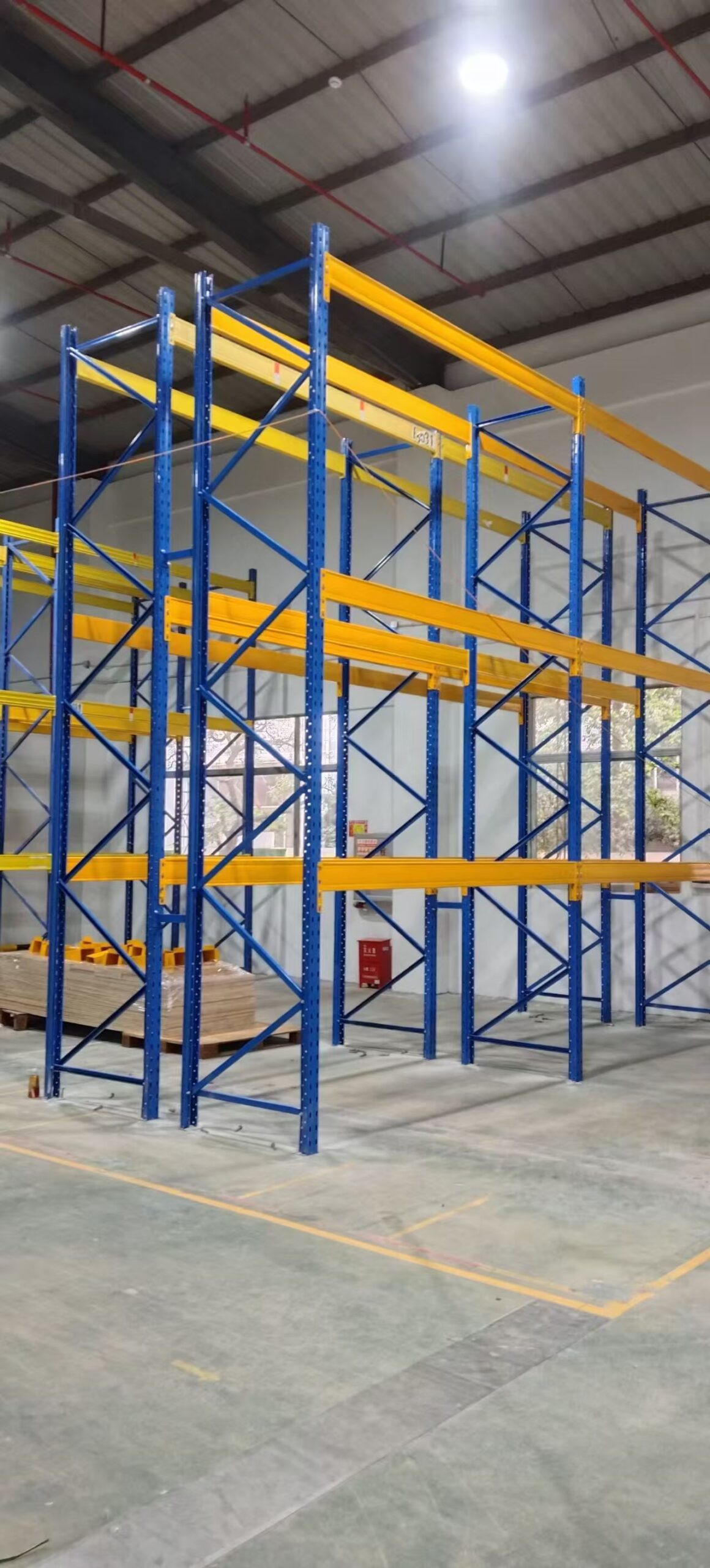
For warehouse managers and project planners, the key is not simply adding more steel. Storage capacity improves when heavy duty warehouse racking is selected and configured around how goods are actually received, stored, picked, replenished, and shipped. A dense layout that slows forklift movement or creates picking congestion may add nominal pallet positions while reducing operational efficiency. The goal is to increase usable capacity, not just theoretical capacity.
What Heavy Duty Warehouse Racking Means in Practice
Heavy duty warehouse racking generally refers to pallet racking systems designed to store substantial loads safely and systematically in industrial environments. These systems are commonly used for palletized inventory, bulk goods, reserve stock, and fast-moving warehouse operations where forklifts or reach trucks handle loads at multiple beam levels.
Compared with light shelving, heavy duty warehouse racking is intended for larger unit loads, greater bay heights, and more demanding handling conditions. It is typically chosen when a warehouse needs to:
- store palletized goods vertically
- improve floor space utilization
- support regular forklift access
- separate SKUs more clearly
- scale storage as inventory grows
The most common mistake is treating all heavy duty warehouse racking as interchangeable. Rack type, bay depth, beam spacing, aisle layout, and handling equipment all affect how much capacity you gain and how usable that capacity will be day to day.
How Heavy Duty Warehouse Racking Increases Storage Capacity
1. It uses building height instead of only floor area
Many warehouses run out of floor space before they run out of clear height. Heavy duty warehouse racking allows businesses to add storage levels above ground-level pallet positions, which is often the fastest way to increase capacity inside an existing building envelope.
This only works well if the clear height, sprinkler constraints, lighting placement, and forklift lift height have been reviewed properly. A warehouse may have tall ceilings, but if the handling equipment cannot safely access higher beam levels, the extra height will not translate into usable capacity.
2. It reduces wasted gaps between stored loads
Unstructured floor stacking often creates inconsistent spacing, blocked pallets, and dead zones around columns or wall lines. Heavy duty warehouse racking introduces defined pallet locations and beam levels, helping operators use space more consistently. Better slotting reduces random gaps and makes replenishment easier to control.
3. It supports better layout planning
Storage capacity is not only about rack height. It also depends on aisle count, rack row length, orientation, and traffic flow. Heavy duty warehouse racking makes it possible to design the warehouse around actual movement patterns, such as inbound staging, reserve storage, picking zones, and dispatch lanes.
In many facilities, a revised layout creates extra pallet positions by improving row alignment and reducing avoidable aisle waste rather than by making the system dramatically taller.
4. It separates reserve stock from picking activity
When reserve pallets and picking stock compete for the same floor area, storage efficiency drops quickly. Heavy duty warehouse racking can create designated reserve levels above lower picking faces or separate pallet storage from shelving and carton flow zones. This helps maintain access while protecting storage density.
Key Planning Factors Before Installing Heavy Duty Warehouse Racking
Ceiling height and clear operating height
Measure the true usable height, not just the building height. Roof structure, lighting, ducting, sprinklers, and safety clearance all affect the maximum rack height. Heavy duty warehouse racking should be designed around realistic lift access and safe operating clearances.
Forklift type and aisle width
Aisle width has a major impact on storage capacity. Narrower aisles can create more rack positions, but only if the site uses suitable handling equipment and trained operators. Standard counterbalance forklifts usually require wider aisles than reach trucks or very narrow aisle equipment. If aisle widths are reduced without considering turning radius and pallet handling accuracy, rack damage and workflow delays can increase.
Pallet size and load consistency
Heavy duty warehouse racking works best when pallet dimensions and load overhang are controlled. Mixed pallet sizes, unstable loads, or inconsistent pallet quality can reduce beam efficiency and create safety issues. Before planning a layout, confirm:
- pallet dimensions
- maximum pallet weight
- load height variation
- pallet condition and quality
- whether loads are wrapped, loose, or overhanging
Floor condition and slab capacity
Racking performance depends on the floor below it. Uneven slabs can affect rack alignment and load distribution. Damaged floors can also create forklift handling problems in narrow aisles. Heavy duty warehouse racking projects should account for floor flatness, anchor fixing conditions, and whether the slab is suitable for the intended load and traffic pattern.
SKU profile and stock rotation
A warehouse with many SKUs and frequent picking usually needs a different storage approach from a warehouse holding large volumes of the same pallet. Heavy duty warehouse racking can improve capacity in both cases, but the best layout depends on whether the operation prioritizes selectivity, density, FIFO rotation, or reserve stock holding.
Choosing the Right Racking Approach for Capacity Gains
Selective pallet racking
Selective heavy duty warehouse racking is often the most practical starting point because it gives direct access to each pallet position. It suits warehouses with many SKUs, mixed stock, and regular replenishment. Capacity gains come from vertical use of space and cleaner layout control rather than maximum density.
It may be less space-efficient than denser systems, but it is usually easier to manage, inspect, and adapt when inventory profiles change.
Double deep racking
Double deep configurations can increase storage density by reducing aisle count and storing pallets two deep. This can improve capacity where SKU depth is sufficient and selective access to every pallet is not required. However, it needs suitable forklift equipment and disciplined stock control. It is less suitable for operations with many low-volume SKUs or strict immediate access requirements.
Drive-in or high-density options
For warehouses storing large quantities of the same SKU, denser systems may deliver stronger capacity gains than standard selective heavy duty warehouse racking. The trade-off is lower selectivity, more demanding operating discipline, and potentially greater impact risk depending on vehicle movement inside lanes.
These systems are not automatically better. If stock variety is high or pallet turnover is complex, the operational limitations can outweigh the space savings.
Very narrow aisle layouts
Very narrow aisle planning can expand pallet count significantly in a limited footprint. But this only makes commercial sense when the site is ready for specialized equipment, tighter guidance, and stricter maintenance standards. It can be an effective capacity strategy, but not a simple rack-only upgrade.
Practical Ways to Improve Capacity with Heavy Duty Warehouse Racking
Audit current space loss first
Before changing equipment, identify why capacity is underperforming. Common causes include oversized aisles, low beam utilization, mixed pallet footprints, poor slotting, blocked access lanes, and random floor storage. A simple warehouse audit often shows that heavy duty warehouse racking will work best when combined with layout correction and inventory discipline.
Match beam levels to actual load heights
One frequent source of wasted cubic space is excessive clearance between beam levels. Some clearance is necessary for safe handling, but too much empty vertical gap reduces the number of usable storage levels. Reviewing stored load heights and setting beam positions accordingly can increase capacity without expanding the rack footprint.
Reduce unnecessary aisle space carefully
Wider aisles than the handling equipment actually needs can consume a large amount of floor area. If the operation allows it, aisle widths can sometimes be optimized to create additional rack rows. This should be based on actual truck specifications, pallet dimensions, operator behavior, and safety margins, not on theoretical minimums alone.
Use upper levels for reserve stock
Heavy duty warehouse racking is often most effective when upper levels are dedicated to reserve pallets while lower levels support active picking or fast replenishment. This improves capacity while keeping daily access practical. It also helps prevent picking stock from spreading across floor space that should be used for structured storage.
Standardize pallets and load handling
If pallet sizes vary widely, storage locations become harder to optimize. Standardizing pallet footprints and load presentation makes heavy duty warehouse racking more efficient, improves safety, and simplifies beam spacing decisions. It also reduces the likelihood of overhang conflicts and accidental impact during put-away.
Plan for expansion from the start
Capacity planning should include future inventory growth, not just current demand. A heavy duty warehouse racking layout that fills every available area today may leave no room for staging, picking growth, or process changes later. It is usually better to preserve some strategic flexibility than to maximize rack count at the expense of operational resilience.
Operational Trade-Offs to Consider
More storage positions do not always mean a better warehouse. Heavy duty warehouse racking should improve both storage and workflow, so it is important to weigh the trade-offs:
- Higher density vs access: denser systems may reduce selectivity and slow retrieval.
- Narrower aisles vs safety: tighter layouts can increase rack damage risk if truck suitability and operator control are not strong.
- More levels vs handling time: very high storage may increase cycle time for some operations.
- Maximum rack footprint vs flexibility: overfilling the warehouse can reduce staging and peak-period efficiency.
The right heavy duty warehouse racking solution is the one that adds usable capacity while preserving safe movement, stock accuracy, and manageable maintenance.
Common Mistakes That Limit Capacity Gains
- choosing a rack layout before reviewing pallet dimensions and forklift requirements
- focusing only on pallet count instead of actual throughput needs
- ignoring floor condition and rack protection needs
- using one storage method for all SKUs regardless of movement profile
- setting beam levels too high above stored loads
- failing to reserve space for staging, returns, or peak inventory overflow
- not planning for inspections, repairs, and safe access around damaged areas
These mistakes often lead to a warehouse that looks full on paper but performs poorly in daily operation.
Maintenance and Safety Considerations
Heavy duty warehouse racking improves capacity only if it remains safe and serviceable. As rack density increases, so does the need for disciplined inspection and damage control. Upright impacts, dislodged beams, missing safety locks, loose anchors, and overloaded levels can quickly turn a capacity upgrade into an operational risk.
Warehouse teams should have a clear routine for:
- checking visible rack damage
- monitoring beam deflection or displacement
- confirming load limits are understood and followed
- keeping aisles clear for safe truck movement
- replacing damaged pallets that affect rack safety
- protecting vulnerable end frames and traffic areas
Maintenance access matters too. If a layout becomes so tight that inspection and repair work are difficult, long-term reliability may suffer.
How to Evaluate Whether Heavy Duty Warehouse Racking Is the Right Upgrade
Heavy duty warehouse racking is usually a strong option when a warehouse stores palletized goods, has underused building height, needs better stock organization, and wants to improve storage within the current footprint. It is especially suitable when the operation needs a structured reserve storage system with predictable forklift access.
It may be less suitable as a standalone answer when the real issue is poor inventory control, excessive obsolete stock, inefficient picking design, or a mismatch between storage system and SKU profile. In those cases, racking can help, but it should be part of a broader warehouse improvement plan.
FAQ
How much can heavy duty warehouse racking increase storage capacity?
The increase depends on warehouse height, aisle layout, pallet size, and the type of racking selected. In many cases, the biggest gains come from using vertical space better and reducing layout waste rather than simply adding more rows.
Is heavy duty warehouse racking suitable for every warehouse?
No. It is most suitable for palletized storage and forklift-based handling. Operations focused mainly on small-item picking, irregular loads, or very mixed storage methods may need a combination of systems rather than pallet racking alone.
What is the main planning mistake to avoid?
A common mistake is selecting heavy duty warehouse racking based only on available floor space without reviewing forklift access, pallet dimensions, load weight, and stock movement. Capacity planning should always reflect real operating conditions.
Can narrower aisles always improve capacity?
Not always. Narrower aisles can increase rack positions, but only if the handling equipment, floor condition, and operator control support safe and efficient movement. Otherwise, the layout may create more damage and slower throughput.
Conclusion
Heavy duty warehouse racking improves storage capacity when it is planned around real warehouse conditions rather than treated as a simple equipment purchase. The most effective projects combine vertical storage, practical aisle design, suitable forklift access, clear pallet standards, and realistic allowance for workflow and maintenance. If the objective is to create more usable pallet positions without undermining safety or efficiency, heavy duty warehouse racking can be a highly effective solution when the layout, load profile, and operations are aligned from the start.