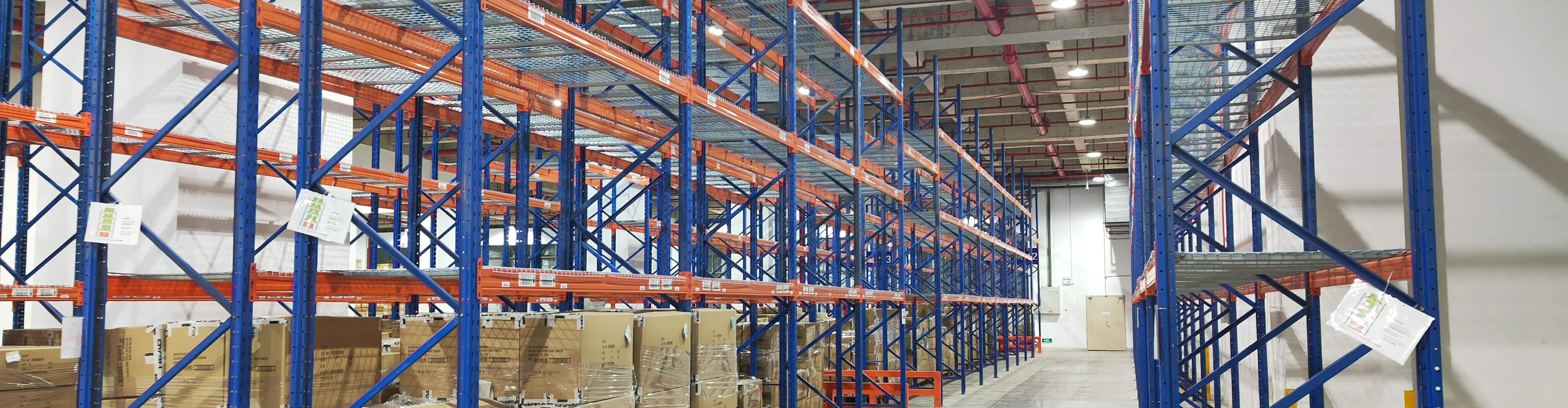
Choosing the right heavy duty warehouse racking for a distribution center comes down to one practical question: how do you balance storage density, fast pallet access, safe forklift movement, and future growth without creating bottlenecks? For most distribution operations, there is no single racking system that suits every product flow. The best choice depends on pallet turnover, SKU variety, picking method, aisle space, building height, and handling equipment.
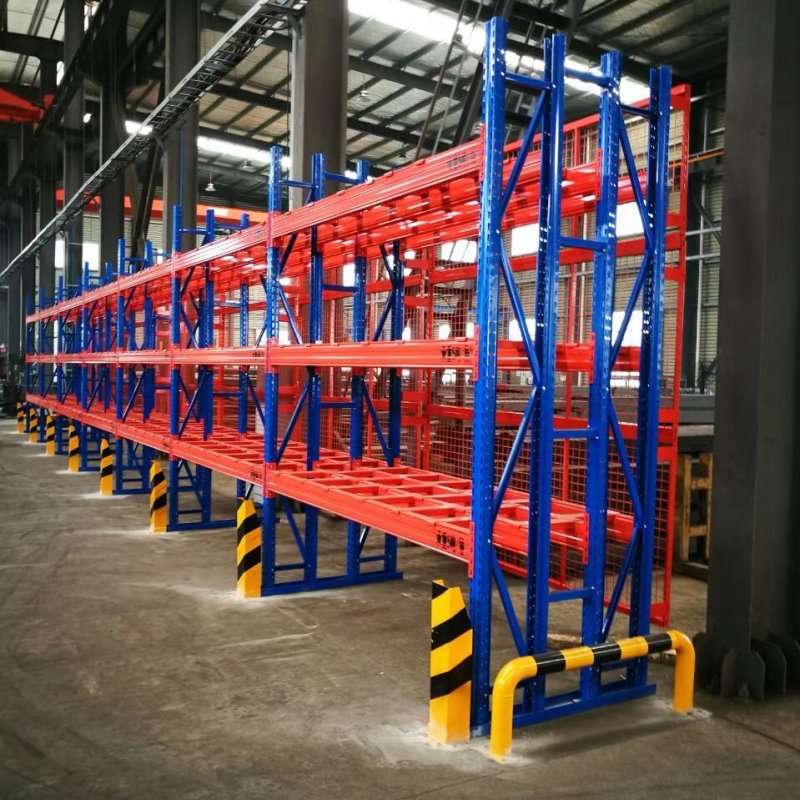
In many distribution centers, selective pallet racking remains the most flexible option because it gives direct access to every pallet location. But for operations with large volumes of the same SKU, high-density systems such as drive-in, push back, or pallet flow may use space more efficiently. That is why selecting heavy duty warehouse racking should be treated as an operational planning decision, not just a product purchase.
What distribution centers need from heavy duty warehouse racking
Distribution centers operate differently from static storage warehouses. Stock is moving in and out constantly, often under tight shipping schedules. That means heavy duty warehouse racking must support more than load capacity alone. It also needs to fit the daily rhythm of receiving, putaway, replenishment, picking, and dispatch.
In practical terms, the right system should help with:
- Reliable pallet storage for high throughput operations
- Safe forklift access and clear aisle movement
- Good use of available floor area and building height
- Fast access to fast-moving SKUs
- Reasonable flexibility when product mix changes
- Easy inspection, maintenance, and replacement of damaged components
- Scalability for future expansion or layout changes
When buyers focus only on storage capacity, they often end up with a layout that looks efficient on paper but causes congestion, slow retrieval, or handling damage in daily use.
Key types of heavy duty warehouse racking for distribution centers
Selective pallet racking
Selective pallet racking is often the starting point when evaluating heavy duty warehouse racking for a distribution center. It provides direct access to each pallet position, which makes it well suited to facilities with many SKUs, mixed pallet sizes, and frequent order activity.
This system is usually a strong fit when:
- You need access to every pallet without moving others first
- Your inventory profile includes many SKUs
- Stock rotation matters
- You expect changes in product mix over time
- You want a simpler layout for inspection and maintenance
The trade-off is lower storage density compared with compact systems. More aisles are needed, so selective racking uses more floor space. For many distribution centers, however, that compromise is worthwhile because accessibility supports faster operations.
Double deep pallet racking
Double deep racking increases storage density by storing pallets two positions deep. It can be a practical middle ground between selective access and compact storage. This type of heavy duty warehouse racking is often considered when a distribution center wants more pallet positions without moving to a fully high-density layout.
It works best when:
- There is enough pallet volume per SKU to store two deep
- Forklifts are equipped for deeper reach handling
- Inventory control can manage reduced selectivity
Its limitation is straightforward: the rear pallet is not immediately accessible. That makes it less suitable where every pallet needs instant access or where stock rotation is strict.
Drive-in pallet racking
Drive-in systems are designed for high-density storage. Forklifts enter the rack structure to place and retrieve pallets from rails. This form of heavy duty warehouse racking can be useful for large quantities of the same product, especially when space utilization is a higher priority than selectivity.
Drive-in racking may suit operations with:
- Low SKU count and high pallet volume per SKU
- Bulk reserve storage needs
- Limited floor space
It is usually less suitable for fast-moving mixed-SKU distribution environments because selectivity is low and forklift interaction with the rack is higher. That can also increase the risk of impact damage if traffic control, operator discipline, and rack protection are not handled well.
Push back racking
Push back systems store pallets on nested carts or rails, allowing several pallets deep per lane. They improve density while keeping loading and unloading at the front aisle. For some distribution centers, this type of heavy duty warehouse racking offers a practical balance between accessibility and compact storage.
Push back is often considered when:
- You need higher density than selective racking
- You want to avoid forklifts driving into the rack
- You store multiple pallets per SKU
- You can work with last-in, first-out inventory flow
It may be less appropriate for operations that require strict first-in, first-out rotation or that handle inconsistent pallet quality, since pallet condition affects system performance.
Pallet flow racking
Pallet flow racking uses gravity rollers to move pallets from the loading side to the picking side. It is commonly used where first-in, first-out rotation is important and pallet throughput is high. In the right application, this heavy duty warehouse racking can support efficient replenishment and dispatch workflows.
It is often a good fit for:
- FIFO inventory management
- High-volume lanes with predictable stock movement
- Separated loading and picking faces
Pallet flow systems require careful planning. Pallet consistency, lane design, brake control, and maintenance all matter. If the operation handles damaged pallets or irregular loads, performance can suffer.
How to choose the best heavy duty warehouse racking for your operation
The best heavy duty warehouse racking for a distribution center is the one that supports actual operating conditions, not just maximum pallet count. A practical evaluation should cover the following decision points.
1. SKU profile and pallet volume
If your facility stores many SKUs with low to medium pallet counts per item, selective racking is usually easier to manage. If you store fewer SKUs with deeper pallet quantities, compact systems may make better use of space.
A common planning mistake is choosing high-density racking for a warehouse that really needs fast access to many different products. That often creates delays in putaway and retrieval.
2. Throughput and access speed
Distribution centers depend on movement speed. If pallets are picked and replenished frequently, access matters as much as storage density. Heavy duty warehouse racking should reduce handling steps, not add them.
Ask practical questions such as:
- How often is each pallet touched?
- Do operators need direct access to every SKU every day?
- Are there peak dispatch periods that create aisle pressure?
- Will reserve storage and picking storage be separated?
3. Forklift type and aisle width
Racking selection should always match the handling equipment. Counterbalance forklifts, reach trucks, and very narrow aisle equipment all have different space and turning requirements. A layout that looks efficient in a drawing may fail in operation if pallets cannot be handled safely at upper beam levels or in tight aisle conditions.
When specifying heavy duty warehouse racking, review:
- Forklift turning radius
- Lift height and residual capacity
- Aisle width requirements
- Clearance for pallet overhang and beam spacing
- Traffic flow at end-of-aisle intersections
4. Building height and clear vertical space
Distribution centers often try to recover capacity by going higher. That can be sensible, but only if the floor condition, sprinkler design, lighting, and forklift capability support the increase. More vertical storage is not automatically more efficient if replenishment becomes slower or if upper levels are hard to use safely.
5. Floor condition and anchoring
Even well-designed heavy duty warehouse racking depends on the floor beneath it. Uneven slabs, poor floor flatness, or weak anchoring conditions can create installation and safety problems. Floor quality also matters for forklift stability and rack alignment, especially in taller installations.
6. Inventory rotation method
Whether your operation uses FIFO or LIFO has a direct effect on system choice. Pallet flow supports FIFO. Push back generally supports LIFO. Selective racking can support either, depending on how stock is managed. The racking should support the inventory method rather than forcing workarounds.
7. Expansion and change management
Distribution operations rarely stay fixed. Product lines change, customer demand shifts, and storage profiles evolve. The most suitable heavy duty warehouse racking should leave room for adjustment, whether that means adding bays, changing beam levels, or reconfiguring parts of the warehouse for different product categories.
Common mistakes when buying heavy duty warehouse racking
Many avoidable problems start during planning. Buyers can reduce risk by watching for these common mistakes:
- Choosing density over usability: A compact layout may save space but slow daily operations.
- Ignoring pallet quality: Damaged or inconsistent pallets can cause trouble in push back and flow systems.
- Underestimating forklift impact risk: Tight layouts and poorly protected uprights increase damage exposure.
- Planning only for current stock: A layout that fits today may struggle when SKU count or volume changes.
- Overlooking inspection access: If damaged components are hard to see or reach, maintenance standards usually decline.
- Assuming one system should do everything: Many distribution centers work better with mixed storage zones rather than one uniform racking type.
When a mixed racking strategy makes more sense
In many distribution centers, the best answer is not one single form of heavy duty warehouse racking. A mixed strategy can align storage with product behavior. For example, selective racking may be used for high-SKU reserve stock, while push back or drive-in is used for deeper storage of fast-moving, low-SKU lines.
This approach can improve both accessibility and density, but it requires disciplined slotting and clear operational rules. Without good inventory control, mixed systems can create confusion rather than efficiency.
Safety, maintenance, and inspection considerations
Any heavy duty warehouse racking in a busy distribution center should be treated as active infrastructure, not passive shelving. Frequent forklift movement, rushed pallet handling, and changing stock profiles all increase wear and risk.
Practical priorities include:
- Regular visual checks for upright impact, beam damage, and missing safety components
- Clear load signage and staff awareness of pallet limits
- Protection at vulnerable upright ends and traffic zones
- Prompt reporting and isolation of damaged rack sections
- Good housekeeping to keep aisles and pallet positions clear
- Periodic review when pallet types, loads, or handling methods change
A system that is operationally efficient but difficult to inspect or maintain can become a long-term liability.
A practical framework for selecting heavy duty warehouse racking
If you are comparing options for a distribution center, use this simple decision framework:
- Choose selective racking when SKU variety is high and direct pallet access is essential.
- Choose double deep racking when you want better density and can accept reduced access.
- Choose drive-in racking when pallet density is the main priority and SKU count is low.
- Choose push back racking when you need more density without forklifts entering the rack structure.
- Choose pallet flow racking when FIFO rotation and high-throughput pallet movement are central requirements.
In many cases, the best heavy duty warehouse racking plan combines more than one system to match reserve storage, fast movers, and bulk stock separately.
FAQ
What is the most versatile heavy duty warehouse racking for a distribution center?
Selective pallet racking is usually the most versatile because it provides direct access to every pallet and adapts well to changing SKU profiles.
Is high-density racking always better for distribution centers?
No. High-density systems can improve space use, but they may reduce accessibility and slow operations if the warehouse handles many SKUs or frequent pallet retrieval.
How important is pallet consistency when choosing a racking system?
It is very important. Systems such as push back and pallet flow generally perform better when pallets are in good condition and consistent in size and construction.
Should distribution centers use one racking system throughout the building?
Not always. Many operations benefit from using different racking types for different inventory categories, especially when reserve stock, bulk stock, and fast-moving lines have different handling needs.
Conclusion
The best heavy duty warehouse racking for a distribution center is the system that supports real warehouse movement, safe handling, and practical growth. For high-SKU operations, selective racking is often the strongest base solution. For deeper storage of repetitive product lines, push back, drive-in, double deep, or pallet flow may offer better space efficiency. The right choice depends on how your pallets move, how your forklifts operate, how your inventory rotates, and how much change your facility needs to absorb over time.
When evaluating heavy duty warehouse racking, focus on operational fit first. A system that matches workflow, access needs, and maintenance realities will usually deliver better long-term value than one chosen only for maximum storage density.