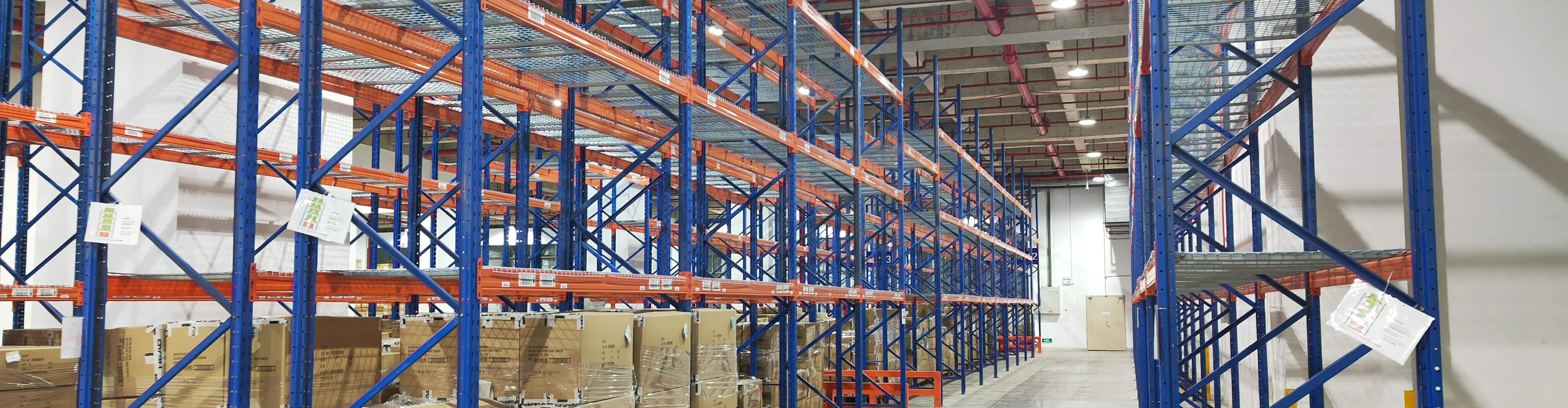
The best heavy duty warehouse racking for high-load storage is not one single system for every facility. In most warehouses, selective pallet racking is the most practical starting point because it balances load capacity, accessibility, and operational flexibility. However, if the priority is higher storage density, better use of floor space, or specific stock rotation methods, other heavy duty warehouse racking options such as drive-in racking, double deep racking, push back racking, or cantilever racking may be more suitable.
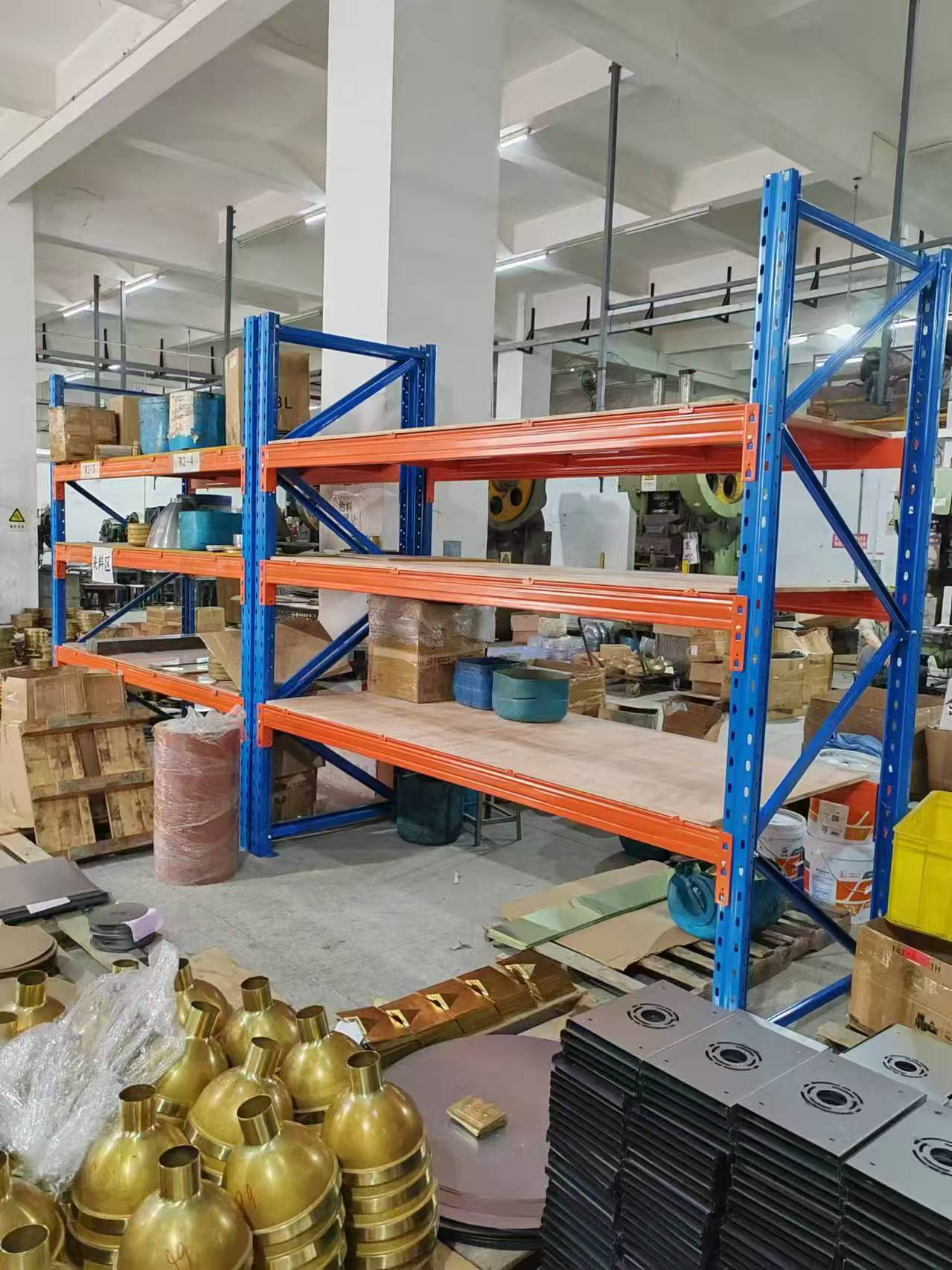
The right choice depends on what you are storing, how pallets are handled, how often stock moves, and how much selectivity your operation needs. A system that performs well for bulk pallet storage may be inefficient for mixed SKUs, frequent replenishment, or intensive picking activity. For that reason, choosing heavy duty warehouse racking should start with operational reality rather than product labels.
What heavy duty warehouse racking means in practice
Heavy duty warehouse racking generally refers to industrial storage systems designed to support substantial pallet or product loads while allowing safe mechanical handling and efficient warehouse flow. In real terms, this usually means rack structures built for palletized goods, bulky inventory, long materials, or other high-load applications where standard shelving is not suitable.
For commercial buyers, the important point is not just that the racking is described as heavy duty. The system must match the actual unit load, beam level loading, bay loading, handling equipment, and working environment. A rack that is structurally suitable on paper can still become a poor choice if forklift access is tight, pallets are inconsistent, or the floor condition is not adequate for the layout.
Which heavy duty warehouse racking systems are most suitable for high-load storage?
When people ask for the best heavy duty warehouse racking, they are usually trying to balance four things: load capacity, accessibility, storage density, and operating efficiency. The most common options each solve that balance differently.
Selective pallet racking
Selective pallet racking is often the most suitable heavy duty warehouse racking for general high-load storage. It gives direct access to every pallet position, supports straightforward stock control, and works well in warehouses with mixed SKUs or regular stock rotation.
- Good for operations that need access to many different pallet lines
- Works well with standard forklift handling
- Simplifies inspection, maintenance, and damaged component replacement
- Easier to expand or reconfigure than denser systems
The trade-off is storage density. If floor space is expensive and pallet selectivity is less important, selective pallet racking may not use the warehouse footprint as efficiently as compact systems.
Drive-in racking
Drive-in racking is designed for dense pallet storage where multiple pallets of the same SKU can be stored together in deep lanes. It is often considered when a business wants more pallet positions within the same floor area.
- Suitable for low-SKU, high-volume inventory
- Improves storage density compared with selective layouts
- Useful when stock can be grouped by product type or batch
It is less suitable where fast access to every pallet is required. It also demands more disciplined forklift operation because trucks enter the rack structure. That increases the importance of rack protection, aisle control, and regular inspection for impact damage.
Double deep pallet racking
Double deep pallet racking is a compromise between selective and high-density systems. It stores pallets two deep, reducing aisle space while still maintaining a more open layout than drive-in systems.
- Higher density than standard selective pallet racking
- Useful for operations with moderate SKU variety
- Can support good cube utilization in taller warehouses
The limitation is that the rear pallet is not immediately accessible. This system usually requires suitable handling equipment and is less convenient where strict first-in, first-out flow is essential.
Push back racking
Push back racking can be a strong heavy duty warehouse racking option for high-load storage when you need relatively high density with better pallet access than drive-in systems. Pallets are loaded from the front and stored on inclined carts or rails.
- Good for last-in, first-out storage
- Reduces forklift travel into the rack
- Can improve throughput in some bulk storage applications
It is not the best fit for every warehouse. System complexity is higher than standard selective racking, and it is generally more suitable where product flow and pallet consistency are well controlled.
Cantilever racking
Cantilever racking is the right heavy duty warehouse racking choice when the load is long, awkward, or not suited to pallet beams, such as timber, pipe, bar stock, or panels. For these products, conventional pallet racking can be inefficient or unsafe.
- Designed for long or irregular loads
- Improves accessibility for oversized items
- Can be configured for single-sided or double-sided storage
It is not intended as a universal answer for palletized high-load storage. Its value is in handling specific product formats more effectively than beam-based pallet racking.
How to decide which heavy duty warehouse racking is best for your warehouse
The best heavy duty warehouse racking is the system that supports your load profile and warehouse workflow without creating avoidable handling risk or operational inefficiency. These are the main decision points buyers should review before selecting a system.
1. Actual load weight and pallet condition
Start with the real load, not the estimated one. Buyers should confirm pallet weight, load dimensions, pallet type, load stability, and whether loads are evenly distributed. Damaged pallets, overhanging goods, or inconsistent load sizes can affect beam spacing, safe handling, and rack suitability.
If loads vary significantly, a layout designed around one standard pallet may create wasted space or increase handling problems. High-load storage works better when load assumptions are realistic and documented early.
2. SKU mix and selectivity requirements
If the warehouse stores many SKUs with frequent access to individual pallets, selective pallet racking is usually the better heavy duty warehouse racking solution. If the warehouse stores fewer SKUs in larger quantities, denser systems become more viable.
This is one of the most common selection mistakes: choosing a high-density system for a high-SKU operation. The result can be slow retrieval, excess reshuffling, and poor labor efficiency.
3. Forklift type and aisle width
Heavy duty warehouse racking should be planned around the actual material handling equipment. Counterbalance trucks, reach trucks, and specialist handling equipment all have different aisle and lift requirements.
A layout that looks efficient on a drawing can become difficult to operate if turning clearances are tight or if operators struggle to place loads safely at height. Narrower aisles may improve storage density, but only if the equipment and operator skill level support them.
4. Ceiling height and vertical use of space
In many facilities, the best way to improve storage capacity is not always denser lanes but better use of building height. Heavy duty warehouse racking can often be planned to make more effective use of vertical cube, provided the floor, building clearances, sprinkler arrangement, lighting, and handling equipment are all considered.
Taller layouts can improve capacity, but they also increase the importance of load accuracy, installation quality, and regular inspection.
5. Floor condition and installation constraints
High-load storage places serious demands on the floor slab. Uneven floors, joint issues, or inadequate slab condition can affect rack alignment, anchoring, and long-term safety. This is especially relevant for tall racking or dense systems where tolerances matter more.
Before installing heavy duty warehouse racking, the floor should be reviewed as part of the planning process. Ignoring slab suitability can lead to costly adjustments later.
6. Stock rotation method
Do you need first-in, first-out, last-in, first-out, or simple bulk storage? The answer affects which heavy duty warehouse racking system is practical. Selective racking supports straightforward pallet access. Drive-in and push back systems are often better aligned with bulk storage patterns and less suitable where strict FIFO access is needed unless the layout is planned accordingly.
7. Future expansion and reconfiguration
Warehouse storage needs rarely stay fixed. Product lines change, pallet profiles change, and throughput often increases over time. Buyers should consider whether the chosen heavy duty warehouse racking system can be extended, re-bayed, or adapted without major disruption.
Highly specialized layouts may solve a current density issue but reduce flexibility later. That may be acceptable in stable bulk storage operations, but it is a risk in fast-changing distribution environments.
When selective pallet racking is usually the safest buying decision
If a buyer is unsure which heavy duty warehouse racking system to choose, selective pallet racking is often the lowest-risk option. It is widely used because it is straightforward to understand, easy to inspect, compatible with many warehouse workflows, and suitable for a broad range of palletized products.
It is especially practical when:
- You need direct access to each pallet
- You store many SKUs
- Stock rotation matters
- You want simpler maintenance and damage identification
- You may need to reconfigure the layout later
Its main limitation is lower density compared with compact systems. If floor space is the main constraint and SKU variety is limited, a denser heavy duty warehouse racking solution may justify the extra complexity.
Common mistakes when choosing heavy duty warehouse racking
Choosing based on maximum capacity claims without reviewing actual pallet handling conditions
Prioritizing storage density while underestimating retrieval delays and stock access problems
Ignoring forklift turning radius, lift height, or operator visibility
Assuming all pallets are uniform when load sizes and pallet quality vary in practice
Overlooking floor condition, rack protection, and inspection access
Installing a system that fits current stock only, with no allowance for future changes
These mistakes usually do not appear during the quotation stage. They appear after installation, when operators start working around layout limitations every day.
Maintenance, inspection, and safety considerations
Any heavy duty warehouse racking used for high-load storage should be supported by routine inspection and safe operating discipline. High load levels increase the consequence of misuse, overloading, or impact damage.
Practical priorities include:
- Checking uprights and beams for impact damage
- Verifying that load notices are clear and followed
- Reviewing anchors, bracing, and beam connections
- Keeping aisles clear to reduce forklift contact risk
- Replacing damaged components promptly rather than continuing to use them
- Training operators to place and retrieve loads correctly
Dense systems such as drive-in racking often need even closer attention because forklift interaction with the rack is more frequent. A storage system should not be judged only by how many pallets it holds, but also by how safely it can be used and maintained over time.
FAQ
What is the most common heavy duty warehouse racking system?
Selective pallet racking is the most common heavy duty warehouse racking system because it provides direct pallet access and suits a wide range of warehouse operations.
Is high-density racking always better for high-load storage?
No. High-density systems improve space use, but they can reduce pallet accessibility and make stock management more complex. They work best when SKU variety is low and pallet flow is predictable.
How do I know if selective racking is enough for my warehouse?
If you handle many SKUs, need frequent pallet access, and want easier inspection and flexibility, selective racking is often enough and may be the most practical choice.
Can heavy duty warehouse racking be expanded later?
In many cases, yes, but expansion depends on the original layout, available floor space, building constraints, and whether the system type is flexible enough to adapt to future needs.
Final decision framework
If your operation needs broad pallet accessibility, mixed SKU storage, and lower planning risk, selective pallet racking is usually the best heavy duty warehouse racking choice for high-load storage. If your warehouse handles large volumes of the same products and space efficiency matters more than direct access, denser systems such as drive-in, double deep, or push back racking may be more suitable.
The best heavy duty warehouse racking is the one that matches real load conditions, forklift movement, stock rotation, floor constraints, and future operational plans. A good buying decision comes from balancing capacity with accessibility, safety, and day-to-day usability rather than chasing density alone.