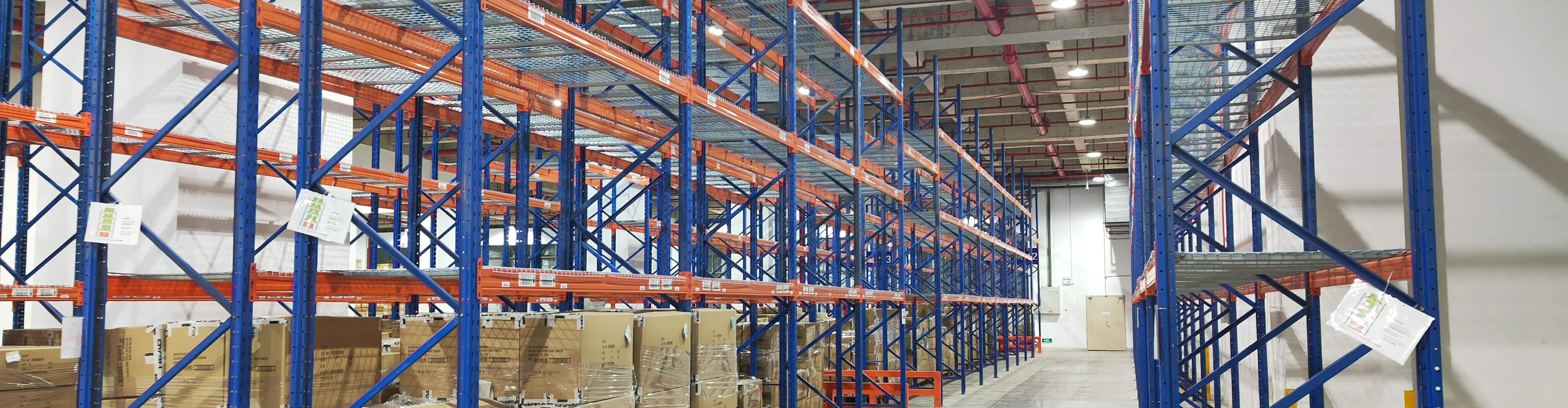
Choosing heavy duty warehouse racking for a new facility starts with one practical question: what exactly needs to be stored, handled, and moved every day? The right system depends on pallet size, load weight, SKU variety, forklift access, aisle width, ceiling height, floor condition, and future growth plans. A racking layout that looks efficient on paper can become slow, unsafe, or expensive to manage if it does not match real warehouse operations.
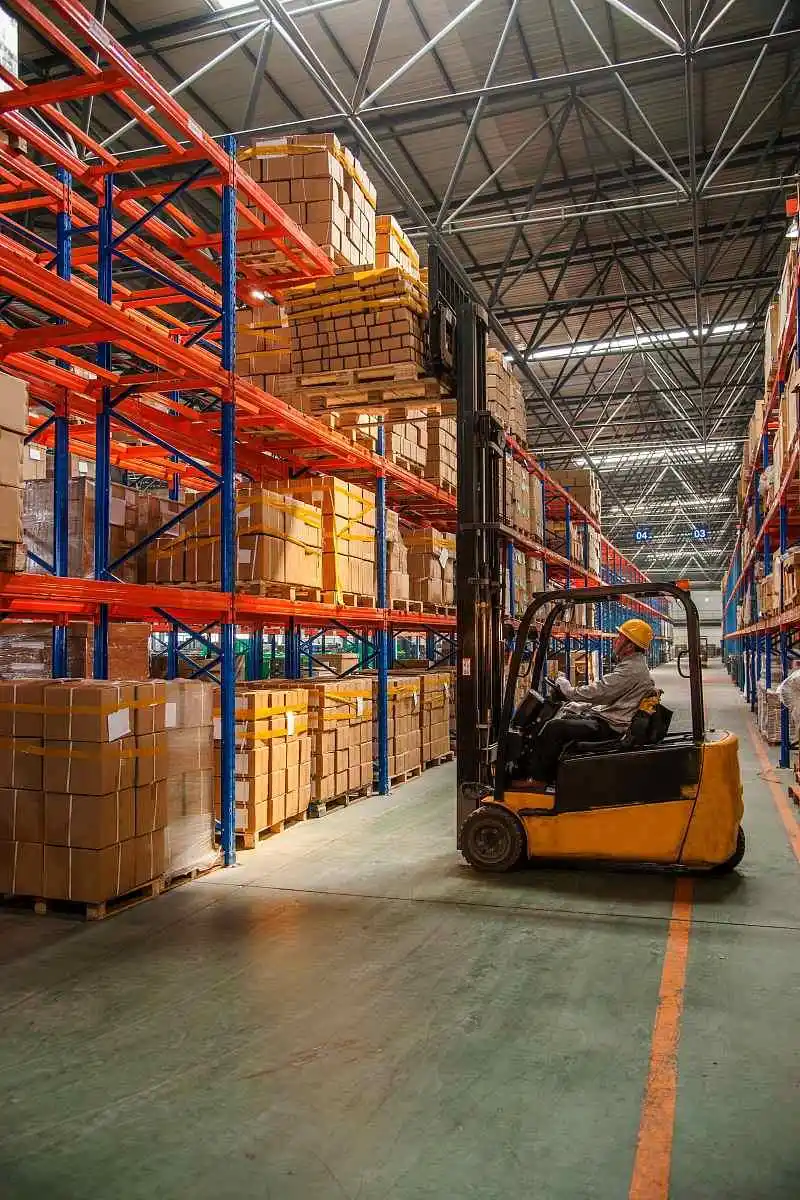
For most new facilities, the decision is not just about maximizing storage capacity. It is about balancing storage density, selectivity, handling speed, safety, inspection access, and expansion potential. This guide explains how to evaluate heavy duty warehouse racking with a buyer’s mindset so you can avoid common planning mistakes and choose a system that supports daily operations.
What Is Heavy Duty Warehouse Racking?
Heavy duty warehouse racking is a storage system designed to hold palletized or bulky loads in commercial and industrial environments. It is typically used where products are handled by forklifts, pallet trucks, or reach equipment and where the storage structure must support substantial load demands across multiple beam levels.
In practical terms, heavy duty racking is chosen when standard shelving is not suitable for the load size, weight, or handling method. It is commonly used in distribution centers, manufacturing stores, spare parts warehouses, cold storage operations, and facilities with high pallet throughput.
The key point is that heavy duty warehouse racking is not one single layout. It includes different system types, each with different trade-offs in accessibility, density, cost, and operational complexity.
Start With Your Storage Profile, Not the Rack Type
A common mistake in new facility planning is choosing a rack system too early. Buyers often begin by asking whether they need selective racking, drive-in racking, or another configuration. The better starting point is to define the storage profile first.
Review these basic inputs before comparing options
- Pallet dimensions: length, width, and loaded height
- Unit load weight: average and maximum pallet weight
- SKU mix: many SKUs with low pallet counts, or fewer SKUs with deeper storage needs
- Stock rotation: FIFO, LIFO, or mixed movement patterns
- Handling equipment: counterbalance forklift, reach truck, VNA truck, or stacker
- Order profile: full pallet movement, case picking, split-case picking, or mixed use
- Inbound and outbound velocity: slow-moving reserve stock or fast-turnover inventory
- Building constraints: clear height, column spacing, sprinkler layout, dock access, and floor flatness
These inputs will shape whether heavy duty warehouse racking should prioritize direct pallet access, higher storage density, narrow aisles, or integration with picking operations.
Key Decision Factors When Choosing Heavy Duty Warehouse Racking
1. Load capacity and pallet consistency
The first technical filter is load suitability. Not all pallets are equally stable, and not all loads behave the same under storage conditions. If pallet quality is inconsistent, loads overhang heavily, or products are easily crushed, some high-density systems become harder to manage safely.
For example, if pallets vary in footprint or condition, selective pallet racking is often easier to operate than systems that require pallets to sit deep on support rails. Load stability affects beam spacing, level height, handling clearance, and long-term rack damage risk.
2. Selectivity versus storage density
This is one of the main trade-offs in heavy duty warehouse racking. High selectivity means operators can access each pallet position directly. High density means more pallets can be stored in less floor space, but access is usually more restricted.
- High selectivity: better for many SKUs, mixed inventory, and fast order access
- High density: better for large pallet volumes of the same SKU and slower selectivity requirements
If your new facility handles a broad SKU range with regular picking and replenishment, chasing maximum density can create bottlenecks. If you store larger batch quantities of the same product, a denser layout may improve space efficiency.
3. Forklift access and aisle design
Racking selection cannot be separated from truck movement. The type of forklift in use will affect aisle width, lift height, turning radius, and rack impact risk. A system that works with reach trucks may be inefficient or impractical with counterbalance forklifts.
In a new facility, it is worth checking whether the building design supports the aisle strategy you want. Narrower aisles can increase storage positions, but they may require more specialized equipment, tighter floor tolerances, and stronger operator discipline. Wider aisles reduce storage density but can simplify traffic flow and training.
4. Ceiling height and cube utilization
Many buyers focus on floor area and underuse the available clear height. A new building may offer strong vertical storage potential, but only if lift equipment, load stability, fire protection, and replenishment practices support it.
Using more vertical space can improve the return on building footprint, but it may also slow access if pick faces are poorly positioned or if replenishment becomes difficult during peak shifts. The best heavy duty warehouse racking plan uses height in a way that remains workable for daily operations.
5. Floor condition and anchoring considerations
Warehouse floors are often overlooked during procurement. Floor slab condition, flatness, and load-bearing suitability affect both installation quality and safe operation. Tall racking in narrow aisles is more sensitive to floor variation than lower, conventional layouts.
Before finalizing a system, confirm that the floor can support the intended rack loads and anchoring arrangement. This is especially relevant for high-bay layouts, concentrated pallet loads, and facilities using heavier handling equipment.
6. Growth and reconfiguration potential
New facilities rarely stay static for long. SKU counts change, product lines expand, and throughput patterns shift. A rigid layout that looks efficient for current stock may become restrictive within a short period.
When selecting heavy duty warehouse racking, consider whether the system can be extended, reconfigured, or adapted as the business changes. Expansion planning is particularly important if the facility is expected to add more SKUs, introduce picking zones, or increase automation later.
Common Types of Heavy Duty Warehouse Racking for New Facilities
Selective pallet racking
This is often the starting point for a new warehouse because it provides direct access to each pallet location. It is suitable for operations with many SKUs, mixed pallet movement, and frequent order access.
Advantages:
- High selectivity
- Simple stock visibility
- Easier inspection and maintenance access
- Works well for general-purpose pallet storage
Limitations:
- Lower storage density than deep-lane systems
- More aisle space required
For many businesses, selective heavy duty warehouse racking is the most practical choice when flexibility matters more than maximum density.
Drive-in racking
Drive-in systems increase density by reducing aisle count and storing pallets in lanes. They are generally better suited to larger volumes of similar products rather than broad SKU mixes.
Advantages:
- Better cube utilization
- Reduced aisle space
- Useful for bulk pallet storage
Limitations:
- Lower selectivity
- Greater forklift interaction with the rack structure
- Can be harder to manage if stock rotation is strict
This type of heavy duty warehouse racking may be less suitable for facilities with frequent SKU changes, high pick activity, or inconsistent pallet quality.
Double deep racking
Double deep layouts improve storage density compared with standard selective racking by storing pallets two deep. This can work well where there is enough pallet volume per SKU and where some reduction in direct access is acceptable.
Advantages:
- Higher density than standard selective layouts
- Retains a relatively familiar rack structure
Limitations:
- Reduced immediate access to every pallet
- May require specialized handling attachments or equipment
- More planning needed for stock rotation
Very narrow aisle racking
VNA layouts aim to increase pallet positions by reducing aisle width significantly. They are often considered where building height is valuable and storage density must improve without moving fully into deep-lane systems.
Advantages:
- Improved space utilization
- Good access to stored pallets
Limitations:
- Requires suitable trucks and tighter operating discipline
- More dependent on floor quality and layout precision
- Less forgiving if traffic patterns are poorly managed
VNA heavy duty warehouse racking can be effective, but it is not automatically the right answer for every new warehouse. It makes more sense when volume, building height, and equipment strategy are aligned.
How to Match the Racking System to Your Operation
If you store many SKUs with low to medium pallet counts
Prioritize direct access and simple stock control. Selective pallet racking is usually easier to manage and less likely to create hidden inefficiencies.
If you store fewer SKUs in larger quantities
A denser system may make sense, especially if inventory turns in batches and direct access to every pallet is not essential at all times.
If picking is a major part of the workflow
Think beyond reserve storage. The heavy duty warehouse racking layout should support replenishment to picking areas without creating congestion or excessive travel time. In some facilities, pallet racking works best when combined with lower-level picking zones or shelving for split-case operations.
If throughput is high and truck traffic is constant
Choose a layout that gives operators enough aisle access and turning space. A dense system that slows truck movement can reduce overall warehouse efficiency even if it increases pallet count.
If future expansion is likely
Favor modular layouts and avoid filling the building too tightly on day one. Leaving room for additional aisles, picking zones, charging areas, or process changes can be more valuable than squeezing in every possible pallet position at the start.
Practical Mistakes to Avoid
- Choosing purely on pallet capacity: More positions do not always mean better operational performance.
- Ignoring SKU behavior: Slow movers, fast movers, and seasonal stock should not always be stored the same way.
- Underestimating forklift clearance: Tight layouts can increase impact damage and slow handling.
- Overlooking pallet quality: Damaged or inconsistent pallets can create problems in dense storage systems.
- Using all height without considering access: High storage levels are only useful if they can be replenished and retrieved efficiently.
- Failing to plan for inspection and maintenance: Rack protection, visibility, and access for checks matter from the start.
- Designing for current stock only: A new facility should be planned for realistic growth and operational change.
Safety, Inspection, and Maintenance Considerations
Any heavy duty warehouse racking system should be selected with ongoing safety in mind, not just installation cost. New facilities often focus on layout efficiency but overlook how the system will be monitored and maintained once operations begin.
Practical points to consider include upright protection in high-traffic areas, clear load signage, visibility of damaged components, and access for routine inspections. Systems with tighter forklift interaction may need stronger damage prevention measures and more disciplined operating procedures.
It is also wise to establish basic inspection routines early. Frequent visual checks for impact damage, beam displacement, loose anchors, and overloaded levels can help prevent minor issues from becoming larger structural problems. A rack system that is hard to inspect or difficult to repair may carry higher long-term operating cost even if it saves floor space initially.
Questions to Ask Before You Buy
- What are the exact pallet sizes, load weights, and storage heights?
- How many SKUs need direct access?
- What percentage of stock is fast-moving versus reserve storage?
- Which forklifts will operate in the area, and what aisle widths do they require?
- Is FIFO or LIFO stock rotation important?
- How much future growth should the layout allow for?
- Will the facility need integrated picking zones or only pallet storage?
- How easy will the system be to inspect, protect, and maintain?
These questions help narrow down the right heavy duty warehouse racking approach far more effectively than comparing rack types in isolation.
FAQ
What is the most common heavy duty warehouse racking system for a new facility?
Selective pallet racking is often the most common choice because it offers direct pallet access, layout flexibility, and relatively simple operation for mixed inventory.
How do I know if a high-density system is worth it?
It is usually worth considering when you store larger volumes of the same SKU and can accept reduced selectivity. If your operation depends on frequent access to many different pallets, the trade-off may not be favorable.
Does heavy duty warehouse racking need to be planned around forklift type?
Yes. Forklift type affects aisle width, lift height, turning space, handling speed, and rack impact risk. Racking and equipment should be planned together.
Can I maximize storage by using the full building height?
Sometimes, but only if the loads, lift equipment, floor condition, and replenishment process support safe and efficient operation at that height.
Conclusion
The right heavy duty warehouse racking for a new facility is the system that fits your inventory profile, handling method, building constraints, and growth plan without creating avoidable operational problems. For many warehouses, flexibility and accessibility matter more than the highest theoretical pallet count. Start with real load data, workflow requirements, and equipment needs, then choose a layout that can be operated safely, inspected easily, and adapted over time.
If you approach the decision this way, heavy duty warehouse racking becomes a long-term operational asset rather than just a storage structure.