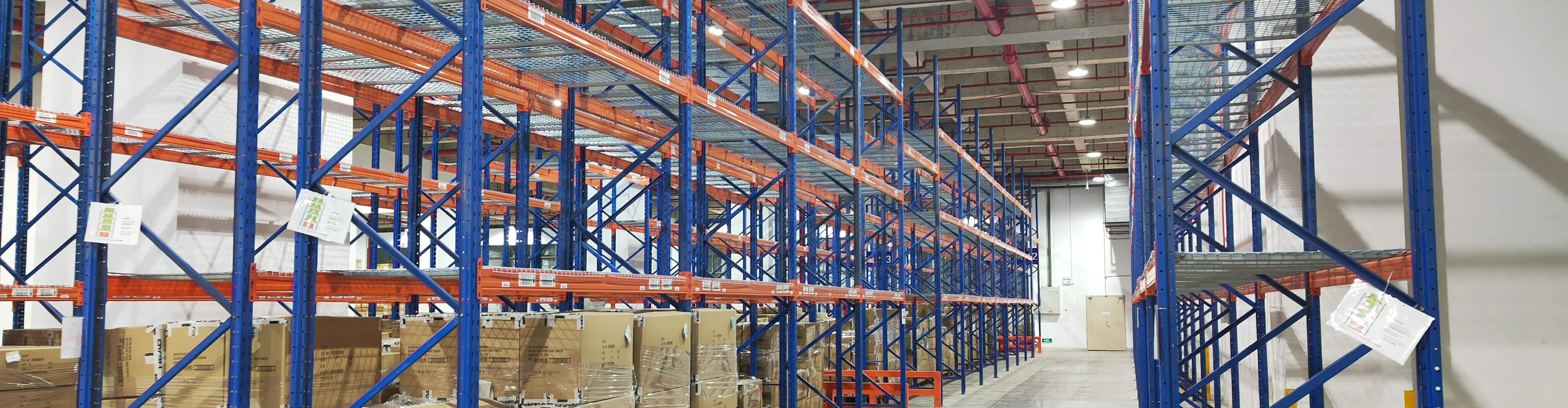
Heavy duty warehouse shelving is a practical storage solution for large warehouses that need organized access to bulk stock, cartons, parts, tools, and non-palletized goods. In larger facilities, the right shelving system is not just about adding more levels. It affects aisle flow, forklift access, picking speed, safety, floor loading, and future expansion. Choosing correctly means matching the shelving layout to inventory profile, handling method, building constraints, and operational priorities.
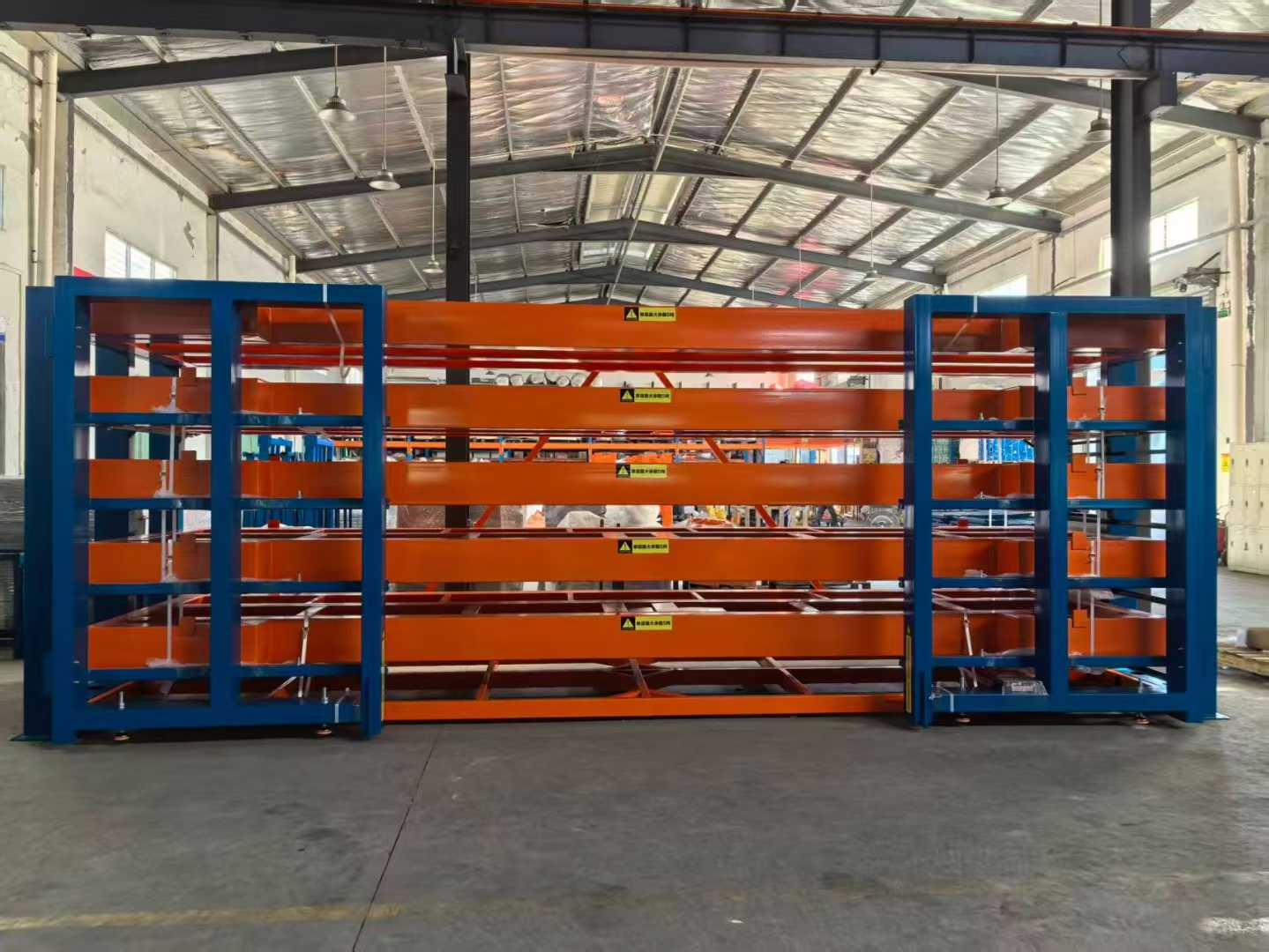
For large warehouses, heavy duty warehouse shelving usually works best when the business needs strong load capacity, clear SKU visibility, and efficient manual or semi-manual picking. It can be highly effective in reserve storage areas, picking zones, spare parts sections, maintenance stores, and mixed-use inventory areas. It is less suitable where operations are dominated by full-pallet movement, very high-density pallet storage, or automated systems designed around pallet racking.
What heavy duty warehouse shelving means in large warehouse operations
Heavy duty warehouse shelving refers to industrial shelving systems built for higher load capacities, larger bay sizes, and more demanding warehouse use than light commercial shelving. These systems are commonly used to store cartons, bins, bulky components, tools, packaged goods, archive materials, and irregular stock that does not sit efficiently on pallets.
In a large warehouse, heavy duty warehouse shelving is often part of a broader storage mix. A facility may use pallet racking for reserve pallet stock, shelving for piece picking and split-case inventory, and mezzanine-supported shelving for vertical expansion. The shelving itself may be adjustable to suit changing product heights and can be configured for hand-loaded operations or replenishment from handling equipment.
The key point is that shelving should support the workflow, not fight it. In a large building, poor shelving selection creates long travel paths, blocked aisles, underused vertical space, and difficult replenishment routines.
When heavy duty warehouse shelving is a good fit
Heavy duty warehouse shelving is usually a strong option when the warehouse stores a wide SKU range and needs direct access to many product lines. It is especially useful when workers pick cartons, individual items, bins, or small batches rather than moving full pallets only.
Common use cases
- Order picking areas with many SKUs and moderate stock depth
- Spare parts and maintenance inventory storage
- Bulk carton storage for wholesale or distribution operations
- E-commerce support zones for medium and slow-moving items
- Tool, component, and consumable storage in industrial facilities
- Archive or document storage where load capacity and access matter
In these settings, heavy duty warehouse shelving can improve stock visibility and reduce the time spent searching for items. It also allows better slotting discipline than stacking goods directly on the floor.
When it may be a poor fit
- Warehouses storing mostly full pallets handled by forklifts
- Operations that need very high storage density over selectivity
- Facilities with extremely high throughput where automated systems are more suitable
- Very tall buildings where vertical access to shelving becomes inefficient without added structure or platforms
If the operation is pallet-dominant, selective pallet racking, double deep racking, drive-in racking, or other pallet storage systems may be more efficient than heavy duty warehouse shelving.
Key decision factors before choosing heavy duty warehouse shelving
Large warehouses should not select heavy duty warehouse shelving based on load capacity alone. The better approach is to review how inventory moves, how often it is picked, how it is replenished, and how the building can support the layout.
1. SKU profile and picking method
If the warehouse handles many SKUs with frequent manual picking, shelving often makes operational sense. If the SKU count is low but stock depth is high, denser systems may be better. Businesses should also consider whether staff pick by piece, carton, tote, or case. Shelf dimensions and level spacing should match the actual units being handled.
2. Product size, weight, and variability
Not all heavy duty warehouse shelving is equally suitable for mixed inventory. Some warehouses store consistent carton sizes, while others deal with awkward parts, tools, and irregular packaging. The wider the variation, the more important adjustability becomes. A shelving layout that works for one product mix may become inefficient after a SKU change or packaging redesign.
3. Aisle width and equipment access
In large warehouses, aisle planning has a direct effect on travel time and safety. If shelving is replenished by pallet truck, reach truck, or order picker, clearances need to reflect turning radius, lift height, and operator visibility. Narrow aisles may improve space use, but they can slow replenishment and increase impact risk if handling equipment is not matched properly.
4. Ceiling height and vertical use
One of the most common planning mistakes is underusing building height. Heavy duty warehouse shelving can support better vertical storage than floor stacking, but access to upper levels must remain practical. In taller warehouses, adding catwalks, platforms, or mezzanine-supported shelving may improve cube utilization. However, these options introduce more planning requirements around access, fire protection, lighting, and workflow separation.
5. Floor condition and load distribution
Large warehouses often assume the floor can accept any shelving layout, but slab condition and levelness matter. Heavy duty warehouse shelving must be installed on a suitable floor, especially where high bay heights, concentrated loads, or mobile handling equipment are involved. Uneven floors can affect alignment, stability, and long-term performance.
6. Replenishment strategy
If picking shelves are constantly emptied and restocked, the replenishment method should be built into the design. A common issue in large warehouses is placing fast-moving SKUs in areas that are difficult to refill without disrupting pick traffic. Heavy duty warehouse shelving performs better when pick faces, reserve stock, and replenishment routes are considered together.
Common heavy duty warehouse shelving configurations for large facilities
Heavy duty warehouse shelving can be configured in several ways depending on stock type and workflow. The right format depends less on the shelving itself and more on how the warehouse intends to use the space.
Single-tier shelving
This is the simplest format and is often used for ground-level picking, maintenance stores, and reserve carton storage. It offers easy access and straightforward supervision, but it may not use vertical space efficiently in large warehouses with high clear height.
Multi-tier shelving
Multi-tier heavy duty warehouse shelving adds upper picking levels connected by stairs and walkways. This can be effective in high-SKU operations where businesses need more pick faces without expanding the building footprint. It is particularly useful for parts distribution, e-commerce, and spare components. The trade-off is added complexity in movement, supervision, and replenishment to upper levels.
Longspan shelving layouts
Longspan-style heavy duty warehouse shelving is often chosen for larger cartons, bulky items, and hand-loaded goods that do not fit standard shelf formats. It is flexible and accessible, but if loads become too heavy or palletized, pallet racking may be more appropriate.
Shelving integrated with mezzanine floors
Where floor space is limited but the building has height, heavy duty warehouse shelving can be combined with mezzanine floors to create additional storage and picking areas. This approach can improve space utilization, but it requires careful planning for goods lifts, stair access, safety barriers, and movement between levels.
Operational benefits of heavy duty warehouse shelving in large warehouses
When planned properly, heavy duty warehouse shelving helps large warehouses create order and accessibility in areas that would otherwise become difficult to manage.
- Better SKU visibility: Open shelf access makes it easier to identify stock and reduce search time.
- Improved picking efficiency: Organized pick faces support faster manual order fulfillment.
- Flexible slotting: Adjustable shelf levels allow businesses to respond to changing product sizes.
- Cleaner floor management: Shelving reduces floor stacking and improves housekeeping.
- Useful for mixed inventory: It handles cartons, bins, parts, and irregular goods more effectively than pallet-only systems.
These benefits are real, but they depend on disciplined slotting, labeling, replenishment routines, and load control. Shelving alone does not fix poor warehouse organization.
Limitations and trade-offs to consider
Heavy duty warehouse shelving is not a universal answer for every large warehouse. It offers accessibility and flexibility, but there are trade-offs.
- Lower density than some racking systems: Highly selective shelving uses more aisle space than denser storage methods.
- Manual handling demands: Many shelving operations depend heavily on labor for picking and restocking.
- Upper-level access challenges: Tall shelving without a proper access strategy can slow work and increase risk.
- Less suitable for full-pallet storage: If products stay on pallets until dispatch, shelving may add unnecessary handling.
- Potential for misuse: Warehouses sometimes overload shelves or store unsuitable items because open shelving appears flexible.
For this reason, heavy duty warehouse shelving should be selected as part of a storage strategy, not as a default replacement for all other systems.
Planning heavy duty warehouse shelving for a large warehouse layout
A good shelving project starts with a layout review rather than a product list. Large warehouses benefit from a structured planning process that connects storage design to operations.
Step 1: Review inventory by movement and handling unit
Separate fast movers, medium movers, and slow movers. Identify whether each item is picked by piece, carton, tote, or case. This helps determine where heavy duty warehouse shelving should be used and where pallet racking or bulk storage may be more efficient.
Step 2: Map replenishment and picking routes
Do not place shelving in a way that creates conflict between pickers and replenishment equipment. High-traffic zones need enough aisle width, sightlines, and working space.
Step 3: Match shelf dimensions to actual stock
Oversized shelves waste space. Undersized shelves encourage unsafe overhang and poor stock presentation. Bay width, shelf depth, and level spacing should reflect real inventory dimensions and handling methods.
Step 4: Plan for growth
Large warehouses often change product mix, order profile, and storage demand over time. Heavy duty warehouse shelving should allow reasonable adjustment or extension. A layout that fills every square meter on day one may leave no room for future re-slotting or process improvement.
Step 5: Include safety and inspection access
Shelving rows should allow clear visibility for routine inspection and housekeeping. If damage is hard to see or anchors are blocked by stock, maintenance standards usually decline over time.
Safety, maintenance, and inspection priorities
Heavy duty warehouse shelving in large warehouses should be checked routinely for damage, misuse, and load-related issues. Even a well-designed system can become unsafe if it is overloaded, struck by equipment, or modified without review.
What to monitor
- Damaged uprights, braces, or shelf beams
- Loose or missing anchors and fixings
- Deflected shelves or overloaded levels
- Impact damage near aisle ends and corners
- Poor housekeeping that blocks access or hides defects
- Improvised changes such as added boards, unsupported extensions, or mixed components
Forklift contact is a common issue in large warehouses, especially where shelving is replenished in narrow or busy aisles. Upright protection, end-of-aisle barriers, and operator awareness can reduce avoidable damage. Regular internal inspections help identify problems early, but businesses should also follow applicable local safety and engineering requirements for industrial storage systems.
Common mistakes buyers make
Many shelving problems begin during specification, not installation. Large warehouse buyers often focus on immediate storage volume while overlooking how the shelving will be used every day.
- Choosing heavy duty warehouse shelving for pallet-heavy operations where racking is more suitable
- Ignoring replenishment access and creating blocked or unsafe aisles
- Using a single shelf size for highly varied inventory
- Failing to plan for future SKU growth or operational changes
- Overbuilding low-value areas while under-designing fast-pick zones
- Assuming all warehouse floors are equally suitable for the same system
- Neglecting inspection access, protection, and load control procedures
A better buying approach is to start with stock movement, handling method, and workflow, then select the shelving format that supports those realities.
How to evaluate suppliers and proposals
When comparing proposals for heavy duty warehouse shelving, procurement teams should look beyond price per bay. A low initial price can become expensive if the layout wastes labor, limits expansion, or creates maintenance issues.
Useful questions to ask
- How does the proposed shelving match the actual SKU mix and picking method?
- Can shelf levels be adjusted easily as inventory changes?
- What load information is provided for bays and shelf levels?
- How will the design support replenishment and aisle flow?
- What protection measures are recommended for impact-prone areas?
- Can the system be expanded or reconfigured later?
- What installation, inspection, and maintenance guidance is included?
A practical proposal should show understanding of warehouse use, not just product dimensions.
FAQ
Is heavy duty warehouse shelving suitable for full-pallet storage?
Usually not as the main system. If the warehouse stores and moves full pallets by forklift, pallet racking is generally more appropriate. Heavy duty warehouse shelving is better for cartons, bins, parts, and hand-accessed stock.
How high can heavy duty warehouse shelving go in a large warehouse?
That depends on the system design, building conditions, access method, and local requirements. In practice, usable height should be based on safe access, efficient picking, and proper installation rather than trying to maximize height alone.
Can heavy duty warehouse shelving be combined with mezzanine floors?
Yes. In large warehouses with sufficient clear height, shelving can be integrated with mezzanine floors or multi-tier structures to increase storage and picking capacity. This requires more detailed planning for access, movement, and safety.
What is the main advantage of heavy duty warehouse shelving in a large warehouse?
The main advantage is direct, organized access to a wide range of non-palletized inventory. It is especially useful for operations that need SKU visibility and efficient manual picking.
Conclusion
Heavy duty warehouse shelving is a valuable solution for large warehouses when the operation needs strong, accessible storage for cartons, bins, parts, and mixed inventory. It works particularly well in high-SKU environments, picking zones, spare parts areas, and mixed-use storage sections. The right choice depends on product profile, handling method, aisle strategy, building height, floor condition, and replenishment workflow.
For buyers and planners, the practical question is not whether heavy duty warehouse shelving can fit into a large warehouse, but where it adds the most operational value. If the system is matched to real stock movement and supported with proper layout planning, load control, and inspection routines, it can improve organization, picking efficiency, and long-term space use without forcing the warehouse into an unsuitable storage model.