1. Understanding Pallet Racking: Definitions, Components, and Applications
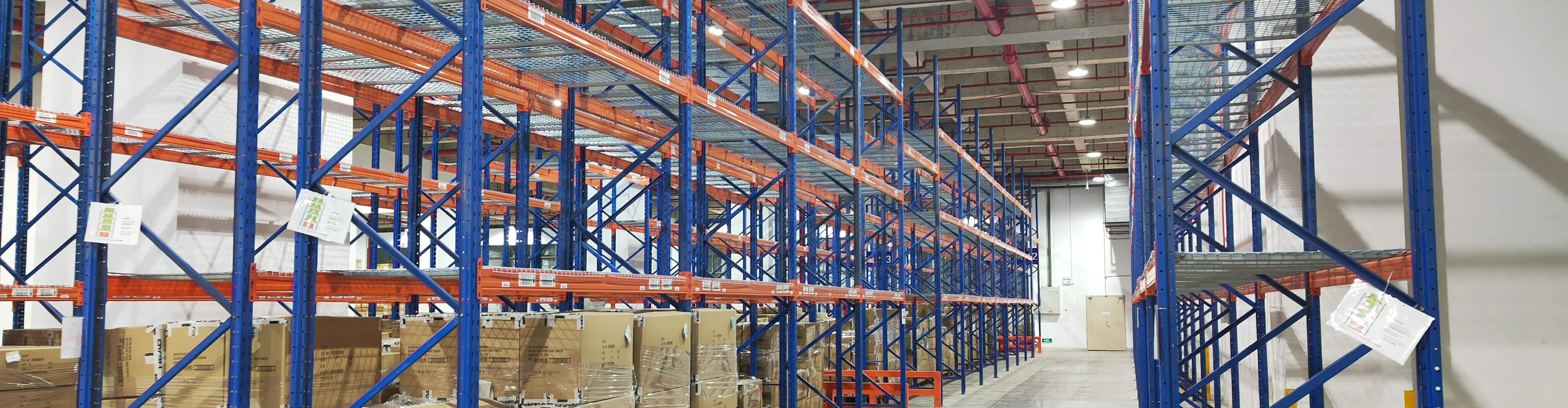
Pallet racking is a critical storage solution designed to organize and maximize the use of vertical space in warehouses, enabling efficient stacking and retrieval of palletized goods. A well-designed pallet racking system integrates structural stability with operational flexibility, making it indispensable for modern logistics operations. This system is widely adopted across industries due to its ability to accommodate varying load sizes and weights, supporting seamless inventory management.
At its core, pallet racking consists of four key components: columns, beams, decking, and safety accessories. Columns are vertical steel structures that bear the primary load, typically made of high-grade S275JR steel for enhanced durability—our factory uses 2.5mm to 3.0mm thick steel columns to ensure structural integrity under heavy loads. Beams, the horizontal components that connect columns, are available in square or rectangular cross-sections, with lengths ranging from 1.2m to 3.6m to fit standard pallet sizes (1.2m×1.0m and 1.2m×1.1m). Decking options include wire mesh, plywood, or steel panels, each selected based on load requirements—wire mesh decking is preferred for pallet racking industrial use due to its ventilation and visibility advantages.
Pallet racking in a warehouse is versatile, adapting to diverse scenarios such as heavy-duty storage for manufacturing raw materials, irregular warehouse spaces with odd angles or low ceilings, and e-commerce fulfillment centers with fast turnover of goods. Unlike standard shelving units, which are limited to light to medium loads (below 500kg per layer), pallet racking is categorized by load-bearing grades: light-duty (500-1000kg/layer), medium-duty (1000-2000kg/layer), and heavy-duty (above 2000kg/layer). A key industry term to note is “beam level spacing”—the distance between adjacent beams, which can be adjusted to fit different pallet heights, a feature that distinguishes pallet racking from fixed shelving systems.
This storage solution is particularly valuable for small and medium-sized enterprises (SMEs) in North America and Europe, where warehouse space is often a premium. Whether storing bulk goods, finished products, or seasonal inventory, pallet racking optimizes space usage while ensuring easy access for forklifts and other material handling equipment. Our factory’s custom pallet racking solutions are tailored to these specific needs, balancing standard compliance with operational efficiency.
2. Common Questions About Pallet Racking (And Expert Answers)
Q1: How to verify that my pallet racking system complies with OSHA and EN 15512 standards?
Compliance with OSHA (Occupational Safety and Health Administration) and EN 15512 (European standard for static storage systems) is non-negotiable for avoiding penalties and ensuring workplace safety. To verify compliance, start by reviewing the manufacturer’s certification documents—our factory provides ISO 9001-certified products with test reports confirming adherence to these standards. Key checkpoints include load capacity labeling, structural integrity of connections, and material quality.
For OSHA compliance, ensure that pallet racking is installed by certified professionals and that load limits are clearly posted on each rack bay—OSHA mandates visible labeling to prevent overloading. EN 15512 requires additional testing for structural performance, such as impact resistance and load distribution. Our factory conducts third-party testing on all custom pallet racking, including pull-out tests for beam-column connections and load-bearing tests to confirm compliance with both standards. Additionally, regular inspections by a qualified engineer (at least annually) can identify non-compliance issues, such as bent columns or loose fasteners, before they pose risks.
Q2: Can custom pallet racking adapt to irregular warehouse layouts without compromising load capacity?
Yes, custom pallet racking can be designed to fit irregular layouts—such as warehouses with columns, low-hanging pipes, or sloped ceilings—while maintaining full load capacity. The key is to conduct a detailed on-site survey to map the warehouse’s dimensions and obstacles, a service our factory provides as part of the customization process. Our engineers use 3D modeling to design racking configurations that work around obstacles, adjusting column placement, beam lengths, and bay widths to maximize space without sacrificing structural stability.
For example, a European manufacturing client with a warehouse featuring central support columns required pallet racking that could navigate the obstacles while supporting 1500kg per layer. We designed a modular system with offset columns and variable beam lengths, ensuring each bay maintained the required load capacity while utilizing 90% of the available space. The use of high-strength steel and reinforced beam-column connections (per EN 15512) ensured the system remained stable, even in the irregular layout. This approach demonstrates that custom pallet racking can adapt to unique spaces without compromising safety or performance.
3. Core Benefits of a High-Quality Pallet Racking System
3.1 Maximized Space Utilization
Pallet racking significantly boosts vertical space usage, a critical advantage for warehouses with limited square footage. Our factory’s custom pallet racking can increase storage density by 30%-40% for narrow warehouses, as we design systems that extend to ceiling height (up to 12m) while maintaining accessibility for forklifts. This is particularly beneficial for pallet racking in a warehouse with high ceilings, turning unused vertical space into valuable storage real estate.
3.2 Enhanced Load-Bearing Safety
Safety is paramount in warehousing operations, and a robust pallet racking system minimizes the risk of structural failure. Our factory uses S275JR and Q235B steel for heavy-duty applications, with welded beam-column connections that exceed OSHA and EN 15512 requirements. Each system undergoes load testing before delivery, ensuring it can safely support the specified weight—for instance, our heavy-duty pallet racking is tested to 125% of the rated load to account for accidental overloading, providing peace of mind for warehouse managers.
3.3 Custom Adaptability to Goods and Pallets
Every warehouse handles unique goods and pallet types, and a one-size-fits-all solution often falls short. Our custom pallet racking system is tailored to match specific pallet dimensions, load profiles, and goods characteristics—whether storing fragile electronics, bulky machinery parts, or perishable goods. For example, we designed a system for a North American e-commerce client with varying pallet sizes (from 0.8m×0.8m to 1.2m×1.2m), incorporating adjustable beams and specialized decking to secure each load type.
3.4 Long-Term Cost Control
Investing in high-quality pallet racking reduces long-term costs by minimizing replacement and maintenance expenses. Our factory’s systems are built with corrosion-resistant steel (hot-dip galvanized for outdoor or humid environments) and durable components, extending their lifespan to 15-20 years—double that of low-quality racking. This durability lowers replacement frequency, while easy-to-adjust components reduce modification costs when inventory needs change, making pallet racking industrial solutions a cost-effective long-term investment.
3.5 Compliance with Regional Standards
Non-compliance with OSHA, EN 15512, or RMI standards can result in heavy fines (up to $136,000 per violation for OSHA) and operational shutdowns. Our pallet racking systems are engineered to meet all regional requirements, with certification documents provided to simplify inspections. For a European food manufacturing client, our system’s compliance with EN 15512 and food safety regulations (non-toxic coatings) ensured they passed a surprise OSHA-style inspection without penalties, avoiding costly disruptions.
4. Step-by-Step Guide to Implementing and Maintaining a Pallet Racking System
4.1 Conduct a Comprehensive Needs Assessment
Start by defining core requirements: load capacity per layer (consult your inventory data to determine average and maximum weights), pallet dimensions, warehouse dimensions (including obstacles and ceiling height), and operational needs (e.g., forklift access, retrieval speed). A critical detail: measure pallet height with goods included, not just the empty pallet—this avoids incorrect beam spacing. Our factory’s technical team can assist with on-site surveys to ensure accurate data collection.
4.2 Collaborate with Engineers on Custom Design
Share your assessment with a factory’s engineering team to develop a tailored design. Provide details on irregular spaces, load profiles, and compliance needs—our engineers use 3D modeling to create a layout that optimizes space and safety. A key tip: prioritize modular designs, which allow future expansions. For example, a client initially needed 50 bays but opted for a modular system, enabling them to add 30 more bays within 6 months without full redesign.
4.3 Select Materials and Specifications
Choose materials based on load requirements and environment: S275JR steel for heavy loads, hot-dip galvanization for humid or cold storage, and wire mesh decking for pallet racking industrial use. Specify beam and column dimensions—for 1500kg/layer loads, we recommend 80mm×50mm beams and 90mm×70mm columns. Avoid cutting corners on material quality; low-grade steel may save upfront costs but increases failure risks.
4.4 Prepare the Warehouse Site
Ensure the installation site is level and stable—uneven floors can compromise racking integrity. Reinforce the floor if needed (our team can advise on concrete strength requirements: minimum 150mm thickness for heavy-duty systems). Clear obstacles and mark column positions to streamline installation. For warehouses with existing infrastructure, coordinate with electricians or plumbers to relocate pipes or wiring that block racking placement.
4.5 Professional Installation and Testing
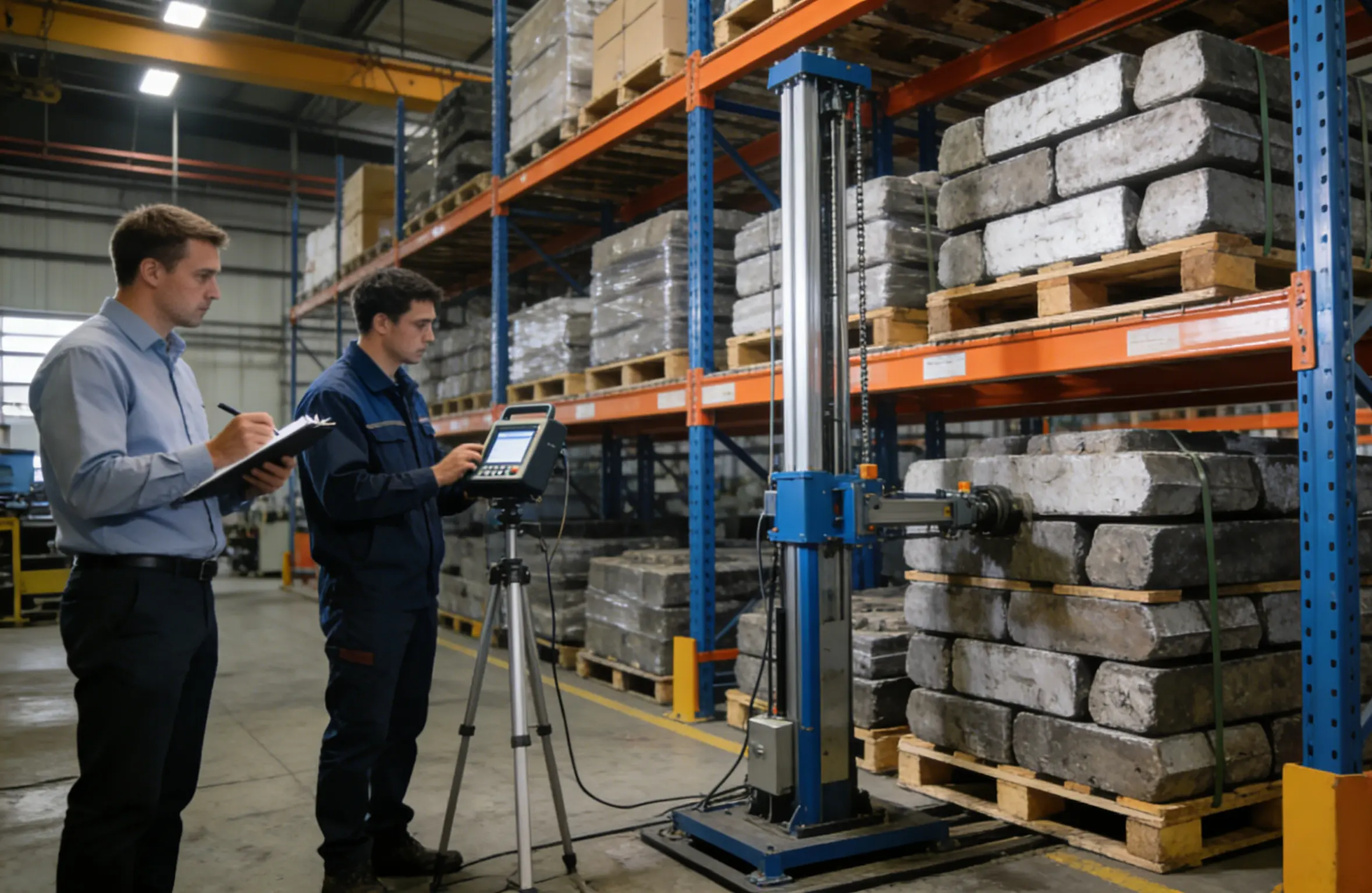
Hire certified installers (our factory provides trained teams) to assemble the pallet racking system per the design. Post-installation, conduct load testing: apply 125% of the rated load to each bay for 24 hours to check for deformation. Inspect all connections—tighten loose fasteners and replace damaged components immediately. Document testing results for compliance records, as OSHA and EN 15512 require proof of structural integrity.
4.6 Establish Routine Maintenance and Inspections
Schedule weekly visual inspections (by warehouse staff) to check for bent columns, loose beams, or damaged decking. Conduct quarterly inspections by a qualified engineer to assess structural integrity. Implement a maintenance log to track issues and repairs—our factory provides a customizable log template. For example, a North American client’s weekly inspections identified a bent column caused by forklift impact, allowing quick replacement before a catastrophic failure.
5. Real-World Pallet Racking Success Stories
Case Study 1: European E-Commerce Fulfillment Center
Client: A medium-sized e-commerce company in Germany with a 1,200㎡ warehouse featuring low ceilings (3.5m) and irregular corners. Core Need: Maximize storage density for 1,000+ SKUs with varying pallet sizes, while complying with EN 15512. Solution: Our factory designed a low-profile, modular pallet racking system with adjustable beams (spacing 0.8m-1.2m) and wire mesh decking. We optimized bay widths to fit the irregular corners, using offset columns to avoid wasted space. Result: Storage density increased by 35%, enabling the client to store 20% more inventory without expanding the warehouse. The system passed EN 15512 inspection, and adjustable components allowed easy reconfiguration when SKU mix changed.
Case Study 2: North American Automotive Parts Manufacturer
Client: A family-owned automotive parts manufacturer in the U.S. with a 2,000㎡ warehouse needing to store heavy components (2,500kg per layer). Core Need: Heavy-duty pallet racking that complies with OSHA and supports forklift operations. Solution: We designed a heavy-duty system using S275JR steel columns (3.0mm thick) and reinforced beams, with bolted connections for stability. We also added safety guards to protect columns from forklift impacts. Result: The pallet racking system safely supports the rated load, reducing the risk of component damage. OSHA inspection compliance avoided potential fines, and the system’s durability reduced maintenance costs by 40% compared to the client’s previous low-quality racking.
Case Study 3: Canadian Food Distribution Warehouse
Client: A medium-sized food distributor in Canada with a 1,500㎡ warehouse requiring temperature-resistant storage for perishable goods. Core Need: Corrosion-resistant pallet racking that fits narrow aisles (1.8m) and complies with food safety regulations. Solution: Our factory provided hot-dip galvanized pallet racking with narrow bay widths (1.2m) and plywood decking (easy to clean). We incorporated adjustable beams to fit different palletized food items (from canned goods to frozen products). Result: The system’s corrosion resistance ensured durability in the cold, humid environment (lifespan extended to 18 years). Narrow-aisle design increased space utilization by 30%, and food-safe coatings passed health inspections. The client reported a 25% reduction in inventory damage due to secure load placement.
Final Thoughts and Call to Action
A well-maintained and properly designed pallet racking system is a cornerstone of efficient, safe, and compliant warehousing operations. By understanding its components, complying with regional standards, and following best practices for installation and maintenance, SMEs can maximize space, reduce costs, and mitigate risks. Our factory’s 10+ years of experience in custom pallet racking solutions ensures we deliver systems tailored to your unique warehouse needs, whether you require adaptability for irregular spaces, heavy-duty capacity, or compliance with OSHA/EN 15512.
Contact our factory for a free custom heavy duty pallet racking design quote, tailored to your warehouse needs. Our technical team will conduct a detailed needs assessment and provide a solution that balances efficiency, safety, and cost-effectiveness—helping you get the most out of your pallet racking system.
About the Author
John Doe is a senior technical consultant with 12 years of experience in the pallet racking industry, working for a leading factory specializing in custom heavy-duty and pallet racking systems. He is proficient in OSHA, EN 15512, and RMI standards, with a track record of designing solutions for 500+ SMEs across North America and Europe. His expertise lies in balancing technical compliance with practical operational needs, helping clients optimize their warehouse storage.