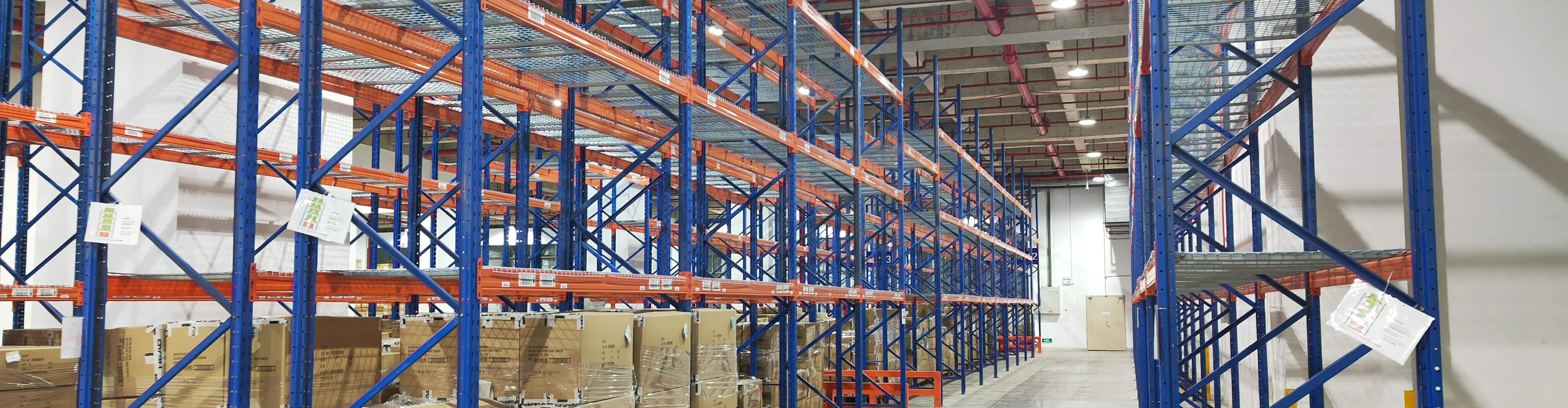
Choosing the right industrial warehouse shelving is not just a storage decision. It affects picking speed, space use, safety, labor efficiency, and how easily your warehouse can scale as order volume grows. For most growing businesses, the right system is the one that fits current inventory and workflow without creating expensive limitations six to twelve months later.
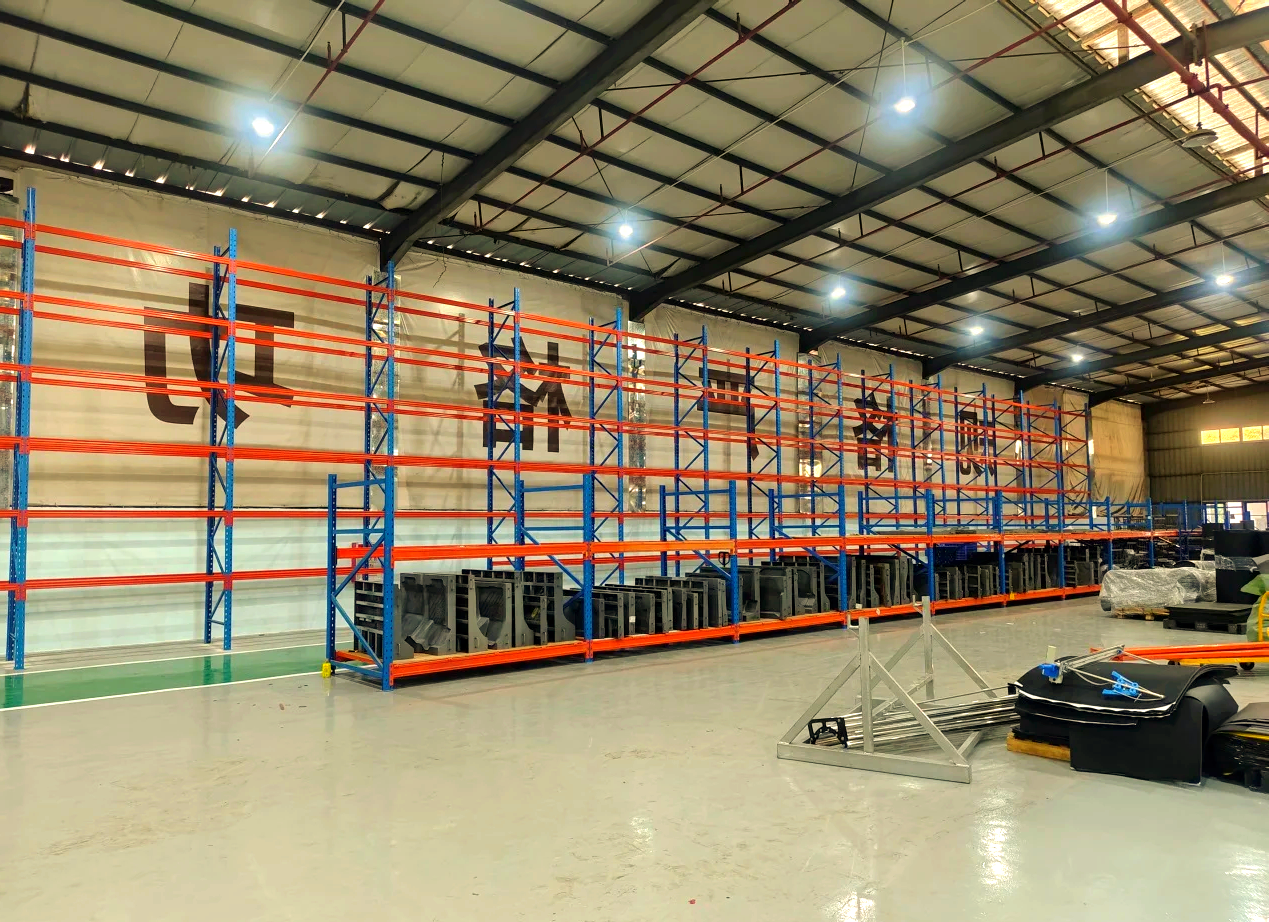
This guide explains how to evaluate industrial warehouse shelving from a buyer’s perspective. It covers shelf types, planning factors, operational trade-offs, safety checks, and common purchasing mistakes so you can make a practical decision based on real warehouse conditions.
What industrial warehouse shelving is used for
Industrial warehouse shelving is typically used for hand-loaded goods, cartons, bins, parts, tools, archive items, and smaller SKU storage that does not require full pallet racking. In many facilities, shelving supports piece picking, reserve stock, packing stations, maintenance stores, and back-of-house inventory.
It is often selected when a business needs direct access to many SKUs, flexible shelf adjustment, and better organization than floor stacking can provide. It can also work alongside pallet racking, mezzanine floors, and work areas as part of a broader storage layout.
For growing businesses, the key question is not simply whether shelving is needed, but which type of industrial warehouse shelving matches the stock profile and daily handling method.
When industrial warehouse shelving is a good fit
Industrial warehouse shelving usually makes sense when your operation has one or more of the following characteristics:
- A high number of small or medium-sized SKUs
- Frequent manual picking rather than pallet-in, pallet-out handling
- Inventory that needs visual identification and easy access
- Fast-moving spare parts, components, e-commerce items, or carton stock
- A need to separate product lines clearly for accuracy and housekeeping
- Storage areas that may need reconfiguration as the business grows
It may be less suitable when most stock is palletized, very heavy, unusually long, or moved mainly by forklift. In those cases, pallet racking, cantilever racking, or a mixed system may be more appropriate than relying heavily on shelving.
Key types of industrial warehouse shelving to compare
Longspan shelving
Longspan shelving is commonly used for cartons, archive boxes, irregular items, and medium-duty stock. It offers wider bays than lighter shelving systems and is often chosen for backroom storage, picking areas, and reserve stock.
This type of industrial warehouse shelving is useful when stock dimensions vary and the business needs flexibility. It is less suitable if loads are highly concentrated or if pallet handling is the primary requirement.
Steel shelving
Steel shelving is often used for smaller items, bins, parts, and maintenance inventory. It can work well in storerooms, picking zones, and areas where many small SKUs need to be organized in a compact footprint.
Its main advantage is accessibility. Its limitation is that shelf capacity and bay width may not suit bulkier goods or heavier carton loads without moving into a more robust shelving format.
Boltless shelving
Boltless shelving is valued for relatively quick assembly and adjustability. It can be practical for businesses expecting SKU changes, layout revisions, or seasonal slotting changes.
Buyers should still review load requirements carefully. Ease of assembly should not be the main selection criterion if the stock profile requires higher capacity or tougher daily use.
Multi-tier shelving
Multi-tier industrial warehouse shelving uses vertical space by creating additional picking levels. It can be effective in warehouses with high ceilings and a large number of small SKUs.
This option can improve storage density, but it also introduces planning complexity. Access routes, stair placement, picking efficiency, fire safety considerations, and replenishment methods all need careful review. It is not automatically the right choice just because clear height is available.
How to assess your storage requirement before buying
Before requesting quotes, define what the shelving needs to do operationally. Many shelving purchases go wrong because buyers focus on bay dimensions first and workflow second.
1. Review your SKU mix
Look at how many SKUs you store, their dimensions, weight range, packaging type, and pick frequency. A warehouse storing small parts in bins needs different industrial warehouse shelving from a facility holding bulky cartons with irregular turnover.
If your SKU profile changes often, flexibility matters more. If your inventory is stable and repetitive, a more fixed layout may work well.
2. Separate fast movers from slow movers
Not every item should be stored in the same style or location. Fast-moving items should be easier to access and closer to dispatch or packing. Slow-moving stock can sit in less convenient positions.
This matters because shelving efficiency is not only about storage capacity. It is also about reducing travel time and unnecessary handling.
3. Understand load requirements clearly
One of the most common mistakes is underestimating shelf loads. Buyers should check the weight per shelf level, weight per bay, and whether loads are evenly distributed or concentrated in small areas.
Industrial warehouse shelving that looks suitable dimensionally may still be a poor fit if the real loading pattern is heavier than expected.
4. Check handling method
Will goods be picked by hand, trolley, ladder, order picker, or forklift-supported replenishment? The answer affects shelf height, aisle width, bay depth, and replenishment safety.
If forklifts operate nearby, you may also need to think about end-of-aisle protection, upright guards, and traffic separation.
5. Measure the building properly
Ceiling height alone is not enough. Review column positions, door clearances, lighting, sprinkler interference, slab condition, and any areas where access is restricted. A shelving plan that works on paper can fail quickly if the building has obstacles that reduce usable space.
Buying factors that matter most for growing businesses
Scalability
Growing businesses should choose industrial warehouse shelving with expansion in mind. Ask whether additional bays, levels, dividers, or multi-tier extensions can be added later without major disruption.
A low initial cost can become expensive if the system cannot adapt to increased SKU count or a layout change.
Accessibility versus density
More storage density is not always better. If shelving becomes too deep, too high, or too tightly spaced, pick speed may drop and errors may increase. Buyers should balance storage density with daily access needs.
For operations with frequent order picking, accessibility often delivers more value than squeezing in a few extra positions.
Durability in real operating conditions
Consider how rough the environment is. Warehouses with frequent trolley contact, replenishment activity, or mixed pedestrian and forklift traffic need more robust industrial warehouse shelving than a light-duty stockroom.
Surface finish, impact exposure, and the general discipline of the operation all influence how well shelving will hold up over time.
Adjustability
If carton sizes, bins, or product lines change regularly, shelf adjustability becomes important. A fixed configuration may look efficient initially but can create wasted space when product dimensions change.
Integration with other storage systems
Shelving rarely exists in isolation in a growing warehouse. It often needs to work alongside pallet racking, packing benches, conveyors, mezzanine floors, or goods-in areas. The right buying decision considers how industrial warehouse shelving fits into the full material flow, not just one aisle.
Layout planning considerations buyers often overlook
Aisle width and movement space
If aisles are too narrow, replenishment slows down and picking becomes awkward. If aisles are too wide, floor space is wasted. The right aisle width depends on whether workers use hand access, carts, ladders, or mobile equipment.
Reach height and ergonomics
Not every shelf level should be treated equally. Frequently picked items are usually better placed between lower chest and shoulder height to reduce strain and improve speed. Slow-moving or lighter items can go higher or lower depending on access method.
Replenishment logic
Some shelving layouts are easy to pick from but difficult to replenish without disrupting operators. Think about how stock gets into the shelf location, not just how it comes out.
Housekeeping and visibility
Overly dense shelving layouts can create blind spots, misplaced stock, and poor cleaning access. Clear labeling, visual line of sight, and access for routine housekeeping all support inventory accuracy and safer operation.
Common mistakes when buying industrial warehouse shelving
- Choosing based on price alone without reviewing load and workflow requirements
- Using one shelving format for every SKU even when stock types vary widely
- Ignoring future growth and buying only for current volume
- Underestimating aisle space needed for picking and replenishment
- Failing to review floor condition, fixing requirements, or building constraints
- Overloading shelves because load limits were not clearly communicated internally
- Missing protection needs in areas exposed to trolley or forklift impact
- Installing shelving too high for safe and efficient manual access
Most of these mistakes are preventable if the buying process starts with operational data rather than a simple shelf size request.
Safety, inspection, and maintenance points to include in the decision
Even when the main goal is buying the right industrial warehouse shelving, maintenance and inspection should be part of the selection process. A system that is difficult to inspect, easily damaged, or regularly misused can create ongoing operational problems.
Check load signage and internal control
Teams should understand shelf load limits and bay capacities. This is especially important where stock profiles change or replenishment is handled by different shifts.
Inspect for damage regularly
Look for bent components, loose fixings, missing parts, shelf deflection, corrosion, and impact damage. Warehouses with busy replenishment cycles should review shelving condition as part of routine safety checks.
Keep aisles and shelf faces clear
Blocked access reduces picking efficiency and increases the chance of unsafe manual handling. Good housekeeping should be planned into the layout rather than treated as an afterthought.
Review anchor and floor conditions where relevant
Floor quality and fixing suitability matter, especially for taller or more heavily loaded industrial warehouse shelving. If the slab is uneven or damaged, installation quality and long-term stability can be affected.
A simple buying framework for industrial warehouse shelving
If you are comparing options, use this practical sequence:
Define what products will be stored, including size, weight, packaging, and pick frequency.
Map the handling method: manual picking, trolley use, ladder access, or replenishment support equipment.
Measure the usable building space, not just the overall footprint.
Decide whether the priority is accessibility, density, flexibility, or future expansion.
Compare shelving types based on real workflow, not just capacity figures.
Review safety, protection, and inspection needs before finalizing the layout.
Plan for growth so the shelving system can expand without major rework.
This approach usually leads to a more durable and commercially sensible decision than buying shelving purely from a catalog specification.
FAQ
How do I know if industrial warehouse shelving is better than pallet racking?
If stock is mainly hand-picked, stored in cartons or bins, and requires direct access to many SKUs, industrial warehouse shelving is often the better fit. If goods are mostly palletized and moved by forklift, pallet racking is usually more appropriate.
Can industrial warehouse shelving be expanded later?
Many systems can be expanded with additional bays or levels, but expansion depends on the original design, available space, load requirements, and compatibility of components. It is worth checking expansion options before the initial purchase.
What is the biggest buying mistake businesses make?
A common mistake is buying shelving based only on price or basic dimensions without analyzing SKU profile, load pattern, picking method, and future growth. That often leads to poor space use and early replacement costs.
Does taller shelving always improve storage efficiency?
No. Taller shelving only helps if items can be accessed and replenished safely and efficiently. In some operations, excessive height slows picking and creates ergonomic issues.
Conclusion
The right industrial warehouse shelving should support how your warehouse actually works today while leaving room for growth, layout changes, and SKU expansion. Buyers should evaluate stock profile, access needs, load requirements, aisle space, building constraints, and future scalability before choosing a system.
For growing businesses, the strongest buying decision is rarely the cheapest or the densest option. It is the shelving solution that improves organization, supports safe handling, and remains practical as the operation becomes more complex.