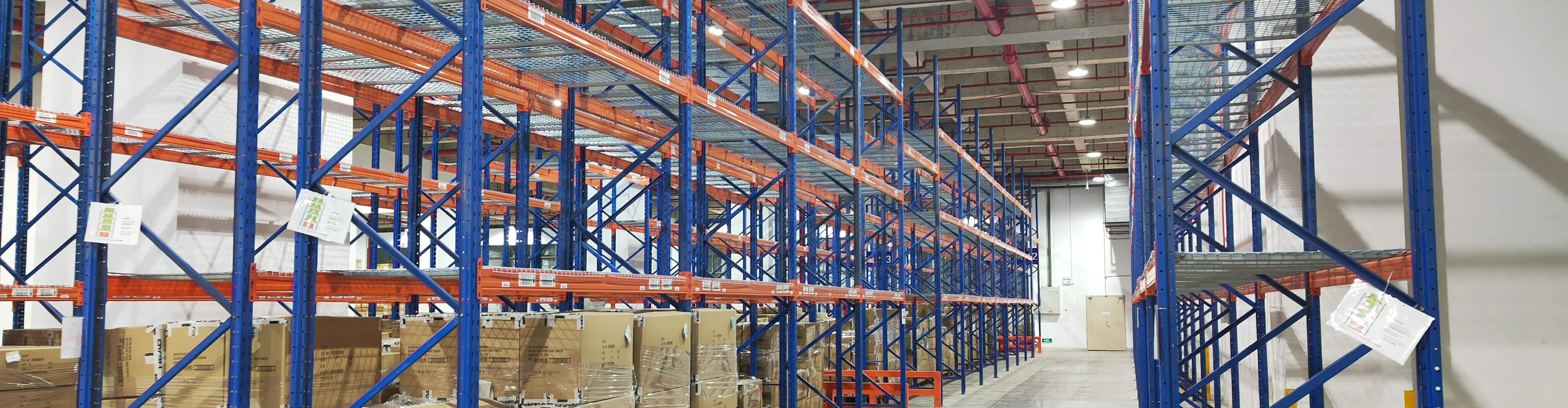
Heavy duty warehouse racking is designed to store large pallet loads, support frequent forklift handling, and make better use of vertical warehouse space in demanding industrial environments. For large-scale operations, the right system is not just about adding more storage positions. It affects throughput, aisle planning, stock accessibility, safety routines, and future expansion costs.
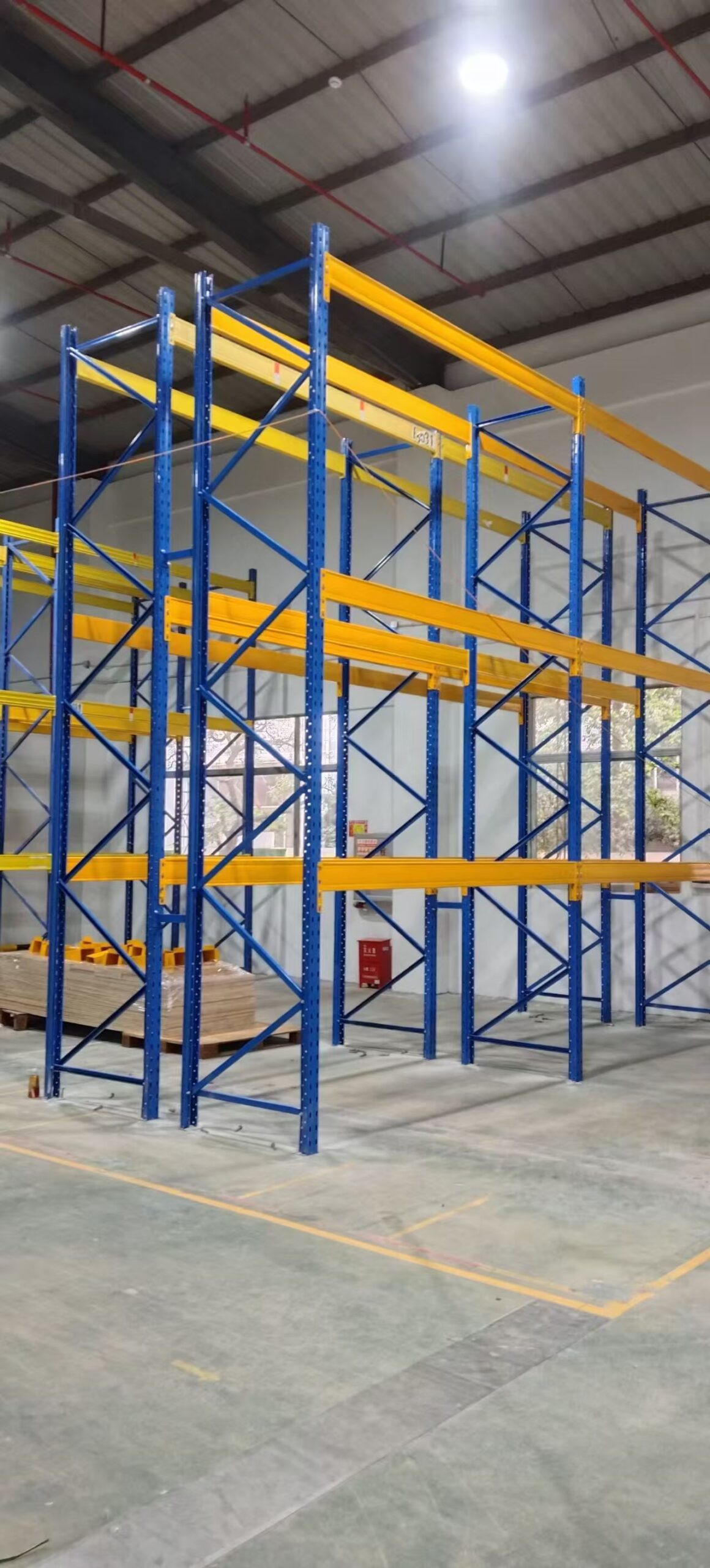
In practical terms, heavy duty warehouse racking is most suitable when a business needs structured pallet storage, reliable load support, and repeatable warehouse workflows. It becomes especially relevant in distribution centers, manufacturing plants, third-party logistics facilities, cold storage operations, and bulk raw material warehouses where pallet volumes are high and storage conditions are demanding.
What heavy duty warehouse racking means in an industrial setting
Heavy duty warehouse racking refers to pallet racking systems built for substantial loads, regular mechanical handling, and long-term use in commercial warehouses. These systems typically use upright frames, horizontal beams, bracing, anchors, and optional accessories such as row spacers, pallet supports, mesh decking, column guards, and rack protection barriers.
The main purpose of heavy duty warehouse racking is to store palletized goods safely while balancing three core operational needs:
- Load capacity for heavy or bulky inventory
- Accessibility for forklifts and stock rotation
- Space efficiency across floor area and clear height
Not every high-load storage application needs the same rack layout. A warehouse storing fast-moving finished goods has different priorities from one storing slow-moving industrial components or imported bulk pallets. That is why system selection should start with operational reality rather than a generic capacity target.
Where heavy duty warehouse racking is commonly used
Heavy duty warehouse racking is widely used in facilities that handle palletized inventory at scale. Common applications include:
- Finished goods warehouses with high pallet turnover
- Manufacturing plants storing raw materials and work-in-progress stock
- Regional distribution centers with mixed SKU profiles
- 3PL warehouses serving multiple clients with different pallet sizes
- Cold rooms and freezer environments where floor space is expensive
- Industrial spare parts storage with heavy packaged items
In these settings, the rack system has to do more than hold weight. It has to support the actual movement pattern of the warehouse. If forklifts are constantly entering and exiting lanes, impact protection and aisle discipline matter. If inventory rotation is critical, rack accessibility becomes more important than maximum storage density. If SKU count is high, selectivity often takes priority over compact storage.
Key types of heavy duty warehouse racking for large-scale storage
Selective pallet racking
Selective pallet racking is the most common form of heavy duty warehouse racking because it gives direct access to every pallet position. It works well for warehouses with many SKUs, variable stock levels, and frequent order picking or replenishment.
Its main strength is flexibility. Beam levels can often be adjusted to suit changing pallet heights, and stock is easier to count and access. The trade-off is that selective systems require more aisle space than denser storage layouts.
Drive-in and drive-through racking
These systems increase storage density by reducing the number of aisles. Forklifts enter the rack structure to place or retrieve pallets from rails. This can be useful for large volumes of similar products where direct access to every pallet is less important.
However, drive-in layouts are less suitable when SKU variety is high or when stock rotation is strict. They also place greater demands on forklift accuracy, rack protection, and damage control because trucks operate inside the structure.
Double deep racking
Double deep heavy duty warehouse racking stores pallets two positions deep, reducing aisle count and increasing density compared with standard selective layouts. It can be a practical middle ground for operations that want more storage capacity without moving to a very high-density system.
The limitation is reduced selectivity. Accessing the rear pallet requires handling the front pallet first unless the stock profile is planned carefully. Specialized forklift reach capability may also be needed.
Push back racking
Push back systems allow multiple pallets to be stored on inclined carts or rails, with pallets loaded and retrieved from the same aisle face. This supports better density than selective racking while keeping forklift movement outside the rack structure.
Push back heavy duty warehouse racking can work well for medium-SKU operations with multiple pallets per SKU. It is less suitable where every pallet needs immediate direct access or where stock sequencing is highly sensitive.
Pallet flow racking
Pallet flow uses gravity rollers to move pallets from the loading side to the picking side. It is often selected for FIFO operations, high-throughput replenishment, or cold storage where dense storage and controlled stock rotation are both important.
This is a more specialized heavy duty warehouse racking solution and needs careful planning around pallet quality, load consistency, braking control, and maintenance access.
How to choose heavy duty warehouse racking for a large facility
For large-scale industrial storage, system choice should be based on how the warehouse actually runs day to day. Capacity alone is not enough. A rack layout that looks efficient on paper can create congestion, poor stock rotation, or damage risk if it does not match the operation.
1. Define pallet and load characteristics
Start with the real load profile. Measure pallet dimensions, loaded height, pallet overhang, unit weight, and load stability. A warehouse may handle standard pallets in one area and oversized or uneven loads in another. Heavy duty warehouse racking must be planned around the heaviest and most operationally realistic load cases, not just average loads.
If pallets are weak, damaged, inconsistent, or poorly wrapped, that affects support requirements and handling safety. In some cases, accessories such as pallet supports or decking may be needed, but they should be chosen based on actual handling needs.
2. Review SKU count and stock rotation
If the warehouse carries many SKUs with low to medium pallet quantities, selective heavy duty warehouse racking is often the most practical choice because it preserves access. If there are fewer SKUs with deep pallet quantities, denser options may make more sense.
Rotation matters as well. FIFO requirements may point toward pallet flow or a carefully structured selective layout. LIFO storage may be acceptable for some raw materials or non-date-sensitive stock, making drive-in or push back more viable.
3. Match the rack system to forklift handling
Forklift type has a direct impact on rack design. Counterbalance trucks, reach trucks, VNA equipment, and articulated forklifts all require different aisle widths, turning clearances, and lift behaviors. Heavy duty warehouse racking should be planned together with material handling equipment, not as a separate decision.
A common mistake is trying to maximize storage density without leaving enough practical maneuvering space. This can slow pallet handling, increase rack impacts, and reduce overall throughput even if nominal storage capacity increases.
4. Use building height carefully
Large-scale storage often depends on vertical space utilization. Clear height, sprinkler constraints, lighting, ventilation, and lift equipment limits all affect how high heavy duty warehouse racking can go in practice.
Adding extra beam levels may increase pallet positions, but only if forklifts can place and retrieve loads safely and efficiently at those heights. Very high storage can also slow cycle times if equipment and operator workflow are not suited to the layout.
5. Check floor condition and slab suitability
Industrial racking performance depends partly on the floor beneath it. Floor flatness, slab strength, cracking, and anchor suitability all matter, especially in large facilities with tall racking and concentrated load points.
If floor condition is ignored, installation tolerances, rack alignment, and long-term stability can all be affected. This should be reviewed early, particularly in older warehouses or buildings being repurposed for heavier storage use.
6. Plan for expansion and reconfiguration
Heavy duty warehouse racking should support current storage demand, but large operations rarely stay static. SKU counts change, pallet heights change, product mix shifts, and throughput can increase after the system is installed.
It is often sensible to leave room for future aisles, additional bays, or beam level adjustments. A slightly less dense layout that supports future adaptation can be commercially smarter than a tightly packed system that becomes restrictive within a year or two.
Operational advantages of heavy duty warehouse racking
When properly selected and installed, heavy duty warehouse racking offers clear operational benefits:
- Improved use of warehouse height and cubic space
- More organized pallet storage and location control
- Faster stock access compared with floor stacking
- Better separation of SKUs and batch inventory
- More predictable forklift routes and replenishment workflows
- Scalable storage structure for growing operations
For many industrial sites, the biggest advantage is not just storage density. It is operational consistency. Pallets have defined locations, aisles are structured, and inventory handling becomes easier to manage across shifts and teams.
Limitations and trade-offs to consider
Heavy duty warehouse racking is not automatically the right answer for every warehouse. In some cases, floor stacking may be simpler for very low-SKU, block-storable goods with limited selectivity requirements. In other cases, shelving, cantilever racking, or mezzanine-supported systems may be more suitable for non-palletized stock.
Even within pallet storage, each heavy duty warehouse racking type involves trade-offs:
- Selective racking: high accessibility, lower density
- Drive-in racking: higher density, more impact risk and less selectivity
- Double deep racking: improved density, reduced immediate access
- Push back racking: efficient lane storage, more system complexity
- Pallet flow racking: strong FIFO performance, higher planning and maintenance demands
The practical question is not which system stores the most pallets. It is which system supports the warehouse’s inventory profile, handling method, safety standards, and labor efficiency with the least operational friction.
Safety, inspection, and maintenance priorities
Large-scale heavy duty warehouse racking should be treated as an active operational asset, not a one-time installation. Regular use exposes racks to forklift impact, overloading, missing accessories, loose anchors, and beam displacement. Small issues can become serious if they are ignored.
Routine priorities include:
- Checking uprights for impact damage or distortion
- Inspecting beams for displacement, deflection, or connector damage
- Confirming load notices are present and understood
- Reviewing anchors, baseplates, and frame alignment
- Monitoring rack protection at aisle ends and high-traffic zones
- Removing damaged pallets that increase storage risk
- Keeping aisles clear for safe forklift movement
Warehouses with heavy traffic should also review operating behavior. Repeated rack damage often points to aisle width problems, poor visibility, rushed handling, or insufficient driver training rather than a simple equipment issue.
Common mistakes when specifying heavy duty warehouse racking
Choosing by price alone
Low upfront cost can lead to poor long-term value if the system does not fit the operation. Extra pallet positions mean little if access is slow, damage rates increase, or future changes become difficult.
Using nominal pallet sizes instead of actual loads
Real pallets often vary in footprint, overhang, and height. Designing heavy duty warehouse racking around assumed standard sizes can create clearance problems and handling inefficiency.
Ignoring forklift realities
A layout that appears dense in CAD can fail in live operation if trucks struggle to turn, align, or lift at the required heights. Throughput and damage risk should be considered from the start.
Underestimating protection needs
End-of-aisle barriers, upright guards, and other protection measures are not optional extras in busy industrial warehouses. They help reduce repair costs and protect structural components from routine impact.
Failing to plan for growth
If a facility expects product line changes, seasonal peaks, or inventory expansion, the heavy duty warehouse racking layout should leave room for adjustment rather than locking the site into a rigid configuration.
Practical framework for planning a heavy duty warehouse racking project
A structured planning process helps avoid expensive corrections later. A practical approach usually includes:
Define pallet types, weights, heights, and inventory profile.
Map current and future throughput, including receiving, putaway, picking, and dispatch flow.
Review forklift fleet, aisle requirements, and lift heights.
Assess building dimensions, obstructions, dock interface, and floor condition.
Choose the heavy duty warehouse racking type that matches access and density needs.
Plan safety accessories, protection zones, and inspection routines.
Allow for future expansion, re-slotting, or layout changes.
This type of planning improves not only storage capacity but also day-to-day usability. In large warehouses, a workable layout is more valuable than a theoretically dense one that creates handling bottlenecks.
FAQ
What is the main benefit of heavy duty warehouse racking?
The main benefit is organized high-capacity pallet storage that uses warehouse height efficiently while supporting structured forklift access and inventory control.
Is heavy duty warehouse racking suitable for every pallet warehouse?
No. It depends on pallet type, SKU count, handling method, rotation requirements, and available space. Some operations need highly selective access, while others benefit more from dense lane storage.
How do I know which racking type is right for my facility?
Start with your load data, stock profile, forklift type, aisle constraints, and throughput pattern. The right choice is the one that balances accessibility, density, safety, and future flexibility for your actual operation.
Why is rack inspection so important in large warehouses?
Because frequent forklift movement and heavy pallet handling can cause gradual damage. Regular inspection helps identify impact, beam issues, anchor problems, and unsafe loading conditions before they create larger risks.
Conclusion
Heavy duty warehouse racking is a core storage solution for large-scale industrial facilities, but the right result depends on more than load capacity. Good planning considers pallet dimensions, SKU mix, stock rotation, forklift handling, aisle width, clear height, floor condition, and future change. When heavy duty warehouse racking is selected around real operating conditions, it can improve storage efficiency, stock control, and warehouse workflow without creating unnecessary handling or safety problems.