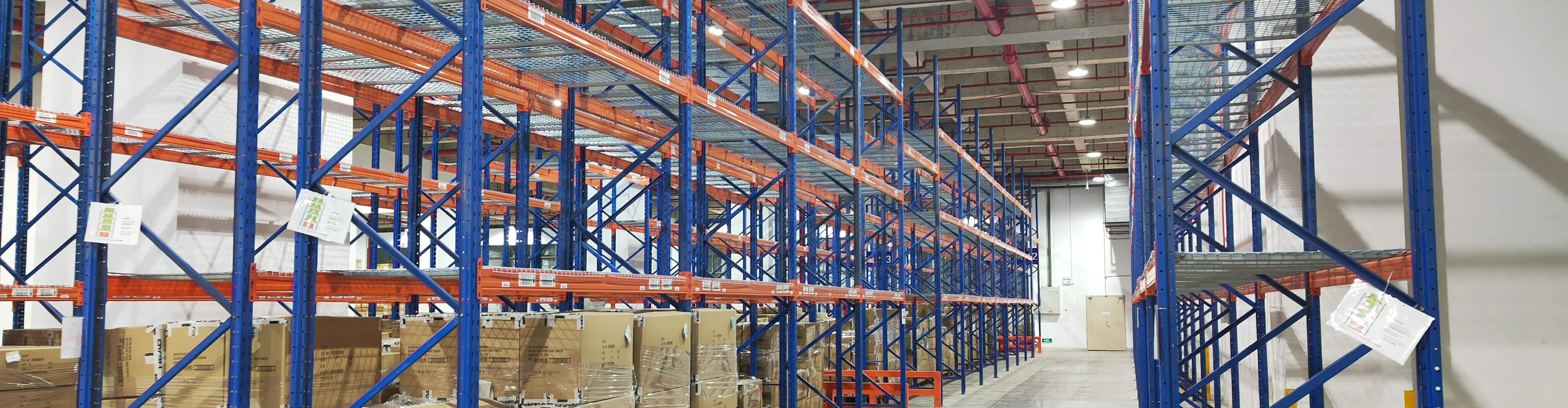
The main difference between heavy duty pallet racking and standard racking is load capacity, structural strength, and the type of warehouse operation each system is designed to support. Heavy-duty systems are built for larger pallet weights, more demanding forklift activity, greater beam and upright strength, and often higher bay heights. Standard racking is usually suitable for lighter pallet loads, less intensive handling, and simpler storage layouts.
That sounds straightforward, but in practice the decision affects safety, forklift efficiency, future expansion, maintenance costs, and how well the warehouse performs day to day. Choosing a system based only on price or appearance often leads to avoidable problems such as overloaded levels, restricted pallet sizes, damaged uprights, or poor use of floor and vertical space.
This guide explains what separates heavy duty pallet racking from standard racking, where each option fits, and what warehouse buyers should evaluate before making a decision.
What Is Heavy Duty Pallet Racking?
Heavy duty pallet racking is a pallet storage system designed for higher load capacities and tougher operating conditions. It typically uses stronger uprights, thicker steel sections, more robust beam profiles, and connection details intended to handle heavier pallets and repeated mechanical handling.
It is commonly considered when a warehouse stores:
- Heavy goods on pallets
- Bulk materials or industrial components
- Dense packaged products
- Machinery parts and metal items
- High-volume pallet inventory handled by forklifts throughout the day
In many facilities, heavy duty pallet racking is not just about maximum weight. It is also about operational resilience. If forklifts are working continuously, if pallets vary in condition, or if storage heights are significant, the rack system needs more than theoretical load capacity. It needs enough structural margin and layout planning to remain practical and manageable over time.
What Is Standard Racking?
Standard racking generally refers to pallet racking intended for more moderate loads and less demanding warehouse conditions. It is often used where pallet weights are lower, rack heights are more modest, and handling frequency is not especially intense.
Standard racking can work well for:
- General warehousing with lighter pallet loads
- Retail backroom storage
- Distribution operations with moderate stock weight
- Warehouses where pallet positions are easy to access and handling pressure is lower
Standard racking is not necessarily low quality. In the right environment, it can be a practical and cost-effective choice. The issue is suitability. A standard system that is acceptable for light consumer goods may be a poor fit for industrial pallets, mixed load profiles, or demanding forklift traffic.
Heavy Duty Pallet Racking vs Standard Racking: The Core Differences
When comparing heavy duty pallet racking with standard racking, the real differences are not limited to how the rack looks. They affect how the system performs in live warehouse conditions.
1. Load Capacity
The most obvious difference is the amount of weight each beam level and bay is designed to carry. Heavy duty pallet racking is intended for higher pallet weights and often for loads that are consistently close to the system’s rated capacity. Standard racking is usually selected for lighter or more uniform loads.
This matters because many warehouses do not store perfectly identical pallets. One SKU may be much heavier than another, and inbound pallets are not always built consistently. If load weights vary, the system must be selected around the real operational range, not the average pallet.
2. Upright and Beam Strength
Heavy-duty systems usually use stronger upright frames and more substantial beam sections. That gives the rack better resistance to deflection, higher vertical loading capability, and greater stability in more intensive environments.
Standard racking may use lighter profiles that are adequate for moderate use but less forgiving if loads increase, pallet sizes change, or forklift handling becomes more aggressive.
3. Rack Height and Vertical Use
Heavy duty pallet racking is often used in taller warehouses where operators want to maximize cubic storage rather than only floor area. As rack height increases, design and installation become more demanding. Upright strength, bracing, beam selection, and floor anchoring all become more important.
Standard racking can also be installed at useful heights, but it is more commonly associated with lighter-duty layouts and less aggressive vertical storage strategies.
4. Forklift Handling Conditions
In a busy warehouse, rack damage often comes from daily handling rather than from pure load weight. Heavy-duty environments usually involve more forklift cycles, more pallet movement, and a greater chance of impact at lower levels. Heavy duty pallet racking is generally chosen where the operating conditions are tougher and where rack protection, aisle layout, and inspection routines need more attention.
Standard racking may perform well in calmer operations, but if aisles are tight, pallets overhang, or drivers frequently reposition loads, lighter systems can become more vulnerable to damage.
5. Pallet Type and Load Stability
Heavier industrial loads often place more stress on beams and require more careful support planning. Pallet quality also matters. Damaged pallets, inconsistent pallet dimensions, or loads with uneven weight distribution create additional risk. Heavy-duty systems are usually the better choice when pallet condition is variable or when products are dense and difficult to handle cleanly.
6. Cost and Long-Term Value
Standard racking usually has a lower initial cost. That can make it attractive for projects with limited budgets or lighter storage needs. However, lower upfront cost does not always mean lower total cost. If the system is underspecified, the warehouse may face later modifications, reduced storage flexibility, increased damage risk, or the need for premature replacement.
Heavy duty pallet racking often costs more initially, but it may deliver better long-term value in operations that expect growth, heavier stock, or frequent handling.
When Heavy Duty Pallet Racking Makes More Sense
Heavy duty pallet racking is usually the better fit when warehouse conditions are demanding enough that a lighter system would create operational or safety limitations.
It is often the stronger choice when:
- Pallet loads are consistently heavy
- Product density is high, such as metal parts, chemicals, industrial materials, or bulk packaged goods
- Forklifts operate continuously or across multiple shifts
- Storage heights are significant and vertical space matters
- The facility expects future growth in load weight or pallet count
- Mixed pallet sizes or inconsistent inbound loads are common
- The cost of downtime or rack replacement would be disruptive
In these cases, heavy duty pallet racking is not just about carrying more weight. It provides a more suitable platform for a warehouse that needs reliability under pressure.
When Standard Racking May Be Enough
Standard racking may be sufficient if the warehouse stores lighter palletized goods, operates with moderate handling intensity, and does not require aggressive vertical storage. It can also make sense in smaller facilities where stock movement is predictable and pallet loads are tightly controlled.
Typical situations where standard racking may be suitable include:
- Lighter consumer goods
- Moderate inventory turnover
- Shorter rack runs and lower storage heights
- Less demanding forklift activity
- Budget-sensitive projects with stable storage profiles
The key is to confirm that the actual operating conditions match the assumption behind the system. A warehouse that starts with light goods may later add heavier SKUs, increase pallet stacking heights, or push more throughput through the same aisles. That is where standard racking can become restrictive.
Operational Trade-Offs Buyers Should Understand
Accessibility vs Structural Capacity
Both heavy-duty and standard selective pallet racking can offer direct pallet access. The difference is what happens under real load and traffic conditions. Heavy duty pallet racking is generally more suitable where direct access must be maintained while handling heavier pallets at speed.
Density vs Flexibility
If a warehouse wants higher density, the discussion may move beyond standard selective layouts into double-deep, drive-in, push back, or shuttle systems. Even then, the structural duty level remains important. Heavy loads inside a high-density system require careful planning around access, rotation method, and impact risk.
Purchase Price vs Lifecycle Cost
Procurement teams often compare racking by initial quotation. That is understandable, but it can miss the operational cost of choosing too light a system. Repairs, damaged components, layout limitations, and future upgrades can make a cheaper system more expensive over time.
Current Need vs Expansion Planning
A common mistake is specifying a rack system only for today’s stock profile. If the business expects heavier products, taller storage, different pallet dimensions, or higher throughput, heavy duty pallet racking may be the more practical choice even if current loads appear moderate.
Practical Factors to Check Before Choosing
Whether comparing heavy duty pallet racking with standard racking for a new warehouse or an expansion, buyers should review the full operating picture.
Actual Pallet Weight, Not Estimated Weight
Use real maximum pallet weights, including packaging, pallet weight, and any seasonal variation. Many projects underestimate this point and end up with a system that leaves too little margin.
Pallet Dimensions and Overhang
Beam length, pallet width, and overhang must work together. Oversized or inconsistent pallets can create unsafe loading positions, especially in tighter layouts.
Forklift Type and Aisle Width
Counterbalance forklifts, reach trucks, and very narrow aisle equipment all influence rack layout. If aisles are too tight for the handling equipment, impact risk increases and rack damage becomes more likely.
Floor Condition and Flatness
Rack performance depends partly on the floor. Uneven or damaged floors can affect alignment, installation quality, and long-term stability. This is especially important in taller or more heavily loaded systems.
Clear Height and Sprinkler Constraints
Available building height is useful only if the rack layout, beam levels, pallet heights, and fire protection considerations all work together. More height does not automatically mean more usable storage.
SKU Mix and Picking Method
If the warehouse handles many SKUs with frequent picking from lower levels, accessibility may matter more than pure storage density. If it stores full pallets with lower SKU variety, a heavier and denser layout may be easier to justify.
Inspection and Maintenance Capability
Heavy duty pallet racking in a demanding environment still needs regular inspection. Stronger rack does not remove the need for load control, impact monitoring, beam checks, anchor checks, and replacement of damaged components.
Common Selection Mistakes
- Choosing standard racking because the quoted price is lower without checking real pallet weights
- Ignoring future throughput increases or expected product changes
- Assuming all pallets are uniform and in good condition
- Using narrow aisles without considering forklift maneuvering space
- Focusing on bay count instead of safe and usable pallet positions
- Overlooking rack protection in high-traffic areas
- Failing to plan for routine inspection and damage reporting
These mistakes are common because racking is often treated as a static product rather than part of a live handling system. In reality, rack performance depends on the interaction between structure, pallets, forklifts, operators, and workflow.
Maintenance and Safety Considerations
Whether you install heavy duty pallet racking or standard racking, safe use depends on disciplined operation. Heavy-duty systems are not immune to damage, and standard systems should never be pushed beyond their intended limits.
Key priorities include:
- Clear load signage and operator awareness
- Routine checks for upright impact, beam damage, and missing safety locks
- Verification that anchors and base areas remain secure
- Prompt replacement of damaged components
- Control of pallet condition and load stability
- Protection at end frames and exposed aisle entries where needed
In many warehouses, the lower front uprights take the most abuse. If the operation is aggressive, that alone may justify a more robust rack specification and stronger protection planning.
How to Decide Between Heavy Duty and Standard Racking
A practical way to decide is to work through the following questions:
- What is the true maximum pallet weight?
- How many pallet movements happen each day?
- How high will the rack system be?
- What forklift type will operate in the aisles?
- Are pallet sizes and load stability consistent?
- Is the warehouse likely to expand or change product mix?
- Would a lighter system create restrictions within the next few years?
If the warehouse handles heavy pallets, relies on frequent forklift movement, or expects growth in capacity and throughput, heavy duty pallet racking is usually the safer and more commercially sensible direction. If loads are lighter, operations are stable, and the layout is straightforward, standard racking may be sufficient.
FAQ
Is heavy duty pallet racking always better than standard racking?
No. Heavy duty pallet racking is better only when the load profile and operating conditions justify it. For lighter goods and moderate traffic, standard racking may be a more cost-efficient option.
Can standard racking be used for heavy pallets?
Only if it is specifically designed and rated for those loads. Buyers should never assume a standard-looking rack can safely handle heavier pallets without confirmed load data and proper system design.
Does heavy duty pallet racking require more maintenance?
Not necessarily more maintenance, but it is often used in tougher environments where inspection discipline becomes more important. High traffic and heavier loads increase the need for regular checks.
What is the biggest mistake when comparing racking systems?
The biggest mistake is comparing price without comparing suitability. A lower-cost system can become more expensive if it limits operations, suffers more damage, or needs replacement when warehouse demands increase.
Conclusion
The difference between heavy duty pallet racking and standard racking comes down to more than weight capacity on paper. It affects how safely the warehouse operates, how efficiently forklifts move, how much usable storage the building can support, and how well the system holds up over time.
If your operation involves heavy pallets, demanding handling conditions, taller storage, or future growth, heavy duty pallet racking is usually the more appropriate choice. If loads are lighter and the operation is stable, standard racking may be enough. The right decision starts with real pallet data, realistic workflow analysis, and a clear view of how the warehouse will operate not just now, but over the next several years.