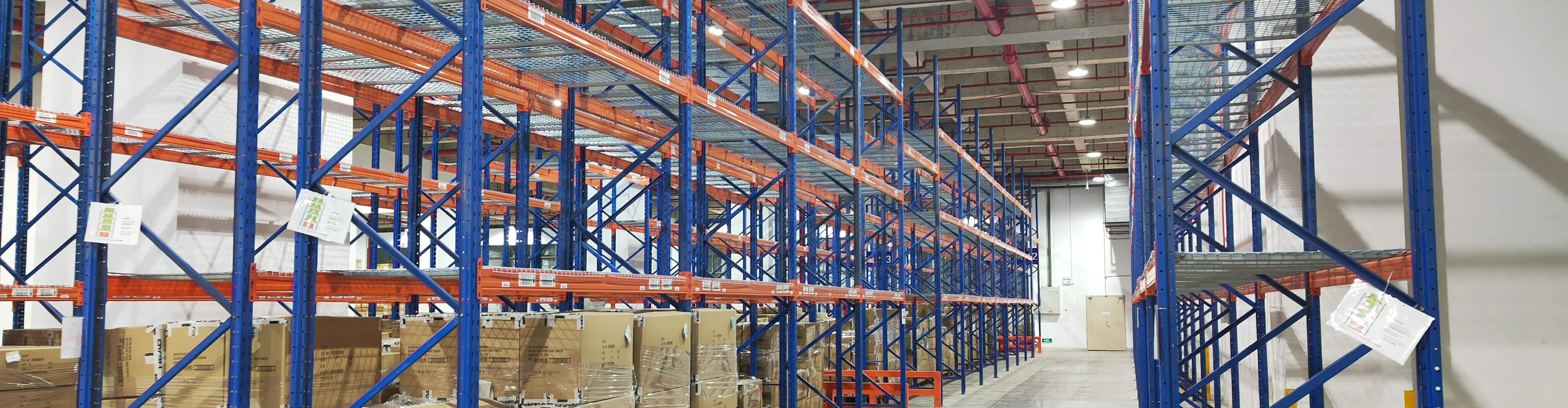
Heavy duty warehouse shelving can hold anything from a few hundred kilograms per shelf to several tonnes per bay, but there is no single universal load figure. Actual capacity depends on shelf dimensions, beam length, upright design, decking material, load distribution, anchoring, floor condition, and how the system is used in daily warehouse operations.
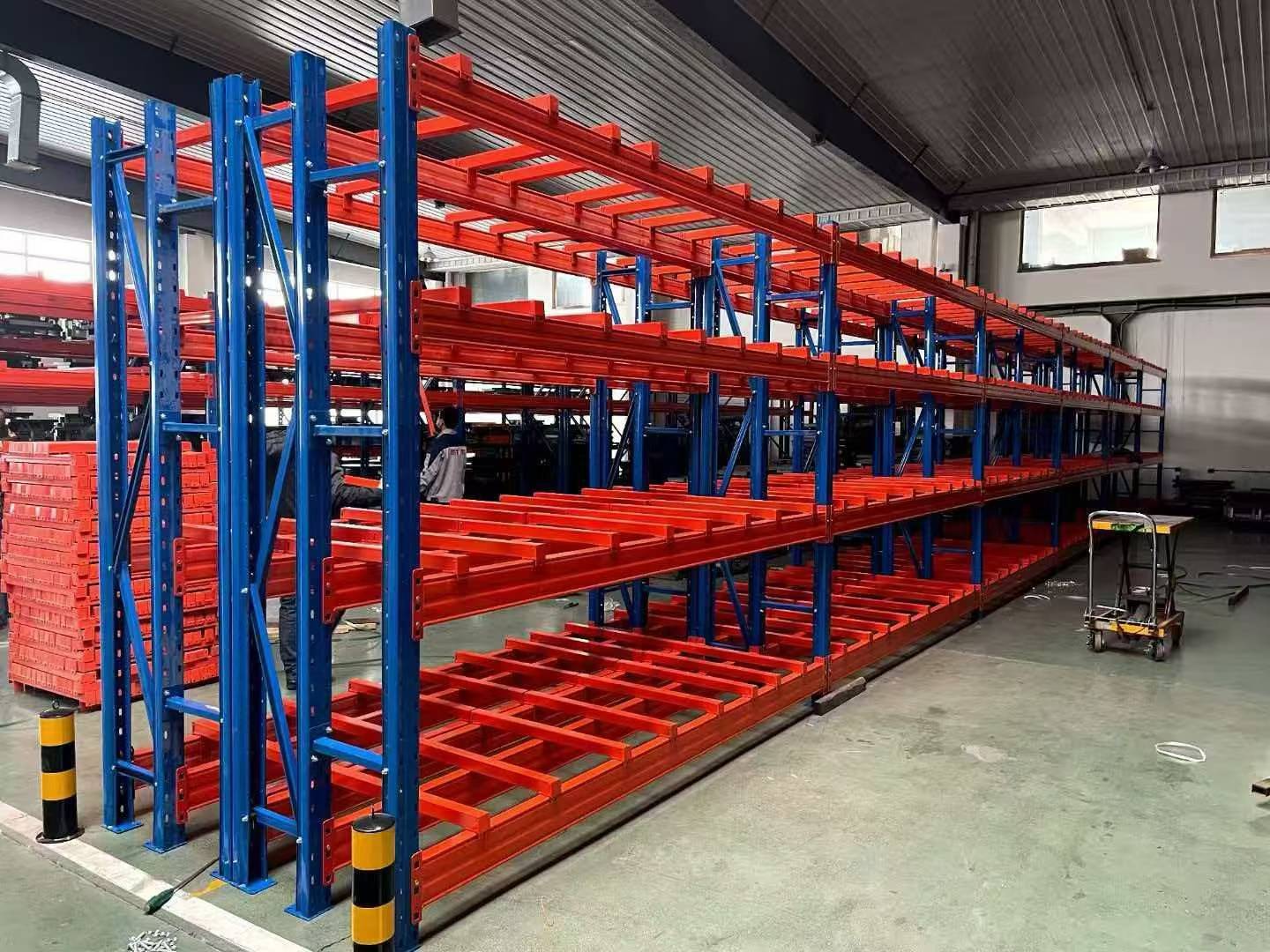
That is the practical answer most buyers need first: load capacity is always system-specific. If you are planning storage based only on a rough advertised figure, you risk under-specifying the shelving, overloading it in use, or paying for more capacity than the operation actually needs.
This guide explains how load capacity is determined, what affects it in real warehouses, and how to evaluate heavy duty warehouse shelving safely before purchase or reconfiguration.
What load capacity means for heavy duty warehouse shelving
When people ask how much weight heavy duty warehouse shelving can hold, they are usually referring to one of three different ratings:
- Per shelf level load – the maximum weight one shelf can safely carry.
- Per bay load – the total weight the complete shelving bay can carry across all levels.
- Floor load impact – the total load transferred to the slab through the uprights and baseplates.
These are not interchangeable. A shelving bay may have shelf levels that appear strong enough individually, but the full bay load could still be limited by the uprights or by the floor. In many projects, the floor and the frame become the real limiting factors, not the shelf panels themselves.
For that reason, warehouse managers should always ask for the load rating of each level and the total bay capacity, not just a broad description such as “heavy duty.”
The main factors that determine load capacity
1. Upright frame strength
The uprights carry the accumulated weight from all shelf levels down to the floor. Their height, profile, steel thickness, bracing pattern, and anchoring method all affect how much the bay can safely support. Taller bays generally need more careful design because slender frames are more sensitive to deflection and instability.
In practice, a shelving system designed for a low-rise stockroom may not be suitable for a taller warehouse installation even if the shelf levels look similar.
2. Beam or shelf support design
In boltless shelving and longspan shelving, beams transfer the load from the shelf surface into the frames. Longer beam spans usually reduce level capacity unless heavier sections are used. This is one reason why bay width matters so much when specifying heavy duty warehouse shelving.
If the operation stores dense cartons, metal parts, or drums, shorter spans with stronger beam sections often make more sense than trying to maximize width on each level.
3. Shelf material and decking type
The shelf surface matters as much as the frame. Steel panels, particle board, wire mesh, and reinforced decks do not perform the same way under the same load. Some deck types are suitable for evenly distributed cartons, while others are less suitable for concentrated point loads such as tooling, castings, or machine components.
A common planning mistake is to assume the frame rating automatically applies to any shelf insert. It does not. The deck itself must be rated for the intended load pattern.
4. Load distribution
Published capacities usually assume an evenly distributed load. Real warehouse conditions are often different. If operators place very heavy items in one section of the shelf, stack goods unevenly, or create point loads from bins or containers, the effective safe capacity can be lower.
This is especially relevant for mixed-SKU environments where shelf contents change frequently. A shelving bay used for uniform cartons is easier to load correctly than one used for irregular spare parts or dense industrial items.
5. Shelf height and bay configuration
As shelving gets taller, stability, sway, and access method become more important. A manually picked shelving bay at moderate height behaves differently from a high shelving run accessed with equipment. More levels also increase cumulative frame loading.
When buyers compare quotations for heavy duty warehouse shelving, they should avoid looking only at shelf-level capacity. A taller multi-level configuration may require a stronger frame even if each individual level carries the same weight.
6. Anchoring and floor condition
Even a well-designed shelving system can perform poorly if installed on an unsuitable floor. Uneven slabs, cracked concrete, poor anchoring, or inadequate base support can reduce safety margins. In older buildings, floor condition should be checked early in the planning stage, especially if the shelving will carry dense goods.
This is one of the most overlooked issues in warehouse fit-outs. Buyers focus on steel specification but forget that the slab is part of the load path.
Typical loading scenarios in real warehouse use
The right capacity for heavy duty warehouse shelving depends on what is being stored and how the stock is handled. A few common examples illustrate why there is no single answer.
Carton and case storage
For hand-loaded carton storage, the issue is often not maximum structural load but practical accessibility. If cartons are stacked too densely or too high on each level, pick efficiency drops and damage risk increases. In these environments, moderate shelf loads with clear SKU visibility are usually more useful than extremely high load ratings.
Parts and component storage
Industrial parts storage can create high shelf loads quickly, especially with metal components, motors, fittings, or tooling. Here, point loading becomes critical. Shelving should be specified around the heaviest realistic shelf condition, not average inventory weight.
Archive or records storage
Archive boxes may look light individually but can create substantial bay loads when stacked across many levels. Tall shelving runs for records storage should be checked for total bay loading and access safety, particularly if operators use ladders or mobile steps.
Backroom or e-commerce picking
In fast-pick operations, shelving often carries mixed goods with frequent replenishment. Capacity still matters, but workflow matters too. Over-specifying load can increase cost unnecessarily if the real priority is pick face access, SKU density, and replenishment speed.
Why advertised load ratings can be misleading
Some buyers see a broad statement such as “500 kg per shelf” and assume that is enough to compare products. It rarely is. Load ratings can be misleading if the conditions behind them are not clear.
Important questions include:
- Is the stated rating per shelf or per bay?
- Does it assume evenly distributed loading?
- What shelf span and depth was used?
- What is the bay height?
- What type of decking was included in the rating?
- Was the system anchored as installed?
- Are there limits on beam deflection or shelf deflection?
If those details are missing, the number has limited value for procurement decisions. For commercial projects, heavy duty warehouse shelving should be assessed as a complete installed system, not as an isolated component rating.
How to estimate the capacity you actually need
Start with the heaviest SKU, not the average
Many storage plans fail because they are based on average product weight. Warehouse shelving should be designed around the heaviest realistic shelf condition, including seasonal peaks, replenishment overstock, and the possibility of operators placing similar heavy items together.
Calculate per level and per bay
Work out the likely maximum load on one shelf level, then multiply across levels to understand the full bay load. This helps identify whether the shelf surface, beams, or uprights are the limiting factor.
Consider future product mix changes
If the operation may add denser stock later, build in sensible capacity headroom. That does not mean buying the highest possible specification. It means allowing for realistic business growth without forcing an early replacement.
Review handling method
Manual loading, trolley loading, and forklift-supported replenishment create different risks. If stock is placed quickly or with limited visibility, impact and uneven loading become more likely. The more aggressive the handling environment, the less wise it is to design too close to the theoretical maximum.
Operational limits matter as much as structural limits
A shelving system may be structurally capable of carrying a high load, but that does not automatically make it operationally suitable. In many warehouses, the better question is not “What is the maximum load?” but “What load can we use safely and efficiently every day?”
For example, very heavy shelf loads can create problems with:
- manual handling and ergonomics
- slow replenishment
- reduced pick speed
- higher damage risk during loading
- difficulty inspecting lower levels
- floor congestion if stock is staged nearby
This is why experienced planners balance load capacity with access, workflow, SKU profile, and replenishment method. More capacity is not always better if it makes the shelving harder to use or maintain.
Common mistakes when specifying heavy duty warehouse shelving
Choosing by headline capacity only
A single load figure does not tell you whether the system suits your stock, layout, or operating method. Always review the full bay configuration.
Ignoring floor loading
Dense shelving can transfer significant load through relatively small base areas. This is particularly important on mezzanines, older slabs, or buildings with unknown floor limitations.
Overlooking load distribution
If inventory is irregular, the shelf should be suitable for the actual loading pattern, not just uniform test conditions.
Underestimating future changes
Businesses often add heavier SKUs, increase stockholding, or change picking methods. A shelving specification that is too tight can limit expansion.
Using shelving where pallet racking is more appropriate
Heavy duty warehouse shelving is useful for hand-loaded goods, bins, cartons, parts, and some non-palletized inventory. It is not a substitute for pallet racking when the operation stores full pallets handled by forklifts. Using the wrong system can create safety and efficiency issues.
When heavy duty warehouse shelving is a good fit
Heavy duty warehouse shelving is typically a good fit when the warehouse needs accessible storage for non-palletized inventory, medium to heavy cartons, spare parts, picking bins, tools, or archive items. It works well where operators need direct access to individual SKUs and where stockholding is too heavy for light shelving but does not justify pallet racking on every line.
It may be less suitable where inventory is palletized, where very high bay heights are required, or where storage density is the main priority. In those cases, pallet racking, multi-tier systems, or a different storage layout may be more appropriate.
Practical checks before buying or reconfiguring shelving
- List the heaviest items expected on each shelf level.
- Confirm whether loads are evenly distributed or concentrated.
- Check required shelf width, depth, and clear loading height.
- Review total bay load, not just per level load.
- Assess slab condition and anchoring requirements.
- Consider aisle width, picking method, and replenishment access.
- Allow for future SKU changes and additional levels if needed.
- Make sure load notices are available and understandable for operators.
If existing shelving is being reused or modified, it is especially important to verify compatibility of added levels, beam lengths, and decking types. Mixing components without checking load implications can create avoidable risk.
FAQ
How much weight can one shelf usually hold?
There is no standard figure. One shelf in a heavy duty warehouse shelving system may hold a few hundred kilograms or significantly more, depending on span, depth, deck type, and load distribution.
Is heavy duty warehouse shelving the same as pallet racking?
No. Heavy duty shelving is generally intended for hand-loaded or manually accessed goods. Pallet racking is designed for palletized loads handled by forklifts or similar equipment.
Can I increase capacity by adding thicker shelf boards?
Not necessarily. Capacity depends on the complete system, including beams, uprights, connectors, and anchoring. Changing one component does not automatically increase the safe load rating.
Does evenly distributed load really matter?
Yes. Most ratings assume the load is spread evenly across the shelf. Concentrated loads or heavy point loading can reduce safe performance.
Should I leave spare capacity for future growth?
Usually yes, but it should be realistic. Sensible headroom can help with product mix changes and stock increases, while excessive over-specification can raise project cost without improving operations.
Conclusion
The amount of weight heavy duty warehouse shelving can hold depends on the full system design and the way it will be used, not on a generic label. Shelf level capacity, bay capacity, load distribution, frame strength, decking type, floor condition, and handling method all affect the answer.
For most commercial buyers, the right approach is to define the heaviest realistic load case, review the total bay loading, and match the shelving specification to actual warehouse workflow. That leads to a safer, more practical system than choosing by a headline capacity figure alone.