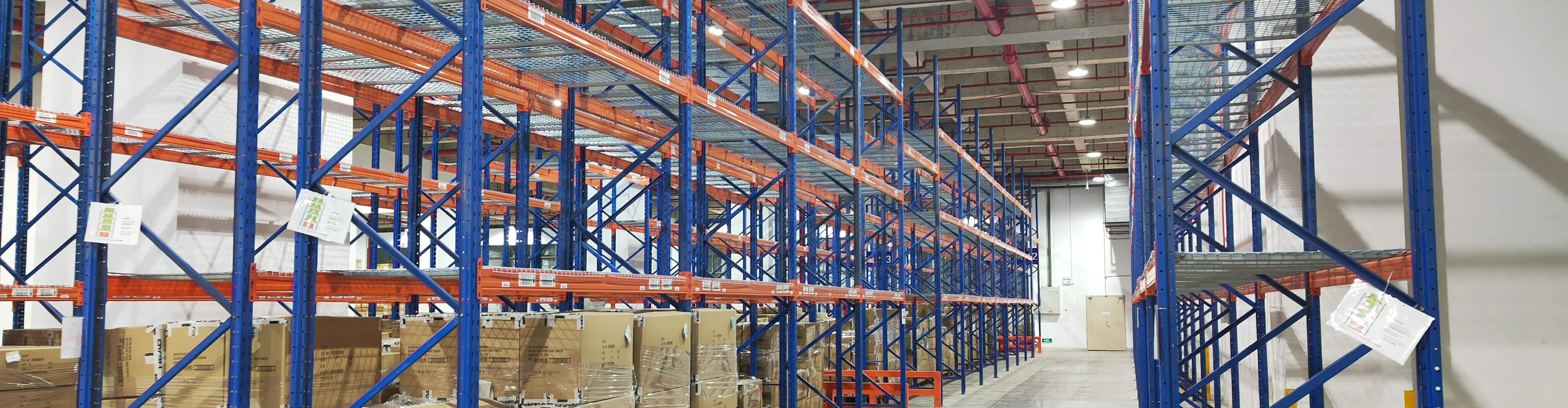
Heavy duty industrial pallet racking is the standard storage system used in many warehouses to store palletized goods safely, accessibly, and at scale. It is designed for higher load capacities than light shelving and is typically selected when a facility needs organized pallet storage, forklift access, vertical space utilization, and room for operational growth.
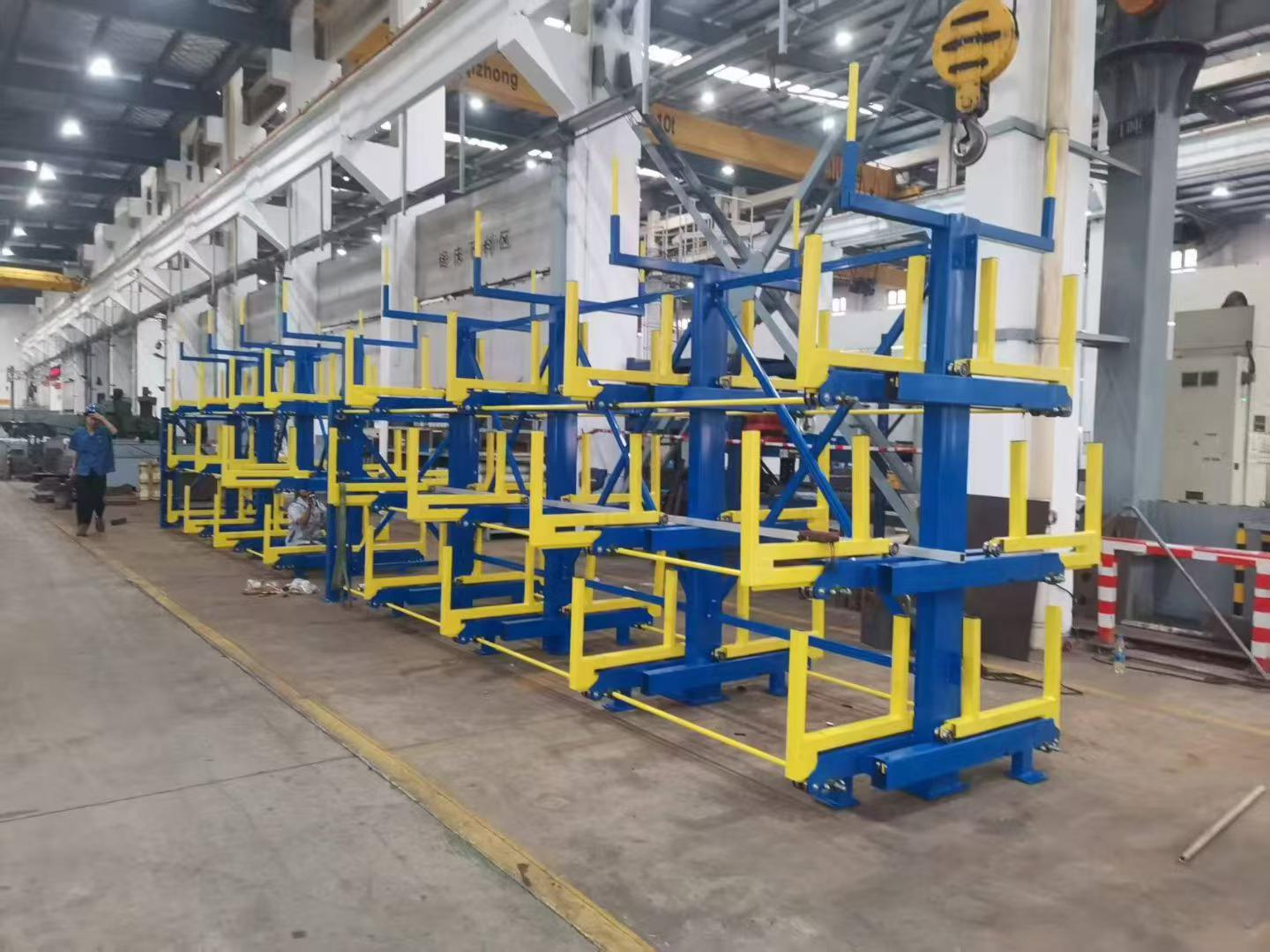
For most modern warehouses, the right racking system is not simply a matter of adding more bays. It affects aisle layout, forklift movement, pallet handling speed, inventory visibility, damage risk, and future expansion. A well-planned system improves storage efficiency and workflow. A poorly planned one creates congestion, unusable locations, and ongoing safety issues.
This guide explains how heavy duty industrial pallet racking works, where it fits best, what buyers and planners should evaluate, and which common mistakes to avoid before installation.
What Is Heavy Duty Industrial Pallet Racking?
Heavy duty industrial pallet racking is a structural storage system made to hold palletized loads in multiple vertical levels. A typical setup includes uprights, beams, base plates, anchors, and optional accessories such as row spacers, pallet supports, mesh decking, column guards, and rack protection barriers.
Its main purpose is to store pallets in a way that balances three priorities:
- Load capacity for heavy goods
- Direct or managed access by forklift or reach truck
- Efficient use of warehouse floor area and clear height
Compared with static shelving, pallet racking is built for larger unit loads and mechanized handling. Compared with floor stacking, it improves selectivity, organization, and vertical utilization, though it requires more planning and stricter load discipline.
Why Modern Warehouses Use Heavy Duty Industrial Pallet Racking
Warehouses today are under pressure to store more inventory without losing control of accessibility and throughput. That is why heavy duty industrial pallet racking remains a core solution across manufacturing, distribution, retail logistics, food packaging, automotive parts, and many other sectors.
Its value comes from practical operational advantages:
- It uses building height more effectively than floor stacking
- It creates defined storage locations for better inventory control
- It supports forklift-based pallet handling
- It can be adapted to different pallet sizes, load heights, and SKU profiles
- It allows phased expansion if future growth is planned properly
That said, not every warehouse should use the same racking layout. A facility with fast-moving full pallets has different needs from one with mixed picking, irregular pallets, or limited truck maneuvering space.
Main Types of Heavy Duty Industrial Pallet Racking
Selective pallet racking
This is the most common form of heavy duty industrial pallet racking. Each pallet position is directly accessible, making it suitable for warehouses with many SKUs and frequent picking from different locations.
It is often the practical choice when selectivity matters more than maximum density. The trade-off is that it requires more aisle space than high-density systems.
Drive-in and drive-through racking
These systems increase storage density by reducing aisle count. Forklifts enter the rack structure to place and retrieve pallets on rails. They can work well for large volumes of similar products with lower SKU variety.
They are less suitable where stock rotation is complex, pallet quality is inconsistent, or impact risk is already a concern. They also require disciplined forklift operation and clear loading procedures.
Double deep pallet racking
Double deep layouts store pallets two positions deep, improving density compared with selective racking. However, access becomes less direct, and the warehouse may need specialized handling equipment or attachment configurations.
This layout makes more sense when some loss of selectivity is acceptable in exchange for better cube utilization.
Narrow aisle and very narrow aisle configurations
These layouts use reduced aisle widths to fit more racking into the same floor area. They can significantly improve storage capacity, but they also place stricter demands on truck selection, floor flatness, operator discipline, and traffic planning.
If the building layout, forklift fleet, or maintenance support is not ready for tighter tolerances, narrow aisle designs can create operating friction rather than efficiency.
How to Decide If Heavy Duty Industrial Pallet Racking Is the Right Fit
The right question is not whether heavy duty industrial pallet racking is useful in general. The right question is whether it fits your inventory profile, handling method, and warehouse constraints.
1. Pallet type and load consistency
Start with the actual loads being stored. Pallet dimensions, pallet quality, overhang, load stability, and unit weight all affect rack design and beam level planning. Mixed pallet sizes can reduce usable capacity if beam spacing is not planned carefully.
If pallets are damaged, undersized, or inconsistent, the issue is not only storage efficiency. It also affects safe placement and retrieval.
2. SKU mix and access requirements
If the warehouse stores many SKUs and needs direct access to most pallet positions, selective heavy duty industrial pallet racking is usually easier to manage. If the operation stores large runs of the same product, denser systems may be worth evaluating.
High-density storage can improve capacity, but only if stock rotation, replenishment, and retrieval patterns support it.
3. Forklift type and aisle width
Racking should be planned around the actual handling equipment, not assumed equipment. Counterbalance forklifts, reach trucks, articulated trucks, and VNA trucks all require different aisle widths, turning behavior, and lift clearances.
A common planning mistake is to maximize rack rows on paper and then discover that real-world maneuvering is slow or unsafe.
4. Building height and clearances
Available clear height strongly affects the value of a racking project. More height can increase storage positions, but only if lift equipment can reach safely and the top beam levels remain practical to use.
Roof structure, lighting, sprinklers, columns, dock zones, and fire access clearances all need to be considered before finalizing rack elevation.
5. Floor condition and load distribution
Racking performance depends on the floor below it. Slab condition, levelness, and point load capacity matter, especially in taller or denser layouts. Even a well-designed rack can become problematic if the floor is not suitable for the intended loads and truck traffic.
This is one reason early site review is important before selecting a final heavy duty industrial pallet racking layout.
Operational Benefits and Real-World Trade-Offs
Benefits
- Better use of vertical warehouse space
- Cleaner pallet organization and location control
- Faster full-pallet access in well-planned layouts
- Compatibility with barcode-based inventory systems
- Scalability for phased warehouse growth
Trade-offs
- Higher dependency on pallet quality and forklift discipline
- Potential for upright and beam impact in busy operations
- Reduced flexibility if future load types change significantly
- Need for regular inspection, maintenance, and load control
- Layout inefficiency if aisle widths are planned without reference to actual equipment
In practice, heavy duty industrial pallet racking performs well when the warehouse has stable operating rules, consistent pallet handling, and a clear slotting strategy. It becomes less efficient when loads vary widely, locations are poorly labeled, or operators are forced to work in aisles that are too tight for safe movement.
Planning Considerations Before Installation
Map the product and movement profile
Do not plan the rack only around floor dimensions. Review inbound pallet volumes, average pallet height, fast- and slow-moving SKUs, replenishment frequency, and whether the system will support reserve storage, picking support, or both.
A warehouse storing reserve pallets above picking faces may need a different bay configuration than one handling mostly full-pallet outbound orders.
Set realistic beam levels
More beam levels do not always mean better storage. If lift truck visibility, pallet stability, or top-level access becomes difficult, theoretical capacity may not translate into usable capacity.
Usable storage is more valuable than nominal storage that operators avoid because it is slow or risky to access.
Allow for protection and maintenance access
End-of-aisle guards, upright protection, and impact barriers are not optional extras in many active warehouses. They help reduce repair frequency and downtime. Maintenance access also matters. If damaged components cannot be reached or replaced easily, small issues may remain in service longer than they should.
Plan for future change
Many warehouses outgrow their original layout faster than expected. If expansion is likely, consider whether the chosen heavy duty industrial pallet racking system can be extended, reconfigured, or integrated with future operational changes such as narrower aisles, different forklifts, or SKU growth.
Common Mistakes When Selecting Heavy Duty Industrial Pallet Racking
- Choosing a layout based only on maximum pallet count
- Ignoring forklift turning space and lift clearances
- Using inconsistent or damaged pallets without addressing handling risk
- Failing to match the rack design to actual load weights and dimensions
- Overlooking floor condition, anchors, and base load implications
- Skipping rack protection in high-traffic areas
- Adding beam levels that are technically possible but operationally impractical
- Not defining inspection and damage reporting procedures after installation
Most of these mistakes come from treating racking as a static fixture rather than part of the warehouse operating system. Storage, handling, safety, and maintenance all interact.
Inspection, Maintenance, and Safety Priorities
Even the right heavy duty industrial pallet racking system needs routine inspection. Daily use exposes racks to forklift impact, pallet scraping, overloaded beams, missing locks, and anchor damage. Small issues can become structural concerns if they are ignored.
What warehouse teams should review regularly
- Visible upright damage or twisting
- Beam deflection, displacement, or missing safety locks
- Loose or damaged anchors and base plates
- Missing protection components or damaged guards
- Pallet overhang and load stability on beam levels
- Unauthorized changes to beam height or bay configuration
- Obstructions affecting aisle access or emergency routes
Inspection routines should be simple enough to follow consistently. Operators should know how to report rack damage, and managers should know when a bay should be unloaded and assessed rather than left in use.
Good housekeeping also matters. Debris, broken pallets, and poor aisle discipline increase impact risk and make rack damage easier to miss.
When Heavy Duty Industrial Pallet Racking May Be Less Suitable
Although heavy duty industrial pallet racking is widely used, it is not automatically the best answer for every warehouse.
It may be less suitable when:
- The operation relies heavily on carton picking rather than pallet storage
- Inventory turns are very low and floor block stacking is more economical
- Pallet quality is poor and cannot be controlled
- The building has severe height, column, or floor limitations
- The business needs very high-density storage for a small number of product lines and can accept reduced selectivity
In these cases, a different storage mix may be more effective, such as combining pallet racking with shelving, cantilever storage, mezzanine-supported picking areas, or denser pallet systems for selected products.
How Buyers Can Evaluate Suppliers and Proposals
When comparing proposals for heavy duty industrial pallet racking, buyers should look beyond price per bay. A lower upfront figure can become expensive if the layout creates wasted space, difficult access, frequent impacts, or early modification costs.
Useful questions to ask
- How has the layout been matched to pallet sizes, truck type, and aisle requirements?
- What load assumptions are being used for each beam level and bay?
- What protection accessories are recommended for traffic areas?
- How easy is it to expand or reconfigure the system later?
- What installation tolerances, floor requirements, and anchoring details need to be reviewed on site?
- What inspection guidance and replacement support are available after installation?
A good proposal should show practical understanding of warehouse operation, not only a materials list.
FAQ
What is the main advantage of heavy duty industrial pallet racking?
The main advantage is organized vertical storage for palletized goods with forklift access. It helps warehouses store more pallets in a controlled layout while improving inventory visibility and access compared with floor stacking.
Is selective racking always the right choice?
No. Selective racking is often the easiest system to manage for mixed SKUs, but it is not the densest option. Warehouses storing large volumes of similar products may benefit from higher-density layouts if stock rotation and handling conditions allow it.
How important is pallet quality in a racking system?
Very important. Damaged or inconsistent pallets can create loading problems, increase impact risk, and reduce safe support on beam levels. Rack performance depends partly on the condition of the pallets being stored.
Can a warehouse add more beam levels later?
Sometimes, but only if the rack design, clearances, floor conditions, and handling equipment support the change. Extra levels should not be added without reviewing load and operational implications.
Conclusion
Heavy duty industrial pallet racking is a practical foundation for modern warehouse storage when it is matched to real operating conditions. The right system supports pallet access, vertical capacity, workflow efficiency, and future growth. The wrong system usually fails for predictable reasons: poor load planning, unrealistic aisle design, weak pallet control, or lack of inspection discipline.
For warehouse managers and buyers, the most effective approach is to evaluate racking as part of the full operation. Look at pallet type, SKU mix, forklift movement, building constraints, safety exposure, and expansion plans together. That is how heavy duty industrial pallet racking delivers long-term value instead of becoming a layout problem that has to be corrected later.