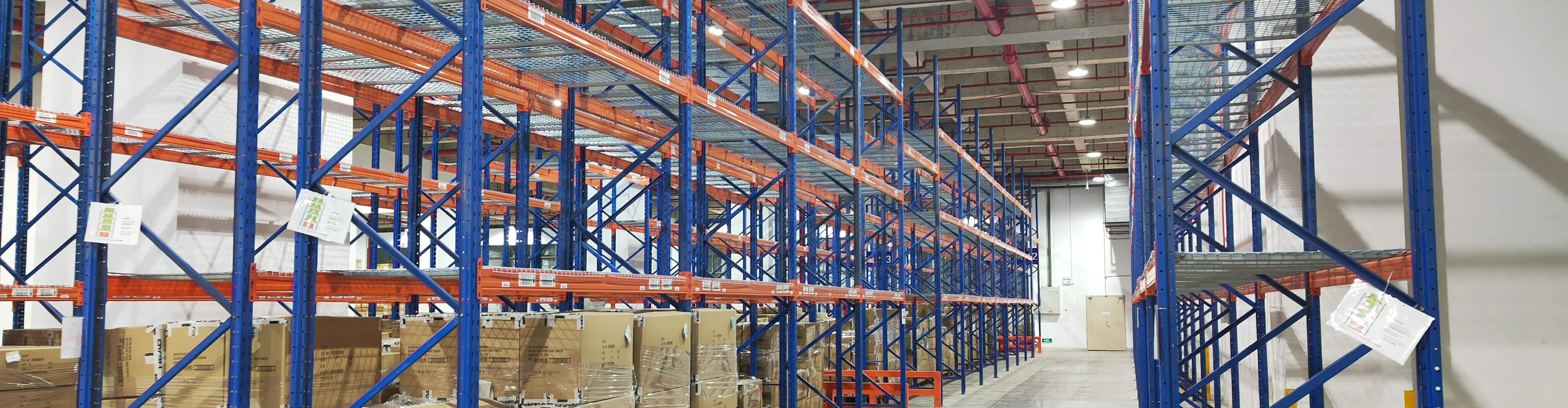
The best heavy duty industrial shelving for warehouse storage depends less on a single product type and more on how the warehouse actually operates. For most businesses, the right choice is the shelving system that matches load weight, SKU profile, picking method, available floor space, ceiling height, and future expansion plans. In practice, wide-span shelving, longspan shelving, boltless shelving, and pallet-supported shelving each suit different storage tasks, and choosing the wrong one usually creates access problems, wasted space, or avoidable safety risks.
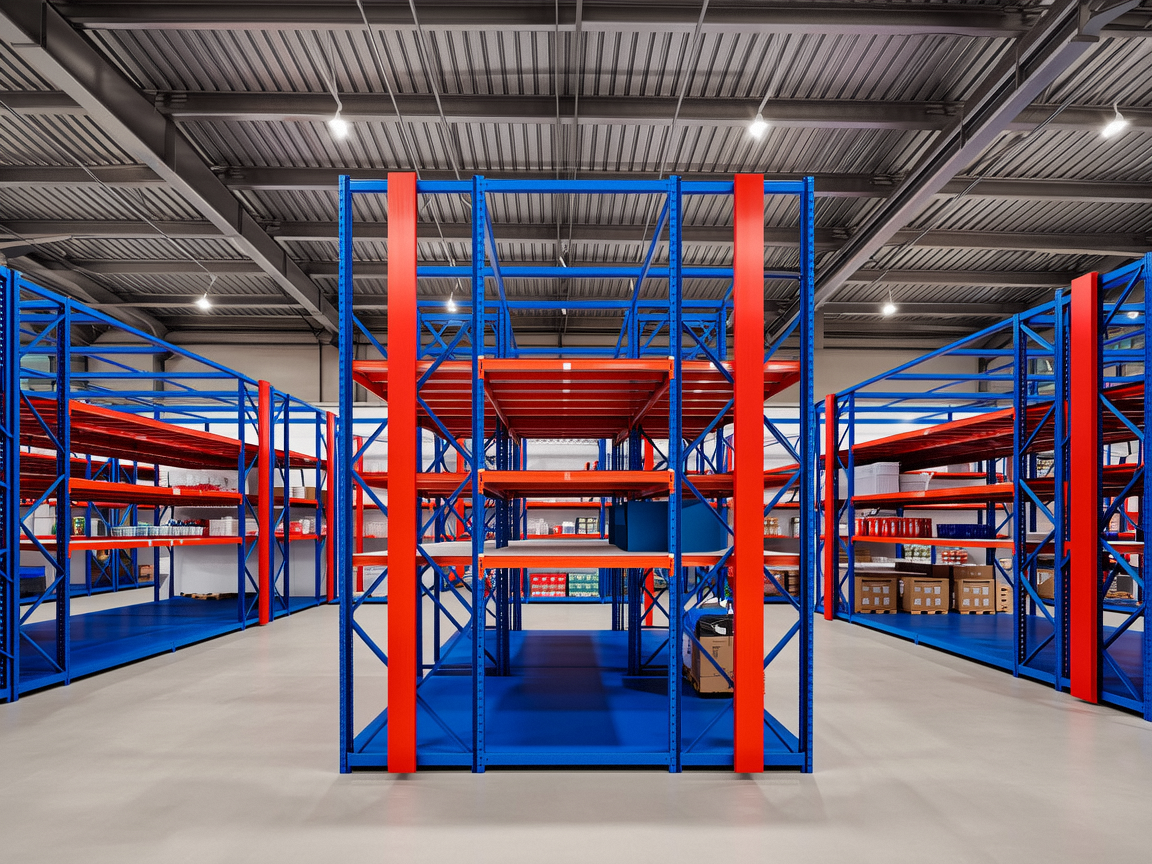
If you are evaluating heavy duty industrial shelving, the key question is not simply which system is strongest. The better question is which shelving layout will support your inventory flow, picking speed, and load requirements without making the warehouse harder to manage. That is where a practical selection process matters.
What heavy duty industrial shelving means in a warehouse setting
Heavy duty industrial shelving is a storage system designed for commercial and industrial use where shelves must carry higher loads than standard office or retail shelving. It is commonly used for cartons, bins, parts, tools, archive boxes, spare components, and sometimes mixed inventory that is too small or too varied for pallet racking alone.
Unlike light shelving, heavy duty industrial shelving is built for repetitive warehouse use. That means stronger uprights, thicker beams or shelf supports, better stability, and layouts that can handle frequent loading and picking. In many warehouses, it fills the gap between static shelving for hand-loaded goods and pallet racking for forklift-handled pallets.
This is why heavy duty industrial shelving is often selected for:
- Hand-picked inventory with medium to high SKU variety
- Bulk carton storage
- Spare parts and maintenance stores
- E-commerce and order fulfillment picking areas
- Back-of-house warehouse storage where pallet access is not needed on every level
- Mixed storage environments that combine shelving and pallet racking
What is the best heavy duty industrial shelving for warehouse storage?
For most warehouse operations, longspan shelving is often the most practical heavy duty industrial shelving option because it balances load capacity, shelf adjustability, accessibility, and cost. It works well for hand-loaded cartons, archive boxes, parts, and medium-bulk inventory. However, it is not automatically the best for every warehouse.
The best heavy duty industrial shelving depends on the use case:
- Longspan shelving is usually the most versatile for general warehouse storage.
- Boltless shelving suits lighter-duty picking areas where flexibility and quick adjustment are important.
- Wide-span shelving works well for larger cartons, irregular stock, and medium-load storage.
- Multi-tier shelving is often the better choice when floor space is limited but ceiling height is available.
- Pallet racking with shelving levels may be more suitable when inventory includes both hand-picked stock and palletized goods.
So the answer is not one universal shelving system. The best heavy duty industrial shelving is the one that supports the warehouse workflow without creating congestion, underused vertical space, or unsafe loading practices.
Main factors to evaluate before choosing heavy duty industrial shelving
1. Load weight per shelf and per bay
The first decision point is load capacity. Buyers should know the expected weight on each shelf level, the total load per bay, and whether weight will be evenly distributed or concentrated in certain areas. This matters because some shelving layouts perform well with uniformly packed cartons but are less suitable for dense metal parts, tools, or other high-weight stock.
A common mistake is choosing heavy duty industrial shelving based on overall appearance rather than actual load planning. If shelf boards sag, beams are underspecified, or operators place dense items on upper levels, the system becomes harder to use safely and may require early reinforcement or reconfiguration.
2. Inventory profile and SKU mix
If the warehouse stores many SKUs in smaller quantities, heavy duty industrial shelving often makes more sense than pallet racking because it provides direct access to individual items. If the operation stores a small number of SKUs in high volume on pallets, shelving may use space inefficiently compared with pallet racking.
Ask practical questions such as:
- Are items picked by hand or by forklift?
- Are products stored in cartons, bins, totes, or loose units?
- Do stock dimensions vary significantly?
- Will fast-moving SKUs need lower, more accessible shelf positions?
The wider the variation in product size and turnover, the more important shelf adjustability becomes.
3. Picking method and labor efficiency
Heavy duty industrial shelving is often chosen for picking operations, so the layout should support the way staff actually work. A shelving system that looks efficient on a drawing can become slow in practice if pick faces are too deep, shelf heights are awkward, or aisles are too narrow for carts or ladders.
For hand-picking environments, the best heavy duty industrial shelving usually allows clear visibility, quick access, and safe replenishment. If workers frequently bend, overreach, or climb unsafely to access stock, the problem is often not the product itself but the shelving design and level allocation.
4. Available floor space and building height
Warehouse storage decisions should always consider both footprint and vertical space. In low-rise buildings, standard heavy duty industrial shelving may be enough. In taller facilities, a multi-tier arrangement can increase storage capacity without expanding the building footprint.
That said, adding height is not always the best answer. More vertical storage can slow picking, increase replenishment complexity, and require stricter safety controls. A taller system only makes sense if access equipment, workflow, and stock profile support it.
5. Aisle width and equipment movement
Shelving must fit the traffic pattern of the warehouse. If operators use hand trolleys, pallet jacks, ladders, or order-picking carts, aisle widths need to reflect real movement requirements. If aisles are too tight, productivity drops and impact damage becomes more likely.
When heavy duty industrial shelving is placed near forklift routes, protection measures and layout separation become important. Shelving intended for hand-loaded stock is often more vulnerable to vehicle impact than pallet racking, especially at aisle ends and corners.
Common types of heavy duty industrial shelving and when they fit
Longspan shelving
Longspan shelving is one of the most common forms of heavy duty industrial shelving because it handles a broad range of warehouse goods and is relatively easy to configure. It is well suited to cartons, bins, spare parts, and medium-bulk items that need direct hand access.
Best suited for:
- General warehouse storage
- Medium to heavy hand-loaded inventory
- Operations with changing stock profiles
- Backroom or spare parts storage
Less suitable for:
- Very high-density pallet storage
- Heavy forklift-only handling
- Operations where every location must be pallet accessible
Boltless shelving
Boltless systems are valued for quick assembly and simple shelf adjustment. In some warehouses, they work well for lighter heavy duty industrial shelving applications, especially where stock changes often and the load profile is moderate rather than extreme.
Best suited for:
- Picking areas with frequent shelf changes
- Small parts and carton storage
- Maintenance rooms and parts departments
Less suitable for:
- Very dense loads
- Rough handling environments
- Areas exposed to frequent impact risk
Wide-span shelving
Wide-span shelving is useful when products are bulky, awkward, or not neatly stored in standard cartons. It offers broader shelf widths and can support inventory that would not fit efficiently in narrower shelving layouts.
Best suited for:
- Larger cartons
- Irregular stock dimensions
- Mixed warehouse inventory
Less suitable for:
- Very small item picking unless bins are well organized
- High-density storage where tighter slotting is needed
Multi-tier shelving
When a warehouse has limited floor area but enough clear height, multi-tier heavy duty industrial shelving can significantly increase storage positions. It is commonly used for high-SKU operations, spare parts storage, and order fulfillment environments.
Best suited for:
- Manual picking operations
- Facilities with good vertical clearance
- Businesses needing more pick faces rather than more pallet positions
Less suitable for:
- Fast pallet throughput operations
- Warehouses with poor mezzanine access planning
- Sites where replenishment to upper levels would be difficult
When heavy duty industrial shelving is a better choice than pallet racking
Heavy duty industrial shelving is usually the better choice when stock is picked by hand, product variety is high, and individual item access matters more than pallet density. It is particularly useful for parts storage, carton picking, and reserve stock that does not justify a full pallet location.
Pallet racking is generally better when goods are stored and moved mainly as pallets by forklift. Trying to use heavy duty industrial shelving for inventory that should really be palletized often leads to poor space use and labor inefficiency. On the other hand, using pallet racking for small-item picking can waste vertical shelf space and slow order assembly.
Many warehouses need both systems. A practical layout often combines pallet racking for reserve stock with heavy duty industrial shelving for split-case or each-pick operations.
Planning mistakes that affect shelving performance
Choosing by price alone
Low initial cost can become expensive if the shelving system does not match the load, access method, or growth plan. The wrong heavy duty industrial shelving may need early modification, additional protection, or a complete layout change.
Ignoring future expansion
Warehouses rarely stay static. SKU count, order volume, and replenishment frequency often change. Buyers should consider whether the heavy duty industrial shelving can be extended, reconfigured, or integrated with additional bays later.
Underestimating floor condition
Even a well-designed shelving layout can perform poorly on an uneven or damaged floor. Stability, leveling, anchoring, and safe load distribution all depend on the actual floor condition. This is especially relevant in older warehouses or buildings that were not originally designed for dense storage.
Using shelf levels inefficiently
One common issue is assigning shelf heights without reference to actual stock dimensions. Oversized vertical gaps waste cubic space, while undersized spacing slows replenishment and causes handling frustration. Good heavy duty industrial shelving design usually starts with the real product profile, not a standard shelf pattern.
Safety, inspection, and maintenance considerations
Even the best heavy duty industrial shelving requires regular checks. Warehouse teams should monitor for damage, loose components, overloaded shelves, missing locking parts, shelf deflection, and impact at exposed positions. A system that is frequently bumped by carts or forklifts needs closer review than shelving in a low-traffic stockroom.
Basic good practice includes:
- Checking that loads are within the intended capacity
- Keeping heavier items on lower levels where practical
- Inspecting uprights, beams, and shelf panels for visible damage
- Replacing damaged parts rather than improvising repairs
- Maintaining clear aisles and access routes
- Reviewing anchoring and stability after layout changes
Safety also depends on operator behavior. If staff use shelves as climbing supports, overload upper levels, or store unstable items loosely, the problem is operational control as much as equipment selection.
How to decide which heavy duty industrial shelving is right for your warehouse
A practical buying process usually works best when it follows a few clear steps:
Define the stock profile. List item sizes, weights, packaging types, and whether goods are hand-picked or moved mechanically.
Map the workflow. Review receiving, replenishment, picking, packing, and dispatch so the shelving supports the real movement of goods.
Measure the space properly. Include clear height, obstructions, fire routes, aisle requirements, and equipment turning areas.
Set load and access priorities. Decide whether the main goal is density, accessibility, flexibility, or speed of picking.
Plan for growth. Consider whether SKU count, order volume, or storage mix is likely to change.
Review safety and maintenance needs. Make sure the chosen heavy duty industrial shelving can be inspected, protected, and used safely in daily operations.
For many businesses, longspan shelving is the most balanced option. But if the operation has high vertical space, a multi-tier system may be more effective. If inventory is mostly palletized, pallet racking with dedicated picking shelves may be the better answer. The right decision comes from warehouse function, not product labels.
FAQ
What is the most versatile heavy duty industrial shelving for warehouses?
Longspan shelving is often the most versatile because it supports a wide range of carton, bin, and parts storage while remaining accessible and adjustable for changing stock profiles.
Is heavy duty industrial shelving suitable for pallet storage?
Usually not as the main solution for full pallet storage. Pallet racking is generally more appropriate when pallets are handled by forklift and need direct access.
How do I know if shelving or racking is the better option?
If inventory is hand-picked and SKU variety is high, heavy duty industrial shelving is often more suitable. If goods are stored mostly on pallets with forklift handling, racking is usually the better fit.
Can heavy duty industrial shelving be expanded later?
Many systems can be extended, but expansion depends on the original design, available floor space, load planning, and whether compatible components remain available.
Final decision takeaway
The best heavy duty industrial shelving for warehouse storage is the system that matches your inventory, picking method, building constraints, and growth plans. In many warehouses, longspan shelving is the most practical starting point because it offers a strong balance of accessibility, capacity, and flexibility. But the right answer changes when stock is bulky, highly varied, palletized, or stored in a building where vertical expansion matters more than floor layout. A good shelving decision should improve storage efficiency without making access, safety, or future changes harder to manage.