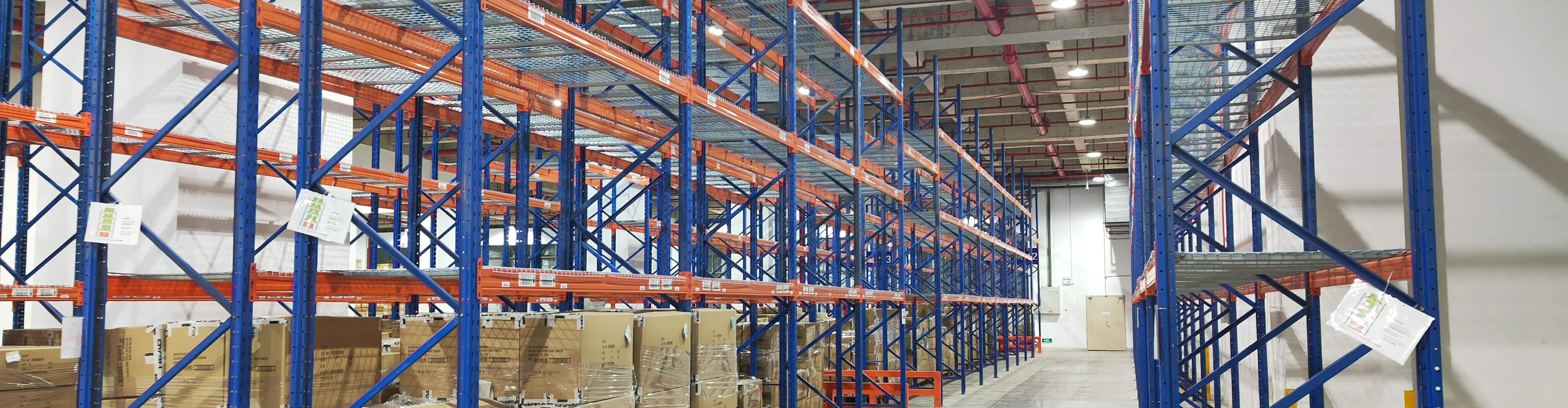
The short answer is that heavy duty industrial shelving can support anything from a few hundred kilograms per shelf to several tonnes per bay, but there is no single safe load figure that applies to every system. Load capacity depends on the shelf dimensions, beam or shelf material, upright design, bay width, shelf spacing, fixing method, floor condition, and how the load is distributed.
That is why the right question is not simply how much weight heavy duty industrial shelving can hold, but how much weight a specific shelving configuration can safely support in your warehouse. For warehouse managers and buyers, that distinction matters. Overloading shelving can lead to deflection, damaged components, unsafe picking conditions, and avoidable downtime.
This guide explains what determines load capacity, how to assess realistic storage requirements, and what practical checks to make before buying or loading a shelving system.
What load capacity means for heavy duty industrial shelving
When suppliers discuss the capacity of heavy duty industrial shelving, they may refer to different load figures. These are not interchangeable, and confusion here is a common cause of poor system selection.
Per shelf load
This is the maximum safe working load for one shelf level. It assumes the shelf is loaded correctly and the weight is spread as intended by the design.
Per bay load
This is the total load that one complete bay can support, including all shelf levels and stored goods combined. A shelf may be rated for a certain load, but the bay itself may have a lower overall limit once multiple levels are filled.
Per frame load
In some systems, the frame or upright load is also specified. This reflects how much weight the vertical structure can carry safely down to the floor.
In practical terms, a warehouse team should always check all three where available. A shelving bay is only as strong as its weakest load-limiting component.
Why heavy duty industrial shelving capacities vary so much
There is a wide range of designs sold as heavy duty industrial shelving. Some are intended for archive boxes, cartons, spare parts, or picking bins. Others are built for dense storage of metal components, tooling, drums, or bulky industrial stock. The label “heavy duty” is useful in a general sense, but it does not provide a reliable load figure by itself.
Capacity varies because shelving performance is affected by structural design and site conditions, including:
- Bay width and shelf span
- Shelf depth
- Number of shelf levels
- Type and thickness of steel
- Upright profile and bracing
- Connector and beam design
- Floor fixing and anchor method
- Whether loads are evenly distributed or concentrated
- Single-sided or double-sided layout
- Manual loading versus mechanical handling exposure
Two shelving systems may look similar in a product image but perform very differently once installed and loaded.
Typical factors that determine safe shelf loading
1. Shelf span
The longer the shelf span between supports, the more bending force the shelf must resist. A wider bay may improve access and reduce the number of uprights, but it usually lowers the load capacity per level unless heavier components are used.
2. Shelf material and reinforcement
Steel shelves, particle board decks, wire decks, and reinforced shelf panels all behave differently under load. Some shelves are designed for uniformly distributed cartons; others are reinforced for heavier point loads. If you are storing motors, castings, dies, or packed machine parts, shelf reinforcement becomes a major decision point.
3. Upright strength
Even if each shelf level appears strong enough, the uprights must safely carry the combined weight of all loaded levels. Taller shelving with more levels may require stronger frames, especially where stock is dense and stored high.
4. Load distribution
A published load rating often assumes a uniformly distributed load. Real warehouses do not always load that way. Heavy items placed at the front edge, in the centre of one section, or on one side of the shelf can change the stress on the structure significantly.
5. Shelf height and bay configuration
As shelving gets taller, stability matters more. High bays with narrow footprints may need careful anchoring and layout planning. If the shelving is used for hand picking at height, access method and safe handling also become part of the assessment.
6. Floor condition
Heavy duty industrial shelving transfers load to the floor. If the slab is uneven, damaged, or not suitable for the point loads created by the shelving feet, the issue is not only the shelf rating. Floor performance can affect alignment, anchoring, and long-term stability.
Evenly distributed load vs point load
One of the most overlooked issues with heavy duty industrial shelving is the difference between an evenly distributed load and a point load.
An evenly distributed load means the weight is spread across the shelf surface. This is the basis for many quoted shelf ratings.
A point load means the weight is concentrated in a small area, such as:
- A gearbox resting on narrow feet
- A die or tool sitting on timber blocks
- A metal component with most of its mass in one corner
- A container with a rigid base concentrating load at contact points
Point loads can exceed the local strength of the shelf deck even if the total item weight is below the published shelf rating. For dense industrial stock, this is a common reason to use reinforced shelf panels, support channels, or a different storage method altogether.
How to estimate the right load requirement for your operation
If you are specifying heavy duty industrial shelving for a new warehouse area or an upgrade, start with your actual stock profile rather than a generic load target.
Review the heaviest SKUs, not the average ones
Average item weight can be misleading. One heavy line stored occasionally can determine the shelf design requirement for the whole bay if stock locations are flexible.
Consider the storage unit, not just the product weight
A carton, tote, stillage insert, or parts bin changes how load is applied to the shelf. The stored product may weigh less than expected, but the container footprint may create high local pressure.
Allow for replenishment practices
If operators top up locations quickly during busy periods, shelves may be loaded temporarily above normal operating levels. Buyers should account for real workflow, not ideal loading discipline.
Plan for future product changes
Warehouses rarely stay static. If your SKU mix may shift toward heavier products, buying shelving with no load margin can become an expensive limitation later.
A practical specification process usually includes:
- Maximum item or container weight per shelf position
- Expected total load per shelf level
- Expected total load per bay
- Product dimensions and footprint
- Loading method and frequency
- Required shelf adjustability
- Available ceiling height and access clearance
When heavy duty industrial shelving is suitable
Heavy duty industrial shelving is often a good fit when goods are too heavy for light shelving but do not need pallet racking. It is commonly used for:
- Manual storage of bulky cartons
- Spare parts and maintenance stock
- Engineering components
- Tooling and workshop inventory
- Picking locations for medium to heavy items
- Back-of-house storage where item access matters more than pallet density
It works well where operators need direct visibility and access to individual items. It is also useful when SKU count is relatively high and full-pallet handling is not the main requirement.
When shelving may not be the right answer
Not every heavy stock profile belongs on heavy duty industrial shelving. In some operations, another system is safer or more efficient.
Very heavy palletised goods
If products are stored and moved primarily by pallet, pallet racking is usually more appropriate. Trying to break heavy pallet loads down onto shelving can create labour, safety, and handling issues.
Long or awkward items
Pipes, bars, timber lengths, and similar products are often better suited to cantilever racking than shelving.
High-density bulk storage
If floor space is tight and stock is better stored in unit loads, shelving may use too much aisle space relative to capacity.
Frequent forklift contact risk
Where lift trucks operate close to shelving, layout protection becomes critical. Some shelving systems are better suited to hand-loaded zones than mixed traffic areas with constant vehicle movement.
Common mistakes that reduce safe load performance
Many shelving problems come from use and layout decisions rather than manufacturing defects. Common issues include:
- Assuming all shelves in a bay have the same safe load regardless of spacing
- Loading heavy items on upper levels for convenience
- Ignoring bay load limits while checking only shelf load limits
- Using shelves for concentrated metal parts without checking point loads
- Installing shelving on uneven or poor-quality floors
- Removing or altering components during reconfiguration
- Failing to anchor or brace the system as required
- Using damaged shelves or uprights after impact
These mistakes are especially common in fast-moving warehouses where shelving evolves over time. A layout that was safe for spare parts can become unsuitable after product mix changes.
Operational factors that affect real-world loading
Picking method
If items are hand-picked, shelf height and product weight affect not only capacity but ergonomics. Heavy stock stored too high creates manual handling risk even if the shelf can technically support it.
Aisle width and access
Narrow aisles can improve storage density, but they can also increase accidental contact if handling equipment works too close to shelving ends. End-of-aisle protection and traffic flow planning matter where heavier shelving is installed.
Ceiling height and vertical use
Taller shelving may seem like an easy way to add capacity, but upper levels are only useful if access equipment, replenishment process, and safety procedures support them. Otherwise, the theoretical extra capacity is not operationally efficient.
Maintenance access
Dense layouts can make inspection harder. If shelving carries heavy stock, you need enough access to check for deflection, damage, loose fixings, and floor-level issues.
What buyers should ask before purchasing heavy duty industrial shelving
Before ordering heavy duty industrial shelving, commercial buyers should ask for clear load information tied to the exact configuration being quoted.
Useful questions include:
- What is the safe working load per shelf level?
- What is the maximum bay load?
- Are ratings based on evenly distributed load?
- How does shelf span affect capacity?
- What deck or shelf material is included in the rating?
- Does the quoted capacity change with shelf spacing or overall height?
- Does the system require floor anchoring?
- What protection is recommended for forklift-adjacent areas?
- What inspection and maintenance checks are advisable after installation?
These questions help prevent a common buying mistake: comparing systems only by price and dimensions while ignoring structural suitability.
How to use load labels and inspections properly
Once installed, heavy duty industrial shelving should be clearly identified and managed. Load notices help operators understand limits, but labels alone are not enough.
A sensible warehouse routine includes:
- Displaying shelf and bay load information where practical
- Training staff not to exceed stated limits
- Checking uprights, shelves, and bracing for visible damage
- Reviewing overloaded or badly distributed stock locations
- Inspecting anchors and base areas for movement or impact signs
- Reassessing capacity after any layout modification
If a bay has been struck, altered, or loaded outside normal conditions, it should be reviewed before continued use. Heavy stock magnifies the consequences of small structural issues.
So, how much weight can heavy duty industrial shelving support?
Heavy duty industrial shelving can support substantial loads, but the safe figure depends entirely on the system design and the way it is used. There is no universal capacity that applies to all shelving sold in this category.
For a realistic answer, you need to confirm:
- The load per shelf level
- The total load per bay
- Whether the rating assumes evenly distributed load
- How your products actually sit on the shelf
- Whether your floor, layout, and handling method suit the system
For business buyers, the safest approach is to specify your heaviest items, storage containers, loading pattern, and operating conditions first, then match the shelving to that requirement. That leads to a system that is not only structurally suitable, but also practical for daily warehouse use.
FAQ
Can heavy duty industrial shelving hold pallet loads?
Usually not as a direct substitute for pallet racking. If goods remain on pallets and are handled by forklift, pallet racking is generally the more suitable system.
Does adding more shelves increase total capacity?
Not automatically. More shelf levels increase the total stored weight, but the bay and upright capacity still limit how much the full structure can safely carry.
Can I store very heavy metal parts on standard shelf panels?
Only if the shelf design and load rating support that use. Dense metal parts often create point loads, which may require reinforced shelves or another storage format.
Why does load distribution matter so much?
Because many load ratings assume weight is spread evenly across the shelf. Concentrated weight can overload part of the shelf even when the total item weight seems acceptable.
Should shelving be checked after reconfiguration?
Yes. Changing shelf heights, bay layout, deck type, or component arrangement can affect safe load performance and should be reviewed before continued use.