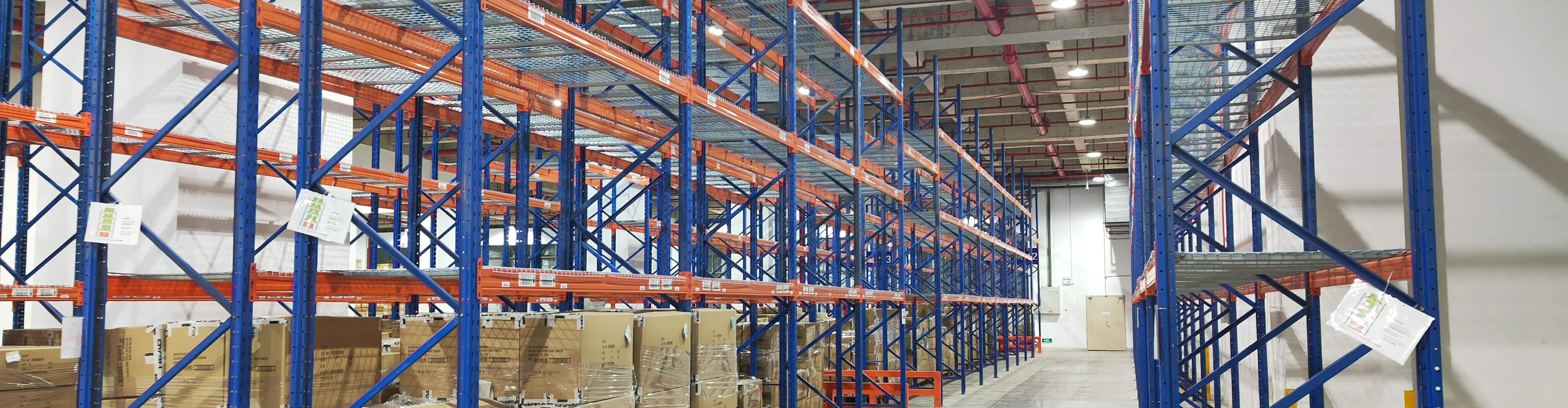
Heavy duty industrial warehouse racking is the core storage infrastructure used in distribution centers that need to store palletized goods safely, use vertical space efficiently, and keep forklift traffic moving without unnecessary delays. For most operations, the right racking solution is not simply the one with the highest load capacity. It is the one that matches pallet type, SKU profile, replenishment flow, picking method, aisle strategy, and future expansion plans.
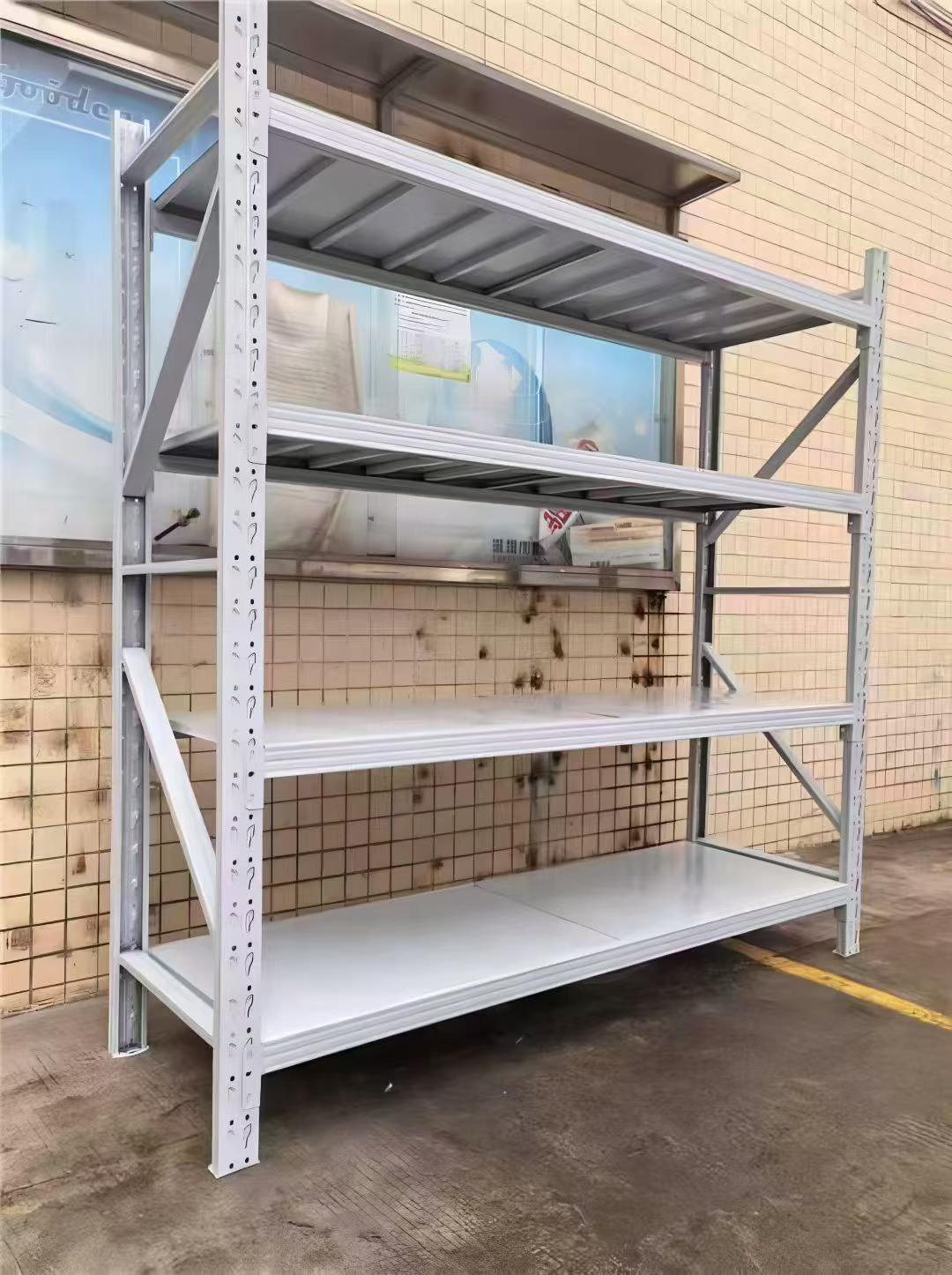
Distribution centers operate under different pressures than small stockrooms or light-duty warehouses. They often handle higher pallet volumes, tighter dispatch windows, larger forklift fleets, and more frequent stock rotation. That means heavy duty industrial warehouse racking must support both storage density and day-to-day operational access. A system that looks efficient on paper can become restrictive if it creates congestion, slows replenishment, or makes inspections difficult.
This guide explains how to evaluate heavy-duty racking solutions for distribution environments, where each system fits, what trade-offs to expect, and what buyers should review before making a layout or purchasing decision.
What heavy duty industrial warehouse racking means in a distribution center
Heavy duty industrial warehouse racking typically refers to pallet racking systems designed to store substantial loads in commercial and industrial settings with regular mechanical handling. In distribution centers, these systems are usually selected for full-pallet storage, reserve stock, fast replenishment, and sometimes integrated picking operations.
The main purpose is straightforward: maximize usable cube while keeping pallets accessible and stable. In practice, the decision is more complex because different rack types solve different problems. Some improve direct access to every pallet. Others increase storage density by reducing aisle space. Some support FIFO stock rotation more naturally, while others are better suited to LIFO inventory handling.
For a distribution center, the most suitable heavy duty industrial warehouse racking layout depends on how inventory moves, not just how much inventory is stored.
Key decision factors before selecting a racking system
Before comparing rack types, buyers should define the operating conditions clearly. This avoids choosing a system based only on available floor area or headline storage capacity.
Pallet type and load consistency
Start with pallet dimensions, pallet quality, and load overhang. Mixed pallet sizes, damaged pallets, or unstable loads can affect beam spacing, level heights, and the suitability of high-density systems. A distribution center with uniform pallets usually has more flexibility than one handling irregular inbound loads from multiple suppliers.
SKU count and stock rotation
High-SKU operations usually need more selectivity. If many SKUs are stored in small to medium quantities, direct access becomes more valuable than maximum density. Lower-SKU environments with deeper stockholding may justify denser configurations.
Forklift type and aisle width
Counterbalance trucks, reach trucks, and very narrow aisle equipment all place different demands on aisle planning and rack clearances. Heavy duty industrial warehouse racking should be selected with real truck maneuvering space in mind, not just theoretical aisle measurements.
Ceiling height and vertical use
Clear building height affects how much value you can get from the system. In many distribution centers, the true gain comes from using vertical storage properly, but only if lift equipment, pallet quality, and load stability can support higher operations safely.
Picking method
If the facility combines reserve pallet storage with case picking or split-case picking, the rack design may need lower pick faces, carton flow levels, or a separate picking zone. Not every heavy duty industrial warehouse racking system handles mixed picking requirements efficiently.
Growth and layout flexibility
Distribution centers rarely stay static. Product mix changes, customer demand shifts, and throughput often increases over time. A system that is too rigid may create future rework costs, especially if beam levels, aisle plans, or storage depth are difficult to adapt.
Common heavy duty industrial warehouse racking solutions for distribution centers
Selective pallet racking
Selective pallet racking is often the starting point for distribution operations because it provides direct access to every pallet location. This makes it practical for high-SKU inventory, frequent replenishment, and operations where stock visibility matters.
For many facilities, selective heavy duty industrial warehouse racking offers the best balance between accessibility, simplicity, and operational control. It is easier to inspect, easier to re-slot, and generally easier to manage when SKU profiles change.
Best fit:
- High SKU variety
- Frequent pallet access
- Mixed inventory turnover
- Warehouses that need flexible slotting
Limitations:
- Lower storage density than deep-lane systems
- More aisle space required
- May be less space-efficient in buildings with expensive floor area
Drive-in and drive-through racking
Drive-in systems improve density by reducing the number of aisles and storing pallets in deep lanes. Forklifts enter the rack structure to place and retrieve loads. Drive-through is similar but accessible from both sides.
This type of heavy duty industrial warehouse racking can work for distribution centers holding large volumes of the same SKU, especially where storage density is a higher priority than selectivity. It is less suitable when inventory is highly varied or when pallet condition is inconsistent.
Best fit:
- Low SKU count with larger pallet volumes
- Bulk storage zones
- Operations seeking denser storage than selective racking
Limitations:
- Reduced selectivity
- Higher risk of rack impact from forklift entry
- More discipline required in pallet quality and lane management
- Can be slower to manage if stock rotation is complex
Push back racking
Push back racking stores pallets on nested carts or rails so that pallets are loaded and retrieved from the same aisle face. It increases density while keeping forklift handling outside the rack structure.
For some distribution centers, push back heavy duty industrial warehouse racking is a practical middle ground between selective access and high-density storage. It works well where multiple pallets per SKU are stored and quick access is still important.
Best fit:
- Medium SKU range with multiple pallets per item
- LIFO inventory handling
- Operations wanting density without drive-in forklift entry
Limitations:
- Not ideal where strict FIFO is required
- More mechanical components than basic selective racking
- Requires attention to pallet condition and load stability
Pallet flow racking
Pallet flow systems use gravity rollers to move pallets from the loading side to the picking side. This supports FIFO stock rotation and can improve replenishment separation from picking activity.
In the right application, pallet flow heavy duty industrial warehouse racking can help distribution centers handling date-sensitive goods, fast-moving lines, or operations where first-in, first-out discipline matters. It is usually more planning-intensive than conventional selective systems.
Best fit:
- FIFO inventory rotation
- Fast-moving palletized goods
- Separate loading and picking faces
Limitations:
- Higher system complexity
- Needs consistent pallet quality
- Can be less forgiving if loads vary significantly
Double deep racking
Double deep racking reduces aisle count by storing pallets two positions deep. It can improve density compared with selective racking, but direct access is reduced because the front pallet must be removed first.
This form of heavy duty industrial warehouse racking can work in distribution centers with moderate SKU counts and enough pallet depth per SKU to justify the reduced selectivity.
Best fit:
- Operations with repeated pallet quantities per SKU
- Sites aiming to improve density without moving to deep-lane systems
Limitations:
- Less selective than standard pallet racking
- Usually requires suitable handling equipment and operator discipline
- Less efficient for highly fragmented inventory
How to match heavy duty industrial warehouse racking to distribution center operations
A practical way to choose heavy duty industrial warehouse racking is to separate the warehouse into storage functions rather than trying to make one rack type solve every problem.
Reserve storage
Reserve pallet storage often prioritizes capacity and replenishment efficiency. Selective racking may work well for broad SKU ranges, while push back, double deep, or drive-in may be suitable for deeper stockholding zones.
Fast-moving inventory
High-turn pallets may benefit from layouts that reduce travel time and minimize aisle congestion. If the same SKUs are dispatched continuously, denser systems may be justified, but only if they do not create bottlenecks at peak times.
Picking support
If the distribution center supports piece picking or case picking, the lower rack levels may need to be planned differently from upper reserve levels. In some cases, a separate picking system is more efficient than forcing all activity into one heavy duty industrial warehouse racking design.
Seasonal overflow and buffer stock
Some operations need temporary capacity for promotions, seasonal lines, or inbound surges. Flexible rack layouts are often more useful here than highly specialized systems that are efficient only under stable inventory conditions.
Layout and planning mistakes to avoid
Choosing density over workflow
One common mistake is selecting the densest possible heavy duty industrial warehouse racking without considering forklift queues, replenishment timing, and pick-face access. High density can reduce available travel paths and slow operations if throughput is the real priority.
Ignoring floor condition
Racking performance depends on the floor beneath it. Uneven or damaged floors can affect installation quality, alignment, and long-term stability. This should be reviewed early, especially in older buildings.
Using inconsistent pallet standards
A rack system designed around one pallet footprint can become problematic if inbound pallets vary widely in size, quality, or load overhang. This is particularly important in high-density systems where clearances are tighter.
Underestimating inspection access
Dense layouts may improve storage numbers but make routine inspection harder. Uprights, beams, anchors, and protection components must remain visible and accessible enough for regular checks.
Not planning for growth
If the business expects SKU expansion, new customer profiles, or higher throughput, the original layout should allow room for adaptation. A rigid rack plan can become expensive when operational needs change.
Safety, maintenance, and inspection priorities
Even well-designed heavy duty industrial warehouse racking needs regular operational control. In distribution centers, damage often comes from repeated forklift contact, overloaded beam levels, poor pallet quality, and rushed handling during peak periods.
Key inspection priorities include:
- Visible upright damage or twisting
- Beam displacement or connector issues
- Loose or missing anchors
- Damaged rack protection
- Deflected or overloaded levels
- Pallet overhang creating collision risk
- Obstructed aisles and housekeeping problems around rack bases
Routine checks should be built into warehouse management, not treated as an occasional response to visible damage. Buyers should also consider how easy the chosen system will be to maintain over time. A denser system that is harder to inspect may carry higher operational discipline requirements.
Questions buyers should ask before investing
- How many pallets per SKU do we typically store?
- Do we need direct access to every pallet location?
- Is FIFO or LIFO stock rotation more important?
- What forklift types will operate in the area?
- How much clear height can actually be used safely?
- Will the rack support reserve storage only, or also picking activity?
- How likely is the SKU mix to change over the next few years?
- How will inspections, repairs, and future reconfiguration be handled?
These questions often reveal whether a straightforward selective layout is the safer commercial choice or whether a denser heavy-duty solution is justified.
When heavy duty industrial warehouse racking is the right choice
Heavy duty industrial warehouse racking is the right choice for distribution centers that need organized pallet storage, efficient use of vertical space, and a system that can support regular mechanical handling. It is especially valuable where stock volumes are too high for light shelving and where floor space must be used more strategically.
However, the right type of rack depends on operating reality. Selective systems suit many distribution centers because they are flexible and easy to manage. Higher-density options can deliver more capacity, but only when pallet profiles, stock depth, handling discipline, and workflow patterns support them.
FAQ
What is the most common heavy duty industrial warehouse racking system for distribution centers?
Selective pallet racking is often the most common because it gives direct access to every pallet and adapts well to changing SKU profiles.
Is high-density racking always better for a distribution center?
No. High-density systems can improve storage capacity, but they may reduce selectivity and create workflow constraints if the operation handles many SKUs or frequent pallet movements.
How do I choose between selective and drive-in racking?
Choose based on SKU count, pallets per SKU, stock rotation, and forklift handling patterns. Selective suits varied inventory and frequent access. Drive-in is more suitable for deeper storage of fewer SKUs.
Does heavy duty industrial warehouse racking require regular inspection?
Yes. Distribution centers should review rack condition regularly for impact damage, beam issues, anchor problems, overloading, and pallet-related risks.
Conclusion
Choosing heavy duty industrial warehouse racking for a distribution center is a planning decision, not just a product decision. The most effective solution supports pallet storage, forklift movement, stock rotation, and future operational changes without creating unnecessary risk or inefficiency. Buyers who evaluate SKU profile, pallet depth, aisle strategy, handling equipment, and inspection needs early are more likely to end up with a racking system that performs well in daily use, not just in a layout drawing.