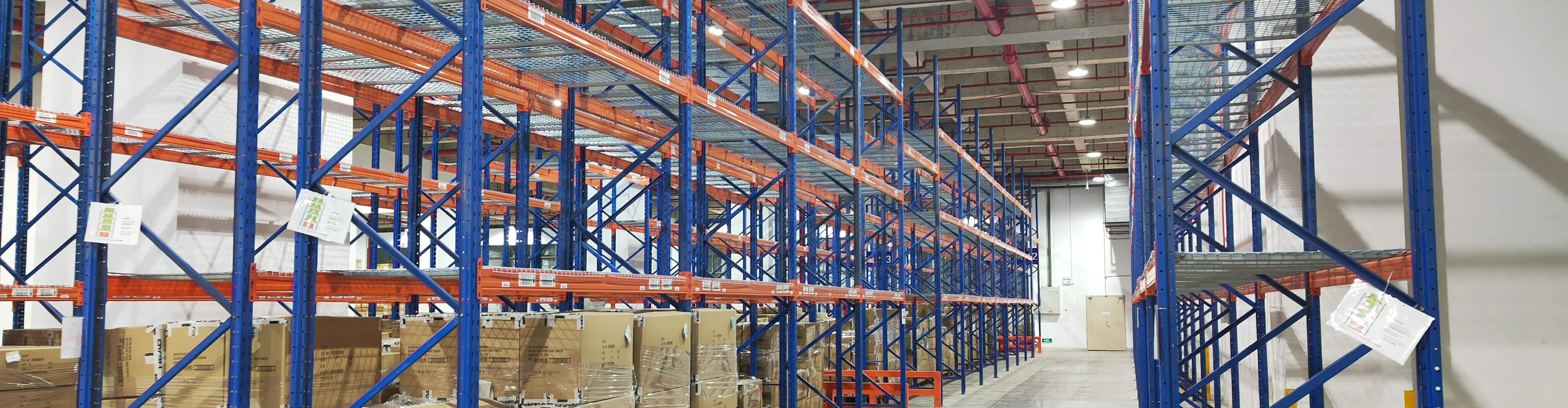
In industrial warehousing and logistics operations, the suitability of shelving solutions directly determines space utilization, operational efficiency, and safety. Heavy-duty pallet racking, with its high load capacity and suitability for storing heavy items, has become the core storage equipment for numerous manufacturing and logistics enterprises. Selecting the optimal heavy-duty pallet racking solution involves more than simply matching specifications and dimensions; it requires building a coordinated system around multidimensional factors. To accurately grasp the selection logic, one must first deconstruct the core concepts in the title, clarifying the essence and interrelationships of each element.
I. Core Concept Breakdown: Clarifying the Core Essence of the “Optimal Solution”
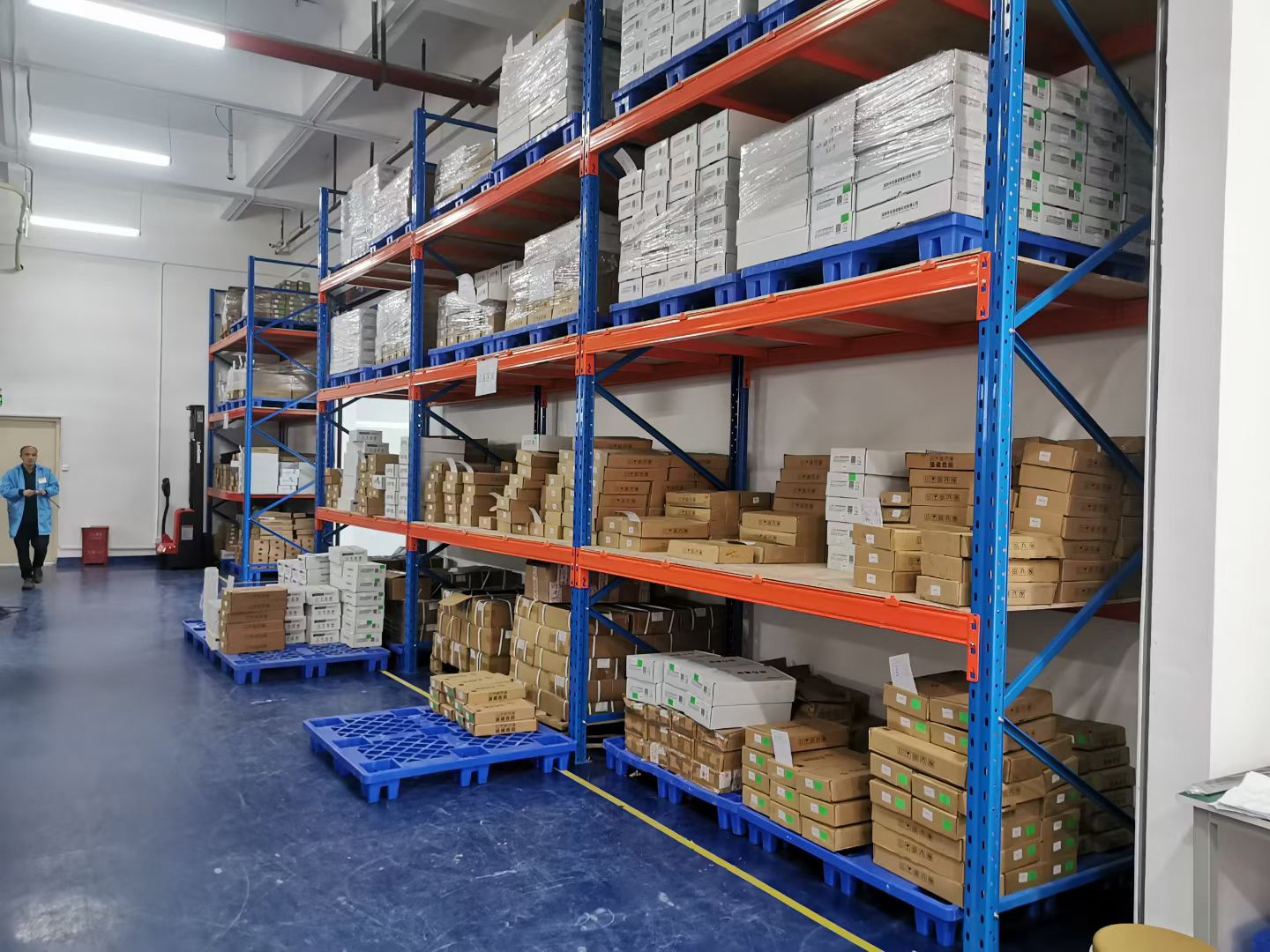
The core concept of the title can be broken down into two key modules: “heavy-duty pallet racking” and “optimal solution,” which share a strong logical connection. Heavy-duty pallet racking refers to shelving systems with a single-layer load capacity typically no less than 500kg. Designed for palletized unitized storage and compatible with mechanized equipment like forklifts, its core characteristics include robust structure, ample load redundancy, and suitability for bulk heavy-item storage. Mainstream types include beam-style, drive-in, and shuttle racking. The “Optimal Solution” does not denote an absolute “best configuration,” but rather a set of solutions that achieve a balanced fulfillment of four key objectives—space utilization, operational efficiency, cost control, and safety compliance—within specific scenarios. Its core criterion is “adaptability”—meaning the precise alignment of the solution with the enterprise’s warehouse space, goods characteristics, operational modes, and development needs.
From a selection logic perspective, constructing the “optimal solution” relies on three core dimensions: First, the foundational compatibility dimension, encompassing alignment between heavy-duty pallet racking and spatial dimensions, floor load capacity, as well as compatibility with cargo weight, dimensions, and packaging formats; Second, the functional compatibility dimension, which must align with cargo turnover frequency, access methods (FIFO/LIFO), and refined management requirements; Third is the long-term value dimension, which must balance cost investment (procurement, installation, operation and maintenance) with long-term reusability, while accommodating the enterprise’s business scale expansion needs. These three dimensions mutually reinforce each other, collectively forming the core framework of the optimal solution.
II. Core Questions and Answers: Avoiding Cognitive Biases in Decision-Making
When selecting the optimal solution for heavy-duty pallet racking, companies often fall into decision-making pitfalls due to cognitive biases. Two core questions are particularly representative of this challenge.
Question 1: Does a solution with higher load capacity automatically approach the optimal solution? Many companies believe that “greater load redundancy equals greater safety,” tending to select load specifications far exceeding actual requirements. Answer: This perception overlooks the balance between cost and suitability. The core of an optimal solution lies in “precise load matching,” not blindly pursuing high load capacity. If a rack’s load capacity far exceeds the actual weight of stored goods, it leads to material waste, increased procurement costs, and potentially heightened floor load pressure due to the rack’s excessive weight. For example, a company storing single pallets weighing 1.2 tons could meet its needs with a heavy-duty pallet rack solution rated for 2 tons. Forcing a 3-ton capacity solution would increase procurement costs by over 30% without delivering tangible value. The correct approach is to maintain a safety margin of 1.2 to 1.5 times the actual cargo weight, achieving a balance between safety and cost efficiency.
Question 2: Does a more complex and comprehensive solution guarantee better results? Some companies mistakenly believe that “multiple modules stacked together equals the optimal solution,” blindly incorporating automated equipment, complex zoning, and other configurations. Answer: The core of an optimal solution lies in “simple adaptation.” Complex configurations must precisely match operational requirements. For businesses with low goods turnover frequency and primarily manual operations, introducing automated storage and retrieval modules not only significantly increases costs but also reduces operational efficiency due to increased complexity. For example, a small mechanical parts company with long inventory cycles and low daily inbound/outbound volumes can meet its needs with a simple solution: “basic beam-style heavy-duty pallet racking + manual forklift operations.” Opting for a complex solution like “shuttle racking + automated control systems” would instead lead to equipment underutilization and skyrocketing maintenance costs.
III. Core Benefits of Selecting the Optimal Solution
Selecting the optimal solution for heavy-duty pallet racking through scientific evaluation delivers multi-dimensional operational benefits to enterprises, with core advantages manifesting in four key areas.
First, maximize space utilization value. The optimal solution precisely matches the number of shelf tiers, spacing, and spatial dimensions to eliminate wasted space. For instance, rationally planning shelf arrangement and aisle widths can increase warehouse space utilization by 30%-50%, meeting storage demands without expanding warehouse facilities. Second, enhance operational efficiency. The solution adapts to goods’ turnover characteristics and operational modes, reducing forklift travel paths and shortening access times. For instance, using beam-style solutions for high-frequency turnover goods can boost inbound/outbound efficiency by over 40%, lowering labor and equipment energy costs. Third, it ensures operational safety. The optimal solution strictly adheres to load-matching and compliance requirements, preventing safety hazards like shelf deformation from overloading or falling goods. It also complies with fire safety and building codes, reducing risks of non-compliant operations. Fourth, it controls long-term costs. The solution balances procurement costs and reusability. Its modular design allows flexible adjustments with business expansion, avoiding shelf scrapping and rebuilding due to operational changes, thereby lowering long-term fixed asset investments.
IV. Detailed Steps for Selecting the Optimal Solution
Selecting the optimal solution for heavy-duty pallet racking requires adherence to a five-step process: research, analysis, model selection, validation, and optimization. Each step must be precisely tailored to meet specific requirements.
Step 1: Conduct comprehensive research on fundamental parameters. Core research areas encompass three major categories: spatial parameters (length, width, height, floor levelness, floor load-bearing capacity, overhead obstacle locations, fire protection facility layout); cargo parameters (single pallet weight, dimensions, packaging type, stacking height, turnover frequency, access method requirements); operational parameters (existing forklift types and lifting heights, staffing levels, average daily inbound/outbound volume). The survey must produce a detailed parameter checklist. For example, floor load capacity must specify both uniformly distributed load (UDL) and concentrated load (CL) values to prevent selection errors due to missing parameters.
Step 2: Identify Core Requirements and Constraints. Based on research data, define three core requirements: – Load-bearing capacity (determine minimum shelf load capacity and safety margin); – Efficiency (select shelf type and layout based on turnover frequency); – Management (determine need for barcode, RFID, or other precision management equipment). Simultaneously outline constraints, including: – Budget ceiling; – Installation timeline; – Environmental limitations (e.g., material requirements for low-temperature or high-humidity environments).
Step 3: Preliminary Selection and Design. Select shelving types based on requirements and commission a professional manufacturer to design detailed plans. The plan must include: shelving specifications (length × width × height, number of tiers, single-tier load capacity), layout diagrams (shelving arrangement, aisle widths, safety clearances), material specifications (standard steel or hot-dip galvanized steel based on environment), and ancillary equipment (e.g., whether to install toe boards or shelves). For instance, high-frequency turnover and FIFO requirements may warrant heavy-duty pallet racking with beams, while low-frequency turnover and space-constrained scenarios may suit drive-in solutions.
Step 4: Solution Validation and Feasibility Analysis. Validate the solution across four dimensions: Compliance Verification (check adherence to fire safety and building codes); Efficiency Verification (simulate operational workflows to calculate storage and retrieval efficiency); Cost Verification (calculate total lifecycle costs including procurement, installation, and maintenance); Safety Verification (confirm adequate safety redundancy through load testing and structural stability analysis).
Step 5: Optimization and Finalization of the Plan. Adjust and refine the plan based on validation results. For instance, if operational efficiency calculations indicate suboptimal performance, modify shelf arrangements or aisle widths. If costs exceed the budget, simplify non-essential configurations without compromising core requirements. Upon completion of optimization, establish the final optimal plan.
V. Practical Outcomes: Empirical Validation of the Optimal Solution’s Benefits
The following three practical case studies from different industries clearly demonstrate the tangible benefits of selecting the optimal solution for heavy-duty pallet racking.
Case Study 1: Automotive Parts Manufacturer. The company originally had 1,000 square meters of warehouse space storing automotive chassis components weighing 1.5 tons each. Previously using a traditional shelving solution, space utilization was only 45%, resulting in low inbound/outbound efficiency. Through a five-step process, the optimal solution was selected: – Adopted heavy-duty pallet racking with beams, designed in a 4-tier layout – Aisle widths adapted to existing counterbalanced forklifts (3.8 meters) – Standard steel material with foot guards installed Post-implementation results: – Space utilization increased to 70% – Warehouse operations efficiency improved by 50% – Monthly labor cost savings of approximately ¥18,000 – Three years of safe operation without safety hazards
Case Study 2: Large-Scale Logistics Distribution Center. The central warehouse spans 2,000 square meters and stores bulk goods of various specifications with significantly differing turnover rates. Previous disorganized solutions resulted in severe space wastage. The optimal solution employed a combination of beam-style and drive-in heavy-duty pallet racking. Beam-style racking was used for high-turnover goods zones, while drive-in racking served low-turnover areas. Simultaneously, rack layout optimization reduced aisle counts. Post-implementation, space utilization rose to 75%, with inbound/outbound efficiency for all cargo types increasing by over 40%. Overall lifecycle costs decreased by 25% compared to the original setup.
Case Study 3: Cold Chain Food Processing Enterprise. The company’s 800-square-meter warehouse operates in a low-temperature, high-humidity environment and stores frozen food items weighing up to 1 ton each. Previously, shelving units suffered corrosion due to material issues. The optimal solution involved installing hot-dip galvanized heavy-duty pallet racking with horizontal beams, configured in a three-tier layout. The design incorporates 1.2-meter clearance for fire sprinklers and aisle widths compatible with reach trucks. Post-implementation results: – Completely resolved shelving corrosion issues – Projected service life extended to over 10 years – Space utilization rate increased to 68% – Goods handling efficiency improved by 35% – Ensured freshness of cold chain food products
In summary, selecting the optimal solution for heavy-duty pallet racking hinges on establishing a multidimensional equilibrium centered on adaptability. This approach dispels the misconception of prioritizing “heavy load capacity and excessive complexity,” instead adhering to a scientific process of research, analysis, and specification selection. Only by aligning with their actual requirements—including spatial constraints, cargo characteristics, and operational workflows—can enterprises identify solutions that balance efficiency, safety, and cost. This ensures racking systems truly become powerful tools for enhancing warehouse operational efficiency.