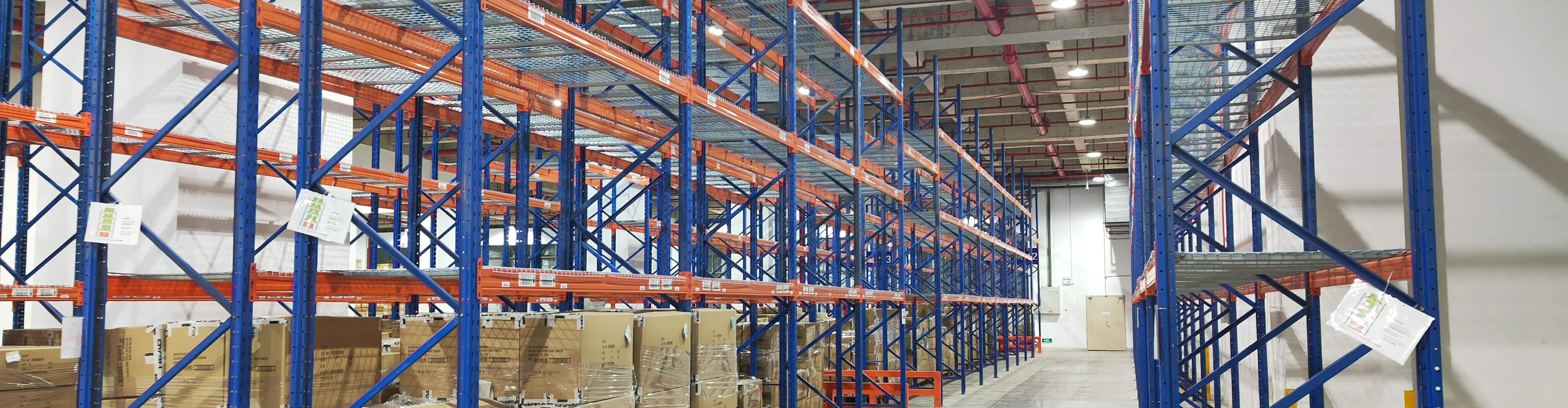
Heavy duty industrial shelving helps warehouses, workshops, back-of-house storage areas, and production facilities store heavier goods safely while keeping inventory accessible and organized. Its main benefits are higher load capacity, better use of vertical space, improved picking efficiency, stronger durability in demanding environments, and more flexibility than lighter shelving for changing SKU profiles.
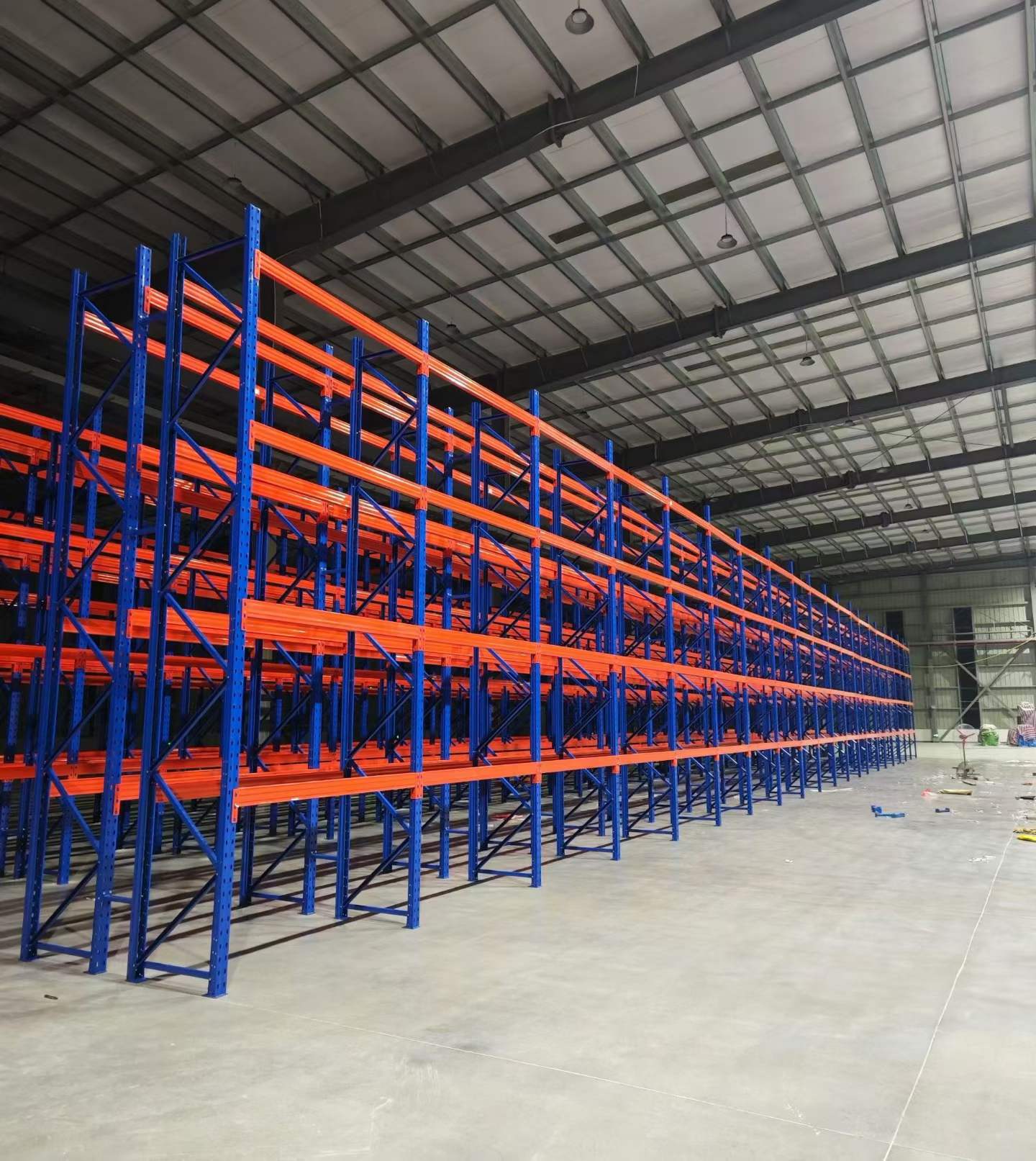
For many operations, heavy duty industrial shelving fills the gap between light-duty shelving and pallet racking. It is often used for hand-loaded items, carton storage, parts, tools, archive boxes, maintenance stock, bulky components, and mixed inventory that does not sit efficiently on pallets. When selected properly, it can improve storage density without making access slower or creating unnecessary handling risk.
What is heavy duty industrial shelving?
Heavy duty industrial shelving is a storage system designed to support substantial loads at each shelf level while standing up to regular warehouse or industrial use. It is typically built from steel components and configured for commercial storage areas where standard office or retail shelving would be unsuitable.
In practical terms, heavy duty industrial shelving is commonly used where operators need direct access to individual items rather than full pallet loads. That makes it useful for operations with medium to high SKU counts, manual picking, spare parts storage, maintenance stores, e-commerce support zones, and production-side inventory.
Compared with lighter shelving, heavy duty industrial shelving is better suited to demanding environments where shelves carry dense cartons, metal parts, tools, containers, or irregular stock. Compared with pallet racking, it offers easier hand access for smaller units and mixed items.
Key benefits of heavy duty industrial shelving
1. Higher load capacity for heavier stock
The most obvious advantage of heavy duty industrial shelving is its ability to store heavier items safely than light-duty systems. This matters in industrial settings where products may include machine parts, hardware, dense cartons, molds, maintenance supplies, or raw materials packed in bins and containers.
Higher load capacity gives planners more confidence when allocating stock by weight and shelf level. It also reduces the temptation to overload lighter shelving, which is a common cause of deflection, instability, and premature damage.
That said, load capacity must always be checked against the actual shelf configuration, bay dimensions, beam or shelf material, and how the load is distributed. A strong frame does not mean every shelf can carry any weight in any layout.
2. Better use of vertical storage space
Many facilities run out of floor space before they run out of building height. Heavy duty industrial shelving allows businesses to use more of the clear height available for stored goods, especially where stock is accessed by hand, order pickers, or mobile steps rather than forklifts.
This can be a practical way to increase storage capacity without immediately expanding the building footprint. In spare parts rooms, maintenance stores, and small goods picking areas, vertical shelving often creates meaningful capacity gains when aisles, shelf spacing, and pick access are planned properly.
The trade-off is that vertical growth only works if the upper levels remain safe and usable. If shelves are too high for the picking method, the space may look efficient on paper but perform poorly in daily operations.
3. Improved organization for mixed inventory
Heavy duty industrial shelving is well suited to mixed SKU environments. Shelf levels can often be adjusted to suit different carton heights, tote sizes, loose components, or bin storage. That flexibility helps operations organize inventory by size, movement rate, product family, or picking sequence.
For warehouse teams, better organization usually means less time spent searching for stock, fewer misplaced items, and cleaner replenishment routines. It can also support clearer labeling and slotting, which becomes increasingly important as SKU counts grow.
This is one reason heavy duty industrial shelving is common in spare parts, MRO stores, technical service inventory, and e-commerce support zones where products vary in size and turnover.
4. Faster manual picking and replenishment
Where inventory is handled at item, carton, or bin level, heavy duty industrial shelving can improve workflow by keeping stock directly accessible. Operators do not need to move pallets or wait for forklift support just to retrieve a small quantity of product.
This direct access is especially useful for:
- Order picking areas with many SKUs
- Maintenance parts storage
- Assembly support inventory
- Tool cribs and technical stores
- Archive or records storage with heavier boxes
In these environments, heavy duty industrial shelving can shorten pick times and simplify replenishment. However, shelf layout matters. If fast-moving items are stored too high, too low, or too deep within the bay, the expected efficiency gains can disappear.
5. Strong durability in demanding warehouse conditions
Industrial storage systems are exposed to more wear than general commercial shelving. Heavy duty industrial shelving is designed for tougher conditions, including repeated loading, denser products, and busier traffic around the storage area.
Durability matters not only for lifespan but also for safety and maintenance planning. A more robust system is generally better able to handle routine use without loosening, bending, or degrading as quickly as lighter alternatives. In facilities with regular stock rotation, maintenance handling, or frequent access, that can reduce disruptions and replacement frequency.
Even so, durability should not be confused with damage immunity. Heavy duty industrial shelving still needs routine inspection for impact damage, overloaded levels, corrosion in certain environments, missing components, and poor housekeeping around the bays.
6. Flexible configuration for changing operations
Storage needs rarely stay fixed. SKU mix changes, packaging changes, order profiles change, and facilities often need to re-slot inventory as demand shifts. Heavy duty industrial shelving can support this better than many fixed storage formats because shelf heights and bay layouts can often be adjusted to suit new stock profiles.
This flexibility is valuable for growing businesses and multi-use facilities. A shelving zone used today for spare parts may later be reassigned to carton picking, maintenance stock, or overflow storage. A system that can be reconfigured with less disruption can help protect the original investment.
Buyers should still check how easy it is to expand the system, source matching components later, and maintain consistency across added bays. Expansion planning is often overlooked during the first installation.
7. Suitable for areas where pallet racking is not the right fit
Not every storage problem should be solved with pallet racking. If goods are mostly handled as individual items, cartons, bins, or small batches, pallet racking may waste space and create inefficient picking. Heavy duty industrial shelving is often the better choice for storage zones that require direct access to many SKUs without pallet handling.
Typical examples include:
- Small parts and components storage
- Manual order picking locations
- Maintenance and engineering stores
- Work-in-progress support stock
- Back-up carton storage near packing or assembly areas
This does not mean heavy duty industrial shelving replaces racking across the whole facility. In many warehouses, the most efficient layout combines pallet racking for reserve stock and shelving for pick faces or non-palletized inventory.
Operational benefits beyond storage capacity
Supports cleaner workflows
Well-planned heavy duty industrial shelving can help separate fast-moving stock from slow-moving stock, consumables from spare parts, or picking inventory from reserve inventory. That improves workflow discipline and reduces congestion in mixed-use storage areas.
When shelving is placed close to packing, assembly, or maintenance points of use, walking time can also be reduced. This is often a more meaningful benefit than raw storage density alone.
Helps improve stock visibility
Open shelf access makes it easier to see what is stored, identify empty locations, and perform cycle counts. For businesses that struggle with hidden stock, mixed bins, or inconsistent replenishment, heavy duty industrial shelving can support better day-to-day inventory control.
Visibility is strongest when the system is combined with clear location labeling, disciplined slotting, and sensible shelf spacing. Poor organization can undermine even a strong shelving installation.
Can reduce handling complexity
If staff can access stored items directly, the operation may rely less on forklifts for small-quantity retrieval. That can simplify internal handling in certain zones and reduce unnecessary pallet breaking in main racking aisles.
However, this benefit depends on inventory profile. If goods are bulky, highly repetitive, or mainly moved in full pallet quantities, shelving may add handling steps rather than remove them.
What buyers should evaluate before choosing heavy duty industrial shelving
Load type and weight
Start with what will actually be stored: loose items, bins, cartons, tools, dense components, archive boxes, or irregular products. Weight per shelf level and total bay loading should be understood early. Underestimating load is a common specification mistake.
SKU profile and picking method
Heavy duty industrial shelving is most effective when operators need direct access to many items. If the operation is full-pallet in nature, shelving is usually not the right primary system. If the operation is high-SKU and hand-picked, shelving may be highly effective.
Available height and access equipment
Ceiling height alone does not determine storage potential. Buyers also need to consider safe reach height, step access, order picking equipment, and replenishment method. Shelves that cannot be accessed efficiently become slow and risky.
Aisle width and traffic flow
Shelving layouts should reflect how people and equipment move through the space. Narrow aisles may increase density, but they can also slow replenishment, create congestion, and make maintenance access harder.
Floor condition and installation area
Industrial shelving performs best on suitable floors with enough level stability for safe installation. Uneven or damaged floors can create alignment issues and affect long-term performance. This should be reviewed before finalizing the layout.
Future expansion
If storage demand is likely to grow, plan for extension bays, matching components, and consistent row lengths from the start. It is easier to expand cleanly when future growth is considered during the first phase.
Limitations of heavy duty industrial shelving
Heavy duty industrial shelving offers clear benefits, but it is not ideal for every application.
- It is less suitable for full-pallet storage than pallet racking.
- It may be inefficient for very bulky or oversized loads.
- Very high shelf levels can slow manual picking if access equipment is not planned well.
- Dense shelving layouts can create congestion if replenishment and picking happen in the same aisles.
- Without disciplined load control, users may overload shelves because stock is hand-placed rather than mechanically controlled.
These limitations do not reduce the value of heavy duty industrial shelving. They simply underline the importance of matching the system to the inventory and workflow rather than choosing it only because more shelving seems useful.
Common mistakes to avoid
- Choosing shelving based on overall size without checking shelf load requirements
- Using heavy duty industrial shelving for products better suited to pallet racking or cantilever storage
- Ignoring aisle width and access when trying to maximize density
- Storing fast-moving items in poor pick locations
- Failing to label bays and shelf levels clearly
- Overlooking inspection routines after installation
- Assuming future expansion components will always match later
Most of these issues are avoidable with proper planning and a realistic review of daily operations.
Maintenance and safety considerations
Like any industrial storage system, heavy duty industrial shelving should be inspected regularly. Teams should look for bent components, loose fixings, overloaded shelves, corrosion where relevant, and damage caused by handling equipment or improper use.
Housekeeping also matters. Obstructed aisles, unstable stacking on shelves, and poor location control can create both safety and efficiency problems. If heavier items are stored on shelving, weight should be distributed sensibly and high-risk loads should not be placed where retrieval becomes awkward.
Routine checks do not need to be complicated, but they should be consistent. A shelving system that is structurally capable can still become unsafe if damaged or misused over time.
FAQ
Is heavy duty industrial shelving the same as pallet racking?
No. Heavy duty industrial shelving is generally intended for hand-loaded or carton, bin, and parts storage, while pallet racking is designed for palletized loads handled by forklifts.
Where is heavy duty industrial shelving most useful?
It is most useful in warehouses and industrial areas that store mixed SKUs, spare parts, cartons, tools, technical inventory, or other non-palletized goods that need direct access.
Can heavy duty industrial shelving be used in a picking area?
Yes. Heavy duty industrial shelving is often a strong option for manual picking areas because it provides direct access to individual items and can be organized around pick frequency.
What is the main risk when choosing heavy duty industrial shelving?
The main risk is selecting a system without properly checking load requirements, access method, aisle layout, and how the stock will actually be handled day to day.
Conclusion
The benefits of heavy duty industrial shelving are practical rather than theoretical: it supports heavier loads than light-duty shelving, improves organization for mixed inventory, makes manual picking more efficient, uses vertical space more effectively, and offers flexibility for changing storage needs. For many warehouses and industrial facilities, it is a valuable system for non-palletized stock that needs direct access.
The real value of heavy duty industrial shelving depends on fit. When load, SKU profile, picking method, aisle layout, and future expansion are considered properly, it can become a reliable and efficient part of the overall storage strategy. When those factors are ignored, even a robust shelving system can underperform.